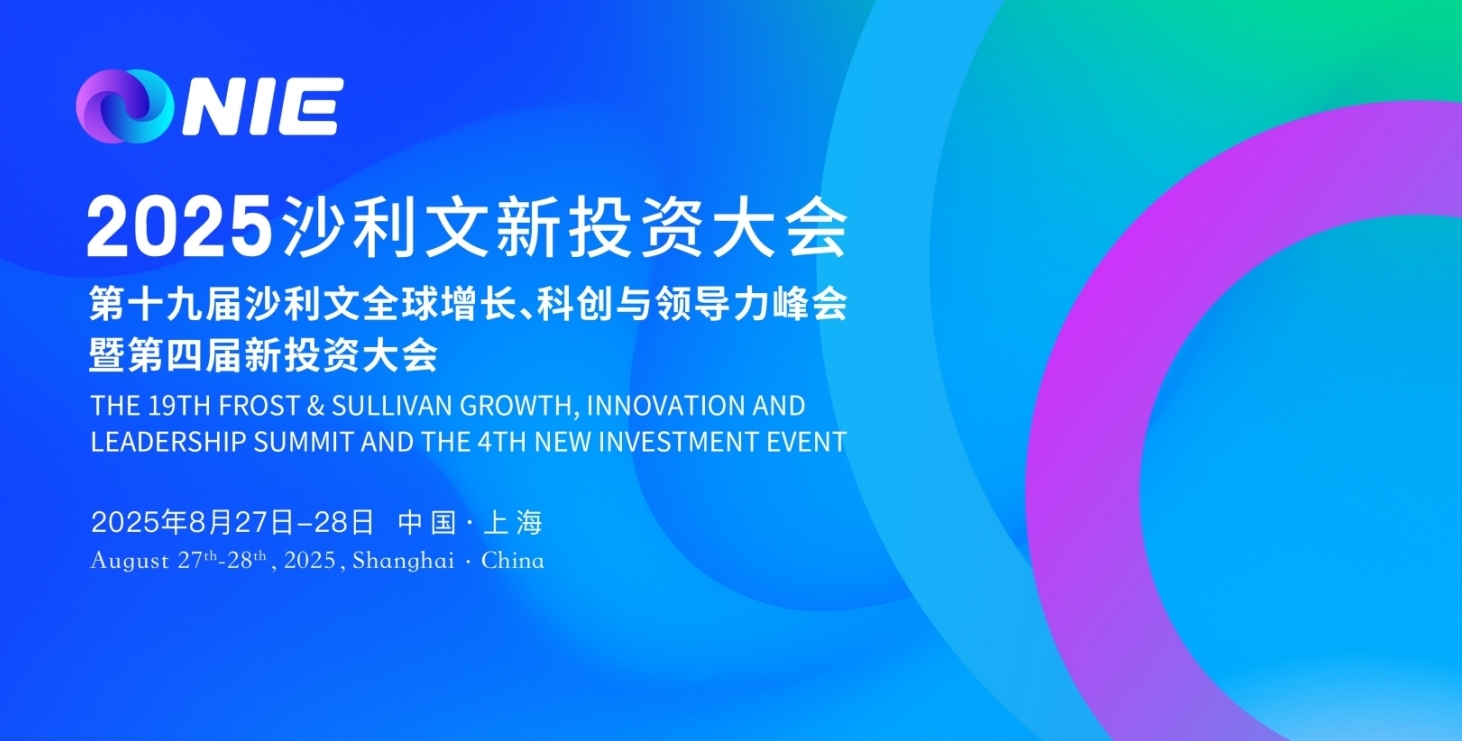



“AI正在重塑几乎所有与人有关的价值和活动,很难预测它最终会把我们的生产与生活带向何方。”8月5日,全球性企业增长咨询公司弗若斯特沙利文(Frost & Sullivan,下称“沙利文”)全球董事局主席兼首席执行官富大为(David Frigstad)在接受《国际金融报》记者采访时判断,AI正将企业带入一个竞争强度更高的时代。
"AI is reshaping almost all human-related values and activities, and it is hard to predict where it will ultimately take our production and daily lives." On August 5, David Frigstad, Global Chairman and CEO of the global growth consulting firm Frost & Sullivan, noted in an interview with a reporter from International Finance News that AI is bringing enterprises into an era of unprecedentedly intense competition.
在富大为看来,AI正以指数级速度加快企业决策、组织协同和市场竞争的节奏。“工业革命大约在150年里带来了百倍的变化;而现在,也许10年里就会发生百倍的变化。”他指出,CEO和企业都必须为这种前所未有的变化速度做好准备。作为沙利文的“掌舵者”,富大为长期深耕企业增长、创新与领导力,并将自己定位为“增长教练”(Growth Coach)。他认为,AI时代最稀缺的,并不是一次漂亮的技术展示,而是企业持续学习、快速选择,并推动团队真正行动起来的能力。值得一提的是,这是富大为时隔近十年再次来到中国。采访中,他回顾了自己所见证的中国创新产业跨越式发展,并对中国在人工智能等高科技领域形成的发展生态给予高度评价。“中国的创新能力让我无比兴奋,在世界任何地方,我都很少见到这样的景象”。
In Mr. Frigstad's view, AI is accelerating the pace of corporate decision-making, organizational collaboration and market competition at an exponential rate. "The Industrial Revolution brought about a hundredfold change over roughly 150 years; now, a hundredfold change might happen in just 10 years." He pointed out that CEOs and enterprises must prepare for this unprecedented speed of change. As the "helmsman" of Frost & Sullivan, Mr. Frigstad has long been deeply engaged in corporate growth, innovation and leadership, positioning himself as a "Growth Coach." He believes that what is most scarce in the AI era is not a beautiful technological demonstration, but a company's ability to continuously learn, make rapid choices and drive its team to take real action. It is worth mentioning that this is Mr. Frigstad's first visit to China in nearly a decade. During the interview, he reflected on the leapfrog development of China's innovative industries that he has witnessed and spoke highly of the development ecosystem China has formed in high-tech fields such as artificial intelligence. "China's innovation capabilities make me incredibly excited; I have rarely seen such a scene anywhere else in the world."
“我还是大学生时,曾在香港和台湾待过,后来第一次有机会来到北京,见到了我们的中国合作伙伴。那是很久以前了。”从学生时代第一次到访,到第一次走进中国市场,再到时隔十年来到上海,富大为的感慨并不只来自中国经济的活力或AI产业的热度,更来自一种在他看来颇为罕见的变化能力——“中国对改善与人的生活有关的问题所作出的国家层面的投入和承诺,令人震撼,也令人兴奋”。在他眼中,中国的发展并非停留在宏大的数字与叙事之中,而是在较短时间内不断转化为看得见的现实。看到中国经济的活力,他直言只能惊叹:“你们能够亲身经历这一切,这也是为什么我觉得,我们能生活在这个时代,是很幸运的。”
"When I was still a college student, I spent time in Hong Kong and Taiwan. Later, I had my first opportunity to visit Beijing and meet our Chinese partners. That was a long time ago." From his first visit as a student, to his first entry into the Chinese market and now returning to Shanghai after ten years, Mr. Frigstad's reflections stem not only from the vitality of the Chinese economy or the boom of the AI industry, but also from a capacity for change that he considers quite rare—"China's national-level investment and commitment to improving issues related to people's lives is both astounding and exciting." In his eyes, China's development does not merely exist in grand numbers and narratives, but is continuously translated into visible reality within a relatively short period of time. Seeing the vitality of the Chinese economy, he frankly expressed his amazement: "You are able to experience all of this firsthand, which is exactly why I feel we are very fortunate to live in this era."

AI时代,企业靠什么建立竞争力?
“增长教练”,是富大为对自己的定义。
"Growth Coach" is how Mr. Frigstad defines himself.
这个称谓,源自他大学时期的体操运动员经历。“任何一位优秀的运动员都离不开教练,团队竞技更是如此。”在富大为看来,无论个人项目还是团队项目,通往胜利的过程都离不开训练、复盘与调整,更离不开教练持续的观察和引导。
This title originates from his experience as a gymnast during his college years. "No outstanding athlete can succeed without a coach, and this is especially true in team sports." In Mr. Frigstad's view, whether in individual or team events, the path to victory requires constant training, review and adjustment—and above all, the continuous observation and guidance of a coach.
但从赛场走进商业世界后,他看到了一种耐人寻味的反差:面对员工、客户与业务关系交织的复杂企业,许多CEO反而处在“无教练”状态——身边少有人能够持续提出问题,帮助他们复盘、判断,并作出更好的选择。
However, upon transitioning from the sports arena to the business world, he noticed an intriguing contrast: despite managing complex organizations with intricate webs of employees, clients and business operations, many CEOs find themselves in a "coach-less" state. They have few people around them who can consistently ask the right questions, help them review past actions, exercise judgment and make better choices.
基于此,富大为并不将沙利文简单定义为一家“带着一份方案走进企业,告诉管理层该怎么做”的传统咨询公司。他更愿意把自己定位为一名“增长教练”,从“我们怎样让你的团队变得更好?”这样的问题开始工作。
Because of this, Mr. Frigstad does not simply define Frost & Sullivan as a traditional consulting firm that "walks into an enterprise with a ready-made proposal and tells management what to do." Instead, he prefers to position himself as a "Growth Coach," initiating engagements with questions like, "How can we make your team better?"
在他看来,提供咨询的重点绝不在于替CEO作决定,也不在于提供一份可以照单执行的外部答案,而是帮助企业形成持续学习、快速判断和共同执行的能力,直至有一天“不再需要外部帮助”。
In his view, the true value of consulting lies not in making decisions for the CEO, nor in handing over an external playbook to be blindly followed. Rather, it is about empowering the enterprise to build its own capabilities for continuous learning, rapid judgment and collaborative execution—until the day comes when "external help is no longer needed."
这套关于组织能力的理解,也构成了富大为看待“AI时代企业如何构建竞争力”的起点。
This deep understanding of organizational capabilities also serves as the starting point for how Mr. Frigstad views the question of "how enterprises build competitiveness in the AI era."
“AI正在把企业带入一个竞争强度(Competitive Intensity)更高的时代。”富大为指出,随着信息愈发透明、技术扩散持续提速,世界各地的公司可能在同一时间开发、运用相似的AI能力。过去,一项核心技术或许能够被一家公司长期掌握,并转化为稳固的竞争壁垒;而今天,技术领先的“保鲜期”正在不断缩短。
"AI is bringing enterprises into an era of higher Competitive Intensity," Mr. Frigstad remarked. As information becomes increasingly transparent and the diffusion of technology continues to accelerate, companies around the world may develop and deploy similar AI capabilities at the exact same time. In the past, a single core technology might have been exclusively held by one company for a long period, translating into a solid competitive moat. Today, however, the "shelf life" of technological leadership is continuously shrinking.
富大为的判断是,企业之间的较量,正从“是否拥有一项新技术”,转向“能否驾驭技术带来的新变化”——能否更快作出决策,能否推动组织协同,能否将技术能力转化为更贴近客户的产品与体验。
Mr. Frigstad's assessment is that the competition between enterprises is shifting from "whether you possess a new technology" to "whether you can harness the new changes brought by technology"—whether you can make decisions faster, drive organizational collaboration and translate technological capabilities into products and experiences that resonate more closely with customers.
这种竞争逻辑的变革也对CEO提出了更高的要求。富大为将当下CEO应具备的能力概括为“高度连接的CEO”( Connected CEO):过去,董事会按季度开会,企业一年制定一次经营计划;如今,这样的节奏已很难追上瞬息万变的竞争。CEO需要更及时地感知项目、员工与客户的变化,并带领团队快速沟通、作出判断、付诸行动。
This shift in competitive logic also places higher demands on CEOs. Mr. Frigstad encapsulates the capabilities required of today's CEOs as the "Connected CEO." In the past, boards met quarterly and companies formulated their business plans once a year. Today, such a pace can hardly keep up with the rapidly evolving competitive landscape. A CEO needs to sense changes in projects, employees and customers more promptly, while leading their team to communicate rapidly, exercise judgment and take action.
不过,随着AI加速融入日常生活、走向产业一线,不同类型企业面对的考题并不相同。
However, as AI accelerates its integration into daily life and advances to the frontlines of industry, different types of enterprises are facing entirely different tests.
对于在AI浪潮中谋求转型的传统企业而言,问题早已不只是“上不上AI”,而是CEO是否真正参与其中,团队是否愿意全员投入。富大为认为,企业不能只把AI视为某个部门的任务,或是交由市场部采购的一项工具;更重要的是,借由AI全面审视内部协作方式与客户体验:哪些生产环节可以被重构,信息如何在组织中更快流动,企业与员工、客户之间的连接又该如何被重新定义。
For traditional enterprises seeking transformation amidst the AI wave, the question is no longer simply "whether to adopt AI," but whether the CEO is genuinely involved and whether the entire team is willing to fully commit. Mr. Frigstad believes that companies cannot merely view AI as a task for a specific department or a tool procured by the marketing team. More importantly, they must leverage AI to comprehensively re-examine their internal collaboration methods and customer experiences: which production processes can be reconstructed, how information can flow faster within the organization and how the connections between the enterprise, its employees and its customers should be redefined.
富大为谈到,亚马逊集团创始人杰夫·贝索斯最令他受启发的,是将“实验思维”( Mindset of Experimentation)融入企业日常运营。“优秀的领导者、优秀的部门和优秀的人,整天都在做实验”。
Mr. Frigstad mentioned that what inspired him most about Amazon founder Jeff Bezos is the integration of a "Mindset of Experimentation" into the company's daily operations. "Great leaders, great departments and great people are conducting experiments all day long," he noted.
在他看来,许多尝试未必能够获得预期结果,但失败既无法被彻底避免,“也不宜被简单定义为失败,而是一次尚未成功的实验”。基于此,富大为进一步强调:“每一位员工都要用AI做实验,看看会产生什么结果。”处于转型中的企业,不能因为害怕犯错便与AI保持距离;一味等待确定答案,风险反而可能更大。
In his view, many attempts may not yield the expected results, but failure can neither be completely avoided "nor should it be simply defined as a failure, but rather as an experiment that has not yet succeeded." Building on this, Mr. Frigstad further emphasized: "Every employee should experiment with AI to see what results it produces." Enterprises undergoing transformation cannot keep their distance from AI out of a fear of making mistakes; blindly waiting for a definitive answer may actually pose a much greater risk.
而走在新一轮产业变革前沿的新兴公司,富大为的判断则更为直接:技术演示再炫目,也不等于真实的商业价值。
For emerging companies at the forefront of this new wave of industrial transformation, Mr. Frigstad's assessment is even more direct: no matter how dazzling a technology demonstration may be, it does not equate to real commercial value.
他以机器人为例:会后空翻、会跳芭蕾的机器人或许足够吸睛,但市场未必需要一台“会表演的机器人”;如果它能够进入医院、参与患者照护、解决真实需求,才可能成为真正值得关注的机会。
He cited robotics as an example: a robot that can perform backflips or dance ballet might be highly eye-catching, but the market does not necessarily need a "performing robot." However, if it can be deployed in hospitals, assist in patient care and solve real-world needs, then it becomes an opportunity truly worth paying attention to.
“归根结底,一切都取决于应用中的人类体验。”在富大为看来,AI和机器人公司必须近乎“疯狂”地聚焦应用本身,回答产品究竟服务谁、解决什么问题,以及能否在真实场景中形成可持续的商业化能力。“技术能力只是起点,真正决定一家公司能否穿过概念与风口、留在市场中的,是其能否将技术落到具体的人、具体的需求与具体的价值上”。
"Ultimately, everything depends on the human experience in its application." In Mr. Frigstad's view, AI and robotics companies must be almost "fanatical" in their focus on the application itself. They must answer exactly who the product serves, what problems it solves and whether it can build sustainable commercial viability in real-world scenarios. "Technological capability is merely the starting point. What truly determines whether a company can navigate past the hype and survive in the market is its ability to ground its technology in specific people, specific needs and specific values."
中国企业,如何构建全球影响力?
How can Chinese enterprises build global influence?
当下,AI正加速融入日常生活、走向产业一线。在这场变革中,中国在研发、制造、应用落地与产业协同等环节,正展现出愈发强劲的创新动能。
Today, AI is accelerating its integration into daily life and advancing to the frontlines of industry. In this transformation, China is demonstrating increasingly robust innovation momentum across areas such as research and development, manufacturing, application deployment and industrial synergy.
十多天前刚在上海落幕的2026世界人工智能大会,正是这一趋势的鲜明注脚。彼时的展馆中,最引人注目的已不再是单纯比拼参数的大模型,也不再是仅作炫技表演的机器人,而是从“会聊天”走向“能干事”的智能体(Agent),以及能够进入不同场景、执行实际任务的具身智能。
The 2026 World Artificial Intelligence Conference, which concluded in Shanghai just over ten days ago, serves as a vivid footnote to this trend. In the exhibition halls at that time, the most eye-catching highlights were no longer large models merely competing on parameters, nor were they robots putting on flashy technological displays. Instead, the focus shifted to Agents that have evolved from "being able to chat" to "being able to execute tasks," as well as embodied intelligence capable of entering various scenarios and performing practical tasks.
这股活力,同样被富大为感知到。在他的观察中,中国企业已经走过几个清晰的发展阶段:先是制造能力的建立,继而是供应链与物流体系的完善,随后是创新能力的积累与释放。“我曾经以为,创新可能是中国企业较难解决的问题,但如今也被顺利解决了”。
This vitality was equally sensed by Mr. Frigstad. In his observation, Chinese enterprises have gone through several clear stages of development: first the establishment of manufacturing capabilities, then the refinement of supply chains and logistics systems and subsequently the accumulation and unleashing of innovation capabilities. "I used to think that innovation might be a difficult problem for Chinese enterprises to solve, but today it has been successfully resolved," he noted.
时隔近十年再次来到中国,他看到的并非一个仍在追赶技术浪潮的市场,而是一个创新持续涌现、应用加快落地的产业现场——从技术研发到产品迭代,从商业模式到应用落地,新的尝试不断出现。“中国的创新能力让我无比兴奋,在世界任何地方,我都很少见到这样的景象”。
Visiting China again after nearly a decade, what he saw was not a market still chasing the technological wave, but an industrial landscape where innovation continuously emerges and application deployment accelerates. From technological R&D to product iteration and from business models to application deployment, new attempts are constantly appearing. "China's innovation capabilities make me incredibly excited; I have rarely seen such a scene anywhere else in the world," he said.
从制造业,到供应链与物流,再到如今的创新能力,富大为指出,中国企业的成长路径是一步一步走出来的。下一步,则是品牌的全球化。在他看来,中国企业发展中最难的部分已经完成;随之而来的问题是:怎样成为全球品牌?怎样在全球舞台上扮演更重要的角色?这将是中国经济和中国企业下一轮重要的增长机会。而在AI创新、产品能力与真正的全球影响力之间,企业仍需要补上关键一环:品牌。
From manufacturing to supply chains and logistics and now to innovation capabilities, Mr. Frigstad pointed out that the growth path of Chinese enterprises has been forged step by step. The next step is brand globalization. In his view, the most difficult part of the development of Chinese enterprises has already been completed. The ensuing questions are: How do they become global brands? How do they play a more important role on the global stage? This will be the next major growth opportunity for the Chinese economy and Chinese enterprises. However, between AI innovation, product capabilities and true global influence, enterprises still need to fill in a crucial missing link: the brand.
Today, AI is accelerating its integration into daily life and advancing to the frontlines of industry. In this transformation, China is demonstrating increasingly robust innovation momentum across areas such as research and development, manufacturing, application deployment and industrial synergy.
而要跨过这一步,CEO不能只做技术与产品的讲解者,更要成为企业故事的讲述者。
“史蒂夫·乔布斯在讲故事这件事上做得非常好。”以苹果公司为例,富大为进一步解释,乔布斯并不执着于讲述一串“比特、字节和功能参数”,而是讲苹果为什么要做这样的产品,希望为客户带来怎样的体验。
To take this step, a CEO cannot merely be an explainer of technology and products, but must also become a storyteller for the enterprise.
"Steve Jobs did a phenomenal job at storytelling." Using Apple as an example, Mr. Frigstad further explained that Jobs did not obsess over reciting a string of "bits, bytes and functional parameters." Instead, he talked about why Apple wanted to create such products and what kind of experience they hoped to bring to customers.
“技术、客户应用与企业使命,都可以成为故事的起点。CEO要做的,是将这些线索串联起来,构建一个能够跨越全球市场与文化边界的品牌。”富大为强调,真正有影响力的品牌,需要让不同市场的客户、员工、投资人、合作伙伴与供应商,理解并相信同一个故事:这家公司为什么存在,希望改变什么,又将为谁创造价值。
"Technology, customer applications and corporate mission can all serve as the starting point of a story. What a CEO needs to do is connect these threads to build a brand capable of crossing global markets and cultural boundaries," Mr. Frigstad emphasized. A truly influential brand needs to make customers, employees, investors, partners and suppliers across different markets understand and believe in the same story: why this company exists, what it hopes to change and for whom it will create value.
除了学会讲故事,富大为还建议中国企业从一开始便以全球市场为坐标。“不要把自己局限为一家中国公司,要把自己定位成一家全球化公司。”在他看来,中国企业出海下一阶段的课题,并不只是将产品销往海外,或在不同市场复制一套增长方法,而是将整个全球经济视为自身所处的舞台,重新理解企业的定位、客户与价值主张。
Beyond learning how to tell a story, Mr. Frigstad also advised Chinese enterprises to use the global market as their coordinate system from the very beginning. "Do not limit yourselves to being a Chinese company; position yourselves as a global company." In his view, the next phase for Chinese enterprises going global is not just about selling products overseas or replicating a growth methodology across different markets. Rather, it is about viewing the entire global economy as their stage and redefining the enterprise's positioning, customers and value propositions.
*文章来源:国际金融报(转载)
International Financial News