



The 18th Frost & Sullivan China Growth, Innovation and Leadership Summit and the 3rd New Investment Conference - Life Sciences New Investment Summit Forum were held inThe forum will be held in Shanghai from August 28th to 29th, 2024. It brings together over 40 industry leaders, biopharmaceutical companies, medical device enterprises, investment institutions, and professional service providers. With the theme of "Responding to Changes and Opening up New Horizons," all participants will discuss new models of investment cooperation. The aim is to build a closer, more efficient, and win-win cooperation network to jointly promote the vigorous development of the domestic and international life science industry.
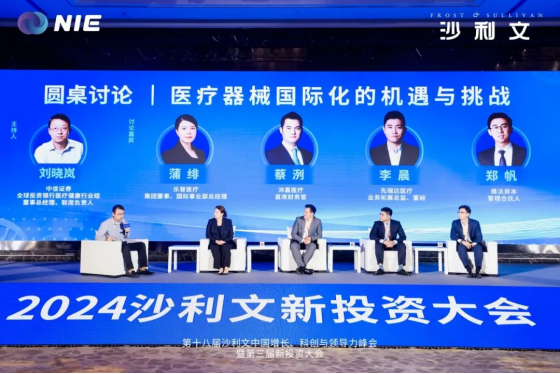
Pu Fei, Director of Leopu Medical Group and General Manager of the International Business Department; Cai Lin, Chief Financial Officer of Peijia Medical; Li Chen, Director of Business Development and Secretary of the Board of Directors at Xianruida Medical; and Zheng Fan, Managing Partner of Yafacapital, discussed the theme 'Opportunities and Challenges of Internationalizing Medical Devices' together. The moderator of this roundtable session was Liu Xiaolan, Managing Director and Co-Head of the Healthcare Industry Group at CITIC Securities Global Investment Banking.
Q
A
&
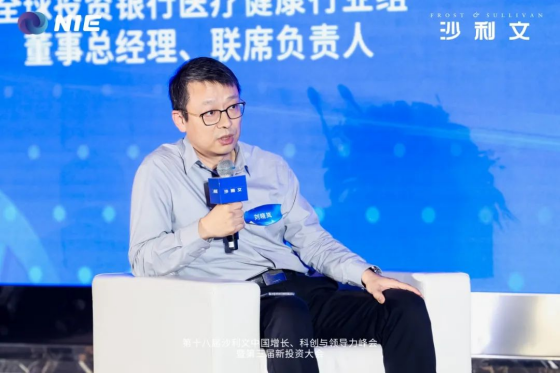 Managing Director and Co-Head of the Healthcare Industry Group at CITIC Securities Global Investment Banking Liu Xiaolan
Liu Xiaolan Against the backdrop of an enterprise's internationalization strategy, how does it plan for overseas market expansion based on product characteristics and market demand? What types of products does the enterprise choose to export and to which target markets? Moreover, what are the main motivations behind the enterprise's promotion of its internationalization strategy? Is it to cope with fierce competition in the domestic market, or is it aimed at promoting technological innovation to global markets in order to enhance its global influence?
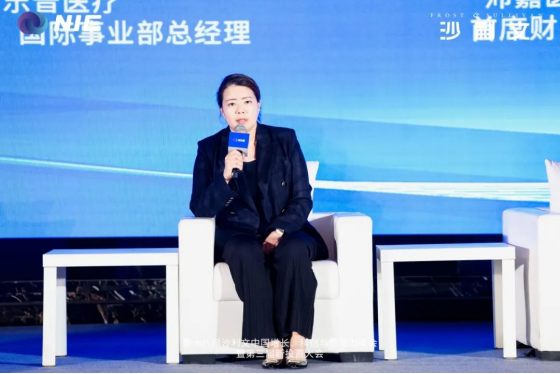 Director of Leopu Medical Group and General Manager of International Business Department Pu Fei
Pu Fei : Lepu Medical has made remarkable progress in its international layout in recent years, with international sales accounting for10%-15%, reaching 1.4 billion last year, mainly including medical devices and pharmaceuticals. In the field of medical devices, Lepu mainly engages in export trade to emerging markets; for pharmaceuticals, the company exports mainly in the form of bulk drugs; at the same time, it also has BD deals through licenses.inUse the /out method to introduce new drugs into the European and American markets for financing.
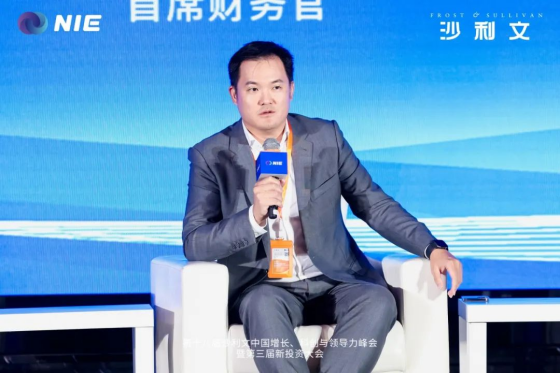 Chief Financial Officer of Peijia Medical Cai Wei
Cai Wei Peijia Medical has been focusing on technological innovation since its establishment, dedicated to developing innovative cutting-edge technology products. Therefore, the company's pipeline is naturally oriented towards the global market, especially in Europe and America where payment capabilities are stronger. Peijia Medical's overseas layout mainly focuses on early research and development and clinical stages.
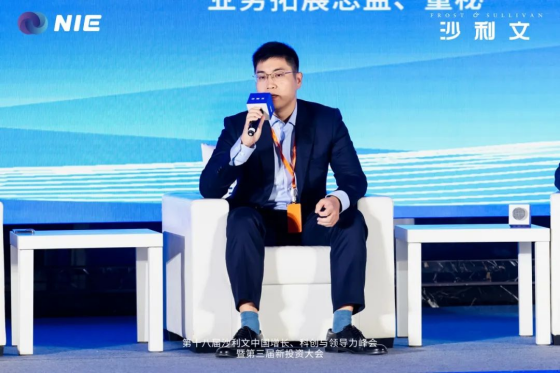 Xianruida's Director of Business Development and Secretary of the Board of Directors Li Chen
Li Chen Xianruida Medical has a certain overseas background since its establishment, and its team has experience in continuous entrepreneurship. The company's commercialization began in the European market, with Xianruida startingIn 2014, it obtained CE certification and obtained Chinese approval in 2016. In its early days, Xianruida mainly focused on the domestic market. At the same time, in the developed medical environment of Europe, it invited KOL doctors and experts to promote its products through clinical trials. Xianruida's drug-coated balloon for knee treatment has excellent clinical performance and received FDA 'Breakthrough Device' certification in 2019, showing great potential in the US market. In 2023, Boston Scientific became one of the controlling shareholders of Xianruida and signed a sales framework agreement that year. Currently, the entire overseas market is mainly sold by Boston Scientific.
Q
A
&
Liu Xiaolan From an industry perspective, what is the general original intention of domestic medical device companies going global? At which stage of internationalization is the entire industry currently at?
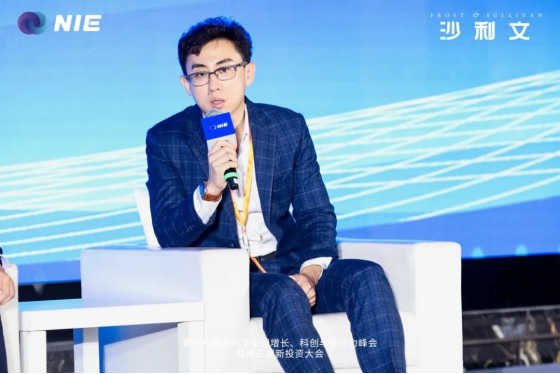 Yafar Capital Management Partner Zheng Fan
Zheng Fan Both Yafar Capital's clients in innovative pharmaceuticals and medical devices are currently in the early stages. Given the company's scale and financial strength, these enterprises do not yet possess the capability to fully expand into overseas markets. The current stage of overseas expansion for the medical device industry isThe innovation drug industry was similar 2-3 years ago, with more and more startups in the medical device sector beginning to plan for international expansion since last year. For these companies, they are currently in the exploration phase of going global. The main motivation for these companies to go global is to cope with the huge competitive pressure in the domestic market. When startups are solving cash flow problems, they naturally consider expanding sales to overseas markets. Medical device companies can quickly form cash flow after obtaining registration certificates, but if they want to rapidly expand their overall revenue scale, they must consider overseas markets. For companies planning future financing, expanding overseas markets to increase revenue channels is an indispensable part of the strategic planning of startups in the medical device sector.
Liu Xiaolan From the perspective of each company, what are our competitive advantages when our product business goes global? What challenges do we face, and are they mainly related to product access or channel marketing?
Pu Fei Leptor's medical device products have a clear cost-performance advantage when going global. In emerging markets such as Brazil, India, and Southeast Asia, local medical devices lag behind those in China.Over the next 10 to 15 years, this provides us with an opportunity to rapidly capture market share. However, our challenge lies in not being able to directly reach the end market and limited investment, mainly relying on distribution channels to obtain 10% to 15% of the market share. In the field of generic drugs, we face price challenges from Indian competitors, who have communication advantages with the FDA, CE, and large European and American companies. Nevertheless, the efficiency of domestic generic drug exports has gradually improved and costs have been declining year by year, making us more competitive in the international market. In the fields of innovative drugs and medical devices, our biggest challenges are R&D capabilities and high clinical costs. However, in recent years, capital has driven Chinese enterprises overseas and cooperation with local strong partners has helped Chinese enterprises make progress in European and American markets. Looking ahead, China's medical devices are expected to move towards the global forefront.
Cai Wei Peijia focuses on innovation in high-value consumables. Compared to other consumable industry companies, Chinese enterprises have a global leading advantage in manufacturing capabilities and the dividends of engineers. In the niche field of innovative consumables, our advantage is not limited to cost but also lies in our rapid conversion ability from concept to product. However, innovative products require a large amount of validation and market education, posing certain challenges in terms of access and sales expansion. It is believed that the efficacy and innovation of high-value consumables will help overcome these challenges.
Li Chen When considering overseas markets, the first issue we face is limited resources, especially in building sales channels in the United States, which requires very meticulous contact and understanding of segmented channels.Due to the monopoly of MNCs and the difficulty for new manufacturers to enter the market, we choose to sell with local partners. Due to limited resources, our strategy is to select products carefully, choosing those that are promoted in the US market after studying the differences between Chinese and American payment systems. While maintaining innovation, we also focus on cash flow and the stability of business operations, being very cautious in product selection and decision-making. We believe that after difficult times, Chinese medical device companies will be able to enter a healthy operating model that pays more attention to innovation and overseas markets.
Liu Xiaolan When considering outbound strategies, one approach is to strengthen the sales network by collaborating with local distributors; another strategy is to introduce partners at the product entry stage, such aslicense number Outlining the methods of collaborating with large multinational corporations, it's not only possible to utilize their marketing channels but also their clinical resources and physician education programs. Which strategy do you prefer?
Zheng Fan The usual model for innovative drugs going global is through cooperation with overseas partners, who are responsible for market access, clinical trials, and obtaining regulatory approvals. The advantage of this model is that overseas companies are more familiar with local markets, including expert resources, funding, and the design of clinical trials. They also have more experience in these areas. In addition, this model can also alleviate the financial pressure on domestic enterprises. Therefore, whether the medical device industry will also consider similar strategies may require listening to the opinions of other guests.
Li Chen Enterprises at different development stages have different needs. For Xianruida, due to our overseas background, we received assistance from overseas experts at the initial stage. Whether it's in terms of physician channels, the selection of clinical centers,The selection of CRO companies, etc., have prepared us for negotiations with companies like Boston Scientific. Devices are slightly different from drugs, with medical device MNCs tending towards later stages. Device companies must at least obtain IDEs to attract potential partners' interest. I believe that a comprehensive consideration and selection should be based on the specific circumstances of each company.
Cai Wei From a macro perspective, when owning an asset, one needs to consider when to find a partner for part of the equity. This issue is similar to investment decisions. We are clearly aware that we cannot establish our own commercial team in the short term, so we prefer to find partners early on. Although they may acquire products at a lower price, they also bear the risks and capital investment involved in product development. At this stage, overseas clinical trials represent a significant burden for us. While we are looking for partners, we are also preparing to move forward on our own. For Peijia, timing is not the key; as long as it is appropriate, any time is reasonable.
Pu Fei Leepu is currently conducting somelicense number Outbound transactions, such as the cooperation between Leopu Biology and AstraZeneca, as well as the GLP-1 project with European and American companies in the future. From a strategic perspective, decision-makers may feel confused because everyone is doing it, so they also try to do it themselves. However, when implementing details, we need to consider the purpose of implementation. To avoid blind following, we need to take into account the differences in products and company strength. For example, the difference between drugs and medical devices lies in the fact that drug research and development costs are higher and entry is more difficult. Therefore, for Chinese enterprises, licensing Out has an advantage, as we do not have sufficient funds and capabilities to bear the risk of drug failure in clinical trials or marketing. For devices, the cost of obtaining FDA or CE certification can be addressed by most listed companies through budget cuts, seeking bank loans, or investors. license Out should aim for commercialization as its ultimate goal. It is necessary to consider whether licensing the product to large companies like Boston Scientific can truly lead to commercial success; this product may be a very small part of their product portfolio. Commercialization could be more successful if these costs are used to find stronger local distributors or establish an in-house sales team. Therefore, we sometimes pause our thinking during negotiations for long-term strategic purposes.
Liu Xiaolan There are differences in the strategies for medical devices and drugs going global. For drugs,license number Out is quite common, and there have been many hit products on the market. However, the segmented market for medical devices is more detailed, and the license for medical devices Will Out become as widespread as medication?
Pu Fei medical deviceslicense number In the next few years, outbound shipments may gradually increase. For example, in markets where some Chinese companies find it difficult to enter, such as Russia and Saudi Arabia, we may choose to cooperate with local partners because the risks of direct entry into these markets are higher. In Russia, due to geopolitical issues, we may choose to outsource to local enterprises. In Saudi Arabia, due to the higher recognition of European and American products in the market compared to Chinese products, the return on investment may not be proportional to the output. Therefore, we may choose to cooperate with enterprises willing to take over the local market, and this trend is expected to continue.
Cai Wei There are indeed differences between drugs and medical devices. This is because drug clinical data have a statistical basis and can be objectively recognized. For medical devices, especially innovative consumables, their clinical effectiveness depends not only on clinical statistical data but also on subjective feedback from users. Over time, the innovative consumable industry in Chinalicense number Outflows are expected to increase. China's manufacturing level leads globally, and as Chinese doctors become more involved in the early development of innovative products rather than verification trials, more doctors and engineers who understand the integration of medicine and engineering will be trained. These doctors will become an important driving force for innovative consumables. As the recognition of innovative consumables in China increases, overseas markets and doctors will also become more receptive to Chinese innovative products.
Li Chen medical deviceslicense number The number of outs is significantly lower compared to drugs, which may be due to the relatively small market share of individual medical devices, insufficient to attract giant companies to license. Out, giant companies tend to acquire companies directly because the other party is large enough. In addition, medical device licenses The definition of 'out' is not clear, and the drug's license The definition of 'out' is not as applicable from the perspective of medical devices, as many medical device know-how have not yet formed protected patents. With the expansion of the scale and enhancement of R&D capabilities of Chinese platform companies, it is expected that MNCs will increasingly engage in cooperation through agency, commissioned production, etc., but acquisition may still be the main approach in the coming years.
Liu Xiaolan From the perspective of industry development trends, what trends will trading show in the future?
Zheng Fan In the field of medical devices,license plate Out may not be as common as in the field of innovative drugs, because of the Top line is usually lower than that of innovative drugs. In addition, medical devices are updated and iterated at a very fast pace, while licenses Outbound transactions typically involve products with clear definitions. Therefore, license The out-trade model may not be very suitable for the medical device industry. In the medical device industry, the model of cooperation with distributors may be the most common. In addition, strategic investment is also a possibility; investors may first make minority equity investments to obtain overall agency rights, and if the product sells well as a whole, they may make an acquisition. In the future, it is expected that the cooperation model between Chinese companies and overseas distributors will increase. At the same time, strategic investment will also become a trend in the medical device industry. In some high-end medical device areas, there may be some licensing. Outbound cases, but the number is relatively small.




