



2On August 29, 2024, Frost & Sullivan (Frost &The 18th Frost & Sullivan China Growth, Innovation and Leadership Summit and the 3rd New Investment Conference (referred to as The '2024 Frost & Sullivan New Investment Conference' and the ESG & New Productivity Summit Forum were grandly held at the Shanghai Jing'an Ruiji Hotel. With the theme of 'Leading New Productivity, Collaborating for a New ESG Future', the forum brought together industry experts, ESG & new productivity enterprises, investment institutions, and professional service providers. It focused on new investment and financing opportunities in ESG and new productivity, and jointly explored successful paths in the capital market.
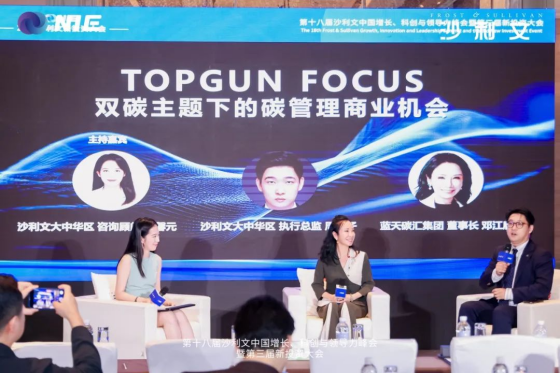
On the sub-forums, blue Deng Jiangying, Chairman of Tian Carbon Sink Asset Management Company, and Zhou Mingzi, Executive Director of Frost & Sullivan Greater China, discussedThe topic 'Carbon Management Business Opportunities under the Dual Carbon Theme' was discussed. This TopGun Frost & Sullivan's Executive Director for Greater China, Zhou Mingzi, and Chairman of Blue Sky Carbon Sink Asset Management Company, Deng Jiangying, participated in the discussion as guests, with Miao Xinyuan, a consulting advisor from Frost & Sullivan's Greater China region, serving as the moderator.
Q
A
&
Miao Xinyuan Which type of carbon asset is favored by the market more?
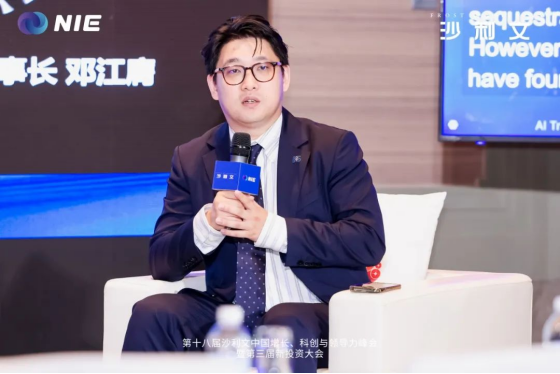 Executive Director, Greater China, Frost & Sullivan Zhou Mingzi
Zhou Mingzi: Compared with engineered carbon sinks, natural carbon sinks are more recognizable and receive more market attention. Carbon assets are divided into natural carbon sinks and engineered carbon sinks. Natural carbon sinks sequester carbon through natural ecosystems such as forests and oceans; engineered carbon sinks sequester carbon through carbon capture technologies (CCUS). Compared to engineered carbon sinks, natural assets are more identifiable, which is why investors currently have a higher preference for natural assets in the capital market.
Currently, the downstream market is divided into several types of players:1) High-carbon-emitting enterprises achieve corporate social responsibility (CSR) through carbon assets; 2) Investors obtain investment returns by investing in carbon assets; 3) International financiers use carbon assets as collateral for innovative assets to realize more diversified financing models.
Miao Xinyuan What are the challenges in ensuring the effectiveness of carbon assets?
Zhou Mingzi: Quantifying carbon assets is the key. The industry's difficulty lies in the quantification of carbon assets. Carbon assets are an intangible asset, and currently, the quantification of carbon assets is more focused on outcomes, that is, what practical value has been realized for local enterprises, governments, and other stakeholders by purchasing carbon assets. For different stakeholders, the opportunity cost of carbon assets varies, which leads to subjective pricing of carbon assets. Whether the price is determined by buyers or sellers is still under discussion.
Miao Xinyuan As a star enterprise in the carbon asset management industry, what is the reason and original intention behind Blue Sky Carbon Sink's focus on forest carbon sinks?
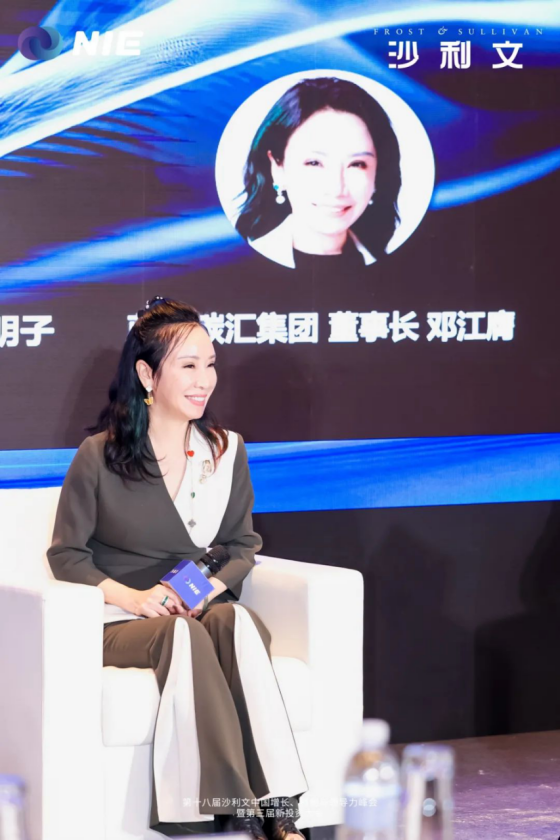 Chairman of Blue Sky Carbon Sink Deng Jiangying
Deng Jiangying : The company has established close cooperation with many leading universities in the field of satellite remote sensing to achieve the recognition and assessment of forest carbon sink assets. Among various carbon assets, forest carbon sinks are the most scarce. Lantian Carbon Sink pays attention to forest carbon sinks for two reasons: on the one hand, due to the use of engineered carbon sinks.Technologies such as CCUS are costly, and compared to engineering-based carbon sinks, forest carbon sinks are more economically viable for assessment. On the other hand, Blue Sky Carbon Sink has formed close technical cooperation with major universities, dedicated to inventorying forest carbon sinks in underdeveloped countries through scientific and technological means.
Miao Xinyuan What is the current status of forest carbon sinks in the carbon market? What challenges do they face?
Deng Jiangying : The theoretical value of forest carbon sinks is high, but their practical application is insufficient. Although forest carbon sinks are considered the most valuable carbon assets, their trading volume is limited and there are many problems. The key issue lies in the fact that traditional monitoring and development methods are too subjective and rely on manual operations, making it impossible to effectively monitor the status of forest carbon sinks. For example, within a five-year measurement period, forests may be cut down or damaged, and this information may not be discovered in time, leading to problems with carbon sink projects or"Thunderous thunderstorms." Therefore, although forest carbon sinks theoretically possess tremendous market value, their practical shortcomings limit their trading and application.
Miao Xinyuan How to develop forest carbon sink projects efficiently, accurately, and with optimal costs?
Deng Jiangying : Satellite remote sensing and blockchain technology play an extremely important role. Satellite remote sensing technology and blockchain technology play a key role in the development, pricing, monitoring, traceability of forest carbon sinks, and the immutability of data. The application of these technologies has enabled Blue Sky Carbon Sink Company to successfully sign agreements with multiple African countries in a short period of time.A 20-year carbon asset management agreement has been obtained, granting rights to manage, develop and conduct future transactions in the national carbon market. In addition, global carbon inventory checks are underway, and countries need to submit carbon emission plans to the United Nations. The participation of Blue Sky Carbon Sink in these efforts is being considered, and it is hoped that Frost & Sullivan, as a professional organization, can provide advice on how to do so.
Miao Xinyuan How does Blue Sky Carbon Sink establish its technical advantages to support commercial implementation? What are its future development plans?
Deng Jiangying : Develop a carbon sink platform leveraging technological advantages and initiate public welfare support initiatives. Blue Sky Carbon Sink mainly relies on Wuhan University's globally leading carbon sink monitoring technology, closely collaborating with industries. It has attracted top global students and experts to jointly create a high-quality carbon trading platform for the Hong Kong government and plans to implement it in Hong Kong, China. In addition, the company has received extensive support and plans to showcase its achievements next year. The co-founders also possess rich international experience, especially in diplomacy and negotiation in Africa. In the future, the company will initiate public welfare actions to support backward countries in formulating carbon emission plans and report to the United Nations Environment Programme.
Miao Xinyuan For enterprises, how can they ensure the compatibility between technological innovation and existing business models during the process of promoting the dual carbon goal and carbon asset innovation accumulation?
Zhou Mingzi : We can leverage authoritative institutions and technologies to improve the quality and pricing accuracy of carbon assets. Enterprises need to assess the potential of carbon assets and innovate business models to promote the dual carbon goals and the innovation of carbon assets. However, high-quality assessment and pricing of carbon assets still face challenges, mainly due to investors' difficulty in identifying high-quality assets. He suggests that enterprises use the technology of authoritative institutions, such as remote sensing technology, to improve the accuracy and verifiability of carbon assets instead of developing them in-house, so as to more effectively realize commercial value.
Miao Xinyuan What are the main development characteristics of the commercialization and development of the global carbon market at present?
Deng Jiangying : The pricing of carbon assets is closely related to their quality and technical level. The main feature of the current commercialization of carbon markets is through various certification mechanisms such asITMO, REDD, and others conduct carbon sink transactions and face challenges such as price certainty, continuous monitoring, and data accuracy. The possibility of a global unified carbon market in the future is influenced by various factors, including technological progress, market demand, and international cooperation. The pricing power of carbon assets depends on the level of technology, and high-precision data can enhance the attractiveness and value of carbon assets. In addition, carbon assets are not limited to the liquidity generated by exchanges; their value and liquidity can also be increased through various financial means.
Miao Xinyuan What is the current business outlook and market ceiling of the carbon asset market?
Zhou Mingzi : The global carbon market size exceeds$300 billion. If the potential market for natural carbon sinks is considered, the annual average commercial value of the global carbon market may exceed$300 billion. However, the standardization of carbon asset pricing and cross-regional transactions remains the main challenge facing the global carbon market. In 2023, the price of 1 million tons of forest carbon credits in Europe reached $25 million, or $25 per ton, while in China, this price could be as low as 25 yuan. This pricing difference reflects the maturity differences in carbon markets between different countries and regions. In terms of cross-regional transactions, the rapid development of the global carbon market in the future depends on the unification of pricing mechanisms and international standardization of transactions. These two core issues will determine the liquidity and commercial value of carbon assets in the global market.
Miao Xinyuan What are the mainstream carbon asset buyers or investors globally and in China?
Deng Jiangying : Carbon asset buyers include real enterprises, financial institutions, the state, and others.
Carbon asset buyers are mainly divided into four categories: The first category is global.Top 500 companies have extremely high requirements for the quality of carbon assets and are willing to pay a high price to obtain flawless carbon assets. These customers pay special attention to the authenticity and long-term reliability of carbon assets. The remote sensing technology of Wuhan University can meet these companies' high-standard requirements for carbon assets, ensuring that the market pricing of carbon assets is credible and competitive.
The second category consists of manufacturing enterprises that have a relatively basic demand for carbon assets, mainly to meet compliance requirements. These customers have relatively lower precision requirements for carbon assets, so they tend to purchase lower-priced carbon assets, such asVCC (VerifiedcarbonCredits).
The third type of customer profile is related toInternational cooperation under the 'Belt and Road' initiative is closely related. China has accumulated a large amount of claims on infrastructure investments in Africa and South America, which can be used as debt offsetting tools to help Chinese enterprises recover these claims. Deng Jiangying also mentioned that cooperation with institutions such as Wuhan University and CEC is promoting research in this area, aiming to convert these claims into carbon assets to support China's strategic layout in the global carbon market.
The fourth type of customer is financial institutions, which seek value-added opportunities in long-term investments in carbon assets, selling carbon assets when market prices rise to make profits.
Miao Xinyuan In the global carbon market, how do Chinese enterprises position themselves and how do they utilize their advantages for global layout?
Deng Jiangying : Chinese enterprises should occupy a favorable position in the global carbon market through technological innovation and international cooperation.
Firstly, Chinese enterprises should continue to strengthen cooperation with international research institutions, such as remote sensing technology collaborations with universities like Wuhan University, to ensure the quality and reliability of carbon assets.
Secondly, Chinese enterprises should actively participateInternational cooperation projects under the 'Belt and Road' initiative achieve debt recovery and carbon asset reserves through infrastructure investment and carbon asset trading. This not only helps Chinese enterprises strategically position themselves in the global carbon market but also promotes international cooperation and sustainable development.
Finally, Chinese enterprises should make full use of their technological advantages to acquire low-cost carbon assets in countries such as Africa to solve their domestic debt problems. Through cooperation with international organizations such as the United Nations, Chinese enterprises can help develop African countries while also reserving a large amount of low-cost carbon assets for China.
"TheTopGunFocus > Leading Business Focuses Frost & Sullivan's 'Frost & Sullivan Briefs' is a dialogue series dedicated to business leaders and industry pioneers. It focuses on cutting-edge industry trends and corporate innovation practices, aiming to provide institutional investors and entrepreneurs with the most insightful future business judgments, as well as reveal related opportunities and challenges.TopGun Focus comprehensively covers various sectors such as artificial intelligence, green economy, healthcare, and new consumption. Important content for each issue will be pushed to mainstream Chinese investment institutions, providing investors and analysts with forward-looking industry perspectives. If you are interested in this column, please contact our corporate service editor Ms. Miao Xinyuan for business cooperation.
Miao Xinyuan
Frost & Sullivan Greater China Regional Consulting Advisor
Email:cindy.miao@frostchina.com




