



On September 27, 2022, the first New Investment Expo and the 16th Frost & Sullivan Global Growth, Innovation and Leadership Summit (hereinafter referred to as the 'Conference') were held at the Shanghai International Convention Center. This year's Conference was organized by Frost & Sullivan (Frost &Frost & Sullivan, abbreviated as 'Frost & Sullivan', co-hosted with Titanium Media and Roadshow China, and co-organized by LeadLeo. The conference is dedicated to creating the premier platform for corporate investment and financing, contributing to sustainable and high-quality development.
At the main conference forum, Mr. Wang Chenhui, Partner-in-Chief of Frost & Sullivan Greater China, Co-founder and President of LeadLeo, releasedChina Private Equity Fund Industry CFO White Paper 2022: The Digital Transformation of Private Equity CFOs Aligns with the New Era's Development Trends (hereinafter referred to as 'White Paper') and was jointly released with Mr. Jin Dewei, Chairman of Meishit Technology, and '2022 VC/PE Firm's Best CFO' Top10" list.
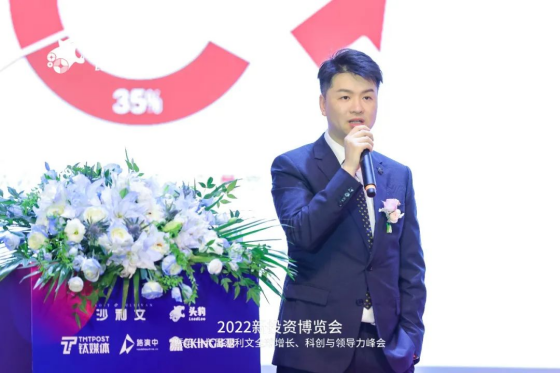
Mr. Wang Chenhui, Partner-in-Chief of Frost & Sullivan Greater China, Co-founder and President of LeadLeo
In recognitionThe important role played by the CFO community in the booming development of China's VC/PE industry, Frost & Sullivan in collaboration with LeadLeo Research has selected the 'Best CFOs of 2022 in VC/PE Firms' based on five dimensions. Top10" list.
The ranking selection is based on five dimensions:CFO personal resume indicators, the VC/PE institution where the CFO works, the CFO's financial digitization capabilities, the CFO's involvement in the institution's investment business, and the CFO's participation in the institution's operational decision-making.
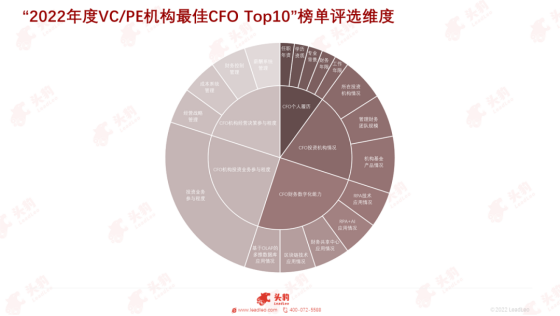
Through the research and analysis of objective data indicators, combined with interviews with dozens of private equity fund managersIn-depth CFO interviews conducted by Frost & Sullivan in collaboration with LeadLeo, have officially released the 'Best CFOs at VC/PE Firms for 2022'. Top10" list.
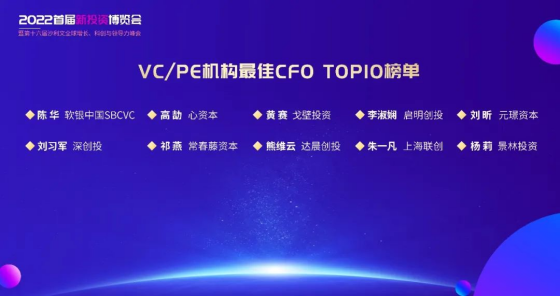

At the event site, Mr. Wang Chenhui, Managing Partner and Executive Vice President of Frost & Sullivan Greater China Region, Co-founder and President of LeadLeo, and Mr. Kim Dewei, Chairman of Meishit Technology, jointly presented the award-winning list for the eventCFO of VC/PE Firm with the Most Outstanding Performance in 2022 Top10" award.
Highlights on the listMr. Xiong Weiyun
Mr. Xiong Weiyun, Partner and Chief Financial Officer at Dacheng Venture Capital, a Certified Public Accountant in China. He has previously worked at large state-owned enterprises and listed companies.With 20 years of experience in financial management in the investment industry, proficient in enterprise budget management and skilled in enterprise risk control.
Highlights on the listMr. Zhu Yifan
Mr. Zhu Yifan, Managing Partner at Shanghai LianchuangCFO, responsible for the company's financial decision-making, fund operations, project risk control, and post-investment management. Mr. Zhu Yifan is a senior financial professional with in-depth research and rich experience in risk management and investor relations maintenance. He also holds a law degree and is a Certified Private Equity Financial Officer (CVCFO) board member.
Highlights on the listMs. Gao Jie
Ms. Gao Jie, co-founder of Heart Capital andPrior to founding Xinchankai Capital, CFO, he held the position of CFO at Opticspeed China. With many years of experience as a senior executive in international top consulting firms, he has actively participated in the organization and activities of various international professional organizations. He worked at McKinsey & Company for 19 years, holding positions such as Financial Controller for the Greater China region.
Highlights on the listMs. Yang Li
Ms. Yang Li, the Financial Director of Jinglin Equity Investment, is responsible for managing the financial and tax affairs of the company and investment funds, as well as participating in fund compliance, fundraising, and investor relations operations. She has extensive financial and operational experience. A seasoned fund financial professional with overOver the past 10 years, Jinglin has been one of the few professional investment institutions that possess teams dedicated to both the primary and secondary markets.
Highlights on the listMs. Qi Yan
Ms. Qi Yan, engaged in financial workOver 20 years of experience, with over 12 years of financial management work in the private equity (equity, securities) industry as a supervisor. With comprehensive financial management capabilities, as well as expertise in mid- and back-office legal compliance, operations, human resources, administrative coordination, and management integration, the candidate is a senior financial professional who focuses onInvestments and project management in the field of ABCD+IoT.
Highlights on the listMr. Liu Xin
Mr. Liu Xin, serving asThe CFO and COO positions are responsible for the financial and operational management of funds, investor relations, and the management and exit of fund projects. The individual is a senior fund financial professional with nearly 20 years of experience in financial management, auditing, financial due diligence, and tax planning. They serve as a director on the board of the China Venture Capital CFO Association (CVCFO).
Highlights on the listMr. Huang Sai
Mr. Huang Sai, currently the Chief Financial Officer of the Gobi Fund,Since 2004, he has been mainly responsible for the daily financial management of the fund at the Gobi Fund. He oversees the progress of project companies and conducts financial due diligence on potential investment targets. He is a senior fund financial professional with nearly 20 years of experience in financial management, auditing, financial due diligence, and tax planning. He is also a director of the board of directors of the China Venture Capital and Private Equity CFO Association (CVCFO).
Highlights on the listMs. Li Shuxian
Ms. Li Shuxian, Partner and Chief Financial Officer of Qiming Venture Capital, Ms. Li is a senior fund financial professional with many years of experience in US dollar fund operations. She holds dual qualifications in finance and law and is in charge of coordinating the company's finance and legal affairs.COO, is a member of the board of directors of the China Venture Capital Finance Directors Association (CVCFO).
Highlights on the listMs. Chen Hua
Ms. Chen Hua, with extensive experience in finance and operational management within the asset management industry,Ms. Chen Hua joined SoftBank China in 2010 and currently serves as a Capital Partner and Chief Financial Officer at SoftBank China. She is a senior fund financial professional familiar with the operation models of RMB and US dollar funds, and has extensive experience in post-investment project management. She is also a member of the Board of Directors of the China Venture Capital Finance Officers Association (CVCFO).
Highlights on the listMr. Liu Xijun
Mr. Liu Xijun, a permanent member of the Group Investment Decision-making Committee of Shenzhen Innovation Investment Group Co., Ltd.,Mr. Liu Xijun joined Shenzhen Venture Capital Group (SVC) at the time of the company's establishment in 1999. He has held various positions including Senior Manager, Deputy General Manager, and General Manager of the Capital Finance Department. For a long time, he has been in charge of the company's financial due diligence, financing management, accounting, financial management, fund management, and other related work. Mr. Liu is a senior financial professional with many years of experience in state-owned enterprise management and rich tax handling expertise.
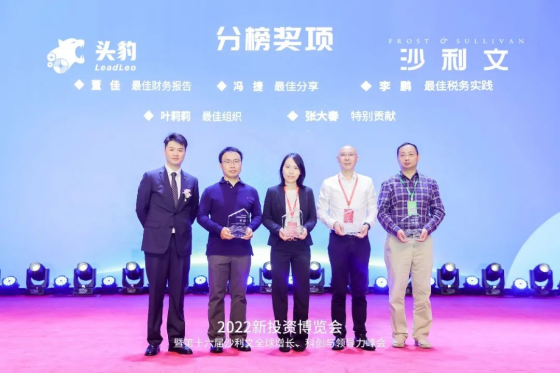
Mr. Wang Chenhui presented the sub-table awards to some of the listed guests
Highlights on the listMr. Zhang Dachun
Mr. Zhang Dachun is currently serving as aMr. Zhang Dachun holds the position of Secretary to the Board of Directors of A-share listed companies, and also serves as a director of White Elephant Food Co., Ltd. and a supervisor of Sichuan Zhongguang Lightning Protection Technology Co., Ltd. Mr. Zhang is a senior financial professional who has played a proactive role in promoting the standardized development of RMB funds in China and has made significant contributions to the field of RMB fund compliance.
Highlights on the listMr. Feng Jie
Mr. Feng Jie is a financial and tax professional with his own personal self-media account, playing a very active role in the field of financial and tax education. He has served as a partner andThe role of CFO.
Highlights on the listMs. Yang Li
Ms. Yang Li, Chief Financial Officer of China Private Equity Finance AssociationSecretary of the China Venture Capital and Private Equity CFO Association (CVCFO), responsible for the daily operations of the association and playing a positive role in promoting the industry's development.
Highlights on the listMr. Li Peng
Mr. Li Peng, currently serving as the CEO of a company planning to go publicCFO, who has held the position of CFO at several early-stage funds including Zhiji Investment. Mr. Li Peng is an expert in taxation and has negotiated for a large number of tax incentives and refunds for fund investors through Tongguo Negotiation.
Highlights on the listMs. Dong Jia
Ms. Dong Jia, Chief Financial Officer of Shanghai Lianchuang, with overWith 14 years of professional financial service experience in the fund industry, Ms. Dong Jia was one of the first professionals to introduce the mature financial reporting and valuation practices of US dollar funds to RMB funds, helping to enhance the transparency of RMB funds. Ms. Dong Jia has rich experience in investor communication and has received unanimous praise from investors.
In this white paper research, a questionnaire survey combined with interviews was conducted. The respondents wereA CFO from a leading 80-member Chinese VC/PE firm, who has gained an in-depth understanding of the functional changes in contemporary private equity fund CFOs and their digital application in financial and investment work. Unlike CFOs in other industries, the role of a private equity fund CFO in China is no longer that of a traditional 'bookkeeper,' but rather involves devoting more energy to the entire investment lifecycle of 'fund raising, investment management, and exit.' The digital transformation of finance can provide strong support for CFOs to shift their focus from investment work, and technologies such as RPA and AI also offer a solid technical foundation for financial automation.
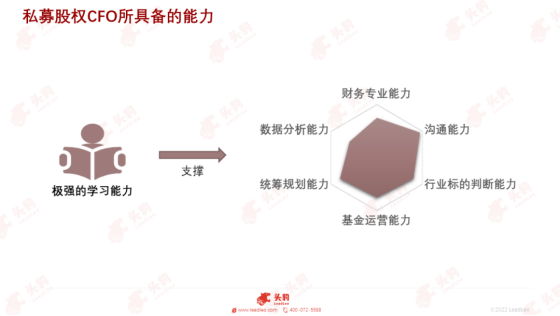
private equityThe CFO has extremely high requirements for comprehensive capabilities, which differ from those of CFOs in traditional industries. Their skill set is broader and they need to possess strong learning abilities to cope with unpredictable policies and regulations as well as the ever-changing development of industry tracks.
"
Through dozens of private equityIn our interviews with CFOs, we found that an excellent and competent private equity CFO needs to possess a range of capabilities including financial expertise, data analysis skills, communication abilities, industry target judgment, fund operation capabilities, and overall planning skills. The foundation of these sub-capabilities is a strong self-learning ability. In the private equity industry, regulations are introduced and accounting policies change frequently, which can affect financial personnel's understanding of reports and data judgment. Therefore, private equity CFOs need to have a keen sense and rapid learning ability to adapt to policy changes. Additionally, private equity CFOs must also learn and understand the industries and tracks they invest in in a timely manner to better judge and handle fund financial work.
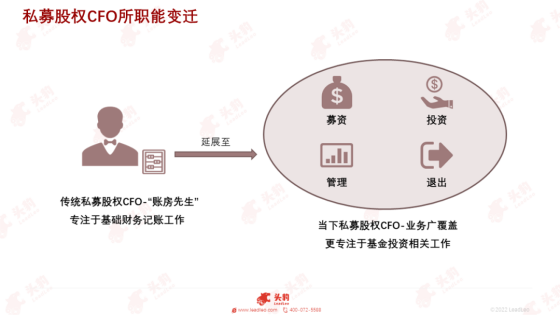
private equityThe CFO role has evolved from the traditional 'bookkeeper' to encompassing the entire 'fund raising, investment management, and exit' process. Most private equity CFOs spend 60%-80% of their energy on investment-related work.
"
Through dozens of private equityFrom the CFO interviews, it is evident that CFOs in the private equity investment industry differ from those in traditional industries. They not only need to fulfill the responsibilities of a traditional 'bookkeeper' but also take on related functions of fund investment. Many private equity CFOs have stated that investment-related work occupies 60%-80% of their energy, with only a small portion dedicated to basic accounting work. At the same time, for different funds and institutions, the focus of private equity CFOs in various participating stages may shift. Generally speaking, larger institutions have more complete organizational structures and a more decentralized division of labor across investment stages, requiring the CFO to undertake more detailed investment functions. Smaller institutions require CFOs to be more involved and control over fundraising, investment, management, and exit activities.
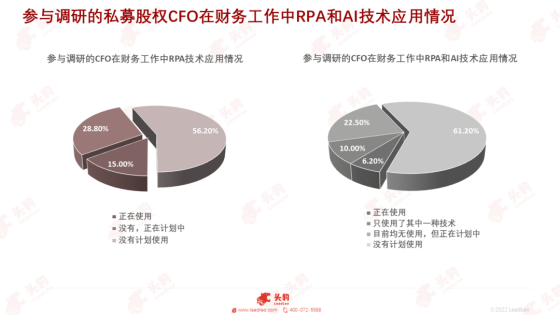
RPA technology can assist financial staff in completing repetitive and standardized basic financial tasks, allowing them to devote more energy to investment business. However, through research, we found that VC/PE financial teams have a relatively low adoption rate of RPA and AI technologies.
"
Application in financial management softwareRPA technology can replace manual operations, assisting financial staff in completing basic financial tasks that involve large volumes of transactions, high repetition, and are easy to standardize. This optimizes financial processes, improves business processing efficiency and quality, and mitigates financial risks. At the same time, the application of RPA technology allows financial staff to devote more energy to value-added businesses, especially investment banking, promoting the digital transformation of investment institutions. Moreover, traditional RPA technology can only automate rule-based and structured data businesses, while the combination of RPA+AI can handle unstructured and complex data businesses.
Participated in the surveyAmong CFOs, only 15% have used RPA technology in their daily financial work, 28.80% have not used RPA technology but are planning to use it, and 56.20% do not have plans to use RPA technology. Additionally, only 6.20% have applied RPA technology and AI technology in their daily financial work simultaneously, while 10.00% have only used one of these technologies.
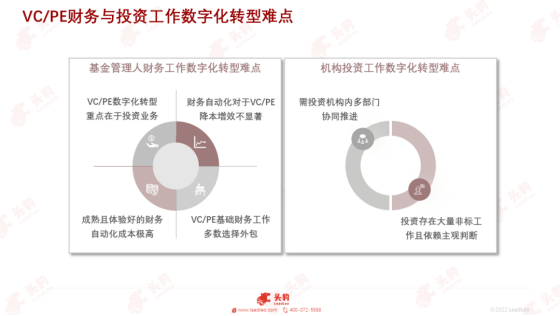
The main difficulties for VC/PE firms in digitizing the basic financial work of fund managers include low cost-effectiveness of introducing RPA technology, and insignificant cost reduction and efficiency improvement; digital transformation in investment work is limited by a large number of non-standard processes that rely on subjective judgment.
"
Regarding the digital transformation of fund managers' own financial work, in the context of participating in theAmong CFOs, the VC/PE finance teams they manage use financial automation technology at a lower level. The main reasons are:
(1) The VC/PE industry places emphasis on investing in businesses rather than basic financial work for digital transformation;
(2) The scale of investment institutions within the VC/PE industry is generally not large, and the complexity of accounting subjects in the fund industry is far less than that in industries such as consumer goods and manufacturing. The cost reduction and efficiency improvement brought about by introducing RPA automation technology are not significant;
(3) Financial automation software with brand effect, high maturity, and good user experience is very costly for VC/PE institutions. Cost-effectiveness is also one of the considerations during the financial digitization transformation process;
(4) Most VC/PE institutions choose to outsource the financial work of basic fund managers to third parties, thus eliminating the need for introducing financial automation technology.
For the digital transformation of investment businesses, obstaclesThe constraints for VC/PE firms using investment management systems include:
(1) The digital transformation of investment businesses is difficult, not only requiring substantial capital and time investments but also necessitating collaboration among multiple departments within the institution;
(2) There are many non-standard tasks in the full lifecycle of investment business that rely on subjective judgment. For workflow processes with a high degree of non-standardization and customization, the implementation cost of RPA technology is extremely high.
Insights: Although deploying financial automation is fraught with difficulties, mostThe CFO still acknowledges its vision. The application of this technology allows the CFO to devote more energy to investment operations, aligning with the development trend of CFOs in the new era towards a shift in focus from 'fund raising, investment management, and exit' to 'fund raising, investment management, and exit strategy'.
"
at presentVC/PE faces many limitations in applying financial automation technology, and the high deployment costs of financial RPA robots deter major VC/PE institutions. When the institution's own scale is not large, deploying high-cost financial automation robots does not bring significant cost savings and efficiency improvements. However, through interviews with dozens of CFOs, we found that most CFOs express recognition of the vision for financial automation. As CFOs play an increasingly important role in investment businesses, financial automation allows them to spend more time on more valuable work.
Required for financial automationRPA technology is currently entering phase 4.0, which refers to the 'RPA+AI' stage. The domestic RPA market has developed relatively maturely. As the scenario with the highest RPA application rate, finance will mainly maintain a competitive landscape with existing assets over the next 2-3 years. Some incremental growth will come from branches and outlets of banks, securities, insurance companies, as well as a small number of VC/PE investment institutions. With the continuous maturity of RPA technology and intensified market competition, it is expected that the cost of RPA software will continue to decrease over the next five years. By then, the threshold for VC/PE institutions to use financial RPA will be lowered, and 'cost-effectiveness' may no longer be a constraint on their deployment of financial automation. The continuous improvement in financial automation rates can also better adapt to the development trend of CFOs shifting their focus towards investment work.




