


On August 29, 2024, the 18th Frost & Sullivan China Growth, Innovation and Leadership Summit & 3rd New Investment Conference (referred to as '2024 Frost & Sullivan New Investment Conference') ESG and New Productivity Summit Forum was grandly held at the Jing'an Ruiji Hotel in Shanghai. With the theme of 'Leading New Productivity, Mapping a New ESG Future', the forum brought together industry experts, ESG and new productivity enterprises, investment institutions, and professional service providers. It focused on new investment and financing opportunities related to ESG and new productivity, and jointly explored the successful paths in the capital market.
On the sub-forums,Glorious Hydrogen Energy CEO Shen Xiaolong shared a keynote speech titled 'Hydrogen Energy Applications in Offshore Areas and Its Data-driven Governance'. The speech mainly focused on three parts: company introduction, the application of hydrogen energy in offshore areas, and the data-driven governance of hydrogen energy.
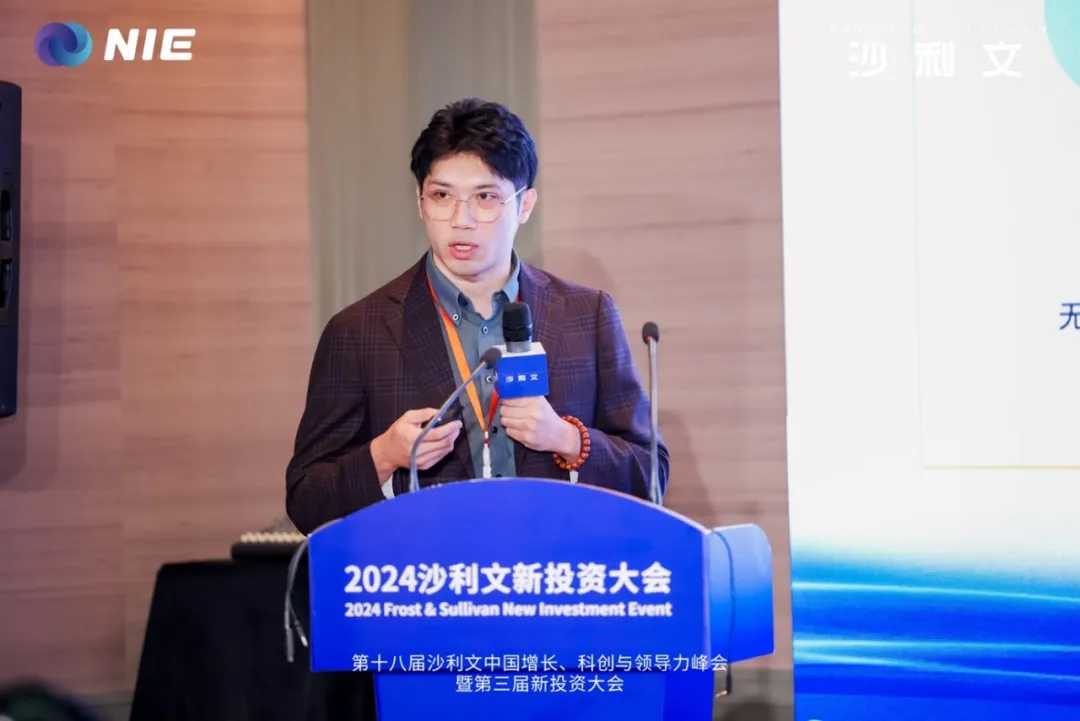
Shen Xiaolong, CEO of Glory Hydrogen Energy
The following are the key points of Shen Xiaolong's speech:
Company Profile
The speech first introduced the glorious hydrogen energy company's development history and core business. Glory Hydrogen Energy was established in 2014, positioning itself as a leading comprehensive fuel cell technology brand in China. The company began to focus on hydrogen energy technology as early as 2015 when China's hydrogen energy industry was just emerging, and officially entered the hydrogen energy industry in 2016. Initially, the company focused on fuel cell and hydrogen energy-related data monitoring and system optimization, gradually accumulating a wealth of industry experience. By 2017, Glory Hydrogen Energy had begun to make breakthroughs in the field of automotive fuel cells, developing and promoting related products. By 2021, the company's business had further expanded into the field of marine applications, especially the application of hydrogen fuel cells in offshore ships.
Currently, Guangrong Hydrogen Energy has established a complete industrial chain covering core component design, research and development to downstream applications. Guangrong Hydrogen Energy's product line has been widely applied in fields such as automotive, marine, and stationary power generation, featuring strong coupling properties and broad market prospects. Through continuous technological optimization and data accumulation, the company has formed a comprehensive set of data resources covering 30 million kilometers of driving records and fuel cell operation conditions, laying a solid foundation for its leading technical position in the industry.
Hydrogen energy applications in offshore areas
Firstly, the application of hydrogen fuel cell technology in offshore ships has multiple advantages. Traditional ships, especially those using diesel internal combustion engines or gas turbines, directly discharge exhaust gases and pollutants into the sea, which not only lead to increased carbon emissions but also cause serious nitrogen oxide and sulfur dioxide pollution to marine ecosystems. Hydrogen fuel cells generate electricity through electrochemical reactions, producing only water during the process without any harmful substances being emitted, making them an ideal choice for offshore ships to replace traditional energy sources. Additionally, the reaction product of hydrogen fuel cells—water—is clean and even drinkable, meaning that ships no longer pollute the surrounding environment, meeting the requirements of marine ecological protection. Secondly, compared to battery-powered ships, hydrogen fuel cells have a significant advantage in refueling time. The refueling time for hydrogen fuel cell ships developed by Guangrong Hydrogen Energy is about 7 to 10 minutes, which is almost the same as that of traditional fuel ships, greatly maintaining the ship's original operating habits and improving operational efficiency. Compared to the several hours of charging time required for electric ships, the refueling efficiency of hydrogen energy ships undoubtedly has a huge advantage in practical applications. At the same time, the energy conversion efficiency of traditional internal combustion engines is only 20%-25%, while the energy conversion efficiency of hydrogen fuel cells can reach up to 60%. Guangrong Hydrogen Energy is currently exploring the recovery and reuse of waste heat from hydrogen energy release to further improve energy utilization rates. By introducing this heat into the heating system, the energy conversion rate can even reach 80%-90%. This efficient energy utilization means that while reducing energy consumption, hydrogen fuel cells can also provide ships with longer endurance and stronger power output, especially suitable for offshore ships operating for long periods. Finally, hydrogen energy technology can effectively reduce dependence on traditional fossil fuels such as oil, helping to optimize the energy structure. One of the fundamental reasons why the country is vigorously promoting hydrogen energy is to gradually reduce dependence on oil imports and enhance energy security. The promotion and application of hydrogen energy not only meet the strategic needs of the country's energy transformation but also, through distributed energy supply systems, further mitigate the impact of oil shortages on the energy supply chain.
Secondly, the speech reviewed the development process of hydrogen-powered ships globally. Since 2015, the US Department of Energy (DOE) has taken the lead in formulating relevant plans for the application of hydrogen fuel cells in ships, marking a substantial phase in the application of hydrogen energy in the offshore sector. Countries such as Japan and South Korea have followed suit, establishing technical standards for the application of hydrogen energy in ships and investing a significant amount of resources in the development and testing of demonstration projects. Especially in Japan, institutions such as the Legend Society have introduced application standards for hydrogen fuel cell ships operating in multiple systems including gaseous, liquid, and solid states, promoting the application of hydrogen energy in ocean engineering ships.
In China, the research and development of hydrogen fuel cell ships began in 2005. After years of technical accumulation and development, it has gradually expanded from initial small experimental ships to areas with simpler hydrological conditions such as lakes and inland rivers, eventually achieving application in offshore ships. Currently, China's hydrogen-powered ships have reached a system scale of 500 kilowatts and have been successfully applied to offshore operation vessels, marking a breakthrough in hydrogen fuel cell technology in the field of Chinese ships.
Glorious Hydrogen Energy took the lead in promoting the application of hydrogen-powered ships in Hainan Province, helping to build a green ecological island in the province. The geographical location and island characteristics of Hainan Province make offshore ships an important mode of transportation. Glorious Hydrogen Energy has cooperated with the local government to complete the hydrogenation transformation of the first batch of fishing boats and yachts, and has obtained certification from the Chinese Classification Society. These demonstration projects not only mark the technical maturity of Glorious Hydrogen Energy in hydrogen-powered ship applications but also provide a technical foundation and practical experience for future large-scale promotion.
Finally, although the application prospects of hydrogen energy in offshore ships are broad, it also faces practical challenges. Firstly, hydrogen is still classified as a hazardous chemical by many provinces, so its storage and refueling processes require higher safety standards. During ship hydrogen refueling, special attention must be paid to safety in the design of port refueling facilities, the location of hydrogen tanks, and the arrangement of pressurization equipment. These pose practical technical difficulties for the application of hydrogen fuel cell ships. Secondly, the maritime environment's waves and high salinity fog pose significant challenges to the performance of fuel cells, especially requiring special design for water management and water balance of fuel cells. In addition, ions in high-salinity fog at sea may contaminate the air capture process of fuel cells. Therefore, Guangrong Hydrogen Energy has specifically designed an deionization system to ensure the stable operation of fuel cells in harsh marine environments. Lastly, the standards for hydrogen-powered ships vary among countries, especially in international cooperation, where companies need to adapt to different national technical requirements, increasing production costs and technical difficulties due to inconsistent standards. Guangrong Hydrogen Energy actively promotes standardization through in-depth communication with international partners to ensure that its products meet the requirements of global markets.




