



On August 30, 2024, the 18th Frost & Sullivan China Growth, Tech Innovation and Leadership Summit & 3rd New Investment Conference (referred to as '2024 Frost & Sullivan New Investment Conference') - the New Consumption and Food & Beverage Industry Investment Summit - was grandly held at the Jing'an Ruiji Hotel in Shanghai. With the theme of 'Leading Innovation & Co-Creating Trends', the forum invited more than forty heavyweight guests and industry experts, bringing together forces from various sectors such as new consumption industry experts and scholars, industry leaders, innovative enterprises, investment institutions, and professional service agencies to jointly discuss core topics of the new consumption and food & beverage industry, anticipate future diversified consumer needs, and explore new trends and driving forces for industrial innovation and development.
At this forum, Li Wenliang, founder and CEO of Zhihangyihé Group, shared the theme 'From 618 to Double Eleven: An Analysis of the Latest Changes in Online Consumption Trends'. Li Wenliang analyzed in detail the current situation of the Chinese market, pointing out that although demand has stagnated, there are still huge opportunities. He proposed that enterprises should attach importance to user operations, focusing on cultivating user activity and long-term loyalty. By innovating product strategies, setting reasonable price points, and implementing omnichannel promotion methods, enterprises can achieve stable brand growth and increase market share. At the same time, he also mentioned that in a market environment full of variables, brands should maintain keen market insight, seize every opportunity for transformation and upgrading to cope with the challenges of uncertainty.
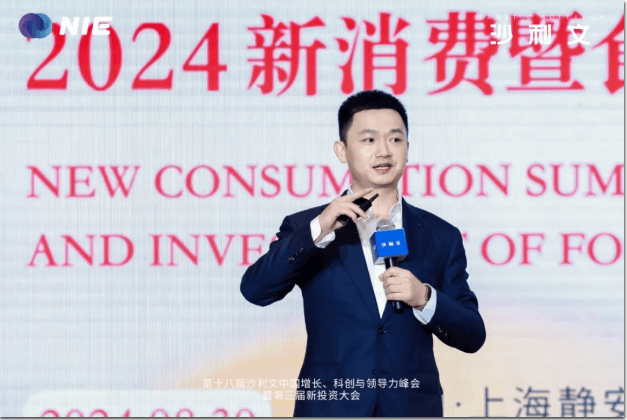
Founder and CEO of Zhihangyi Group, Li Wenliang
The following are the key points of Li Wenliang's speech:
Li Wenliang pointed out that this year's '618' and the upcoming 'Double 11' are crucial junctures for online operations to understand the trends and impacts of consumer industry changes. The price war during this year's '618' highlighted the fierce competition in the online market and reflected the current weak state of the consumer market. In this predicament, it becomes particularly important to grasp the correctness of underlying logic. Li Wenliang uses simple and easy-to-understand language to explain the current trends in online and digital operations, starting from the classic four P's model of product, price, promotion, and channel for analysis.
Price dimension
Firstly, in terms of price, Li Wenliang mentioned that different from traditional consumption concepts, today's consumption trend has evolved into an 'M' shape - meaning that people prefer to buy large quantities of consumer goods, general merchandise, and durable items at low prices, while also willing to pay more for artworks and design-conscious daily necessities. This also implies that the low-end market demands high quality at low prices, bringing new opportunities for enterprises to explore markets and innovate industries; while the development of the front-end market requires deepening product depth and experience to capture market share.
Specifically, the trend of M-type society can be described through three 'overs', namely super cost-effectiveness, value-for-money cost-effectiveness, and super experience. 'Super cost-effectiveness' emphasizes that products should be of high quality for a low price. In essence, products that are both good quality and inexpensive are 'price-segmented'. This trend indicates that setting prices first and then determining products is the key to the current market. From daily necessities priced from 9.9 yuan to 29.9 yuan, to skincare sets priced at 399 yuan in South Korea, they have all subtly established different intermediate price range standards for different categories in the hearts of Chinese consumers. 'Value-for-money cost-effectiveness' emphasizes that products have excellent quality and relatively low prices, showing excellent cost-effectiveness. Finally, there is 'super experience', which does not specifically refer to high-end experiences but emphasizes the special feelings that products bring to consumers. For example, the user experiences of Innovent and NIO cars. These cars are not favored due to their high price, but because they can endow consumers with a unique patriotic sentiment experience, and the self-driving experiences of these products are very superior. Although the product price is in the four or five hundred thousand yuan range, the experience they bring is extraordinary.
Several typical trends have emerged around these three 'super' extensions—affordable prices, segmented upgrades, affordable large bowls, and emotional experiences. Among them, 'affordable large bowls' best reflect consumers' sensitivity to prices.
It is worth noting that all practitioners in the catering, online business, or consumer goods sector should be aware that China's consumption trend has been driven by super platforms such as Kuaishou and Douyin, with their unique influencer distribution operations system, from single-item purchase price habits to the calculation of single-use prices. In the past, consumers were accustomed to considering the overall price of goods, but now they are more concerned with the cost of single use. For example, the price of laundry detergent is calculated based on the cost of washing one piece of clothing, and the single-use price of liver-protecting tablets is twenty yuan per day. Therefore, if there is no recognition of calculating single-use prices, it is difficult for companies to gain a leading position in the future competitive price segments. Li Wenliang said: 'The business that serves the people is the best business.' This awareness is crucial for future competition in terms of price, especially for forming a leading advantage in price segments.
Product dimension
The current explosive product strategy is struggling to generate traffic growth, especially in enterprises that have been operating online for a long time. When brands and growth are not organically unified, it is difficult to continuously acquire high-quality traffic relying solely on explosive product strategies. In response to this challenge, enterprises need to adopt a focused strategy to identify and retain long-term target users. For example, L'Oréal has shown impressive revenue performance both domestically and internationally, but its core strategy is focused on a narrow user group, namely anti-aging elderly people around the age of 25 in urban areas. The brand treats strategic customer groups as the primary users of its products, prioritizing the satisfaction of these needs to ensure the long-term operational returns and market penetration of the brand.
Product development and selection are not easy tasks. Many enterprises, especially brands in the catering industry, excel at positioning and developing hit products, but the challenge they face is insufficient budgets. How to allocate these resources among numerous products with limited advertising budgets becomes a key issue. Therefore, it is crucial to achieve effective expansion and reasonable distribution of products under limited resources—relying on China's complete supply chain system, most brands can achieve a product strength of around '90 points.' When competitors are on the same starting line, the only difference that can widen the gap is in the allocation of product promotion resources. In simple terms, there is only so much money for marketing, and products keep expanding; the question is how to allocate the money.
In summary, most enterprises face two key issues in building product matrices: first, how to allocate limited resources among numerous products; second, how to effectively expand products under limited resource conditions. To solve these problems, enterprises should innovate and establish a branded product matrix, rather than solely relying on ROI and GMV metrics. This strategy ensures the leading position of products within their category. In terms of product development and brand strategy, enterprises need to focus on core users and achieve long-term operational returns through a branded product matrix: identifying products highly relevant to the strategic audience and concentrating resources on these products to ensure maximum user penetration and brand influence. In addition, the branded product matrix also covers the strategies for image products and opportunity products. Image products are invested in at one time and stop once invested, without additional budgetary allocation. Opportunity products are targeted at those categories with high growth potential but low relevance to the strategic audience, requiring profitability to ensure more development opportunities for the brand.
Establishing a branded product matrix is the foundation for stabilizing traffic and the key to achieving product success. The conversion from traffic to user retention is crucial; if customers cannot be retained for a long time, it will greatly affect the development of the brand.
Promotion Dimension
The key to promotion lies in using a language that consumers are more willing to listen to. Li Wenliang took pot rings as an example to illustrate the specific application of this concept. Traditional slogans might say 'Eat hot pot at home, get pot rings', which is more like 'Mom's language', conveying rational and practical information. A more effective approach should start from 'Girlfriend's language', such as 'I had a fight with the boss at work today, so go out for pot rings tonight', which not only reflects cost-effectiveness but also carries a sense of humor, making it easier to resonate with consumers.
The ideal state of product operation is to fully reuse customers, meaning that not only should customers keep repurchasing, but they should also recommend others to buy, indicating that customers are willing to continuously convey the brand's reputation. Winning long-term user choice is key for a brand to achieve sustained growth. Customers continuously choose a brand because it sees them as strategic users and can continuously provide them with value. Therefore, in the digital age, the connection between brand positioning and long-term user choice becomes particularly important. Enterprises need to ensure that every product has the potential for dissemination and interaction before development through content-based product strategies.
Li Wenliang also pointed out that in the digital age, the value of brand positioning is the foundation for users' long-term choice. Today's online consumers have a very different language and communication style from the past, and traditional advertising slogans and communication models from the era of large KV (Knowledge Value) are no longer applicable. Nowadays, semantic recognition and algorithmic recommendation play a greater role in promotion. Therefore, products must consider their contentization potential during the development stage, which Li Wenliang calls the '6S' principle, meaning that products should possess characteristics such as being knowable, visible, observable, perceptible, evolvable, and transmissible from the outset of design.
Channel Dimension
In terms of channel dimensions, Li Wenliang emphasized that to build a brand with true meaningfulness, one must possess operational capabilities across all channels. Among all channel links, it is necessary to design a channel matrix approach, where different channel categories act in accordance with the trend to achieve long-term results.
Firstly, Li Wenliang defined 'channels' as the sum of various links and driving forces that bring goods to consumers' hands. In other words, channels are traffic, and each channel has its unique traffic or customer base. Therefore, the operational capability of a channel is first reflected in the company's mobilization and control capabilities over these links. In this regard, Yade has demonstrated outstanding channel rooting capabilities. Yade owns 47,000 stores, all opened by agents. Yade trains its dealers annually, and its control and mobilization capabilities over these agents are extremely strong, enabling Yade to quickly unify actions nationwide, reflecting the importance of channels as a community outside the corporate system.
The operation of online channels also faces challenges in channel development. Especially in the field of Douyin influencers, many companies are unable to achieve expected returns on this channel due to a lack of leadership and organizational life for Douyin influencers. Li Wenliang mentioned: 'Our customer Wufangzhai often invites Douyin influencers to deeply participate in brand activities and grants them honorary titles, which enhances the connection and sense of honor between influencers and the company. It also reflects the company's cohesion in channel management. This is about treating influencers as one's own channel. As brand owners, one must demonstrate strong mobilization and control capabilities, organize and lead the influencer channel, in order to promote closer cooperation between the influencer channel and the company.'
Li Wenliang believes that there is no essential difference between online and offline channels, the key lies in whether they possess digital capabilities. Single channels often have strong cyclical characteristics, making it difficult for consumers to establish long-term relationships with them. Therefore, companies must clarify the purpose of each channel and make new explorations in channel segmentation to establish the ability for full-channel collaborative operations.
At the end of his speech, Li Wenliang summarized that in the current fierce external environment, enterprises need to return to the essence of their business and respect objective laws. From a framework perspective, it is the synergy formed by products, prices, channels, and promotion that is the key to enterprise success.




