



On August 30th, the 18th Frost & Sullivan China Growth, Innovation and Leadership Summit and the 3rd New Investment Conference (hereinafter referred to as '2024 Frost & Sullivan New Investment Conference') AI Reconstructing the Digital Economy Sub-forum, hosted by Frost & Sullivan, a globally leading growth consulting firm (Frost & Sullivan, abbreviated as 'Frost & Sullivan'), was held in Shanghai.
At the sub-forum, Qin Zengchang, the chief algorithm scientist at Sight Technology, delivered a keynote speech, delving into how AI can enhance profits in the digital intelligence transformation of consumer markets through the process from data to decision-making.
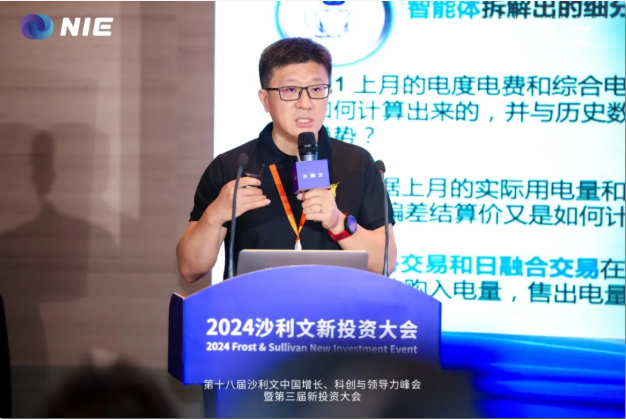
Qin Zengchang, Chief Algorithm Scientist at heSight Technology
Key points from Qin Zengchang's speech below:
According to the classification system of Stuart J.Russell and Peter Norvig, the authors of the famous artificial intelligence textbook, AI can be divided into four major categories: systems that think in human ways, such as technologies inspired by neuroscience or brain-like AI; systems that think rationally, such as applications for optimizing path planning like Didi Chuxing; systems that act in human ways, such as the capabilities demonstrated by bipedal robots; and systems that act rationally. Qin Zengchang stated that AI technology is not limited to imitating human cognitive processes but also includes achieving optimal decision-making and behavioral performance through logic and computation. These diverse AI applications are increasingly infiltrating people's daily lives, driving technological and social development.
However, Qin Zengchang emphasized that despite the current use of large models by many intelligent agents, they still face numerous challenges, especially when dealing with complex tasks in professional business domains. These are mainly reflected in three aspects: First, it is difficult to verify long-chain thinking as the structure of large models is complex and cannot be directly corrected; adjustments can only be made through external prompts. Second, there is a lack of expertise integration capabilities, making it difficult for industry experts' knowledge to be integrated with existing models. Third, cost and efficiency issues are prominent. These factors together constitute the main obstacles for large model intelligent agents in specific business complex task applications.
Qin Zengchang also stated that the Sight has adopted four major strategies to enhance the performance of intelligent agents in complex real-world business tasks: First, it uses tools and small models to build local knowledge as the prior knowledge for the agent; second, it designs end-to-end business logic to simplify user interaction, with the agent completing complex steps and returning results; third, it analyzes causal relationships in complex scenarios to construct nonlinear flowcharts, helping the agent learn optimal processes; fourth, it employs multi-agent collaboration to complete more complex tasks, where each agent possesses memory and task execution capabilities, and can learn and master specific domain tools and technologies to enhance overall capabilities.
Qin Zengchang cited a real case of an outdoor brand. The purpose of this case was to promote the innovation of camping strollers through a multi-agent collaborative system and develop a new multifunctional camping stroller product. First, a strategic agent conducted a comprehensive competitive analysis of the market, identified major competitors, and collected key data. Then, a product R&D agent conducted in-depth research based on this information, finding that usability and quality were the two most concerned elements for consumers. Subsequently, a market agent further explored user needs on social platforms such as Rednote, revealing that camping strollers are not limited to outdoor activities but are also widely used for household shopping and child pick-up and drop-off. This discovery prompted the camping stroller brand to consider adding modular designs and canopy features to broaden the product's range of applications. Through a multi-round feedback loop, the brand continuously adjusted its strategic positioning and product characteristics to ensure that the final camping stroller launched could meet diverse market demands. This process not only enhanced the competitiveness of the product but also provided new perspectives and directions for the company's long-term development.
Qin Zengchang stated that intelligent agents, as a new generation of AI technology, are expected to play an important role in enterprise operations, and he summarized four specific aspects: First, they provide unlimited labor force; intelligent agents can achieve work efficiency equivalent to that of multiple professionals (such as sales directors) at very low costs. Second, they enhance employee capabilities; by empowering employees with AI technology, they improve work efficiency. Third, they automate complex tasks, effectively managing even intricate processes. Fourth, they quickly adapt to market changes, helping enterprises respond to market dynamics in a timely manner.
Finally, Qin Zengchang believes that by deeply exploring the application potential of AI technology, enterprises can transform it into actual business outcomes, create new growth points for the company, and ensure a leading position in industry competition. With the continuous integration of AI technology, theSight believes that the company can better address future challenges and achieve higher efficiency and better performance in specific business scenarios.




