



On August 27th, the 19th Frost & Sullivan Global Growth, Innovation and Leadership Summit and the 4th New Investment Conference (hereinafter referred to as '2025 Frost & Sullivan New Investment Conference') ESG and New Productivity Summit Forum, hosted by the world-leading growth consulting firm Frost & Sullivan (Frost & Sullivan, abbreviated as 'Frost & Sullivan'), was grandly held at the Shanghai Jing'an Shangri-La Hotel. The forum, themed 'Sustainable Development and New Productivity', brought together industry leaders, leading enterprises, investment institutions, and professional service providers. It focused on new investment and financing opportunities in the fields of sustainable development and new productivity, and jointly explored the capital and industrial forces that enable enterprises to navigate through cycles.
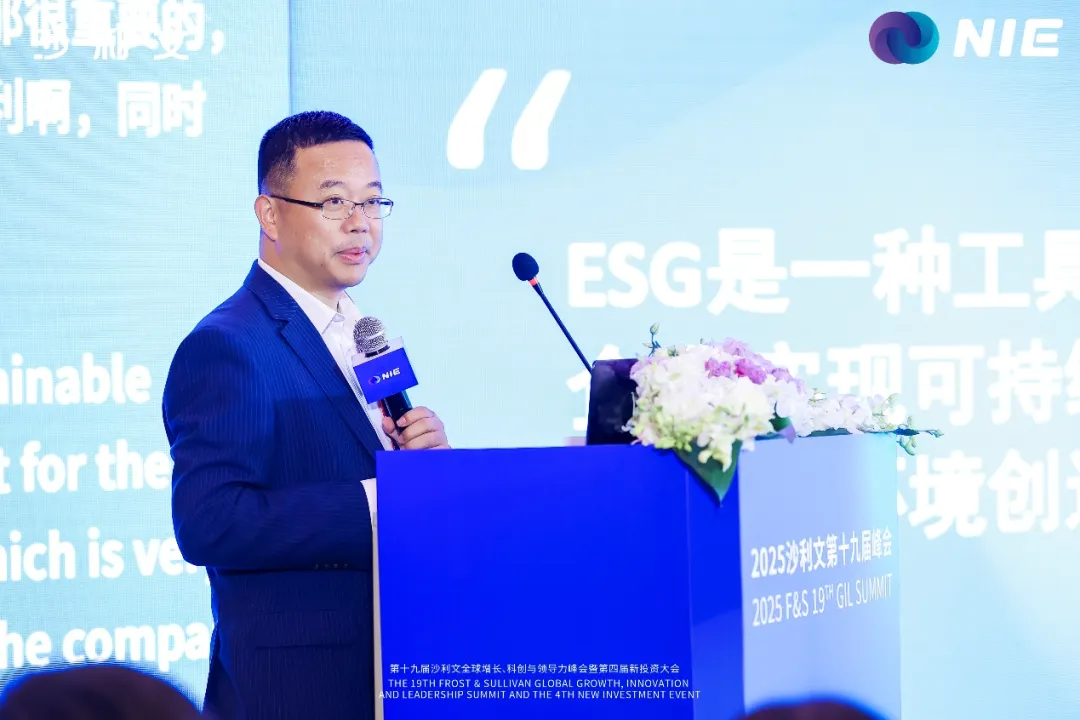
At this forum, Tang Zhehui, Co-Head of Audit Services Markets in Greater China at EY, delivered a speech titled 'When ESG Meets New Productivity, Unleashing a Beautiful Sci-Tech Odyssey'.
Tang Zhehui conducted an in-depth analysis of the current situation after China's economy reached a structural inflection point, as well as trends such as the slowdown in global value chain trade. He also introduced the global leadership of China's climate technology industry in sectors like photovoltaics and energy storage, as well as mergers and acquisitions dynamics. He emphasized the key role of the integration of ESG with new productive forces in the sustainable development and high-quality growth of enterprises, pointing out that the combination of the two can be centered around green, efficient, and safe practices, stimulating the vitality of production factors and helping the Chinese economy break through difficulties and contribute to global green transformation.
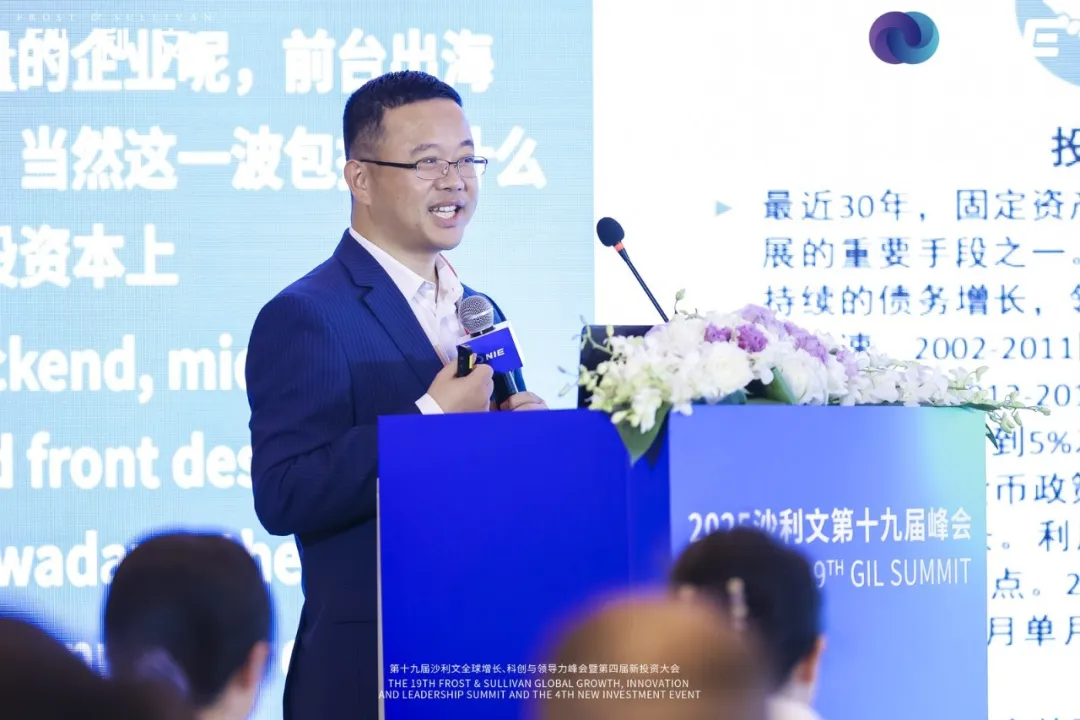
Tang Zhehui, Co-Head of Audit Services Markets, EY Greater China
The following are the key points from Tang Zhehui's speech:
I. Economic Status
Tang Zhehui pointed out that the United Nations Global Compact (UNGC) represents a statement that ESG is a tool, means and approach aimed at promoting sustainable development and long-term profitability of enterprises, while creating value for society and the environment. With the implementation of 'New Development Concepts' proposed in the '14th Five-Year Plan', the implementation of ESG in China has opened a new chapter in history.
In 2021, China's economy experienced a 'structural' inflection point, and the comprehensive green transformation of the economy and society is an urgent necessity.
In terms of investment, fixed asset investment has been an important means of driving the Chinese economy over the past 30 years. Through rapid monetary expansion and continuous debt growth, investment led economic growth ahead of demand. In terms of consumption, the debt burden on residents significantly constrains their consumption capacity. The leverage ratio of the household sector has climbed, with debt balances and repayments accounting for a growing proportion of disposable income. Population aging is accelerating, and it is expected that by 2050, the aging rate will be close to Japan's level. In terms of exports, the restructuring of China's industrial chain supply chain brings both opportunities and challenges. The growth rate of global value chain trade, especially complex value chain trade, has slowed sharply and shows long-term structural changes. Supply chain security has become a focus, and global supply chains are shifting towards regional layout.
II. Climate Technology Industry
Tang Zhehui proposed that 'ESG+ new productive forces' will become the core path to achieving sustainable and high-quality development. Science is the primary productive force, innovation is the driving force, and talent is the primary resource. Green development is the background color of high-quality development, and new productive forces themselves are also green productive forces; at the same time, it is necessary to improve the income distribution mechanism and stimulate the vitality of elements such as labor, knowledge, technology, capital, and data.
Entering the AI2.0 era, artificial intelligence will lead a new round of productivity revolution globally. China has a latecomer advantage in the AI application phase, and AI will penetrate into all scenarios in manufacturing and services, forming symbiosis with energy: energy is the foundation for AI development, while AI promotes energy transformation. The collaborative evolution of the two will reshape the global landscape.
The report 'Empowering Capital, Towards China's Climate Technology Industry by 2060', released at the first Carbon Expo, proposes that with the '3060 Strategy' as a fulcrum, China's climate technology industry is advancing along three dimensions: manufacturing, innovation, and green finance, with a focus on five major sectors: renewable energy, energy storage batteries, synthetic biology, energy conservation and environmental protection, and power batteries. Currently, photovoltaic companies are listed intensively on the Sci-tech Innovation Board (STAR Market), and the capital market is accelerating the growth of the industry.
The 'M&A Wave Rising: China's Climate Technology Industry for 2060', released in 2025, emphasizes the trend of industrial integration and mergers and acquisitions. The report points out that under the guidance of the '3060 Strategy', Made in China, new quality productivity, and industrial mergers and acquisitions will become driving forces. The transaction volume of mergers and acquisitions in nine major sectors such as photovoltaics, energy storage, and new energy vehicles continues to climb, attracting different types of investors and forming agglomeration effects in niche areas. At the same time, China's exports of automobiles, lithium batteries, and photovoltaic products continue to grow, and expanding overseas markets bring new development blueprints to the climate technology industry.
Tang Zhehui believes that China's climate technology industry is forming a complete ecosystem that spans investment, R&D, manufacturing, and mergers and acquisitions through capital empowerment, technological innovation, and global layout. In the future, guided by the '3060 Strategy', China is expected to achieve global leadership in more fields and accelerate its journey towards sustainable and high-quality development.
III. Trend Outlook
In the latest trend outlook, Tang Zhehui pointed out that the industry is entering an 'ultra M&A cycle,' which is an important phase of transition from technological revolution and industrial revolution to valuation revolution and profit revolution. China's climate technology industry is accelerating its progress towards the high end of the global value chain through active cross-border mergers and acquisitions and international cooperation. This strategic path has not only promoted the globalization layout of Chinese enterprises but also contributed Chinese wisdom and solutions to the global green transformation.
He emphasized that the global trade pattern is undergoing a drastic restructuring, with new tariff policies and trade rules profoundly rewriting the map of developed and emerging economies. Against this backdrop, mergers and acquisitions in the technology industry are not only a key path for supply chain upgrading but also an important measure to achieve sustainable development.
Tang Zhehui believes that under the global wave of carbon neutrality, industrial mergers and acquisitions have become the core driving force for accelerating technological breakthroughs and market integration in the climate technology sector. Chinese enterprises, through the 'technology introduction + production capacity export' merger and acquisition model, have not only enhanced their competitiveness but also driven the overall upgrading of the global low-carbon industrial chain.
In the future, global energy competition will gradually shift from resource competition to technology competition, with energy technology innovation entering a highly active period. 'ESG+New Productivity' will become the key combination for Chinese enterprises to succeed, and 'who cares wins'.




