



On August 27th, the 19th Frost & Sullivan Global Growth, Innovation and Leadership Summit and the 4th New Investment Conference (hereinafter referred to as the '2025 Frost & Sullivan New Investment Conference') ESG and New Productivity Summit Forum, hosted by Frost & Sullivan (Frost & Sullivan, abbreviated as 'Frost & Sullivan'), a globally leading growth consulting firm, was grandly held at the Shanghai Jing'an Shangri-La Hotel. The forum, themed 'Sustainable Development and New Productivity', brought together industry leaders, leading enterprises, investment institutions, and professional service providers. It focused on new investment and financing opportunities in the fields of sustainable development and new productivity, and jointly explored the capital and industrial forces for enterprises to navigate through cycles.
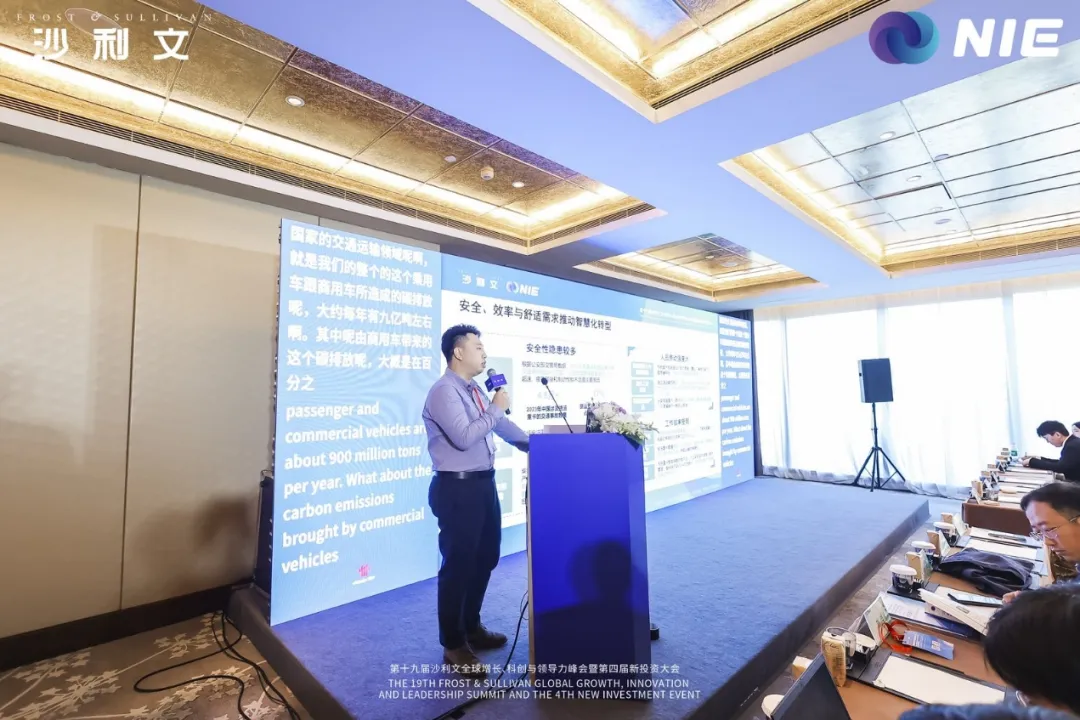
At this forum, Li Man, Deputy General Manager of Proton Motors and Director of the Board, delivered a speech on zero-carbon smart transportation practices and explorations. The speech mainly covered the significance of zero-carbon smart transportation, the current status of zero-carbon smart transportation practices, Proton Motors' zero-carbon smart transportation practices, and the exploration of future development directions for zero-carbon smart transportation.
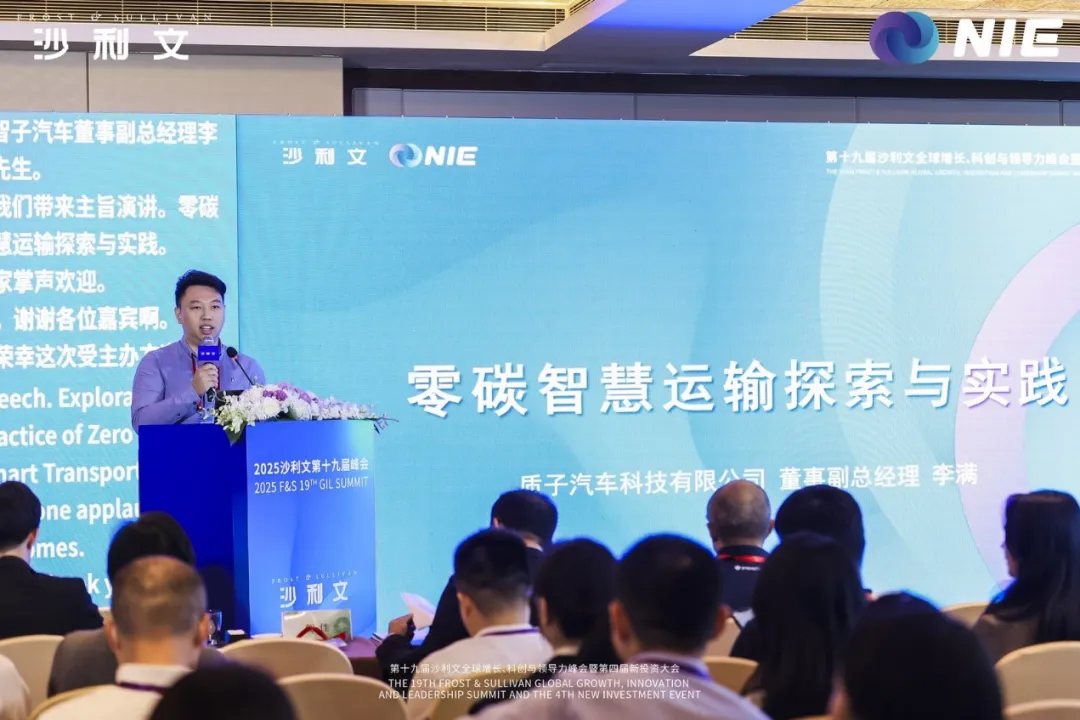
Li Man, Deputy General Manager of Proton Motors
The following are the key points of Li Man's speech:
I. The Significance of Zero-Carbon Intelligent Transportation
Li Man emphasized that the freight industry currently has many deficiencies in terms of safety, comfort, and efficiency, and urgently needs to be empowered for healthy development through intelligent transformation.
In terms of safety, freight heavy trucks are prone to frequent traffic accidents due to insufficient braking and stability, fatigue driving, and other reasons, resulting in serious consequences. At the same time, although the ownership of commercial vehicles is relatively small, their emissions are significant. Heavy truck nitrogen oxide emissions account for 76.1% of total vehicle pollutant emissions, making them a 'critical minority' in the field of transportation emissions and posing a threat to driver and environmental safety. Zero-carbon intelligent transportation technology promotes the improvement of freight safety and effectively reduces emission risks.
In terms of comfort, freight transportation scenarios such as long-distance and short-haul operations are dominated by extremely high personnel labor intensity. The poor comfort of traditional heavy truck cab driving positions leads to high levels of physical and mental exhaustion. Zero-carbon intelligent transportation is needed to propose optimization plans for driving hours, driving mileage, etc., while enhancing the driving experience of freight heavy truck products, alleviating fatigue and various health problems brought about by freight driving.
In terms of efficiency, current traditional diesel heavy trucks have low energy efficiency. Fueling demands and traffic restrictions also limit transportation efficiency. Additionally, traditional heavy trucks lack intelligent networking capabilities, resulting in poor dispatching and energy efficiency management. It is necessary to continuously iterate zero-carbon smart transportation technologies, using new energy power systems and information-based intelligent networking to promote various efficiency gains in freight operations.
II. Current Status of Zero-Carbon Smart Transportation Practices
Li Man stated that zero-carbon smart transportation has begun preliminary practice. In terms of cost economy, new energy heavy trucks can already achieve the same price for oil and electricity as traditional fuel vehicles and perform better in terms of total life cycle cost ownership and profitability. In terms of transportation economy, traditional heavy truck transportation suffers from long waiting times for goods due to cargo type requirements, high empty running rates on return journeys, which lead to increased operating costs and low industry efficiency. There is still a need to improve time utilization and shorten the return period on purchasing through means such as smart networking. In terms of mileage economy, current pure electric heavy trucks have begun to be applied in short-distance reverse transportation scenarios such as ports, mining areas, urban construction, and industrial parks. Due to issues such as energy supply network gaps and the contradiction between energy consumption and load capacity, the demand for medium and long-distance transportation applications is temporarily difficult to meet.
Li Man believes that although the domestic zero-carbon intelligent transportation system is continuously evolving, it is still not yet perfect and faces issues such as insufficient safety assurance systems, slowed infrastructure construction, poor coordination of intelligent transportation, and varying international demand standards. With the continuous improvement of regulations and insurance mechanisms, enhanced construction of charging and swapping networks, accelerated progress in V2X construction, and gradual removal of certification policy standards barriers, the foundation for large-scale application of new energy commercial vehicles will be effectively enhanced.
III. Proton Smart Transport Practice for Zero-Carbon Mobility
Li Man introduced that Proton Motors was established by Shaanxi Gas Group in preparation to implement General Secretary Xi Jinping's important 'Four New' directives. It has been exploring new energy vehicles and heavy-duty vehicles for some time, aiming to create intelligent commercial transportation solutions. As of now, Proton Motors has completed three rounds of market-oriented financing and has incubated a mature R&D platform.
Proton Motors began delivering products in its first year of official establishment, with sales of new energy commercial vehicles continuously breaking through records and hydrogen energy heavy trucks performing outstandingly in the industry. Currently, Proton Motors has deployed a full range of new energy commercial vehicle products, meeting both small batch customization needs and large-scale production requirements. In the areas of tractors, dump trucks, and trucks, Proton Motors has launched hydrogen versions, focusing on customized development for various scenarios and needs.
Proton Auto has developed its own core technologies and laid out various core software and hardware products: multiple hydrogen fuel system electric vehicles with different power outputs meet the dynamic needs of diverse scenarios such as short-distance reverse transportation and trunk line logistics; magnesium alloy materials for trailers and frames effectively achieve vehicle lightweighting; the intelligent cockpit integrates cloud data at the vehicle end, covering functions such as in-vehicle entertainment, active safety, and fleet management; the pure electric solid-state chassis has been applied on heavy truck platforms, forming a technological barrier; intelligent assisted driving empowers the large-scale intelligent popularization of commercial vehicles with cost-effective intelligent driving solutions. The proprietary intellectual property covering multiple aspects will support Proton Auto's further exploration of zero-carbon smart transportation.
IV. Exploration of Future Development Directions for Zero-Carbon Intelligent Transportation
Li Man pointed out that the current commercial vehicle connected vehicle network is accelerating development, driving the logistics transportation industry towards intelligence, efficiency, and safety. Smart connected vehicles achieve integrated management and control of the transportation system through mobile terminals, intelligent dispatching systems, WeChat mini-programs, etc., deeply tapping into data value, comprehensively empowering fleet management, determining transportation efficiency, becoming vehicle value multipliers and business boosters, and serving as an important reference indicator for customers' car purchases and a catalyst for purchasing decisions.
Li Man believes that new energy transportation modes will gradually become mainstream and truly realize long-distance transportation applications, with single-trip distances exceeding 1,100 kilometers. L2-L3 level assisted driving technology, combined with manned and intelligent cockpits, will provide a highly comfortable driving experience. In addition, transportation on designated semi-enclosed roads and other high-grade roads may achieve fully autonomous driving, capable of autonomous dispatching, transportation, and multi-vehicle support. In the future, with the further development of zero-carbon smart transportation, freight trucks will transform from 'single means of transport' into a 'smart space' that integrates environmentally friendly and efficient transportation equipment, comfortable office spaces, and intelligent super energy storage devices.




