



The 19th Frost & Sullivan Global Growth, Innovation and Leadership Summit - the Fourth New Investment Conference —— Life Sciences New Investment Summit Forum, hosted by the world-leading growth consulting firm Frost & Sullivan (Frost & Sullivan, abbreviated as: F&S), was successfully held in Shanghai on August 28, 2025. The forum brought together more than 50 industry leaders, biopharmaceutical companies, medical device companies, investment institutions and professional service providers. With the theme of 'Strengthening Foundations Internally and Riding the Waves Steadily', it focused on cutting-edge trends, innovative technologies and globalization development strategies in the field of life sciences, aiming to promote industrial development and global cooperation.
At this forum, Cai Jiangnan, founder and executive chairman of Shanghai Chuangqi Health Development Research Institute, shared his speech on "The Latest Policy Developments in the Medical and Health Industry".
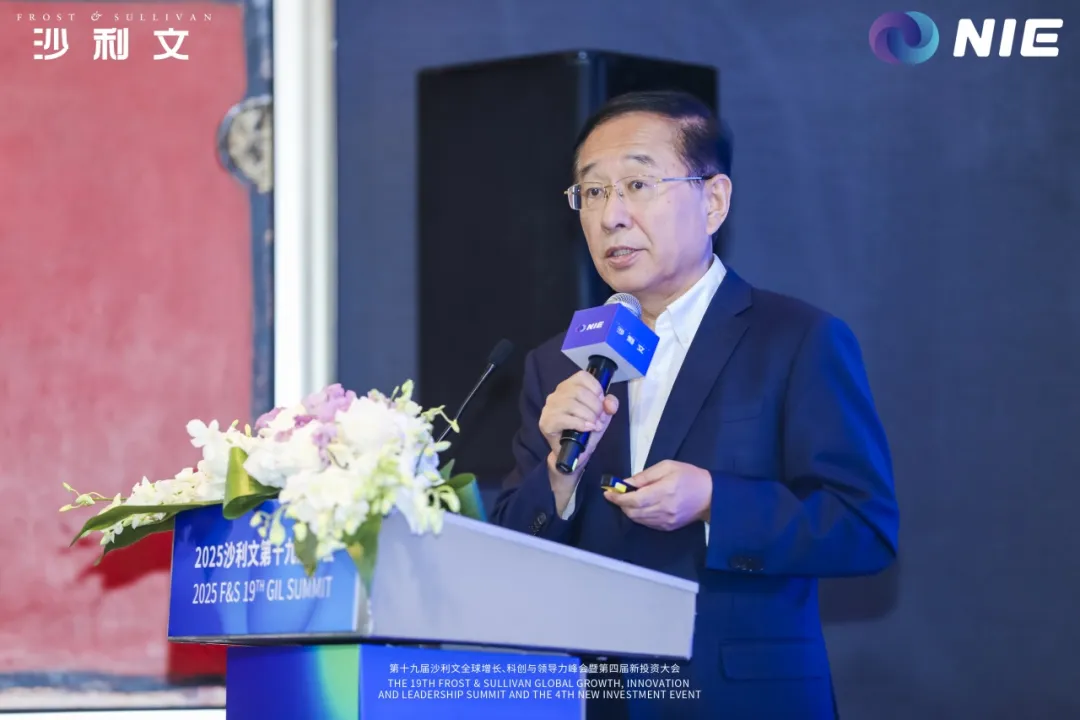
Cai Jiangnan, Founder and Executive Chairman of HAI Chuangqi Health Development Research Institute
The following are the key points of Cai Jiangnan's speech:
Policy promotes the development of innovative drugs
In recent years, China has attached great importance to innovative drugs and introduced a series of policies. The General Office of the State Council issued documents to promote the high-quality development of the pharmaceutical industry in multiple aspects such as improving the review and approval mechanism and increasing support for traditional Chinese medicine research and development. In terms of review and approval, resources are tilted towards innovative drugs urgently needed in clinical practice; intellectual property protection has also been improved to support the promotion of innovative drugs, creating a favorable policy environment for the research, development, and marketing of innovative drugs, and driving the industry forward continuously.
Challenges to Access to Innovative Medicines
Innovative drugs moving from the laboratory to patients need to overcome two key hurdles: "high prices" and "insufficient payment." Currently, innovative drugs such as gene cell therapy products and rare disease-specific drugs available on the market in China generally incur "millions of yuan" in treatment costs. For example, a CAR-T product used for treating blood tumors has a single treatment cost of up to 1.2 million yuan, far exceeding the affordability of ordinary families. Even though some innovative drugs have seen price reductions through medical insurance negotiations, a large number of high-priced drugs are still not included in the medical insurance catalog due to "cost-effectiveness disputes." More critically, commercial health insurance has not yet formed an effective supplement: although more than 30 provinces across the country have launched "beneficial insurance" products with over 500 million insured people, these products mostly adopt the "low contribution, broad coverage" model, with reimbursement ratios for high-priced innovative drugs generally below 30% and annual reimbursement limits; moreover, the penetration rate of high-end commercial health insurance is less than 5%, making it difficult to cover the vast majority of middle- and low-income groups. The shortcomings in the payment system directly lead to "difficulty in accessing drugs." According to the 2024 "China's Innovative Drugs Accessibility Report," only 38% of the innovative drugs approved for market release in China can be administered within three months after diagnosis, far lower than the 70% level in developed countries, highlighting the prominent issue of the "last mile" obstruction for the implementation of innovative drugs.
Coordinated exploration of medical insurance and commercial insurance
In response to the pain points of access to innovative drugs, constructing a multi-channel payment system featuring 'medical insurance as the foundation, commercial insurance as a supplement, and charity assistance' has become an industry consensus and policy focus. The National Healthcare Security Administration (NHSA) released the 'Commercial Health Insurance Drug List (Pilot Version)' for the first time in 2024, including 138 high-priced innovative drugs not covered by medical insurance into the scope of commercial insurance reimbursement. It specifies that commercial insurance institutions can purchase drugs at the 'negotiated price' from medical insurance, reducing procurement costs. Local policies represented by Shanghai's 'New 18 Articles' further encourage enterprises to insure their employees with group health insurance that includes coverage for innovative drugs, offering tax incentives of 5%-10% to insured enterprises. In 2024, the number of participants in Shanghai's group health insurance increased by 22% year-on-year. In practice, many regions have explored the co-payment model of 'medical insurance + commercial insurance + individual': for example, a specific drug for treating spinal muscular atrophy costs about 700,000 yuan. Through the combination of 'medical insurance paying 30% (210,000 yuan) + commercial insurance reimbursement 50% (350,000 yuan) + individual out-of-pocket payment 20% (140,000 yuan)', the burden on patients is significantly reduced. In addition, some regions have introduced charitable institutions to participate, subsidizing the individual out-of-pocket portion by another 50%, resulting in an actual payment of only 70,000 yuan for patients. This multi-party collaborative payment model not only avoids excessive pressure on the medical insurance fund but also effectively improves access to innovative drugs, providing a replicable solution to the problem of 'sky-high drug prices'.




