



Entering the summer of 2025, many foreign-funded financial institutions generally have a positive outlook on the prospects of the Chinese market, and their asset allocation recommendations for China have shifted from neutral to 'overallocation'.
According to data previously released by the State Administration of Foreign Exchange, in the first half of the year, foreign capital net increased its holdings of domestic stocks and funds by $10.1 billion, reversing the overall net reduction trend over the past two years. Among them, the net increase in holdings reached $18.8 billion from May to June.
Moreover, the attractiveness of Chinese companies to overseas markets is also increasing day by day. The Hong Kong Exchanges and Clearing Limited (HKEX) semi-annual report shows that in the first half of 2025, a total of 44 companies were newly listed, raising a total amount of 109.4 billion yuan, a more than seven-fold increase compared to the same period last year. Other institutional statistics indicate that Chinese companies have raised more than 80 billion yuan through financing on the Hong Kong stock market.
New changes in investment trends are also shaping new logic for global growth. Waves of technological innovation, restructuring of supply chains, changes in consumer markets, and the rise of emerging brands are all influencing the direction and form of global material, industrial, and talent flows.
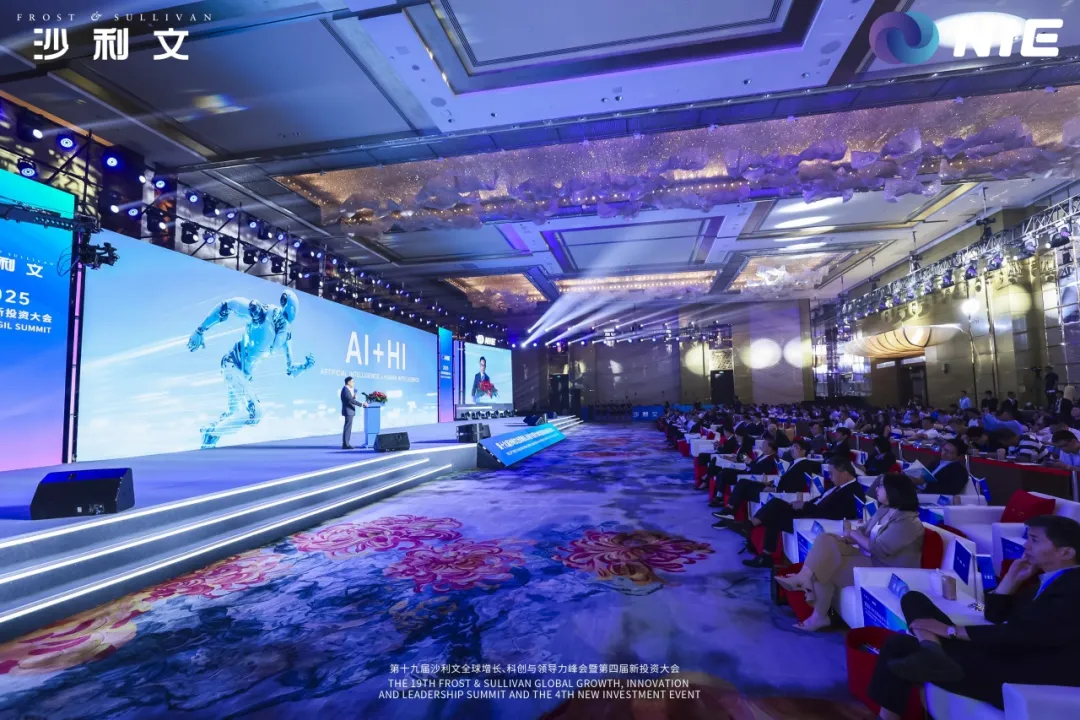
On August 27th, the 19th Frost & Sullivan Global Growth, Innovation and Leadership Summit & 4th New Investment Conference, hosted by Frost & Sullivan (hereinafter referred to as 'Frost & Sullivan'), was held in Shanghai. The event aimed to help global investors gain a deeper understanding of the opportunities and potential of the Chinese market, provide Chinese enterprises with opportunities to communicate and cooperate with top global companies and investment institutions, and accelerate their entry into international markets.
During the conference, Phoenix Business Weekly had a dialogue with Aroop Zutshi, Global President and Partner-in-Chief of Frost & Sullivan, and Dr. Wang Xin, Global Partner at Frost & Sullivan and Chairman of the Greater China Region, to discuss how current China, Chinese enterprises, and ordinary Chinese people are facing both 'bringing in' and 'going global'.
Entering China for 27 years,
The biggest takeaway is 'localisation'.
Phoenix WeeklyFrost & Sullivan has been deeply involved in China for 27 years. What is your biggest takeaway? Have you encountered any difficulties? How do you view the future development of foreign investment in China?
Dr. Wang XinFrost & Sullivan has been in China for 27 years, always adhering to localization. This is because only a local team can respond more quickly to market conditions and grasp the latest market opportunities. One cannot stand by and watch from afar; this is not clear-cut. It is essential to be on the front line of production services, ensuring cultural synchronization so that business can develop.
In the new era, the country has been persistently open, attracting more foreign investment and welcoming foreign enterprises to invest and set up factories in China. From the national level to local levels, the situation of foreign investment has been announced, giving us a very clear signal. Of course, operating in China must be legal and compliant, and it must also align with the country's development strategy. It is the era of enterprises, not the other way around.
In the process of development, a company inevitably encounters various voices, even criticism. If there are any issues, we should correct them; if not, we should strive for improvement. This is not a bad thing. If we have indeed not done our best, we must humbly accept and correct them. Even if the voices are not right, we must see if there are any beneficial values within them.
Phoenix WeeklyFor Chinese enterprises going global, facing challenges of language and culture differences, is 'localization' also a way to integrate into the local community?
Aroop ZutshiAs we move towards globalization, it is inevitable to focus on establishing businesses overseas. However, no company understands all the details of operating in local markets abroad. This is why you ultimately need to hire locals; they possess both the skills and willingness to work for the parent company. It is important not to let locals feel a difference between themselves and their parent company employees; they should be on the same level.

Aroop Zutshi, President and Partner-in-Chief, Global at Frost & Sullivan
Break through contraction,
The key lies in 'innovation-driven'
Phoenix WeeklySince 2025, the capital market has shown a long-lost fervor. As you also mentioned, China's development strategy has provided enterprises with many certain opportunities. However, for a large number of Chinese companies, there is still a gap in perception between the rise in the stock market and their actual situation, such as lower gross margins and more severe price wars. Companies are still taking measures to reduce costs and increase efficiency. How do you think companies can break this increasingly contracting trend?
Dr. Wang XinSince 2025, the capital market has warmed up again, showing a long-lost fervor. China's development strategy has also brought many definite opportunities to enterprises. However, many companies still feel pressure in their actual operations: gross profit margins have declined, and price wars are fierce, forcing them to continuously adopt measures to reduce costs and increase efficiency.
To break out of this 'contraction' state, the key is to shift from efficiency-driven to innovation-driven: First, it is necessary to upgrade value propositions, not just relying on price competition, but to create differentiation in technology, design, and service; second, it is essential to find new spaces, enter new markets, niche tracks, or ecosystems to avoid homogenizing competition; third, leverage the capital market by taking advantage of the current favorable capital environment to increase R&D investment and accelerate transformation.
Phoenix WeeklyIn 2025, many new and innovative consumer brands and trends emerged in the Chinese market. Some have summarized that to capture Chinese consumers, it is better to find emotional triggers rather than pain points. However, achieving a low absolute amount is easier, while high emotional value is a mystery. Do you think that in today's consumer market, businesses can follow a pattern to capture emotional triggers?
Dr. Wang XinIn summary, what truly moves consumers is not only the product features but also the brand and its story.
Telling stories is not only a one-way communication but also a community connection. Chinese enterprises need to do two things in today's consumer market: learn how to tell good stories—making brands warm, emotional, and values-driven; and build community connections—making consumers feel like they are part of the story, thereby generating long-term emotional attachment.
My suggestion is that companies should not regard emotional value as 'mysticism', but rather as a strategic tool that can be systematically designed. In the long run, rational value + emotional resonance + community connection are the keys to the sustainable growth of consumer brands.

Dr. Wang Xin, Global Partner at Frost & Sullivan and Chairman of the Greater China Region
Overseas M&A integration,
We should not only focus on depth but also possess breadth
Phoenix WeeklyIn recent years, there have been an increasing number of cases of Chinese enterprises going global for mergers and acquisitions. Compared to the initial challenges, Chinese enterprises have significantly improved their brand integration and operational effectiveness. What do you think is the reason for this growth in the ability of Chinese enterprises to engage in mergers and acquisitions? What suggestions do you have for Chinese enterprises hoping to participate in mergers and acquisitions?
Dr. Wang XinIn the past, Chinese companies often faced 'culture shock' when acquiring and integrating overseas assets, but their capabilities have significantly improved in recent years. I believe the reason lies not only in the accumulation of experience and talent but also in the progress Chinese companies have made in cross-industry learning and integration.
The Frost & Sullivan Summit has been held globally for 30 years, with the 19th edition being held in China, which also reflects this. This year, we have set up 8 industry-specific sub-forums, inviting enterprises from different industries to exchange ideas on the same stage. It is this cross-industry dialogue and learning that has promoted the enhancement of enterprises' integration capabilities.
In overseas mergers and acquisitions integration, it is not only necessary to focus on the depth of a single industry but also possess the breadth across industries. By combining the advantages of different industries, true synergies can be formed in global competition.
Phoenix WeeklyFor Chinese enterprises 'going global', how do they specifically integrate into local societies in the face of different languages and cultural environments?
Aroop ZutshiFirstly, language integration is crucial. If you are a Chinese boss and converse in your mother tongue in front of others, whether it's Mandarin or certain dialects of China, you are actually creating a barrier. Once there is a distinction between 'you' and 'them', it becomes very difficult to unite them. Therefore, I suggest that every company and Chinese leadership team, if operating overseas, should try to avoid speaking their mother tongue in front of others.
Secondly, you need to integrate into their lives, participate in their festivals, celebrations, and activities. Bring them into your culture, but also make sure that you become a part of theirs.
Thirdly, you should try to eat with these locals at the factory, without creating a sense of separation where you say 'I want to eat in my private room, I won't eat with these people.' This should be done not only with your employees but also with your customers and other locals.
Language and food play a very important role in cultural interaction. Most people feel comfortable in their local language environment, and eating with locals teaches you how to talk with them, how to explain things to them, how to reward and acknowledge them, and thus how to get them to do what you want them to do.
Another point I would like to emphasize is collaboration. You must learn how to collaborate, encourage local people to participate in the solutions to your products, and make them feel like they have a sense of ownership within your company. This is crucial for the global expansion of Chinese companies.
Before ordinary people go out,
Think carefully about 'leaving' or 'coming back'.
Phoenix WeeklyIf you are a Chinese business owner who wants to go global, would you choose to rush to acquire orders overseas or build factories first?
Aroop ZutshiI believe that the first thing to consider is how large the market for products and solutions in overseas countries is. First, what is the total potential market size? Second, what is the accessible market size? Third, is the market they can actually capture large enough? Is there government policy support? Is there high-level support or hindrance?
If all these conditions are met and there is sufficient demand, then I would recommend starting by trying to enter the market through domestic sales to gain some traction and establish a foothold.
As for building factories, establishing new manufacturing plants in any new country is a daunting task. It requires understanding policies, local laws and regulations, taxation, operations, human resources, and various other issues. At the same time, you must examine your entire supply chain; do you have a supply chain that can handle this? You must also consider whether your manufacturing plant can support other markets in the vicinity. For example, if you are in Egypt, Africa, can you provide solutions and products for all North African countries from there? Similarly, if you are in India, can you supply products to all of India's neighboring countries?
Therefore, if you can understand this model and have sufficient demand, then I would recommend setting up a manufacturing factory that takes advantage of the government incentives provided by many countries today to attract foreign direct investment. If you proceed without considering these matters, you are taking a huge risk.
Phoenix WeeklyWith the wave of Chinese companies going global, some ordinary people are also pondering whether they need to follow this trend and actively 'go out' for education or employment. At the same time, many Chinese students or employees who have gone abroad with this wave may not find jobs upon returning to their home country due to regional environmental differences. Do you think this is a waste of talent in an overseas ecosystem?
Aroop ZutshiI would tell every student or job seeker that they should make plans about 'going out' and 'coming back' before starting. If you end up confusing these orders, it can be difficult, and you may have to re-adapt your career in the country where you were born and grew up.
Because you must remember that during the years you are abroad, not only are you personally making progress, but so is your homeland. The city where you grew up is changing, your old friends are advancing, and your family is also moving forward. Therefore, when you decide to return, no one will be waiting for you there. These are important things that you must consider before making your decision.
Of course, I'm not discouraging people from going out; on the contrary, I would say that if possible, you should go; if you can afford it, that would be even better. But you must make a very clear plan: either stay there or come back.




