


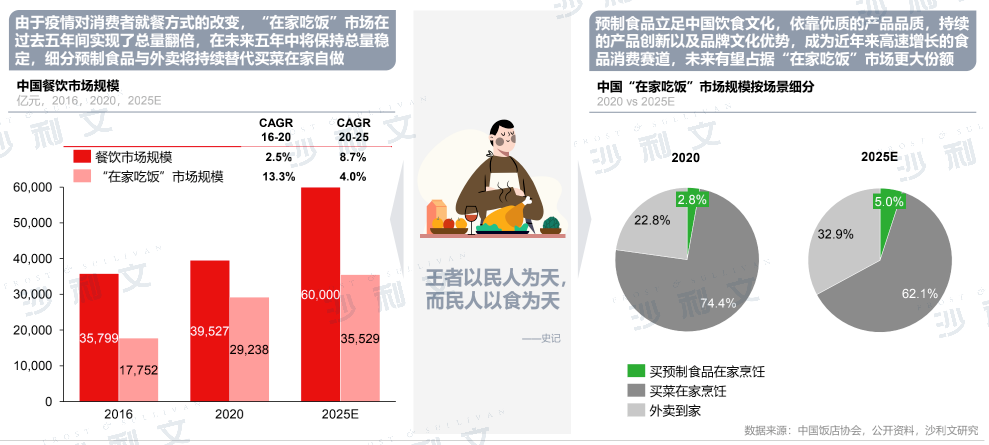
Due to the pandemic's impact on consumers' dining habits and their demand for convenience, safety, and quick access to food, the 'home dining' market has doubled in total volume over the past five years. Frost & Sullivan's white paper data shows that by 2020, the scale of China's 'home dining' market reached 2.9238 trillion yuan, with a compound growth rate of 13.3%. It is predicted that by 2025, the market size could rise to 3.5529 trillion yuan, and the future market scale of the 'home dining' industry will further expand.
"Prefabricated food" has become the optimal solution for the industry standard of "eating at home".
In recent years, with the change in people's living habits after the pandemic, 'eating at home' has gradually become a mainstream trend. The scenarios for achieving 'eating at home' are further divided into: cooking groceries at home, cooking pre-prepared foods at home, and taking food orders to your doorstep.
Although each of the three methods has its own merits, in the scenario of 'eating at home', consumers mainly focus on cooking/preparation time, food quality and safety, cost-effectiveness, and convenience of purchase. Compared to traditional grocery shopping and takeout, pre-packaged foods are expected to comprehensively solve industry pain points due to their advantages such as short cooking time, safe and healthy brand-prepared foods, high cost-effectiveness, and rich purchasing channels across multiple platforms. Frost & Sullivan believes that pre-packaged foods, as the optimal solution for 'eating at home', have formed three major industry standards. As a pioneer in the pre-packaged food industry, Kouquan Food Hub is interpreting this standard definition with its business logic and development approach.
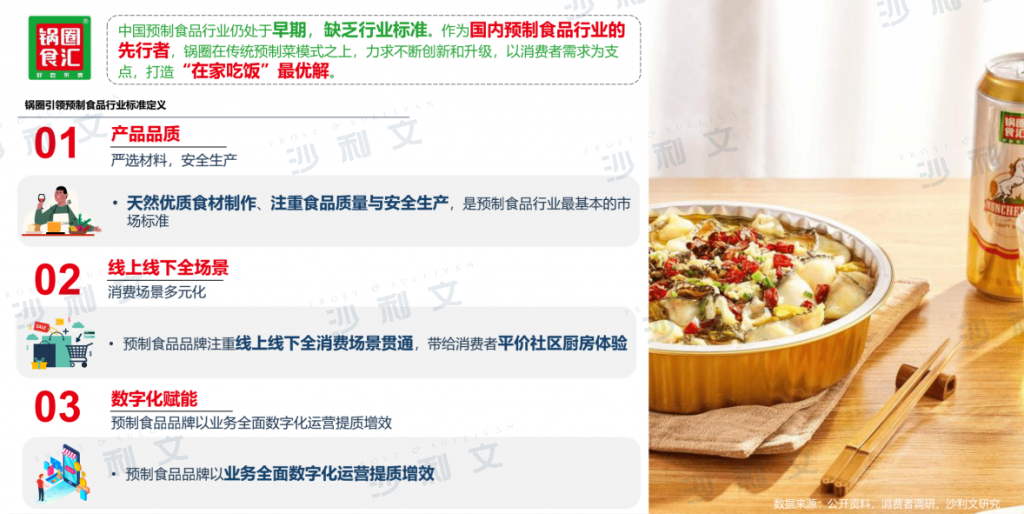
The first standard is a natural and high-quality product matrix. The use of natural and high-quality ingredients, as well as emphasis on food quality and safe production, are the most fundamental market standards in the prefabricated food industry. Since its inception, Kookoo Food Hub has maintained strict internal control over products, including stringent store product acceptance standards, cold chain temperature control, real-time GPS monitoring, and an information system for the supply chain, laying the foundation for consumers to build a happy life.

The second standard is the integration of online and offline consumption scenarios. Pre-prepared food brands focus on integrating online and offline consumption scenarios, providing consumers with a community kitchen experience. Leading industry brand Kouquan Food Hub has over 8,000 stores nationwide, mainly located in communities close to ordinary people. At the same time, relying on the integrated collaboration between online APPs and offline stores OMO, it effectively creates a high-quality happy life for the common people.
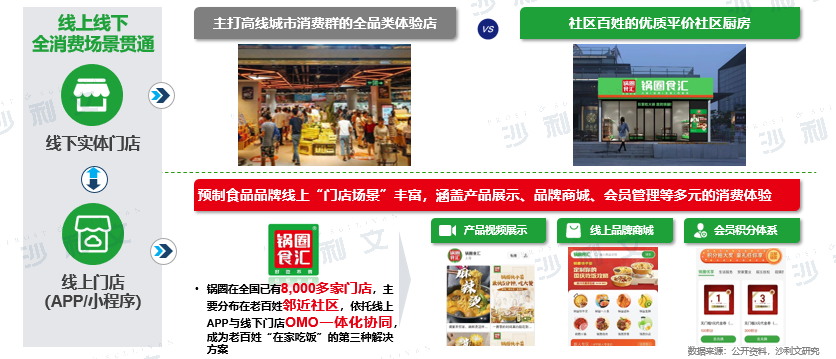
The third standard is digital empowerment. In the context of big data, digital operations have become the 'new ace' for leading prefabricated food brands. Kuaquan Food Hub has now integrated online and offline operations by fully digitizing membership, cashiering, products, kitchen operations, management, and supply chain, providing a clear and visual understanding of store operations and user and product situations. With higher levels of online and digital support, modules such as supply chain management, product research and development, marketing, and customer operations can operate more digitally, improving efficiency and reducing costs, thereby enhancing the happiness index for thousands of households.

Prefabricated food will become the main growth point for the 'eat-at-home' market in the future
According to a Frost & Sullivan survey, in 2020, the market for home-cooked pre-packaged foods accounted for only 2.8% of the 'home dining' market, and it is predicted that this proportion will rise to 5.0% by 2025. Factors such as celebrating the New Year locally have further driven a significant increase in pre-packaged food sales during the Spring Festival. Data from the Ministry of Commerce shows that during the Spring Festival in 2021, sales of New Year's Eve dinner series products alone increased by 96% year-on-year during the online New Year goods festival, with semi-finished products growing by more than 380%. After a year of supply capacity upgrades and category expansions in the pre-packaged food industry, industry insiders expect that 2022 may become a year of explosive growth for pre-packaged foods.
Prefabricated food has become a rapidly growing segment in the food consumption market in recent years, relying on its high-quality product quality, continuous product innovation, and brand cultural advantages. It is expected to occupy a larger share of the 'home-cooked meal' market.
At the same time, the rapidly growing consumer capacity of the people brings about diversified and quality-oriented consumption upgrade demands, which is beneficial to the overall large consumer industry and serves as the foundation supporting the consumption of the prefabricated food industry.

E-commerce platforms will become one of the main channels for purchasing ready-made foods.
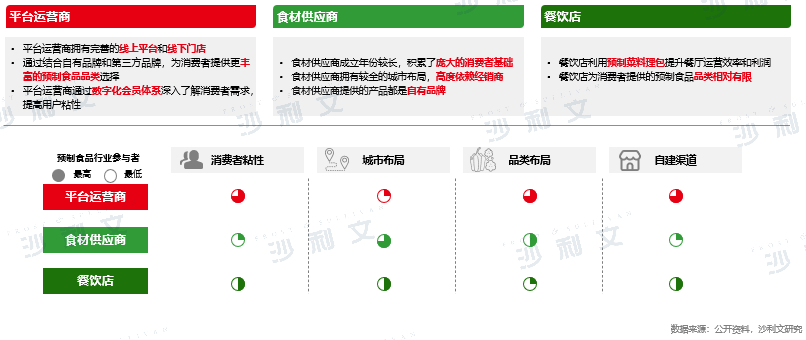
The main participants in the prefabricated food industry can be divided into three categories: platform operators, ingredient suppliers, and catering stores. Among them, platform operators have won consumer favor with their digital membership system, rich variety layout, and strong self-built channels. Moreover, the revenue of the main participants in the prefabricated food industry mainly comes from ready-to-eat and ready-to-cook foods, among which quick-cooked dishes are primarily branded by their own brands.
For example, Kookoo Food Hub, established in 2017, has become a leading platform operator in the domestic pre-packaged food industry within just a few years. As a new digital retail model for community dining focusing on the 'home-cooked meal' scenario, Kookoo Food Hub relies on the integrated collaboration of offline stores and its online Kookoo APP, serving over one billion households in total. At the same time, Kookoo Food Hub deeply understands consumer needs through a digital membership system, enhancing user stickiness. Today, Kookoo Food Hub has developed into a relatively mature pre-packaged food (3R) production and sales company, with over 600 SKUs of home-cooked dining products under its banner. These include ready-to-eat hot pot and barbecue prepackaged foods, as well as the instant hot meal brand 'Hannan', along with corresponding ingredients and cookware, covering eight major scenarios: hot pot, barbecue, marinated dishes, one-person meals, quick cuisine, beverages, Western cuisine, and fresh produce. Everything is centered around consumer needs to create the optimal solution for 'home-cooked meals'.
The consumer group for 'eating at home' is diverse
After extensive research, Frost & Sullivan found that consumers under the age of 40 have become the main consumer group for 'eating at home' in China, with the post-90s generation at its core. Moreover, consumers who are 'married with children' and 'single' account for a relatively high proportion, becoming the main participants in 'eating at home' and 'eating alone'. With the improvement of economic levels, the reconstruction of living needs, and the enhancement of consumer purchasing power, 'paying for convenience' has gradually been accepted by people.

Low-tier cities: The market for 'eating at home' has great development potential
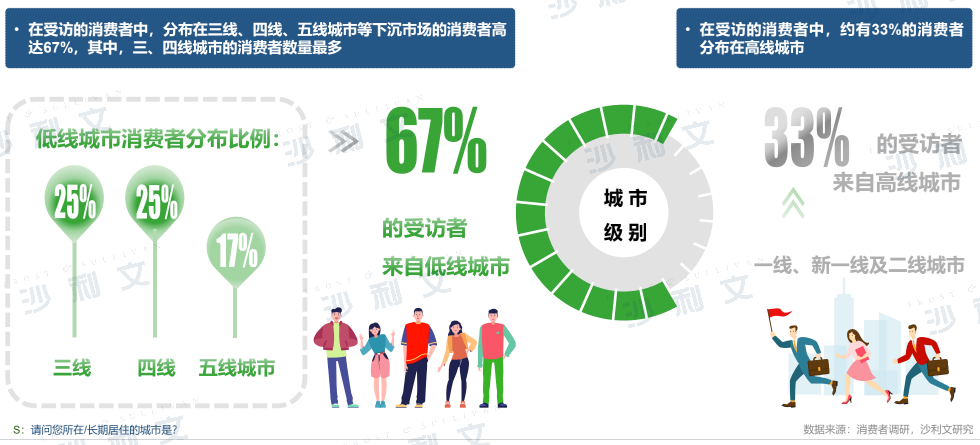
Among the surveyed consumers, 67% are 'home-cooking' consumers distributed in the sinking markets of third, fourth, and fifth-tier cities, with the largest number of consumers in these cities being from third- and fourth-tier areas. This data fully demonstrates that the consumer group for 'home-cooking' is mainly concentrated in lower-tier cities; compared to the economically developed high-tier cities, lower-tier cities have a faster growth rate in per capita disposable income and greater potential. In the future, the blue ocean market for 'home-cooking' is expected to grow rapidly in lower-tier cities.
Prefabricated food has many more traditional advantages overhand
The convenience, variety, and delicious flavors of prefabricated foods precisely address the 'pain points' of modern busy urbanites in terms of dining, and have gradually cultivated consumers' lifestyle concept of 'eating at home'. According to feedback from a large number of respondents, the scenario of 'eating at home' has advantages such as healthy nutrition, affordability, and easy control over ingredient quality. In terms of overall purchasing channels, consumers mainly buy prefabricated foods and groceries through offline channels. Secondly, with the rapid development of e-commerce platforms, online sales have the potential for greater growth in the future.

High-quality brands lead the industry
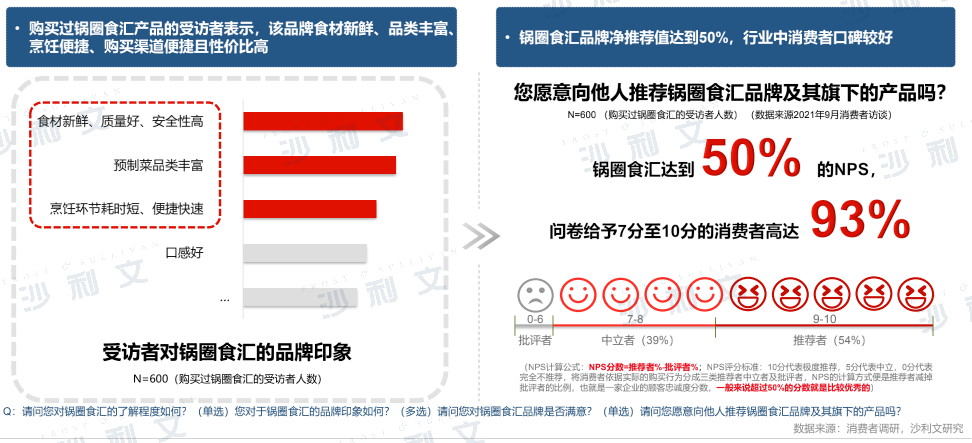
In recent years, there have been numerous industry participants, including rapidly developing new brands and traditional enterprises that have been deeply involved in the industry for many years. The top five pre-packaged food brands that consumers have purchased include: Sanquan Food, Kouquan Shihui, Haidilao, Wuzhi Xiang, and Anjing Food. In Frost & Sullivan's view, under the trend of catering retailization, Kouquan Shihui has great potential for growth and future development. Kouquan Shihui has not only become a high-quality brand in the pre-packaged food industry but is also widely favored by consumers for its excellent products and reputation. Respondents who have purchased Kouquan Shihui products stated that the brand has advantages such as fresh ingredients, a rich variety of categories, convenient cooking, convenient purchasing channels, and high cost-effectiveness. At the same time, most consumers who have purchased Kouquan Shihui expressed satisfaction and were willing to recommend the brand and its products to others, with a net recommendation value of about 50%; among those who gave recommendations from low to high, up to 93% gave recommendations ranging from 7 to 10 points.
Competing to dine at home's dining tracks, Kuaquan Food Hub builds family happiness
In the post-pandemic era, with changes in consumer habits and the pursuit of clean and hygienic food as well as home-cooked dining experiences, the 'eating at home' industry has rapidly grown. Under this general trend, prefabricated food is becoming a new blue ocean in the catering and retail sector, and prefabricated e-commerce platforms may become one of the main channels.
As a pioneer in the domestic prefabricated food industry, Gouquan strives for continuous innovation and upgrading on top of traditional prefabricated food models, serving more user groups and dining scenarios. In terms of category needs, Gouquan has not only launched quick-serve dishes but also hot pot, barbecue, one-person meals, self-heating pots, etc. On the other hand, from the perspective of diversified application scenarios, Gouquan can meet various needs such as home dining, friends' gatherings, outdoor picnics, and the newly launched Tang Palace New Year's Eve Dinner.
Secondly, Kwan Kee Food Hub has pioneered a 'supermarket for hot pot ingredients + internet sales platform + physical storefront + supermarket distribution model', providing consumers with high-quality options at affordable prices, which has thus gained the high recognition of consumers.
It is reported that Gouquan has been focusing on digital applications since its establishment, having developed and operated its own management system and online platform. Last year, Gouquan further strengthened strategic technical cooperation by developing 'Gouli Square', establishing a digital business system that connects the front desk, middle office, and back office, truly realizing iterative updates to the digital retail platform system. Recently, the upgraded Gouquan APP has achieved integrated online and offline operations, managing membership and sharing data between stores and online platforms, thereby serving the production of the supply chain and logistics distribution more effectively.
The essence of a happy life is actually a choice in lifestyle. Kouquan Food Hub is using this approach to create a healthy circle full of happiness, providing 'pot noodle' consumers with a faster, safer, and higher-quality way of living that brings happiness.




