



1. Overview of China's Passenger Vehicle Market Industry (Example)
1.1 Definition and Classification of China's Passenger Vehicle Market
1.1.1 Traditional fuel vehicle ownership stands at 220 million units, shifting from an incremental market to a stock market
1.1.2. The number of new energy vehicles in use exceeded 4.6 million, and the penetration rate of new vehicle sales has been gradually increasing
1.2 Analysis of the Passenger Vehicle Industry's Industrial Chain
1.2.1. Automotive Key Material Supply
1.2.2. Vehicle and Parts Manufacturing
(1) New energy vehicles have become a consensus in industry development
(2) Automotive lightweighting has become an important development direction
(3) Passenger vehicles are gradually developing towards intelligence
1.2.3. Downstream Market
1.3 Analysis of Passenger Vehicle Sales in China
1.3.1 Global Passenger Vehicle Sales, 2015-2024E

1.3.2. China Passenger Vehicle Sales, 2015-2024E
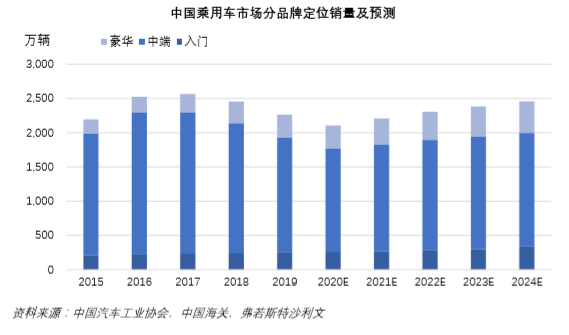
1.3.3. China's passenger car sales, categorized by brand positioning into entry-level, mid-range, and luxury cars
1.4 Analysis of the competitive landscape of China's passenger vehicle industry, based on sales volume in 2020
1.4.1 Top 10 Joint Ventures/Independent Brands
1.4.2. Top 10 Luxury/Mid-range/Entry-Level Brands

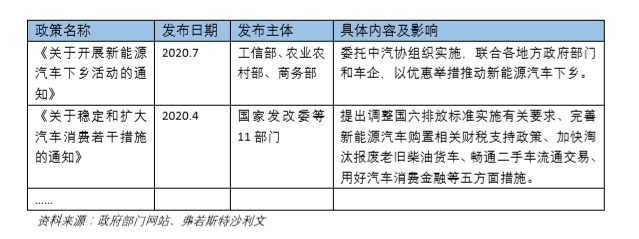
1.5 Analysis of Policies and Regulations in China's Passenger Vehicle Market
1.6 Analysis of Driving Forces for the Development of China's Passenger Vehicle Market
1.7 Analysis of the Future Development Trend of China's Passenger Vehicle Market
1.8 Analysis of the Development Trend of China's Auto Parts Market
1.8.1. The transformation and upgrading of local auto parts are accelerating, the industrial chain is gradually developing and improving, and the technical level is enhancing.
1.8.2. Due to the development of vehicle energy conservation and emission reduction, as well as new energy vehicles, the trend towards lightweight parts has become more pronounced
1.8.3. The trend of younger consumers in the automotive market is evident, with increased demands for personalization. Among these, exterior customization has become a popular area.
2. Overview of the Chinese Automotive Exterior Market (Example)
2.1. Definitions and classifications of automotive exterior trim
2.1.1 Exterior products can be divided into broad-sense exterior parts and narrow-sense exterior parts.

2.1.2. Classification of exterior products, divided by material type
2.2 Analysis of the Automotive Exterior Industry's Industrial Chain
2.2.1 Exterior Products - Glass
2.2.2 Exterior Products - Plastic Trim Parts
2.2.3 Exterior Products - Aluminum Trim Parts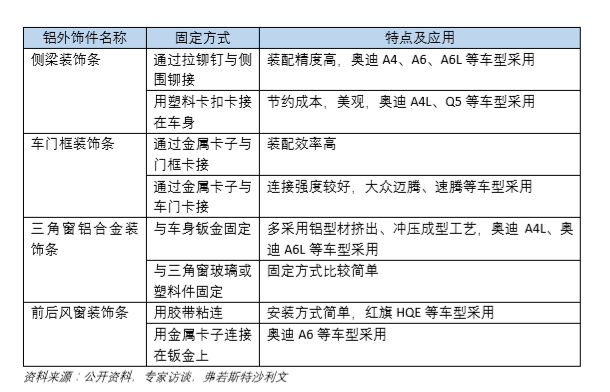
2.3 Market Analysis of Automotive Exterior Trim

2.4 Analysis of the Market Competition Pattern for Automotive Exterior Trim
2.5 Analysis of the Driving Forces for the Development of the Automotive Exterior Market
2.6 Future Development Trends of the Automotive Exterior Market
2.7 Development of new technologies, new industries, and new business forms in the automotive exterior industry over the past three years
3. Overview of the New Energy Vehicle Market in China (Example)
3.1 Definition and Classification of New Energy Vehicles in China
3.2 Analysis of the Industrial Chain of China's New Energy Vehicle Industry
3.3 Market Size Analysis of New Energy Vehicles
3.3.1 Global New Energy Vehicle Market Size Forecast, by Region: Europe, North America, China, 2015-2024E
3.3.2 Global New Energy Vehicle Market Size Forecast, by Type (Pure Electric and Plug-in Hybrid), 2015-2024E
3.3.3. Forecast of the scale of China's new energy vehicle market, divided into pure electric and plug-in hybrid vehicles, 2015-2024E
3.4 Analysis of the Competition Landscape of New Energy Vehicles
3.4.1 Global New Energy Vehicle Market Competition Landscape, Top 10 Sales Volume, 2020
3.4.2 Market competition landscape of new energy vehicles in China, top 10 sales volume, 2020
3.5 Analysis of China's New Energy Vehicle Policies and Regulations
3.6 Analysis of the Driving Forces for the Development of China's New Energy Vehicle Market
3.7 Future Development Trends of China's New Energy Vehicle Market
4. Overview of China's New Energy Vehicle Power Battery Industry (Example)
4.1 Definition and Classification of New Energy Vehicle Power Batteries in China
4.1.1 Classification of power lithium-ion batteries, by packaging form
4.1.2 Classification of power lithium-ion batteries, by positive electrode material
4.2 Analysis of the New Energy Vehicle Power Battery Industry Chain in China
4.2.1 Lithium battery cell
(1) Positive electrode material (2) Negative electrode material of the battery cell (3) Electrolyte for the battery cell (4) Separator of the battery cell
4.2.2. Power Battery Case
4.2.3 Battery Management System
4.3 Analysis of the Market Scale of New Energy Vehicle Power Batteries in China
4.3.1. Market scale of power batteries in China, by vehicle model installed capacity from 2018 to 2020
4.3.2. China's power battery market scale, installed capacity by material type from 2018 to 2020
4.3.3. China's power battery market size and forecast, 2015-2024E
4.4 Analysis of the Market Competition Pattern among New Energy Vehicle Power Batteries in China
4.5 Analysis of the Driving Forces for the Development of China's New Energy Vehicle Power Battery Market
4.6 Future Development Trends of China's New Energy Vehicle Power Battery Market
5. Analysis of market competition landscape segmentation (example)
5.1 Analysis of the Competitive Landscape of China's Passenger Vehicle Exterior Industry
5.1.1 Analysis of the market scale and competitive landscape of China's aluminum exterior decoration industry
5.1.2 Analysis of the market scale and competitive landscape of plastic trim parts
5.1.3 Market Scale of Metal Trim (excluding Aluminum Trim)
5.1.4 Analysis of the Future Development of Innovative Exterior Products for Passenger Vehicles
5.2 Analysis of the Competitive Landscape of Power Battery Cases for New Energy Vehicles
5.2.1 Comparative Analysis of Power Battery Technology Routes for New Energy Vehicles
Overall, extruded aluminum alloy battery casings are currently the mainstream application route for both present and future applications. Steel casings serve as a supplement and are the main technical route chosen by pure electric vehicles. Die-cast aluminum alloy battery casings are mostly used for the battery casings of plug-in hybrid vehicles. The specific application scenarios are as follows:
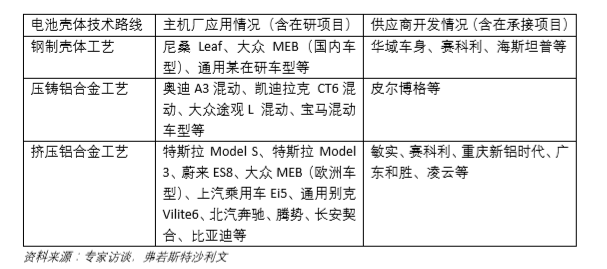
5.2.2 Analysis of the market scale and competitive enterprises of power battery housings for new energy vehicles
(1) The market scale of power batteries is expected to exceed 10 billion yuan by 2024
(2) Leading domestic competitors include Sike Li and Minshi
5.2.3 Analysis of the Future Development Trend of Power Battery Cases for New Energy Vehicles
Appendix
Appendix 1: Glossary
……
Appendix 2: Introduction to Industrial Chain Enterprises
Enterprise abbreviation: Fuyao Glass
Full Chinese Name: Fuyao Glass Industry Group Co., Ltd. Country: China English Name: FUYAO Company Introduction: Established in 1987, Fuyao Group focuses on the automotive safety glass business. It has established production bases in multiple provinces and cities across China, as well as in 11 countries including the United States, Japan, and South Korea. At the same time, it has set up a total of 6 design centers both domestically and internationally, and has grown into a large multinational group related to automotive safety glass. It maintains close cooperation with well-known domestic and international automobile manufacturing enterprises, providing global OEM supporting services and complete automotive glass solutions. Its products have been certified and selected by many well-known enterprises and major automobile manufacturers including Bentley, Mercedes-Benz, BMW, and Audi, and have been rated as "Global Excellent Supplier" by major cooperative enterprises.
Enterprise abbreviation: Weikawei
Full Chinese Name: Beijing WIKAWAY Auto Parts Co., Ltd.
Country: China
English Name: WKW Automotive
Company Introduction: Established in 2002, Beijing WIKAWAY is a Sino-German joint venture specializing in the manufacturing and service of passenger vehicle interior and exterior trim systems. The company is mainly committed to the research, development, and production of interior and exterior products, with material applications covering mainstream substrates such as aluminum alloy, stainless steel, plastic, and rubber. With years of experience in parts technology, it holds a 10% share in the Chinese aluminum exterior trim market. WIKAWAY's interior and exterior products mainly include various decorative strips, luggage racks, door sill molding, scratch guards, and other structural components, possessing strong integrated production, manufacturing, development, and overall supporting supply capabilities on a large scale.
……
Appendix 3: Policies on Lightweight New Materials
Appendix 4: Global Market Scale of New Energy Vehicle Power Battery Cases
Appendix 5: Aluminum consumption per passenger vehicle in China
Appendix 6: Global Automotive Exterior Market Size
The above is only a partial content of the report. For a complete copy, please contact Frost & Sullivan.




