


Frost & Sullivan (hereinafter referred to as 'Frost & Sullivan') released 'Research on the Chinese Rehabilitation Medical Device Market' on October 25th. The following content is an overview of this report.
Chapter 1: Overview of the Rehabilitation Medical Device Market
1.1 Overview of Rehabilitation Medical Services
According to the WHO's description, rehabilitation refers to a series of interventions that are needed when people are experiencing or may experience daily functional limitations due to aging or health problems, including chronic diseases or disorders, injuries or traumas. Examples of functional limitations include difficulties in thinking, vision, hearing, communication, mobility, interpersonal relationships, or maintaining employment. Rehabilitation enables individuals of all ages to maintain or return to daily activities, play a beneficial role in life, and maximize their well-being.
Rehabilitation medicine mainly includes physical therapy, speech therapy, occupational therapy, psychotherapy, rehabilitation engineering, and traditional rehabilitation treatments. It is dedicated to eliminating and reducing human functional impairments, compensating for and reconstructing missing functions, striving to improve and enhance various aspects of the body's functions, and helping the human body restore its physical strength, cognitive abilities, and motor performance to the optimal level possible. Rehabilitation medicine can help patients accelerate the recovery of physical functions, reduce recurrence rates, decrease complications, and save overall treatment costs. It plays an increasingly important medical, economic, and social role in the healthcare system.
Since rehabilitation medicine was introduced into China in the 1980s, the theory, technology, and construction of rehabilitation medical institutions in our country have been continuously developing. With the continuous maturity of the rehabilitation medical industry in our country and the advancement of new medical insurance reforms, more capital will be invested into the rehabilitation medical industry, indicating a huge market potential for rehabilitation medicine.
1.2 Definition and Classification of Rehabilitation Medical Devices in China
Rehabilitation medical devices are medical instruments used in rehabilitation medicine for evaluation, training, and treatment. They can help patients assess and improve their physical functions, restore muscle strength, and compensate for functional deficits. Rehabilitation medical devices are a prerequisite and foundation for the implementation of rehabilitation medicine, and their development is closely related to it. Rehabilitation medical devices include four major categories: rehabilitation evaluation devices, physical therapy devices, rehabilitation training devices, and assistive rehabilitation devices.
Classification of rehabilitation medical devices
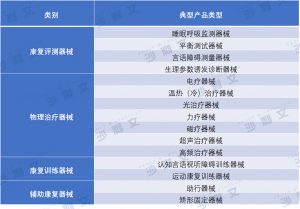
Source:2017Annual Edition of 'Medical Device Classification Catalog', Frost & Sullivan Analysis
1.3 Global and Chinese Medical Device Markets
The rehabilitation industry in the United States began to germinate in 1917 and has now gone through about 100 years of development. The rehabilitation medical industry in the U.S. has now matured, with a complete tertiary rehabilitation medical system. Rehabilitation institutions cover acute patients, patients in the rehabilitation phase, and long-term follow-up patients. There is a clear division of labor and functional definition among various rehabilitation institutions. Therefore, there is a demand for purchasing rehabilitation medical devices. Institutions capable of providing device-based rehabilitation treatment for rehabilitation patients often regard the purchase of rehabilitation medical devices as a rigid indicator. The development level of rehabilitation medical devices is relatively high, and they are currently entering a stable development period, focusing more on academic breakthroughs. Globally, the market scale of rehabilitation medical devices is also growing rapidly.
China's rehabilitation industry started in the 1980s, with rehabilitation medical services still in their infancy. There is a shortage of supply and significant growth potential, which has already shown its investment value. The construction of new rehabilitation hospitals is currently the main investment model, with participants mainly including listed companies, insurance companies, healthcare management groups, real estate developers, and other industrial capitals.
In terms of demand, China has a large population that requires rehabilitation, including postpartum women, patients with mental disabilities, neurological diseases, musculoskeletal disorders, and the elderly. This has led to a huge demand for rehabilitation medical services and rehabilitation medical devices. With the acceleration of population aging, the increasing number of chronic disease patients year by year, the increase in the number of postpartum women after the relaxation of the two-child policy, and other factors, the demand for rehabilitation medical services and rehabilitation medical devices in China will continue to grow. Frost & Sullivan research shows that from 2014 to 2018, the market scale of rehabilitation medical devices in China increased from 115 billion yuan to 280 billion yuan, with an average annual compound growth rate of 24.9%. This growth rate is higher than the overall market growth rate of the medical device industry. It is estimated that the market scale of rehabilitation medical devices in China will grow at a compound annual growth rate of 19.1% to reach 670 billion yuan by 2023.
China Rehabilitation Medical Devices Market2014 - 2023(Expected)

Source:Frost & Sullivan analysis
1.4 China's Rehabilitation Medical Device Industry Chain
The upstream of the industrial chain in China's rehabilitation medical device industry includes hardware suppliers and software service providers. Hardware suppliers provide materials and accessories necessary for producing rehabilitation medical devices, while software service providers offer information technology services for rehabilitation medical devices. With the popularization of rehabilitation medicine and technological development, the variety of rehabilitation medical devices will become more abundant. The downstream of the industrial chain includes institutions, families, and individuals. Rehabilitation medical devices are most commonly found in medical institutions, elderly care facilities, and disability rehabilitation centers. In the future, rehabilitation medical devices are expected to benefit more families and individuals.
Rehabilitation medical devices are continuously developing towards higher-end directions, with some new materials and accessories having begun to be applied. In the past, rehabilitation medical devices were mainly used in the field of physiological rehabilitation. Now, instruments such as emotion intervention systems and sensory training equipment are gradually becoming popular, and rehabilitation medical devices are gradually covering the field of psychological rehabilitation. In the future, the application scope of rehabilitation medical devices is expected to expand further, with families and individuals also contributing to an important incremental market, jointly driving the development of China's rehabilitation medical device industry.
1.5 Driving Forces and Development Trends of the Rehabilitation Medical Device Market in China
1.5.1 Policy Promotion of the Development of Rehabilitation Medical Devices
In October 2016, the State Council issued the 'Several Opinions on Accelerating the Development of the Rehabilitation Assistive Devices Industry'. This is the first time since the founding of New China that the State Council has conducted top-level design and strategic planning for the rehabilitation assistive devices industry. Article 11 stipulates that localities with conditions are encouraged to study and gradually incorporate basic therapeutic rehabilitation assistive devices into the scope of basic medical insurance payments. Improve the industrial injury insurance payment system for rehabilitation assistive devices, and reasonably determine the payment scope. Support commercial insurance companies in innovating product designs, including the configuration of rehabilitation assistive devices within the scope of insurance payments. Encourage financial institutions to innovate consumer credit products and support the consumption of rehabilitation assistive devices. Localities with conditions can provide subsidies for the configuration of basic rehabilitation assistive devices for urban and rural poor disabled persons and severely disabled persons.
In September 2017, the Ministry of Civil Affairs, in conjunction with five other departments and units, issued the 'Notice on Carrying Out Comprehensive Innovation Pilot Projects for the National Rehabilitation Assistive Devices Industry', deciding to select 12 regions across the country to conduct comprehensive innovation pilot projects for the national rehabilitation assistive devices industry, exploring the deep integration of rehabilitation assistive devices in fields such as elderly care, disability assistance, medical care, and health. At the same time, 24 national ministries and commissions including the Ministry of Civil Affairs, the National Development and Reform Commission, the Ministry of Education, the Ministry of Science and Technology, and the Ministry of Industry and Information Technology jointly issued the 'Notice on Printing and Distributing a List of Policy Measures to Support Comprehensive Innovation Pilot Projects for the National Rehabilitation Assistive Devices Industry', providing support for industry development from multiple aspects such as discipline and professional construction, capital market support, financial support, approval, insurance listings, etc. Currently, many provinces across the country have successively introduced their own supportive measures.
1.5.2 The number of rehabilitation medical institutions and rehabilitation departments has increased
The standardization of rehabilitation medical device operation affects the effectiveness of rehabilitation treatment. Patients highly rely on the guidance of physicians when using rehabilitation devices for rehabilitation therapy. In the context where intelligent rehabilitation medical devices are not yet widespread and remote rehabilitation services are not mature, the sales channels and usage scenarios of rehabilitation medical devices are limited to general hospitals, rehabilitation hospitals, community rehabilitation centers, and retail pharmacies. Among them, general hospitals and rehabilitation hospitals are the main sales channels for rehabilitation medical devices.
The potential growth in the rehabilitation department of general hospitals creates room for expansion in the rehabilitation medical device channel. According to the 'Guidelines for the Construction and Management of Rehabilitation Medicine Departments in General Hospitals' issued by the former Ministry of Health in 2011, as well as the 'Basic Standards (Trial) for Rehabilitation Hospitals' released in March 2012, general hospitals must establish rehabilitation departments and corresponding rehabilitation sections, and be equipped with designated rehabilitation medical devices. The large number of rehabilitation departments to be established provides a broad platform for the sale of rehabilitation medical devices.
The rehabilitation medical services in rehabilitation hospitals cover a wide range, and there are many types and quantities of rehabilitation equipment available. Therefore, there is a high demand for rehabilitation medical devices. In recent years, the number of rehabilitation medical institutions in China has shown a steady growth trend. According to data from the 'China Health Statistics Yearbook', the number of outpatient visits and hospitalizations in rehabilitation hospitals in China in 2017 was 9.732 million and 736,000 respectively, an increase of 20.3% and 56.6% compared to 7.792 million and 470,000 in 2014. Against the backdrop of national encouragement for private medical practice and rising capital investment in the field of rehabilitation medicine, the number of rehabilitation hospitals will continue to grow, and the procurement volume of rehabilitation equipment will continue to expand.
1.5.3 Comprehensive medical insurance coverage has enhanced residents' payment ability and willingness
Against the backdrop of rapid economic development in China, per capita medical expenses of Chinese residents have been steadily increasing. The payment ability and awareness of Chinese residents in the field of healthcare are constantly strengthening, providing a solid foundation for the development of the rehabilitation market.
The expenditure of Chinese residents on rehabilitation medical care is largely affected by changes in the scope of medical insurance payments. In 2010, the 'Notice on Incorporating Some Medical Rehabilitation Programs into the Basic Medical Insurance Coverage' included nine medical rehabilitation programs such as exercise therapy within the scope of medical insurance payments; in 2016, the notice stipulated that based on the original scope, another 20 rehabilitation programs including 'Childhood Hearing Impairment Language Training' and 'Electric Standing Bed Training for Disabled Elderly' were added to the scope of medical insurance payments. From 2010 to 2016, the number of medical rehabilitation programs included in the basic medical insurance coverage gradually increased, covering a wider range of items, which stimulated patients' demand for rehabilitation equipment. This led to institutions such as general hospitals, rehabilitation hospitals, community rehabilitation centers, and chain pharmacies increasing their procurement of rehabilitation equipment, thereby promoting the expansion of production by rehabilitation equipment enterprises and driving the continuous growth of the rehabilitation equipment market scale.
1.5.4 With the continuous application of new technologies, rehabilitation medical device products are developing towards informatization and intelligence.
At present, the rehabilitation medical device products in our country are still mainly imitation-based, lacking high-end rehabilitation devices with independent intellectual property rights. The mid- to low-end market is mainly occupied by domestic products, leading to severe homogeneous competition.
With the continuous development and progress of technology, the United States has developed many commercial high-tech rehabilitation device products and technologies in the past decade. One representative field is rehabilitation robots, which include rehabilitation training robots, paraplegic assistive walking robots, home care robots, and intelligent wheelchair mobile robots. Research on nursing robots abroad started earlier, with countries such as Japan, Germany, the United States, and France playing a leading role in the field of rehabilitation nursing robots technology. In Japan, scientists have successfully applied robots to medical care and welfare fields.
1.5.5 The development of rehabilitation medical devices has extended from mainly targeting tertiary hospitals to encompass secondary hospitals, specialized rehabilitation hospitals, non-medical institutions, and community homes, adopting a new model
The 'Several Opinions on Deepening the Reform of the Medical and Health System' issued by the Central Committee of the Communist Party of China and the State Council, as well as the 'Guiding Opinions on Rehabilitation Medical Work during the 12th Five-Year Plan Period' released by the National Health Authority, clearly state that in areas with relatively abundant medical resources, health departments encourage qualified secondary general hospitals, including hospitals run by enterprises and institutions, to plan and gradually transform into comprehensive hospitals or rehabilitation hospitals focusing on rehabilitation medical services.
Many rehabilitation centers, in accordance with the development needs of their rehabilitation institutions, have made efforts to adjust their medical business structure, including the setup of departments and the allocation of personnel and equipment. They make forward-looking adjustments based on development trends, such as integrating pediatric surgery into the child rehabilitation department, ophthalmology into the vision rehabilitation department, neurology and orthopedics into the limb rehabilitation department, and ENT (Ear, Nose, and Throat) into the hearing and speech rehabilitation department respectively. Under this new model, rehabilitation medical devices are also fully penetrating the market along with the development of rehabilitation services, better leveraging their therapeutic characteristics within the subdivided departments. In addition, with the implementation of community rehabilitation service center models, this will further affect the distribution channels for rehabilitation medical devices, tap into the potential of rehabilitation needs at grassroots medical institutions, and influence the layout of rehabilitation medical devices.
Chapter 2: Market Analysis of Subdivided Medical Rehabilitation Devices
Further breakdown shows that the four cutting-edge fields of electrical stimulation, magnetic stimulation, electrophysiology, and rehabilitation robots are developing rapidly, with the market in a stage of rapid development. In particular, the market for magnetic stimulation rehabilitation medical devices and rehabilitation robots has just begun and is expected to have significant growth potential in the future. Frost & Sullivan research indicates that from 2014 to 2018, the market for these four sub-sectors of rehabilitation medical devices grew from 720 million yuan to 1.66 billion yuan, with an annual compound growth rate of 23.0%. It is estimated that the market size for rehabilitation medical devices in China will grow at a compound annual growth rate of 32.2% to reach 6.69 billion yuan by 2023.
4A sub-market of rehabilitation medical devices,2014 - 2023(Expected)

Data source: Frost & Sullivan analysis
2.1 Analysis of the Electrical Stimulation Rehabilitation Medical Device Industry
Electrical stimulation therapy technology has undergone rapid development over the past 50 years, providing an effective rehabilitation pathway for patients. It is widely used in fields such as pelvic floor and postpartum rehabilitation, neurological rehabilitation, and mental rehabilitation, with pelvic floor and postpartum rehabilitation and neurological rehabilitation being the most significant areas. In recent years, the Chinese electrical stimulation rehabilitation medical device market has been developing in a healthy manner, with a steady growth in market size.
2.1.1 Clinical Application Analysis of Electrical Stimulation Rehabilitation Devices
(1) Pelvic floor and postpartum rehabilitation
The main application areas of electrical stimulation therapy are pelvic floor and postpartum rehabilitation. Its indications mainly target common pelvic floor dysfunction in postpartum women or middle-aged and elderly women, such as urinary incontinence, pelvic organ prolapse, defecation disorders, rectus abdominis separation, low back pain, postpartum pain, uterine involution, etc. In clinical practice, biofeedback is usually combined with electrical stimulation for treatment.
Public and private hospitals, specialized maternity care and child health hospitals, rehabilitation departments within hospitals, and rehabilitation hospitals all provide professional pelvic floor and postpartum rehabilitation services. In addition, some private non-medical institutions, such as confinement centers and specialized postpartum rehabilitation centers, are also important providers of pelvic floor and postpartum rehabilitation services. With continuous market competition, non-medical institutions have increasingly set higher standards and requirements for the effectiveness and safety of rehabilitation treatments. At the same time, compared to medical institutions, they place more emphasis on service quality and customer experience. In recent years, the market for pelvic floor and postpartum rehabilitation in the field of non-medical institutions has developed rapidly.
China has a large maternal population. With the official implementation of China's "universal two-child policy" on January 1, 2016, the number of mothers in China will still remain at a relatively high level. Frost & Sullivan research shows that there were 15.17 million mothers in China in 2018. The incidence of complications such as pelvic floor diseases is higher among second-time mothers, and the demand for pelvic floor and postpartum rehabilitation treatment is greater. In addition, with the upgrading of public consumption, the health awareness of mothers is gradually increasing, and their demand for postpartum rehabilitation will also gradually emerge. At the same time, as people pay more attention to postpartum rehabilitation, more local hospitals, private hospitals, maternity centers, and postpartum rehabilitation centers will enter the market competition, providing better and more convenient services for more mothers, which is conducive to improving the acceptance rate of postpartum rehabilitation patients.
In addition to parturients, a large number of middle-aged and elderly women in the future will also be treated for pelvic floor rehabilitation. The study 'Analysis of Related Factors for Urinary and Reproductive Dysfunction and Pelvic Floor Disorders in Community Elderly Women in Beijing' published by Peking University People's Hospital in 2018 in the 'Chinese Journal of Obstetrics and Gynecology' clearly indicated that the prevalence rate of pelvic floor diseases among middle-aged and elderly women aged (53.61±7.06) years is 65.24%. With the increasing awareness of pelvic floor health and the high emphasis on pelvic floor diseases among middle-aged and elderly women, more and more patients with clear pelvic floor disorders such as urinary incontinence, pelvic organ prolapse, constipation, and chronic pelvic pain are seeking professional hospital pelvic floor rehabilitation treatment.
(2) Neurorehabilitation
Another major application area of electrical stimulation therapy is neurorehabilitation, which is mainly indicated for motor dysfunction caused by central or peripheral nerve injuries such as stroke and Parkinson's disease. This includes hemiplegia, muscle atrophy, low muscle strength, subsequent standing and walking disorders, and hand dysfunction. In neurorehabilitation in China, stroke rehabilitation is the most significant.
Most survivors of stroke suffer from varying degrees of disability, such as limb dysfunction, speech dysfunction, cognitive dysfunction, etc., which impose a serious economic burden on families and society. Evidence-based medicine has confirmed that among stroke survivors, active rehabilitation treatment can enable most patients to regain the ability to walk and take care of themselves. Therefore, it is crucial to actively carry out rehabilitation treatment for stroke survivors, which is an important way to extend their lifespan and improve their quality of life.
China has a vast neurorehabilitation market. With the acceleration of social aging and urbanization, unhealthy lifestyles among residents are prevalent, leading to a continuous increase in the number of patients with neurological diseases represented by stroke. The demand for rehabilitation medical services will continue to rise. Frost & Sullivan research shows that the number of stroke patients in China reached over 16 million in 2018, showing an increasing incidence rate year by year and a trend towards younger patients. The continuous growth trend in the incidence of neurological diseases determines the increasingly important position of rehabilitation treatment in neurorehabilitation, and rigid rehabilitation medical demand will continue to rise.
Number of stroke patients in China2014 - 2023(Expected)

Data source: Frost & Sullivan analysis
2.1.2 Market Analysis of Electrical Stimulation Rehabilitation Devices
Frost & Sullivan research shows that from 2014 to 2018, the market size of electrostimulation rehabilitation therapy devices in China increased from 320 million yuan to 650 million yuan, with an annual compound growth rate of 19.2%. It is expected to grow at a compound annual growth rate of 25.6% to reach 2 billion yuan by 2023.
China Electrostimulation Rehabilitation Medical Device Market ,2014 - 2023(Expected)
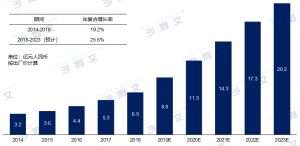
Data source: Frost & Sullivan analysis
The fastest-growing segment in the market for electrical stimulation rehabilitation medical devices is the pelvic floor and postpartum recovery area. Affected by the relaxation of the two-child policy, there is a high demand. At the same time, as patients' awareness of rehabilitation continues to improve, the market scale of electrical stimulation rehabilitation medical devices in this field will maintain a high-speed growth trend. Frost & Sullivan research shows that the market scale of electrical stimulation medical devices for pelvic floor and postpartum recovery in 2018 was 390 million yuan, and it is expected to reach 1.31 billion yuan by 2023, with a compound annual growth rate of 27.5% from 2018 to 2023.
China's pelvic floor and postpartum rehabilitation electrical stimulation medical device market2014 - 2023(Expected)

Data source: Frost & Sullivan analysis
2.1.3 Competitive Analysis of Electrical Stimulation Rehabilitation Medical Devices
The market for electrostimulation rehabilitation devices is relatively fragmented. Since electrostimulation therapy can be applied to multiple different departments and diseases, and the demand for electrostimulation therapy varies among different system diseases, as well as patient willingness to pay and doctors' prescription considerations, electrostimulation device manufacturers face different requirements for the research, development, production, promotion, and hospitalization strategies of electrostimulation device products for different departmental diseases. This leads to a large number of manufacturers in this field with low market concentration. Currently, the main enterprises in the industry include Guangzhou Shanshan Medical Device Industrial Co., Ltd., Nanjing WeiSi Medical Technology Co., Ltd., Nanjing Mairand Medical Technology Co., Ltd., Guangzhou LongzhiJie Technology Co., Ltd., Henan Xiangyu Medical Equipment Co., Ltd., etc. Frost & Sullivan analysis shows that Nanjing WeiSi Medical Technology Co., Ltd.'s market share of electrostimulation medical device products in 2018 was 17.31%.
2.2 Analysis of the Magnetic Stimulation Rehabilitation Medical Device Industry
Magnetic stimulation technology is a new type of rehabilitation medical technology that has developed after electrical stimulation technology and has gradually been applied. In China, the market for magnetic stimulation rehabilitation medical devices started relatively late, with large-scale promotion only occurring after 2016. The products mainly include transcranial magnetic stimulators and pelvic floor function magnetic stimulators. Clinically, they are primarily used in areas such as mental rehabilitation, neurological rehabilitation, pelvic floor, and postpartum rehabilitation, with the market scale gradually growing.
2.2.1 Clinical Application Analysis of Magnetic Stimulation Rehabilitation Devices
(1) Transcranial Stimulator
Transcranial stimulators are mainly used for mental rehabilitation and neurological rehabilitation. After Anthony Barker of the University of Sheffield in the UK invented transcranial magnetic stimulation in 1985, this technology has been rapidly applied to neuroscience research and clinical practice. In particular, over the past decade or so, it has achieved remarkable therapeutic effects in treating depression, sequelae of stroke, Parkinson's disease, and other conditions, gradually becoming an important technique for treating mental and neurological disorders.
Depression is a major market for transcranial magnetic stimulation (TMS). Frost & Sullivan research shows that in 2018, the number of people suffering from depression in China reached 62 million. With the deepening pressure of modern society, the expected growth of domestic depression patients will remain stable and is projected to reach 70.5 million by 2023. In contrast to the large base of patients, the overall diagnostic rate of depression in China is still low, with drug treatment being the main approach. Therefore, there is still significant room for expansion in the domestic depression treatment market. TMS for depression treatment has been explicitly approved in countries such as the United States, Canada, New Zealand, and Israel. Compared with drug treatment, TMS has advantages such as fewer side effects, high safety, no pain, low risk of addiction, and does not affect cognitive function. As the effectiveness of TMS treatment continues to improve, its penetration rate in the domestic depression treatment market will continue to grow.
Number of depression patients in China2014 - 2023(Expected)
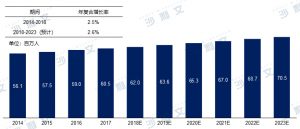
Data source: Frost & Sullivan analysis
Stroke rehabilitation treatment is another major application market for transcranial magnetic stimulation (TMS). As a safe, painless, non-invasive neurointerventional method, TMS combined with rehabilitation training can significantly improve limb dysfunction caused by stroke. In addition, TMS has good therapeutic effects on speech dysfunction, swallowing disorders, cognitive dysfunction, and other conditions caused by stroke. Frost & Sullivan research shows that China has a large number of stroke patients, with the number of stroke patients in China exceeding 16 million in 2018, and there is a trend of increasing incidence and younger age of patients. As the application of TMS in stroke rehabilitation treatment gradually matures, its penetration rate will continue to increase.
Rehabilitation treatment for Parkinson's disease is also a major potential market for transcranial magnetic stimulation (TMS). The main clinical symptoms of Parkinson's disease include resting tremor, bradykinesia, muscle rigidity, and postural and gait disorders, accompanied by non-motor symptoms such as depression, constipation, and sleep disorders. Pascual-Leone and colleagues first discovered in 1994 that TMS has a certain therapeutic effect on patients with Parkinson's disease in 'Neurology'.[1]The application of transcranial magnetic stimulation (TMS) technology can effectively alleviate patients' resting tremors, as well as improve their postural and gait disorders, emotional depression, swallowing dysfunction, and urinary and fecal incontinence. It can greatly enhance the rehabilitation treatment outcomes for Parkinson's patients on top of drug therapy. Frost & Sullivan research shows that the number of people with Parkinson's disease over the age of 65 in China continues to grow, reaching 2.832 million in 2018 and is expected to reach 3.459 million by 2023. The continuously growing market for Parkinson's rehabilitation treatment will bring strong demand for transcranial magnetic stimulators.
Number of Parkinson's disease patients in China (≥65Population aged 60 and above),2014 - 2023(Expected)

Data source: Frost & Sullivan analysis
(2) Pelvic floor functional magnetic stimulator
The pelvic floor magnetic stimulator is mainly used in urology, pelvic floor rehabilitation, postpartum recovery, and reproductive health, with stress urinary incontinence being the primary condition treated. Compared to transcranial magnetic stimulation, pelvic floor magnetic stimulation has developed more recently. In 1999, Galloway published the first successful case of magnetic stimulation treatment for urinary incontinence, and in 2000, the US FDA approved seats equipped with magnetic stimulation functions for treating urinary incontinence.
Indications for pelvic floor magnetic stimulation
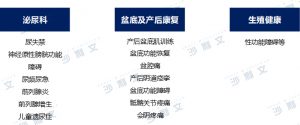
Data source: Frost & Sullivan analysis
Compared to electrical stimulation therapy, pelvic floor magnetic stimulation has advantages such as high intensity, high penetration, non-invasiveness, and painless stimulation. Pelvic floor magnetic stimulation generates a high-energy focused electromagnetic field through a device that can effectively penetrate air, skin, fat, bones, etc., covering all the pelvic floor muscle groups and providing painless stimulation to the neuromuscles. Patients do not need to change clothes or have an internal electrical stimulation probe, greatly improving training effectiveness and patient compliance.
China has a vast market for pelvic floor and postpartum rehabilitation. Affected by the relaxation of the two-child policy, coupled with the increasing awareness among patients about rehabilitation, the demand in this field will continue to grow.
2.2.2 Market Analysis of Magnetic Stimulation Rehabilitation Medical Devices
According to a Frost & Sullivan study, from 2014 to 2018, the market size of magnetic stimulation rehabilitation medical devices in China increased from 0.4 billion yuan to 2.4 billion yuan in 2018, with a compound annual growth rate of 56.5%. However, overall, the current treatment penetration rate of magnetic stimulation rehabilitation therapy in China is still relatively low. With the continuous growth of the patient population suitable for this therapy, the awareness of rehabilitation treatment has improved, new clinical applications such as pelvic floor stimulation have been actively expanded, industry standardization and treatment normalization are favorable factors that will continue to drive rapid growth in the Chinese magnetic stimulation rehabilitation medical device market. It is expected to grow at a compound annual growth rate of 49.4% to reach 1.78 billion yuan by 2023.
The Chinese magnetic stimulation rehabilitation medical device market,2014 - 2023(Expected)

Source: Frost & Sullivan analysis
2.2.3 Competitive analysis of magnetic stimulation rehabilitation medical devices
The manufacturing of magnetic stimulation rehabilitation medical devices requires precision and complexity, posing high technical barriers. Currently, the domestic magnetic stimulation rehabilitation medical device market is relatively concentrated, with major companies including Wuhan Yireide Medical Equipment New Technology Co., Ltd., Magstim UK, Nanjing Weisi Medical Technology Co., Ltd., Denmark's Tonica, Wuhan Aosifu Medical Technology Co., Ltd., etc. Frost & Sullivan analysis shows that Nanjing Weisi Medical Technology Co., Ltd. had a market share of 18.64% for magnetic stimulation medical device products in 2018.
2.3 Analysis of the electrophysiological rehabilitation medical device industry
With the progress of computer technology, microelectronics technology, and medical signal processing technology, the accuracy and credibility of electrophysiological technology have been greatly improved. The application of electrophysiological technology in medical devices has become more widespread, and the electrophysiological medical device industry has entered a mature development period. There are a wide variety of electrophysiological medical device products, mainly including surface electromyography analysis, neonatal electroencephalogram analysis, and biofeedback instruments, which are widely used in fields such as neurological rehabilitation, mental rehabilitation, and child rehabilitation.
2.3.1 Clinical application analysis of electrophysiological rehabilitation devices
(1) Surface electromyography analysis
Due to the advantages of objective, quantifiable, non-invasive, and repeatable electrophysiological technology, it plays a significant role in the rehabilitation assessment of patients with neurological disorders, especially stroke patients. The most important one is surface electromyography analysis. Compared with traditional needle electromyography, surface electromyography analysis has advantages such as large detection space, good repeatability, and non-invasive operation, providing a non-invasive, dynamic, and real-time evaluation method for clinical research. It is applied to motor analysis and neuromuscular function assessment, capable of objectively and quantitatively evaluating the resting state, contraction function, and coordination ability of muscles. Currently, the main surface electromyography analysis products on the market include the company's surface electromyography analysis system and Shanghai Nuocheng's electromyograph.
(2) Biofeedback instrument
Biofeedback therapy technology has currently been applied in the treatment and diagnosis of various diseases, such as the rehabilitation treatment of mental illnesses such as anxiety, depression, and insomnia. The implementation of biofeedback therapy technology cannot be separated from the assistance of instruments, and among them, the most commonly used one is the multi-parameter biofeedback instrument, which can collect, analyze, and evaluate multiple physiological indicators such as the patient's electroencephalogram, electromyogram, respiration, blood volume pulsation, skin potential, skin temperature, and electrocardiogram. Currently, the biofeedback products on the market mainly include the company's group biofeedback instrument, multi-parameter feedback instrument, Guangzhou Runjie's brain biofeedback therapy instrument and multi-parameter biofeedback therapy instrument.
(3) Neonatal electroencephalogram measuring instrument
The neonatal electroencephalogram measuring instrument is mainly used to help clinicians carry out neonatal brain injury screening, brain function monitoring, and brain development assessment. Neonatal brain injury is a common disease during the neonatal period and also a major cause affecting the neonatal mortality rate and quality of life. Therefore, bedside continuous monitoring of critically ill newborns and early detection of brain injury are crucial. Since the behavioral functions of newborns are not yet fully developed, the value of clinical examination in evaluating neurological development is quite limited. Electroencephalogram is more sensitive than some clinical indicators in reflecting brain function and has the advantages of being non-invasive and allowing for dynamic follow-up review. It can be used to evaluate the maturity of brain development, judge the severity of brain injury and prognosis, and is also an important means for diagnosing neonatal convulsions. Amplitude-integrated electroencephalogram is a technology developed in recent years for neonatal clinical electroencephalogram monitoring. It has advantages such as simple operation, less environmental interference, easy interpretation, and long-term bedside continuous monitoring. It has become an important means for daily monitoring in neonatal intensive care units abroad. Currently, the neonatal electroencephalogram measuring products on the market mainly include the company's neonatal electroencephalogram measuring instrument, Nihon's electroencephalogram measurement system, Qitong Medicine's electroencephalogram measuring instrument, and Meilun Medical's electroencephalograph.
2.3.2 Market analysis of electrophysiological rehabilitation devices
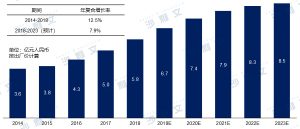
Frost & Sullivan research shows that from 2014 to 2018, the market size of electrophysiological rehabilitation treatment devices in China increased from 3.6 billion yuan to 5.8 billion yuan, with an expected compound annual growth rate of 7.9% to reach 8.5 billion yuan by 2023.
The Chinese electrophysiological rehabilitation medical device market,2014 - 2023(Expected)
Source: Frost & Sullivan analysis
2.3.3 Competitive analysis of electrophysiological rehabilitation medical devices
In China, due to the wide variety of electrophysiological rehabilitation medical devices and relatively dispersed market, the main companies in the industry include American Natus Company, Shanghai Nuocheng Electric Co., Ltd., Shanghai Optoelectronic Medical Instrument Co., Ltd., Nanjing Weisi Medical Technology Co., Ltd., Guangzhou Runjie Medical Device Co., Ltd., etc. Frost & Sullivan analysis shows that Nanjing Weisi Medical Technology Co., Ltd. had a market share of 4.64% for electrophysiological medical device products in 2018.
2.4 Analysis of the rehabilitation robot industry
Rehabilitation robots are a high-end rehabilitation medical technology that has only developed in recent years. It is a product of the combination of robotics technology and medical technology and can achieve the function of replacing/assisting rehabilitation therapists. Compared with the global market, China's development of rehabilitation robots started relatively late. Currently, the Chinese rehabilitation robot market is not yet mature, but there is great potential for future market scale growth.
2.4.1 Clinical application analysis of rehabilitation robots
Rehabilitation robots are currently mainly suitable for upper or lower limb motor dysfunction caused by stroke, brain injury, spinal injury, neurological injury, muscle injury, orthopedic diseases, etc., helping patients reshape their brain motor nerves, restore the brain's control over upper limb movement, and thus improve patients' daily living ability. For example, by providing safe and effective walking training platforms or wearable exoskeleton mechanical legs to assist patients in completing a large number of repetitive physiological gait training, patients can establish the correct movement pattern at an early stage, laying a good foundation for normal walking in the future. The clinical application advantages of rehabilitation robots mainly lie in three aspects:
(1) Mechanical repetitive operation to replace rehabilitation therapists. Due to the advantages of mechanical equipment, rehabilitation robots can free doctors from heavy and repetitive training and enable them to focus more on improving treatment plans. At the same time, it also makes remote rehabilitation medicine and centralized rehabilitation medicine possible.
(2) Precise control of the rehabilitation treatment process. Using various sensors provided by rehabilitation robots to measure human kinematics and physiological data can provide an objective basis for doctors to improve and optimize rehabilitation plans; after functional assessment of patients, the treatment intensity and different training modes of rehabilitation robots are mainly calculated by algorithms, which are more in line with the actual treatment needs of patients.
(3) Combining feedback systems and interactive design to stimulate patients' active movement awareness, enhance the fun of treatment, increase patients' rehabilitation information, and maintain compliance with rehabilitation treatment.
2.4.2 Market analysis of rehabilitation robots
Frost & Sullivan research shows that since the start of the rehabilitation robot rehabilitation treatment device market in China in 2017, the market size reached 210 million yuan in 2018, and is expected to grow at an annual compound growth rate of 57.5% to reach 2 billion yuan by 2023.
The Chinese rehabilitation robot rehabilitation medical device market,2014 - 2023(Expected)

Source: Frost & Sullivan analysis
2.4.3 Competitive analysis of rehabilitation robots
At present, the domestic market for rehabilitation robots is still in the initial exploration stage, with few market competitors, and most mainly provide lower limb rehabilitation robot products.Currently, the main companies in the industry include Beijing Diehe Medical Technology Co., Ltd., Guangzhou Yikang Medical Equipment Industrial Co., Ltd., Beijing Da'ai Robot Technology Co., Ltd., Shanghai Fourier Intelligence Technology Co., Ltd., Changzhou Qianjing Rehabilitation Co., Ltd., etc.
[1] A. Pascual-Leone, J. Valls-Solé;, J. P. Brasil-Neto, A. Cammarota, J.Grafman, M. Hallett, Akinesia in Parkinson's disease. II. Effects of subthreshold repetitive transcranial motor cortex stimulation, Neurology May 1994, 44 (5) 892; DOI: 10.1212/WNL.44.5.892
If you need to purchase a complete report with rankings
Click on the link to purchase:
https://www.leadleo.com/report/viewReport?id=5def53085d27be577f5d763b




