



China X-ray Inspection Equipment Market: A Scale of Hundreds of Billions, with Promising Prospects
In the field of non-destructive testing, there are five conventional testing methods: radiographic testing, ultrasonic testing, magnetic particle testing, eddy current testing, penetrant testing, and some unconventional methods such as laser, electromagnetic wave, infrared, etc. Among these, radiographic testing is one of the most important detection methods. Key equipment in industries such as aerospace, aviation, and military requires radiographic testing to assist other detection methods and form a comprehensive non-destructive testing plan. Among these conventional and unconventional internal non-destructive testing methods, X-ray has the best visibility, is measurable, and has the highest precision, reaching the nanometer level.
According to a report by the internationally renowned research institution Frost & Sullivan (hereinafter referred to as 'Frost & Sullivan'), the global X-ray development journey is as follows:
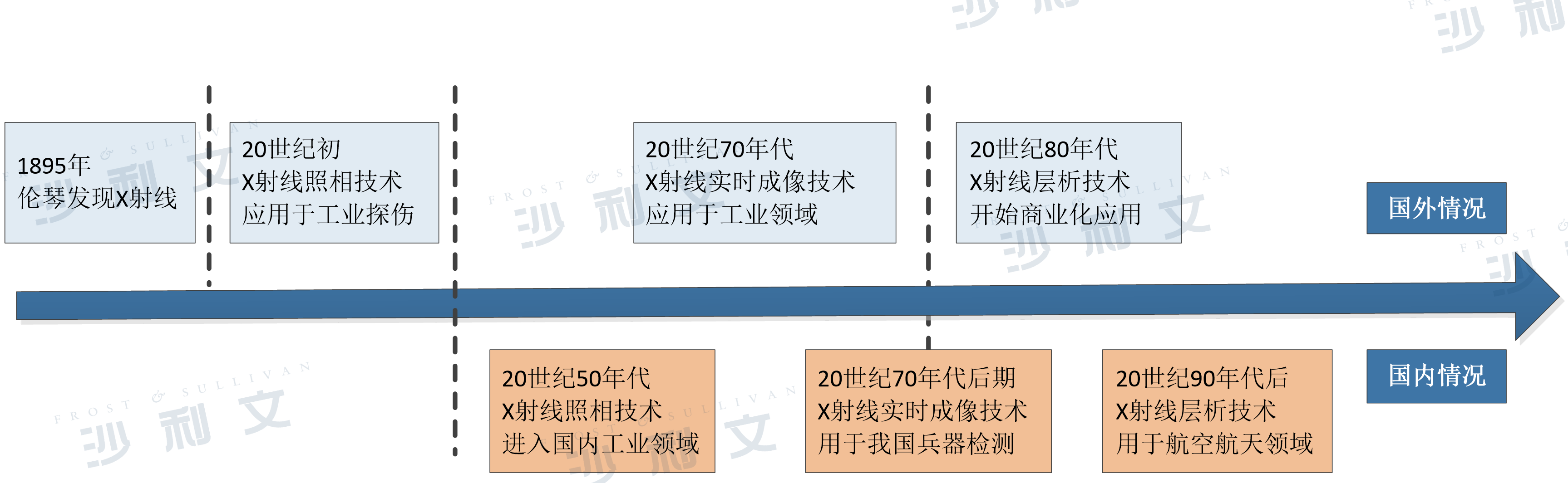
Data source: Frost & Sullivan
In addition to the medical field, downstream applications of X-ray inspection equipment mainly include integrated circuit and electronic manufacturing inspection, battery inspection, industrial castings, welds and pressure vessel inspection, foreign object detection, and public safety inspection. According to Frost & Sullivan data, in 2021, the total market size of X-ray inspection equipment in China, excluding medical applications, was 11.9 billion yuan, a year-on-year compound growth rate of 9.3%, indicating a relatively stable growth compared to the 8.34 billion yuan in 2017.It is estimated that by 2026, the market size of X-ray inspection equipment in China's main application fields will reach 24.14 billion yuan. Compared with 2022, the annual compound growth rate is 15.8%.Affected by the rapid growth in demand from downstream industries such as integrated circuits and electronics manufacturing, battery testing, etc., X-ray inspection equipment is expected to maintain a high growth trend over the next five years.
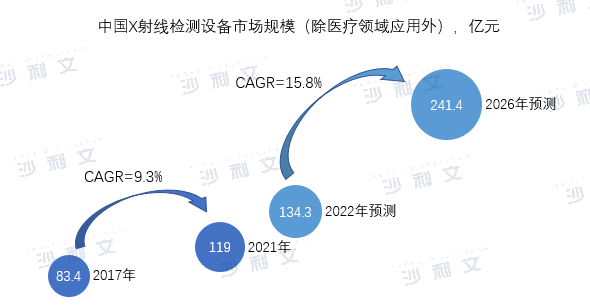
Data source: Frost & Sullivan
With excellent detection capabilities, X-ray inspection equipment is widely used in various fields.
According to the different application fields of X-ray inspection equipment, they generally include semiconductor and electronics manufacturing, lithium battery manufacturing, industrial product manufacturing, public safety, and others (such as the food industry).
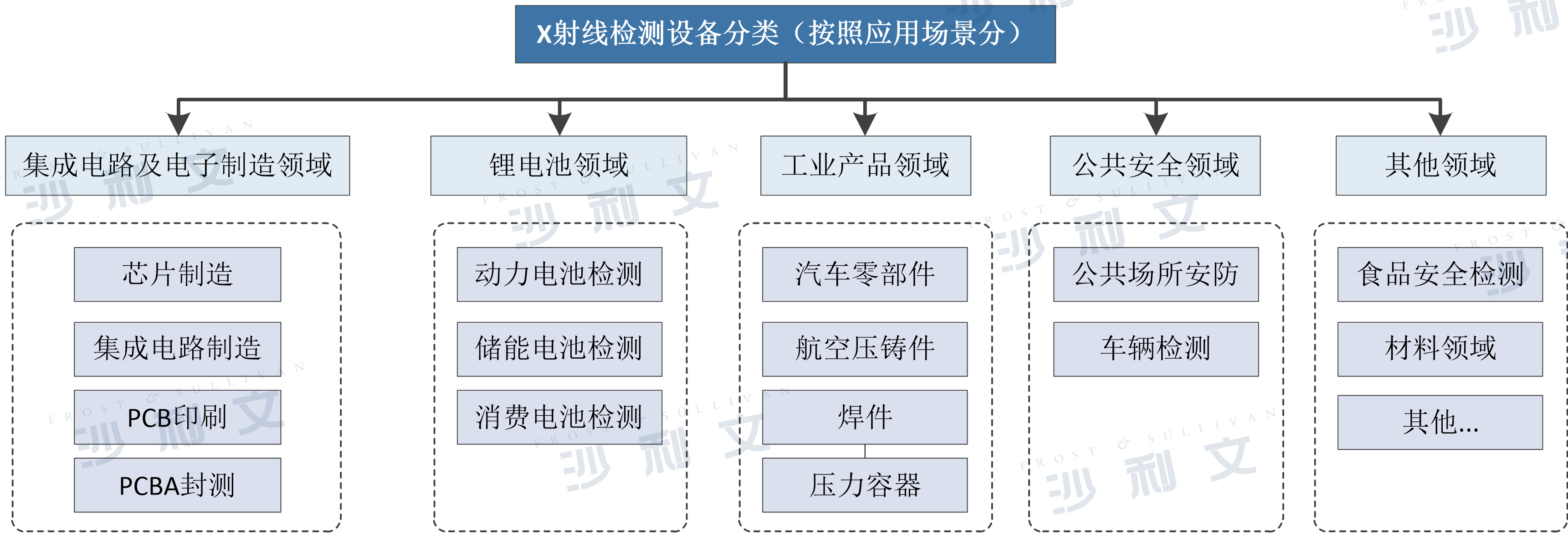
Data source: Frost & Sullivan
The integrated circuit and electronics manufacturing field includes chip, integrated circuit manufacturing, as well as PCB printing, PCBA packaging and testing; the lithium battery field (also known as new energy battery field) includes power battery testing, energy storage battery testing, and consumer battery testing; the industrial product field (mainly involving welded parts, castings, and materials) includes automotive components, aerospace die-castings, welded parts, and pressure vessels; the public safety field includes public places (such as airport, railway station, subway, etc., for small luggage inspection), vehicle testing (high-speed road traffic inspection, prison vehicle inspection); in other fields, X-ray inspection equipment is gradually being applied, such as in the food safety field and material testing field.
Among them, the integrated circuit and electronics manufacturing sector, lithium battery sector, and industrial product sector have high requirements for X-ray inspection equipment, thus resulting in higher equipment value. In 2021, the market size of these three sectors accounted for about 50% overall, and it is expected that by 2026, it will approach 70%.
The field of integrated circuits and electronic manufacturing has a high demand for X-ray inspection with high precision.
The integrated circuit and electronics manufacturing fields involve the manufacturing/installation of electronic components, PCB printing, packaging, etc. With the development of lightweight and intelligent electronic products, the size of semiconductors is continuously shrinking, leading to an increasing demand for higher density integrated circuit packaging. Correspondingly, the precision requirements for defect detection need to reach a more advanced level. Currently, industrial X-ray inspection equipment or micro-focus X-ray inspection equipment can meet the multi-stage inspection requirements of complex integrated circuits and electronics manufacturing processes.
According to data disclosed by the Global Semiconductor Trade Statistics Organization, global semiconductor sales increased from $335.2 billion in 2015 to $555.9 billion in 2021; among them, sales in the Chinese market grew from $98.6 billion in 2015 to $192.5 billion in 2021, with an average annual compound growth rate of 11.8%. Its share of the global market also rapidly rose from 29.4% in 2015 to 34.6%,Ranked first in the world.
According to Frost & Sullivan's statistics and forecasts, from 2017 to 2021, the market scale of integrated circuits and electronic manufacturing in China increased from 1.53 billion yuan to 2.34 billion yuan, with an average annual compound growth rate of 11.2%. In the future, as the semiconductor manufacturing industry gradually becomes a national key development industry and government support policies continue to be introduced, the integrated circuits and electronic manufacturing industry in China is expected to thrive. At the same time, the demand for X-ray inspection equipment by integrated circuit and high-end electronic manufacturing manufacturers is also expected to further expand.By 2026, the market size of integrated circuit and electronic manufacturing X-ray inspection equipment is expected to reach 6.12 billion yuan, with an average annual compound growth rate of 23.0% between 2022 and 2026.

Data source: Frost & Sullivan
The shipment volume of new energy batteries has increased, driving the growth of the X-ray inspection equipment market.
The development of X-ray inspection equipment in the new energy battery industry is closely related to the growth of the new energy battery industry itself. The X-ray inspection equipment for the new energy battery industry is mainly used in the fields of new energy batteries such as power battery testing, consumer battery testing, and energy storage battery testing for new energy vehicles.
With the increase in electric vehicle sales, the shipment volume of power batteries will continue to rise. Moreover, X-ray inspection has become an essential part of battery production. The power battery market will drive the application of X-ray inspection equipment in the power battery industry.Especially conducive to enhancing the penetration rate of online X-ray inspection equipment.
According to the statistics and forecasts of Frost & Sullivan,In 2021, the market scale of X-ray inspection equipment in the battery inspection field reached 1.32 billion yuan, with Chinese equipment playing a dominant role.The explosive development of the new energy vehicle and energy storage industries has been the main driving force behind the rapid growth of X-ray inspection equipment in the battery industry. With the high-speed expansion of production capacity by power batteries and energy storage companies, the demand for X-ray inspection equipment in this field has grown rapidly. Moreover, equipment technology is iterating quickly, with an expected compound annual growth rate exceeding 28.9% over the next five years (from 2022 to 2026). It is anticipated that by 2026,The market scale of X-ray inspection equipment in the overall battery inspection field will reach 5.8 billion yuan.
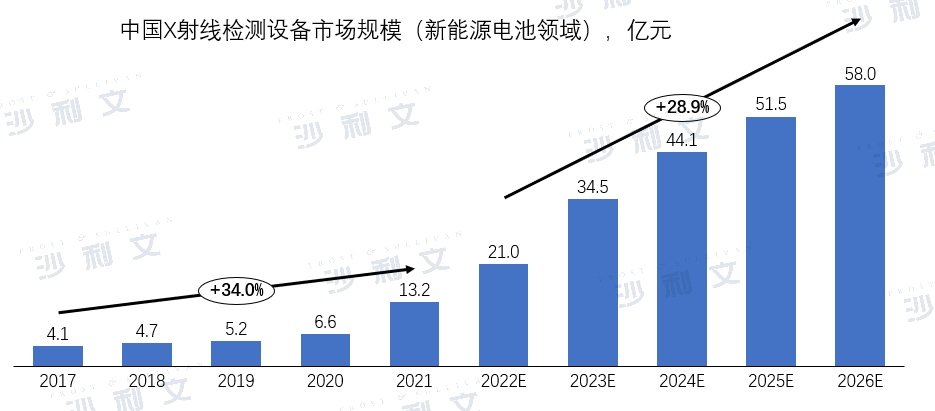
Data source: Frost & Sullivan
The demand for X-ray inspection in the fields of castings, welded parts and materials remains stable, with steady growth expected in the future.
With the growing strength of China's scientific and technological capabilities, leading enterprises in fields such as automobiles, casting, and aerospace are gradually expanding their production scale to improve productivity in order to meet the surging market demand.
In the field of casting, welded parts, and material inspection, X-ray imaging technology is the most intuitive, sensitive, and convenient method for quantitative analysis. It has irreplaceable advantages and has been widely applied in various defect detection and diagnosis tasks, mainly including: ① Metal castings (including various automotive parts, integrated die-cast frames, industrial machinery parts, rail transit wheel hubs, etc.); ② Sensitive structural components (such as aerospace and military parts); ③ Pressure vessels (such as high-pressure boilers, gas cylinders, gas tanks, etc.); ④ Welding of pipe fittings and other scene inspections.
Currently, the main suppliers in the fields of casting, welding, and material testing are focusing their attention on X-ray intelligent inspection equipment. As an efficient and precise inspection tool, X-ray inspection is increasingly favored and recognized by industries such as automotive manufacturing and aerospace. The demand for X-ray inspection equipment has also gradually increased with the overall expansion of markets like the automotive industry and aerospace.
According to Frost & Sullivan's statistics and forecasts, in 2021, the market size of X-ray inspection equipment in China's industrial sector (castings, weldments, and materials) was nearly 2.11 billion yuan. The market for X-ray inspection equipment in related fields still has room for development, with an estimated market size exceeding 4.42 billion yuan by 2026. The compound annual growth rate from 2022 to 2026 is expected to be close to about 17.0%.

Data source: Frost & Sullivan
Market competition in X-ray inspection equipment: The Chinese market has shifted from foreign monopoly to domestic substitution
The X-ray inspection equipment industry chain includes upstream component supply, midstream equipment system integration and manufacturing, as well as downstream applications in various fields. The X-ray inspection equipment industry involves numerous links, and Chinese enterprises are gradually replacing the use of overseas inspection equipment in some areas with their own technology and experience accumulation. The overall market is shifting from foreign monopoly to domestic substitution.
X-ray inspection equipmentupstream partsMainly including X-ray source, detector, high-voltage power supply, multi-axis linkage system, etc. Competitors include those providingOpen-ended microfocus ray sourceYxlon, Finetech, X-WorX; availableClosed-circuit microfocus ray sourceBench-top, Thermo Fisher, Riken; COMET, Varian, VJ Technologies offering high-power focal sources; Shanghai Chaogun, Dandong Ronghua offering ordinary focal sources; Toshiba, THALES, Varian, Bench-top, Rayence, Yirei, Kangzhong offering detectors; forOpen-ended microfocus ray sourceProvide high-voltage power supplyGulmay, Spellman, COMET.
The midstream of X-ray inspection equipment includes the design, detection algorithms, system integration, and manufacturing aspects. It involves the design and integration of imaging systems, scanning systems, etc. Competing companies are classified according to their downstream application fields, includingCompetitive enterprises in the fields of electronic manufacturing and integrated circuit testingSuch as Yxlon, GE, Shimadzu, OMRON, Nippon Ricoh, SEC, Sany;Competitors in the battery testing fieldSuch as Zhengye, Rilian, Dacheng, Shuangyuan;Foundries, welded parts and pressure vessel inspectionCompetitive companies such as EKVS, Zeiss, Beckhoff, Relyon, HuaRI, and Dandong Aolong;Foreign object detection fieldCompetitive companies include: Mettley-Trimble, Thermo Fisher Scientific, Anritsu, Taiyi, Meiya Optoelectronics, Duoko, Gaojing, and Rilian;Public safety testing fieldCompetitive enterprises include Smiths, L3Harris, Rapiscan, Tongfang Vision, Public Security First Institute, and Tianhe Times.

Data source: Frost & Sullivan
From the perspective of industrial chain enterprises in China, since the demand for X-ray inspection equipment varies across different inspection fields, onlyA few enterprises can achieve multi-field layoutFor example, Yxlon, a leading foreign company, is applied in the fields of electronic manufacturing and integrated circuit testing, as well as castings, welded parts, and pressure vessel testing. Rilian, a leading Chinese company, offers products in the areas of electronic manufacturing and integrated circuit testing, battery testing, castings, welded parts, pressure vessel testing, foreign object detection, safety testing, etc. The downstream customers of X-ray inspection equipment are spread across various industries. Leading companies in different fields often choose X-ray inspection equipment with better comprehensive performance to ensure product quality and improve product yield.
The X-ray inspection equipment market in the integrated circuit and electronics manufacturing field is mainly dominated by foreign competitive enterprises.
- Market competition of X-ray inspection equipment in the integrated circuit field
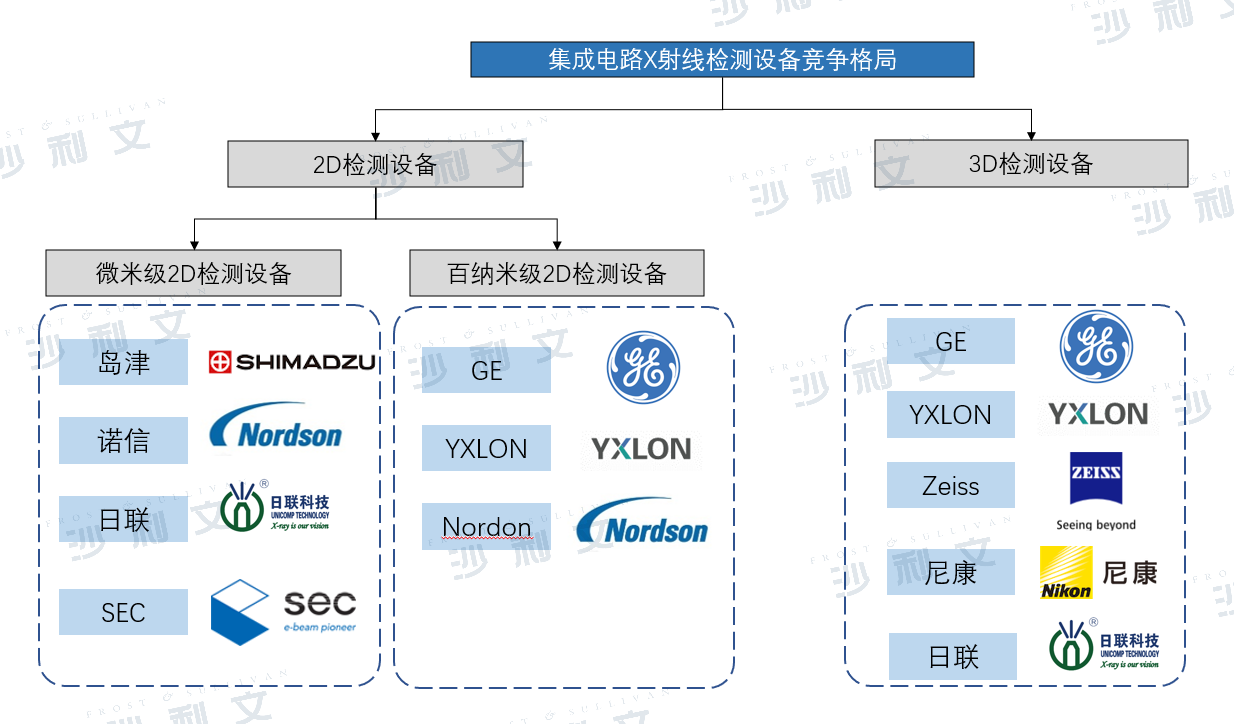
The integrated circuit industry has high requirements for the accuracy of X-ray inspection equipment,Nanometer and micron precisionPrimarily. Among the enterprises competing in the integrated circuit X-ray inspection market,Primarily foreign manufacturers, with a high market concentration.
at2D detection field, includingNanometer-level detection equipment and micron-level detection equipmentTwo categories, among which the main participants in 2D detection at the micron level include brands such as Shimadzu, Nioson, Rion, and SEC;Detection equipment with 100-nanometer-level detection accuracyThe main participants include GE, Yxlon, and Nordson, with market share essentially concentrated among these three companies;3D inspection equipmentIn the field, GE and Yxlon have a relatively high market share. Zeiss and Nikon also occupy a portion of the market. Currently, Chinese enterprise Ronglian Technology is also entering this market.
Data source: Frost & Sullivan
- Market competition of X-ray inspection equipment in the electronics manufacturing field
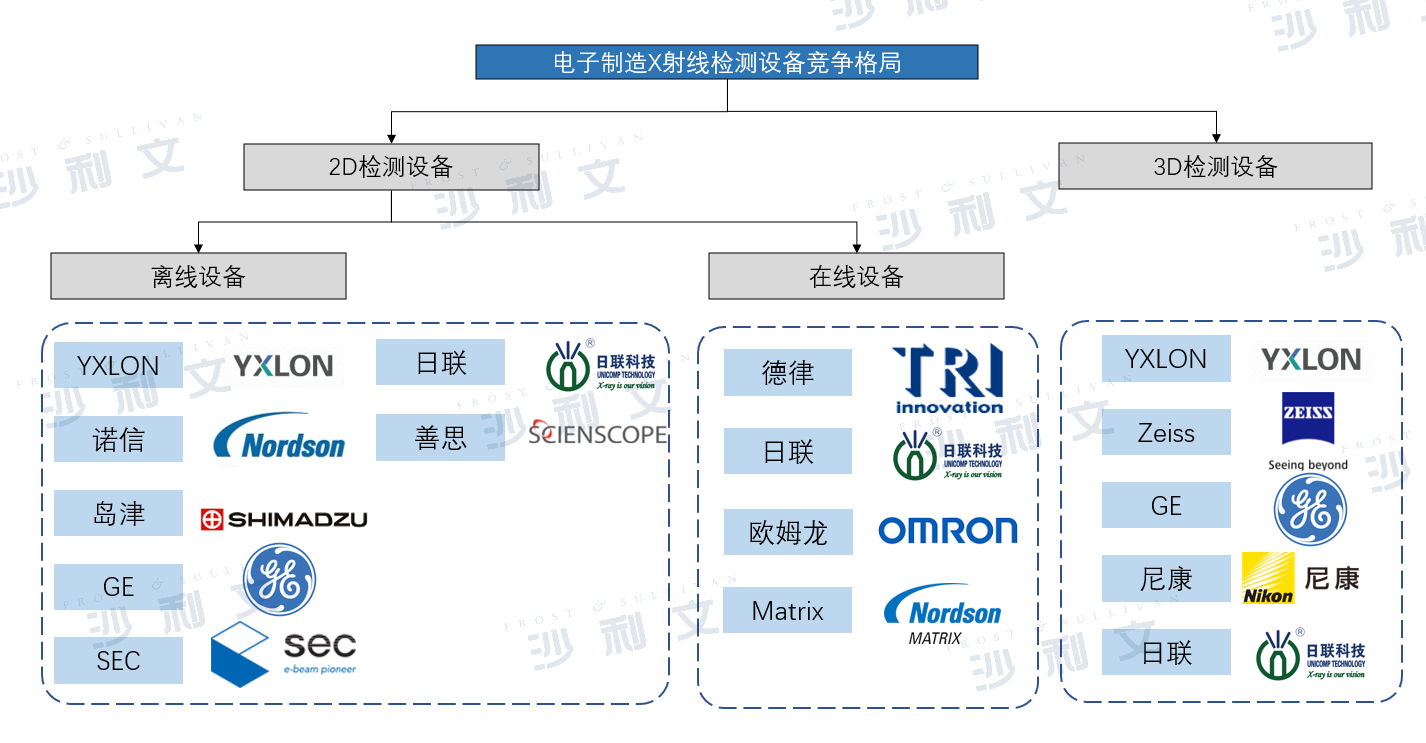
X-ray inspection equipment for the electronics manufacturing (including SMT, PCB, and PCBA) testing industry includesOffline 2D inspection equipment, online 2D inspection equipment3D inspection equipment.3D inspection equipment marketAmong them, Yxlon and Zeiss hold a high market share, with GE, Nikon, and Hitachi also occupying a portion of the market.2D online inspection equipment marketAmong them, the main participants include Deloitte, RIO, OMRON, and Matrix.2D offline detection device marketIn the Chinese market, the main manufacturers are Ronglian Technology and Sainscreen. Among the imported 2D offline inspection equipment, the major participants include Yxlon, Nordson, Shimadzu, GE, SEC, etc.
Data source: Frost & Sullivan
Due to the earlier start-up of foreign enterprises and their deep accumulation of technical experience, they have certain advantages over Chinese enterprises in terms of technology. According to Frost & Sullivan's statistics, currently, more than 75% of the market in China for X-ray integrated circuits and electronic manufacturing inspection equipment is occupied by overseas enterprises, especially in the field of high-end X-ray electronics manufacturing and integrated circuit inspection equipment. Among Chinese enterprises, according to Frost & Sullivan's statistics, Ronglian Technology currently leads the Chinese market with a market share of about 6%, includingA few Chinese companies, including Rilian Technology and SANSI, have entered the market. The X-ray inspection equipment for integrated circuits and electronics manufacturing in the Chinese market is gradually shifting from foreign monopoly to domestic substitution.
In the field of new energy battery testing, Chinese enterprises account for over 90% of the X-ray testing equipment market.
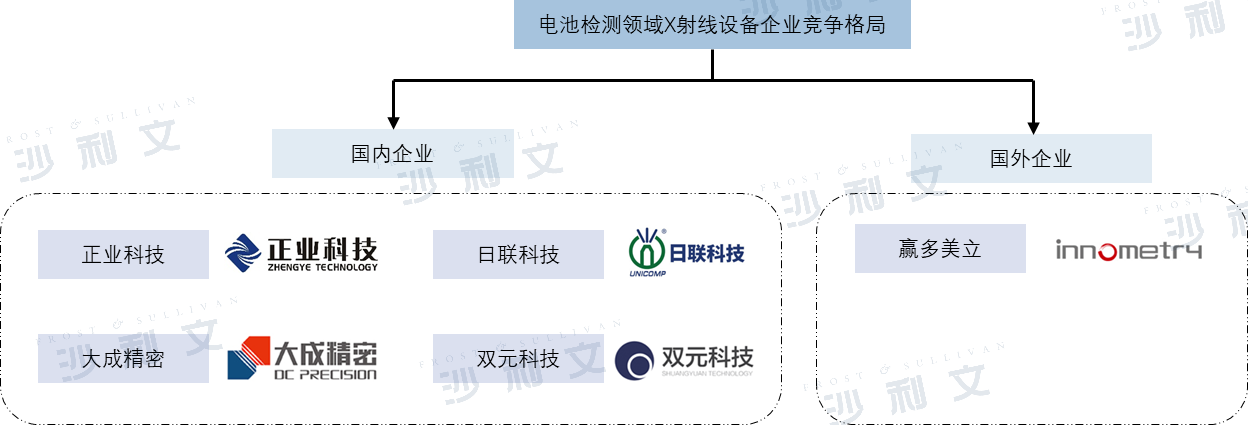
Battery X-ray inspection equipment is affected by the concentration of downstream industries, resulting in a relatively concentrated competitive landscape. Moreover, due to the strong demand for non-standard customization of the equipment, in recent years, the battery X-ray inspection equipment market has been mainly dominated by Chinese enterprises, including Zhengye Technology, Rilian Technology, Shuangyuan Technology, Dacheng Precision, etc. Major foreign participants include Winmore Li, etc.
Data source: Frost & Sullivan
Battery industry X-ray inspection equipment enterprises mainly provide non-destructive testing equipment to battery manufacturers to improve battery safety. Industry clients include CATL, BYD Battery, Contemporary Amperex Technology Co., Ltd., Guoxuan High-Tech Energy Co., Ltd., EVE Energy, Honeycomb Energy, and others.
Power lithium-ion battery products, due to their high number of winding layers and strict quality requirements, also have high demands on X-ray inspection equipment. In addition, there is a large demand for power battery production capacity with fast production lines, requiring inspection equipment that can automatically feed, sort, and unload materials, thus placing extremely high demands on the automation systems of online equipment.
Thanks to the rapid development of the upstream and downstream industries of power batteries and energy storage batteries in China, as well as the strong demand for non-standard customization of X-ray inspection equipment in this field, the localization rate of X-ray inspection equipment in the power battery and energy storage battery industry in China is relatively high.Chinese enterprises account for more than 90% of the market share.According to the statistics of Frost & Sullivan,Zhengye Technology ranks first in market share, while Rilian Technology leads the Chinese new energy battery X-ray intelligent inspection equipment market, with its business scale ranking second in the Chinese market.
The market for X-ray inspection equipment for casting, welding parts and material testing is evenly divided between Chinese and foreign enterprises.
In the field of castings, welded parts, and pressure vessels, there are many market participants. Among them, foreign enterprises hold a dominant position in the market, such as Zeiss, Eikon Vision, Phoenix, etc. Their equipment is technologically advanced and has a high single-unit value, and is widely used in fields such as automotive, aerospace, etc. Chinese enterprises, such as Rilian Technology, Huarui Science, Dandong Aolong, are relatively leading and are the main competitors and challengers to the market position of foreign enterprises. X-rays are widely used in the industrial field. In addition to being mainly concentrated in industries such as aerospace, auto parts, and pressure vessels, they are also widely used in fields such as rail transit and power facilities. Besides industry-leading top enterprises, there are also many smaller enterprises participating, but their market share is small. Leading enterprises in industrial X-ray inspection equipment include Gemelon, GE, Phoenix, Rilian Technology, Huarui Science, Dandong Aolong and other enterprises.
In 2021, the market scale of X-ray inspection equipment in China's casting, welding and pressure vessel industries was RMB 2.11 billion. According to Frost & Sullivan's statistics, foreign enterprises accounted for about 60% of the market share, while the overall market share of Chinese enterprises is relatively fragmented.
By mastering core components, China's X-ray inspection industry continues to enhance its innovation capabilities.
Overall, the upstream core components of X-ray inspection equipment include X-ray sources and detectors.microfocus X-ray sourceRepresenting the highest R&D level in the industry,Major competitorsIncluding foreign companies such as Yxlon, Finetech, X-WorX, ThermoFisher, Bushnell, COMET, and Varian. CurrentlyChinese enterprisesRilian Technology has made breakthroughs in micro-focus X-ray sources. Competitors in the detector market include foreign companies such as Varian Vision, Trixell, Canon, Vieworks, and Rayence, as well as Chinese companies like Kangzhong and Yirui Technology. Chinese companies have continuously enhanced the innovation capabilities of X-ray inspection equipment by gradually mastering the core components of X-ray equipment.
An X-ray source, also known as an X-ray tube or X-ray light source, is a device that produces and emits X-rays. Based on their different performance characteristics, X-ray sources are divided into microfocus ray sources, high-power ray sources, and ordinary ray sources, among which microfocus ray sources have the highest technical barriers.The technology and market of micro-focus ray sources in China are basically monopolized by foreign manufacturers, constituting a typical 'neck-sticking' technology and supply issue.
Microfocus ray sources involve disciplines such as atomic physics, vacuum physics, materials science, electromagnetism, electron optics, and thermodynamics. They are highly developed and technically challenging, used in precision detection equipment, and refer to ray sources with a focal size ranging from dozens of micrometers to 1 micron. Due to their high detection accuracy, they are widely applied in semiconductor packaging, electronic manufacturing, and battery testing. For example, in the field of integrated circuits, microfocus ray sources can be used for detecting integrated circuits and chip packages. The size of the material being tested is small, and high sensitivity of the equipment is required.
As the core component of X-ray detection equipment, X-ray sources are a focal point for global enterprises competing to invest in research and development. Currently, micro-focus X-ray source technology represents the highest level of R&D in the industry.
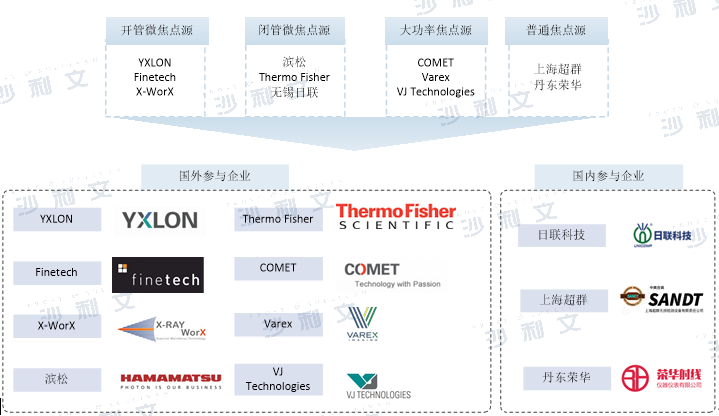
As shown in the figure below, X-ray source competitors include Yxlon, Finetech, and X-WorX, which provide open-tube micro-focus sources; Japanese manufacturer Shimadzu, American company Thermo Fisher, and Wuxi Rilian, which offer closed-tube focal sources; COMET, Varex, and VJ Technologies, which provide high-power focal sources; and Shanghai Chaoyun and Dandong Ronghua, which offer ordinary focal sources.
X-ray source companies include foreign enterprises such as Yxlon, Finetech, X-WorX, Shimadzu, Thermo Fisher, COMET, Varex, and VJ Technologies, as well as Chinese companies like Rilian Technology, Shanghai Chaopeng, and Dandong Ronghua. In the field of micro-focus X-ray sources, there are also foreign companies including Yxlon, Finetech, X-WorX, Shimadzu, and Thermo Fisher, along with the Chinese company Rilian Technology. Some of these X-ray source companies also engage in the research, development, and sales of X-ray inspection equipment, such as Yxlon and Rilian Technology. Overall, in the high-end micro-focus X-ray source field, foreign companies hold a certain advantage, with only Rilian Technology making certain breakthroughs in this area.
Data source: Frost & Sullivan
For micro-focus ray sources, the Chinese market has always been monopolized by two companies: Shimadzu of Japan and Thermo Fisher of the United States. In 2021, their combined market share was nearly 85%. Shimadzu and Thermo Fisher can provide a full range of micro-focus ray sources including 90 kV, 110 kV, 130 kV, 150 kV, and above. In recent years, some Chinese manufacturers have also continued to invest in research and development in this field and made certain progress, but the overall market share is still small. With the continuous advancement of the localization wave,In the future, Chinese domestic manufacturers are expected to gain a foothold in the micro-focus ray source market and achieve domestic substitution.
According to the relevant materials, the comparison of Ritek Technology's market position and competitive enterprises in the micro-focus radiation source market is shown in the following table:

Data source: SinoTech's prospectus
For a long time, the technology and supply of closed-cathode micro-focus X-ray sources have been monopolized mainly by Shimadzu Photonics in Japan and Thermo Fisher Scientific in the United States. Closed-cathode micro-focus X-ray sources mainly cover the product range from 90 kV to 180 kV. Currently, Riken Technology has developed 90 kV and 130 kV products that are urgently needed in the market and have been mass-produced for applications such as integrated circuit packaging and testing, electronic manufacturing SMT/PCB/PCBA, and new energy batteries.
In the field of enclosed hot cathode microfocus X-ray sources, Rilian Technology is the only company in China that has achieved mass production. However, Rilian Technology currently only realizes batch production of products at 90 kV and 130 kV, and its product range is not as rich as that of overseas competitors. At the same time, overseas competitors have decades of production experience in the field of enclosed hot cathode microfocus X-ray sources and still hold certain advantages in terms of technical reserves, market recognition, and market share.Through the self-development of core light sources, X-ray inspection equipment in different application fields is expected to utilize domestic light source products, thereby enhancing the overall strength of China's advanced manufacturing industry.
The global X-ray market benchmark Comet Yxlon leads the industry's development direction
Comet Yxlon is a global leader in industrial X-ray and CT system solutions. With a wide range of X-ray product types and CT system categories, Comet Yxlon serves many industries such as automotive, aerospace, electronics, electric vehicles, or scientific research, dedicated to achieving the highest quality products and maximum production efficiency.
At the Automation Control Exhibition in 2022, Yxlon, a manufacturer of X-ray and CT inspection systems, announced that it would be renamed Comet Yxlon after September 8, 2022. The new brand design highlights the long-standing affiliation between Yxlon and Comet. Comet is a global leading technology company that has been focusing on plasma technology and X-ray technology for many years. The CEO of the Comet Group and the Global President of Yxlon mentioned at the time, "Comet Yxlon represents decades of X-ray expertise and passion for innovation. This brand reshaping strengthens our brand influence and underscores the importance of the entire Comet Group."
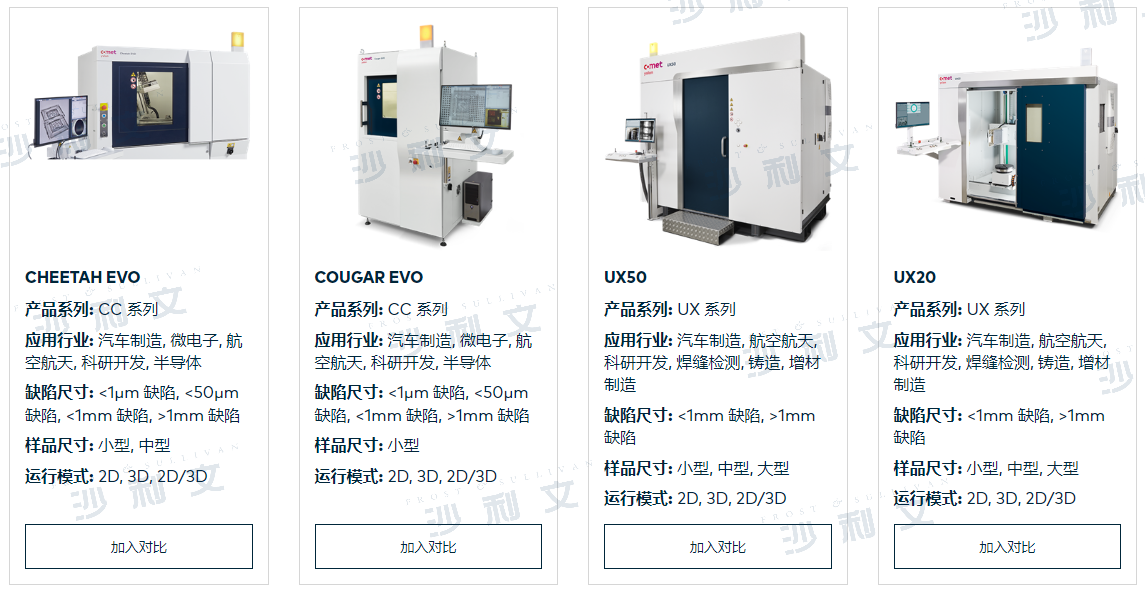
Source: Yxlon official website
Yxlon, headquartered in Hamburg, Germany, is a global leader in X-ray non-destructive testing technology. It has long been committed to miniaturizing products while maintaining high quality and reliability. Its Feinfocus brand is at the forefront of micro-focus X-ray inspection technology. Feinfocus has developed a series of new technologies for high-precision micro-focus X-ray inspection, including micron-focus X-ray tubes, nanofocus X-ray tubes, micro-focus X-ray systems, and micro-focus CT scanners.
As a global market leader in the development and manufacturing of X-ray inspection equipment and its core components, Yxlon can be regarded as a global benchmark and will continue to lead the global development direction of the industry.
The leading player in China's X-ray market is emerging, with Rilian Technology achieving a win-win situation for technology and capital.
Rilian Technology is a leading provider of industrial X-ray intelligent inspection equipment in China, mainly engaged in the research, development, production, sales, and service of micro-focus and high-power X-ray intelligent inspection equipment. Its products and technologies are applied in the fields of integrated circuits and electronic manufacturing, new energy batteries, castings, welds, and materials. Rilian Technology has established three production, research and development, and after-sales service bases in Wuxi, Shenzhen, and Chongqing, constructing a sales network covering key regions across the country and overseas. It has established stable cooperative relationships with well-known customers in industries such as BYD, CATL, Xinwangda, EVE Energy, Anfeng, Lixin Precision, and Tesla.
Rilian Technology has broken the monopoly of foreign manufacturers on enclosed hot cathode micro-focus X-ray sources, achieving self-control over core components for precise X-ray detection in China. It has solved the 'bottleneck' problem in precision detection in fields such as integrated circuits and electronics manufacturing, new energy batteries, and other areas.
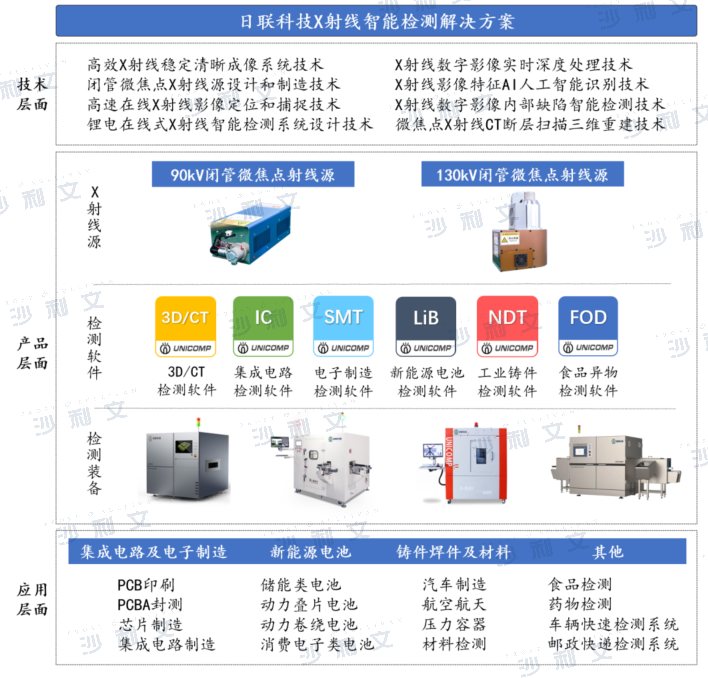
Data source: Sinochem Technology's prospectus
As a leading enterprise in X-ray inspection equipment and core components, the company received nearly 50 million yuan in investment from CATL in October 2021, with a post-investment valuation of 1 billion RMB. Through this investment,Rilian Technology has won recognition from both the industry and customers in both technology and capital markets, achieving a win-win situation for technology and capital.
It is reported that Rilian Technology passed the meeting of the Science and Technology Innovation Board Listing Committee of the Shanghai Stock Exchange in November 2022. According to the announcement of the Science and Technology Innovation Board Listing Committee meeting, Rilian Technology achieved 'no on-site inquiries' and 'no further implementation matters,' making it one of the few listed companies on China's Science and Technology Innovation Board that have passed both the 'no on-site inquiries' and 'no further implementation matters' criteria.The success of Rilian Technology will mean that in the near future, it will achieve listing on the Sci-tech Innovation Board, marking another important milestone for the company.
Through technological accumulation and self-developed core components, as a leading enterprise in the field of X-ray inspection equipment, Rilian Technology will continue to lead domestic substitution, promote China's advanced manufacturing technology globally, and become a globally respected brand!




