



Frost & Sullivan releases '2025White Paper on the Current Development and Future Trends of the Mitochondrial Medicine Industry
As the global wave of aging sweeps through, as the burden of chronic diseases intensifies, and as humanity"healthy lifespan"The pursuit transcends"survival period"A new medical era centered around cellular energy factories is quietly beginning——Mitochondrial medicine is moving from the laboratory to clinical practice, from concept to industry, and becoming a key force reshaping the future health landscape. To comprehensively sort out the development context, technological breakthroughs, and market opportunities of mitochondrial medicine globally,Frost & SullivanFrost & Sullivanabbreviation"Frost & Sullivan'"The white paper conducts in-depth research and systematic analysis from aspects such as technology R&D progress, clinical application scope, market scale, and growth trends. The aim of this white paper is to assist all parties in the market to gain an in-depth understanding of the mitochondrial medicine industry environment, clarify the competitive landscape, explore emerging market opportunities, and promote resource integration and collaborative innovation.
PART.01Overview of the Mitochondrial Medicine Industry: A Leap from Scientific Exploration to Clinical Application
A century of exploration has laid the foundation for mitochondrial medicine
The development of mitochondrial medicine has undergone more than a hundred years of scientific accumulation.19Mitochondria were discovered and named at the end of the century.20Mid-century"mitochondrial disease"The concept is established.2013yearcellThe journal will"mitochondrial dysfunction"Listed as one of the nine biomarkers of aging, driving research from the narrow focus on mitochondriaDNAGenetic diseases extend to a broader spectrum of disorders related to mitochondrial dysfunction.
Mitochondria as cells'"Energy Factory", synthesized by oxidative phosphorylation approximately95%The energy required by cells, as well as participating in various key biological processes such as fatty acid metabolism and calcium ion homeostasis regulation.NAD⁺Nicotinamide adenine dinucleotide, coenzymeI) is a core molecule of mitochondrial function: it is both an essential cofactor for the tricarboxylic acid cycle and oxidative phosphorylation, directly participatingATPGenerate; alsosirtuinsThe key substrate of family deacetylases, responsible for regulating mitochondrial homeostasis,DNARepairing physiological processes profoundly affects cellular aging and disease. With age or under pathological conditions, within cellsNAD⁺each20Decreased by about50%, which can lead to reduced mitochondrial energy metabolism,ROSElimination is reduced, leading to mitochondrial dysfunction.
Mitochondrial dysfunction can lead to disorders in cellular energy metabolism, excessive production of reactive oxygen species, and is closely related to various diseases such as aging, cardiovascular diseases, and neurodegenerative diseases.
Figure: Mitochondrial dysfunction and aging mechanism
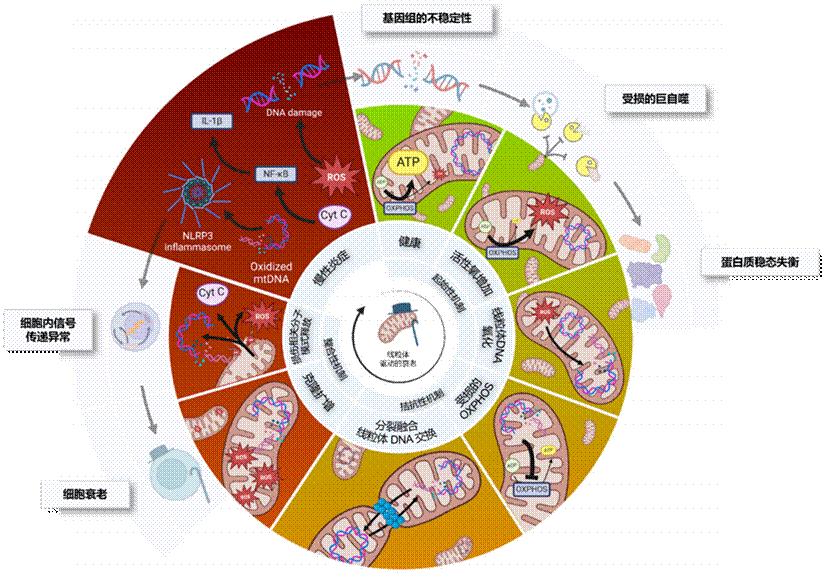
Literature source:Radovic, M., Gartzke, L. P., Wink, S. E., van der Kleij, J. A., Politiek, F. A., & Krenning, G. (2025). Targeting the Electron Transport System for Enhanced Longevity. Biomolecules, 15(5), 614. https://doi.org/10.3390/biom15050614
Core technologies drive industry development
Key technologies in mitochondrial medicine are continuously breaking through, including mitochondrial isolation and purification, genetic testing, multi-omics techniques, biomarker detection, gene therapy, and cell therapy. These technologies provide important support for the study of mitochondrial function, the diagnosis, and treatment of diseases.
Industry ecosystem coverage"Detection-intervention/treatment-Re-test"Closed-loop. The detection phase achieves precise diagnosis through gene, metabolic function, and biomarker testing; intervention treatments include diverse methods such as mitochondrial nutrition intervention, drug therapy, and mitochondrial transplantation; retesting is used to optimize personalized treatment plans, collectively forming a complete mitochondrial medicine service system.
PART.02Current Situation of the Mitochondrial Medicine Industry: Driven by Both Market Demand and Policy Support
Population aging generates huge demand
The global and China population is aging significantly.2024Global65The population aged8.2billion, expected2030The number will increase in the new year9.9billion; China65Population aged 15 and above2024Year2.2Yi, accounting for about15.8%estimated2030annual reach2.7billion.
The aging brings about an intensified disease burden related to age, with an increase in the incidence of cardiovascular and cerebrovascular diseases, neurodegenerative diseases, etc. People are"healthy lifespan"The pursuit is becoming increasingly urgent, and mitochondrial medicine has become a key to solving the problem of healthy aging by conducting early assessments and precise interventions targeting the cell's energy powerhouse and core aging mechanisms. The market demand continues to grow.
The policy system provides protection for the industry
China attaches great importance to population aging and related industry development, and the 20th National Congress of the Communist Party of China will"Actively address population aging"Ascending to a national strategy, the General Office of the State Council issued the 'Opinions on Developing the Silver Economy to Enhance the Well-being of the Elderly',2025The Government Work Report for 2021 further emphasizes"Vigorously develop the silver-haired economy".
The policy has formed a complete support system in terms of strategic layout, technological support, service optimization, financial guarantee, etc. It encourages the application of gene technology, regenerative medicine, etc. in the field of anti-aging, promotes the development of the elderly health industry, and provides a solid policy foundation for the innovative research and development and market expansion of mitochondrial medicine.
Disease Burden and End-Need Analysis
Mitochondrial dysfunction is associated with a variety of diseases, including cardiovascular diseases, neurodegenerative diseases, metabolic diseases, etc. Taking cardiovascular diseases as an example, mitochondrial dysfunction plays a key role in pathological processes such as atherosclerosis and myocardial ischemia-reperfusion injury; neurodegenerative diseases such as Alzheimer's disease and Parkinson's disease are also closely related to mitochondrial dysfunction.
The terminal demand market exhibits multi-level and broad-spectrum characteristics, including both clinical treatment needs for overt hereditary mitochondrial diseases and health consumption demands such as improving sub-health conditions and anti-aging. In medical scenarios, mitochondrial medicine shows great potential in areas like cardiovascular and nervous systems; in health consumption scenarios, it focuses on precise intervention and functional enhancement to meet consumers' diverse needs.
Figure: The central role of mitochondrial dysfunction in aging-related diseases
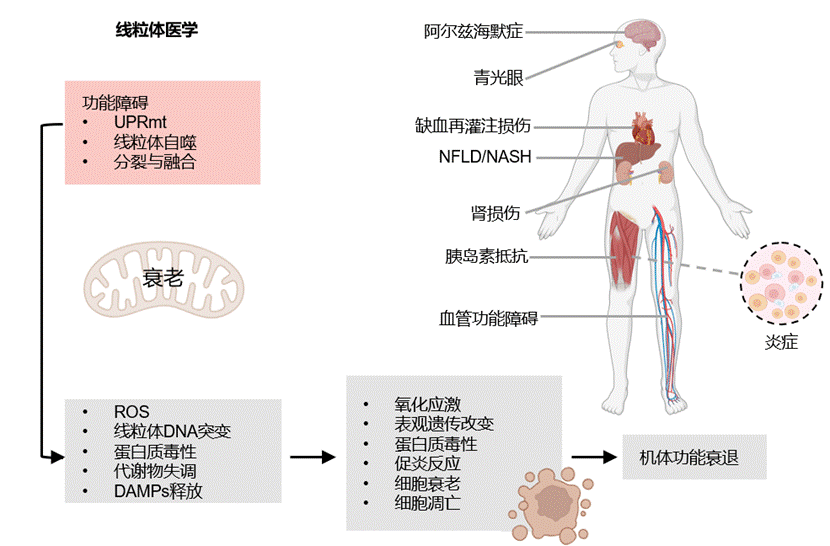 Literature source:Lima, T., Li, T. Y., Mottis, A., & Auwerx, J. (2022). Pleiotropic effects of mitochondria in aging. Nature aging, 2(3), 199–213. https://doi.org/10.1038/s43587-022-00191-2
PART.03Future trends in the mitochondrial medicine industry: Technological innovation leads the blue ocean market
Global Development Trends: Parallel Progress of Technological Breakthroughs and Standardization
The global mitochondrial medicine field is continuously making breakthroughs in technology. Clinical applications of cutting-edge technologies such as mitochondrial transplantation, gene therapy, and cell therapy are expanding continuously. The application of artificial intelligence and machine learning in disease diagnosis and treatment is becoming increasingly widespread, driving the industry towards precision and efficiency.
At the same time, intensified market competition has prompted enterprises to attach importance to technological innovation and product quality. Governments around the world have strengthened supervision to ensure patient safety and market order, and the degree of industry standardization has been continuously improving. International cooperation and exchanges have been strengthened, promoting knowledge and technology sharing, and consumers' concern about product compliance has also been increasing day by day.
Domestic development trend: Policy and market driving forces
Domestic policies continue to boost the development of the industry."Healthy China2030Planning outline,"14th Five-Year Plan"Planning has actively taken up the challenge of addressing population aging as a national strategy. Multiple policies support the development of anti-aging industries and the health consumer market, creating broad prospects for mitochondrial medicine.
With the increasing health awareness and consumption upgrading among residents, the market demand for mitochondrial medical services is becoming increasingly refined and personalized, driving enterprises to transform from standardized products to personalized services. Technological innovation continues to advance, with the integration of multi-omics technology, artificial intelligence, and big data accelerating. The market scale will continue to expand, and application fields will continue to broaden.
Blue ocean prospects and broad market space
Mitochondrial medicine is currently still in its development stage, with enormous market potential in the future. The healthcare sector covers multiple popular areas such as cardiovascular diseases and neurodegenerative diseases; the health consumer market has even broader space due to its large population base and continuous usage demand.
Technological breakthroughs drive the industry from"Theoretical feasibility"Towards"Clinically available"It is continuously improving in terms of efficiency, targeting, safety, etc., bringing new hope for the treatment of various diseases. Precise interventions for sub-health conditions, anti-aging and functional enhancement, and personalized health management upgrades will become important market growth points, leading to sustained industry growth.




