




Hair has functions such as regulating body temperature, protecting the body, and sensory activities, and it holds significant sociological importance. According to data from the National Health Commission of the People's Republic of China, the number of people with hair loss in China reached 250 million in 2020. With the overall improvement of living standards in China, the issue of hair loss has received more attention, and there is an urgent need to meet the growing demand for diagnosis and treatment.
Rye microneedle hair transplantation is based on the characteristics of hair loss diseases, referring to multiple expert consensuses and diagnostic and treatment guidelines in China, and combining clinical practice to propose a grading diagnosis and treatment system for rye hair loss. The establishment of this grading diagnosis and treatment system for rye hair loss helps patients determine personalized treatment plans, conduct more scientific and precise hair loss diagnosis and treatment, fully protect the health rights and interests of patients, promote the standardized, systematic, and standardized development of the hair medical industry, enhance public trust and support for the hair medical industry, and is an inevitable trend for the future development of the hair loss diagnosis and treatment market.
Hair transplantation technology is a surgical procedure for repairing hair loss. After a century of development, it has continuously broken through and innovated, closely aligning with the huge market demand and being widely applied globally. Currently, the new microneedle hair transplantation technology proposed by Da Mai Micro Needle Hair Transplantation is the latest advancement in follicle unit extraction technology. Clinical results show that the new microneedle hair transplantation can increase the hair transplantation speed by 30%. Due to its fast planting speed, short exposure time of follicles to air, good effect, high density, natural direction, the ability to wash hair 24 hours after surgery, and effectively improved follicle survival rate after the operation, the new microneedle hair transplantation technology has significantly enhanced the user experience and shows great market potential.
Frost & Sullivan (hereinafter referred to as 'Frost & Sullivan') in conjunction with Daimai MicroNeedle Hair Transplantation has officially released the 'White Paper on Daimai Hair Loss Grading Diagnosis and Treatment' and the 'White Paper on the Formulation of New MicroNeedle Hair Transplantation Standards' (hereinafter referred to as the 'White Papers'). The report aims to analyze the current state of the hair medical industry, examine the significance of the grading diagnosis and treatment system for the development of the hair industry, comprehensively analyze the advantages of new microneedle hair transplant technology, as well as the higher-quality services it can provide for hair enthusiasts. The goal is to offer the public a more comprehensive understanding of the hair loss diagnosis and treatment industry and share the latest technological advancements in the industry.


"White Paper on the Graded Diagnosis and Treatment of Alopecia Miliaria"
1
Overview of hair loss in China
01
Definition and classification of hair loss
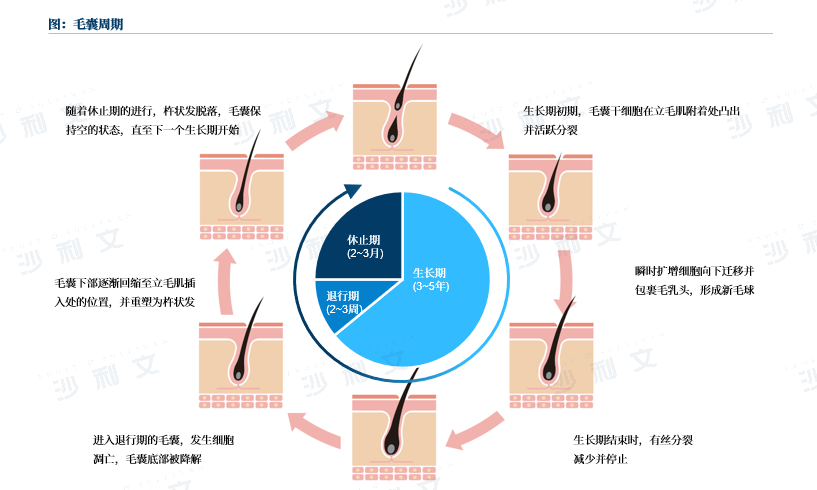
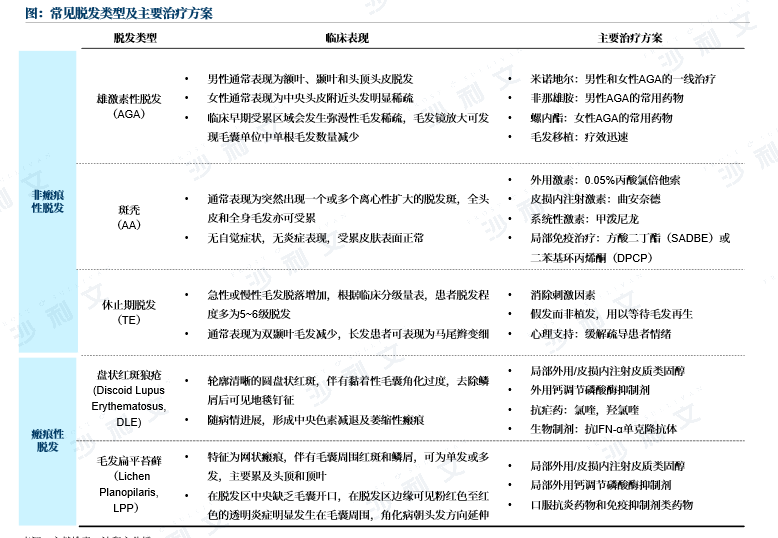
Hair loss can be divided into physiological hair loss and pathological hair loss based on clinical manifestations. Pathological hair loss refers to excessive or abnormal hair shedding, which should be treated promptly. Pathological hair loss can be further classified into non-scarring hair loss and scarring hair loss in clinical practice, with the difference lying in whether the follicular openings in the hair loss area have disappeared. Classifying the types of hair loss helps to better formulate personalized treatment plans.
Data source: Literature search, Frost & Sullivan analysis
The White Paper sorts out the hair follicle cycle, the clinical manifestations of common types of hair loss, and the main treatment options. For more detailed content, please refer to the full report.
02
The scale of hair loss population in China
The number of hair loss sufferers in China is vast, with as many as 250 million people experiencing hair loss in 2020. Affected by a combination of genetic and environmental factors, the number of hair loss cases continues to increase, and the onset of the condition is showing a trend towards younger ages.
03
Industry policies and regulatory environment in the field of hair loss diagnosis and treatment in China
With the improvement of living standards and the enhancement of people's health awareness, hair loss has become an increasingly concerned issue. In the face of the growing market for hair loss diagnosis and treatment, the state has successively promulgated a number of industry policies and regulatory regulations to strengthen industry guidance, laying a solid foundation for the long-term healthy development of the industry.
2
Analysis of the Hair Loss Diagnosis and Treatment Market in China
01
Analysis of the Development Process of the Hair Loss Diagnosis and Treatment Grading System
Humans have been actively exploring methods to treat hair loss. With the development of modern medicine and a deeper understanding of the pathogenesis, people have gradually realized that the prerequisite for effective treatment of hair loss lies first in identifying the cause of hair loss and making an accurate diagnosis. At the same time, the progression of hair loss is a gradual process. Grading the severity of the condition helps to determine the progress of hair loss and establish personalized treatment plans.
02
Analysis of the Diagnosis and Treatment Needs of Hair Loss Patients in China
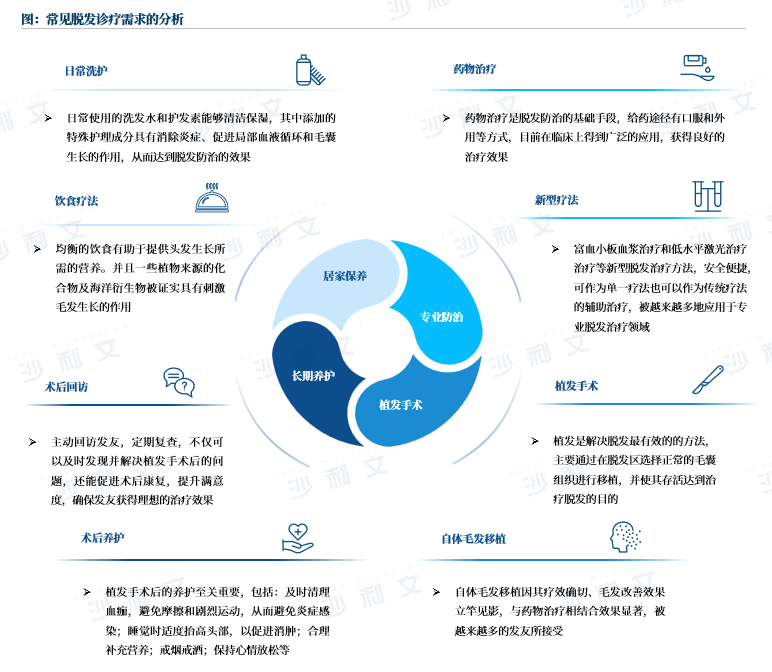
The comprehensive prevention and treatment of hair loss is a multifaceted process that can be achieved through home care, professional treatment, hair transplantation surgery, and long-term maintenance after the procedure. These four steps complement each other and should be carried out step by step. Hair loss sufferers should pay attention to early detection in their daily lives and establish a good understanding of diagnosis and treatment. After being diagnosed and evaluated by a professional physician, they should choose a treatment method based on the cause and degree of hair loss, combined with their own actual situation, so as to avoid risks and side effects associated with blind hair transplantation and achieve satisfactory treatment results.
Source: Public data, Frost & Sullivan analysis
The White Paper sorts out the comprehensive prevention and treatment steps for hair loss in China. For more detailed content, please refer to the full report.
03
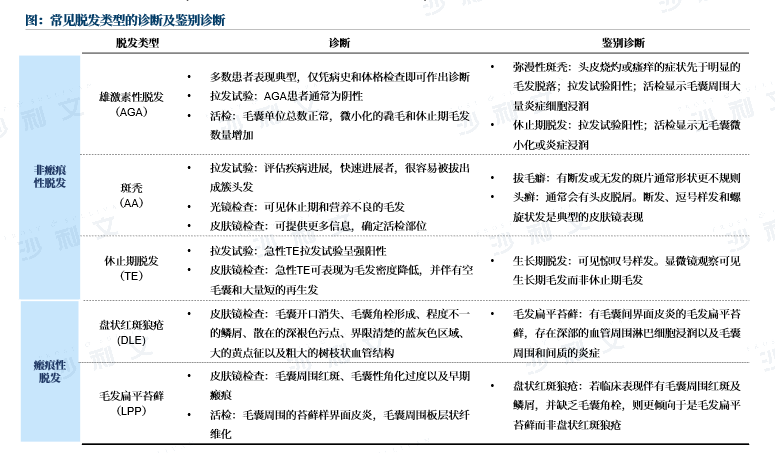
Analysis of Hair Loss Diagnosis and Differential Diagnosis
Different types of hair loss have their own characteristics, which can be diagnosed and differentiated through methods such as hair pullout tests and microscopic examination. An accurate diagnosis of hair loss helps to determine an appropriate treatment plan and effectively improve the therapeutic outcome.
Data source: Literature search, Frost & Sullivan analysis
The White Paper sorts out the diagnostic methods for hair loss patients, as well as the diagnosis and differential diagnosis of common types of hair loss. For more detailed content, please refer to the full report.
04
Analysis of Hair Loss Treatment Technologies
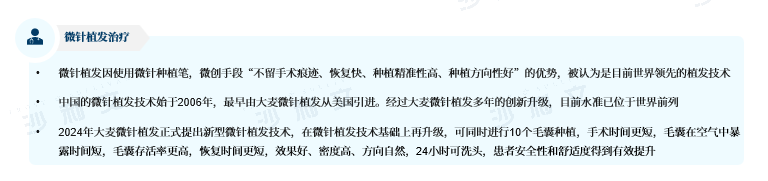
The general principles of hair loss treatment are: early intervention, comprehensive approach, long-term management, and personalization. Hair loss patients can undergo treatments for hair loss through scalp care, medication, hair transplantation, as well as new methods such as low-energy laser therapy and platelet-rich plasma therapy. Among these, medication is the foundation, and microneedle hair transplantation has a prominent clinical advantage in the treatment of hair loss.
Data source: Literature search, public data, Frost & Sullivan analysis
The White Paper sorts out the main treatment methods for hair loss. For listed products, more detailed content can be found in the full report.
3
Hair loss grading diagnosis and treatment system
01
Analysis of Pain Points in the Hair Loss Diagnosis and Treatment Market in China
The hair loss diagnosis and treatment market in China is continuously developing, but there are still many pain points, including insufficient popularization of professional knowledge, weak awareness of seeking medical treatment, uneven diagnostic and treatment technologies, and ineffective fulfillment of personalized diagnostic and treatment needs.
02
Hair loss grading diagnosis and treatment system
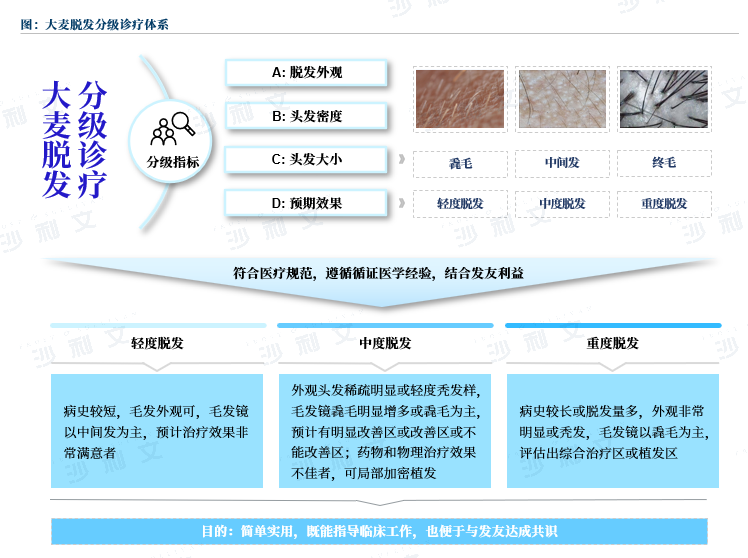
Currently, most hair loss grading systems mainly consider the relationship between hair distribution, density, and scalp exposure, with descriptions of hair diameter and the ratio of vellus to terminal hair being rather general. According to the characteristics of hair loss diseases, Med66 has introduced a grading system based on hair diameter and density, rather than the size of the affected area, in reference to multiple expert consensuses and diagnostic guidelines in China. The condition is divided into mild, moderate, and severe: Mild hair loss refers to early-stage hair loss with a small amount of hair loss, a light degree of hair loss as seen in photos, and changes in hair mirror indicators. Treatment mainly includes medication, home care, and dietary therapy; Moderate hair loss refers to significant reduction in hair as seen in photos and obvious changes in hair mirror indicators. Treatment mainly involves nourishing and consolidating the hair (low energy laser, platelet-rich plasma, mesenchymal therapy, etc.); Severe hair loss refers to a noticeable reduction or baldness affecting appearance, and treatment mainly involves hair transplantation surgery.
The barley hair loss grading diagnosis and treatment system is simple and practical, effectively meeting the clinical application needs of dermatology and hair surgery. Barley micro-needling hair transplantation adheres to the interests of hair loss patients, adopting different diagnostic and treatment methods to protect their interests, rather than simply focusing on profit and guiding hair transplantation in a one-dimensional manner. This reflects the medical spirit and social responsibility of private hair transplantation enterprises.

Data source: literature search, company data, Frost & Sullivan analysis
The White Paper sorts out the main indicators of the barley hair loss grading diagnosis and treatment system, the pathways of the grading diagnosis and treatment system, and the treatment recommendations for mild, moderate, and severe alopecia areata in men and women. For more detailed content, please refer to the full report.
03
Analysis of the Graded Diagnosis and Treatment System for Hair Loss
The hair loss grading diagnosis and treatment system can provide targeted treatment measures based on the condition of each patient, improving treatment effectiveness while effectively reducing the burden on patients. In addition, barley provides full-course hair management and proactive maintenance during the post-operative period for hair transplantation, meeting the diverse diagnostic and treatment needs of patients.

Source:Company information, Frost & Sullivan analysis
The White Paper sorts out the advantages of the barley hair loss grading diagnosis and treatment system, as well as the steps for full-process hair management. For more detailed content, please refer to the full report.
4
Analysis of the Driving Forces and Development Trends of China's Hair Loss Diagnosis and Treatment Market
01
Analysis of the Industrial Chain in the Hair Loss Diagnosis and Treatment Market in China
The field of hair loss diagnosis and treatment covers a wide range of services, involving multiple sub-sectors of the hair health management market. In China, a relatively complete industrial chain has been formed, which can provide hair loss patients with comprehensive hair health management services.

Source: Public information, analysis by Frost & Sullivan
The White Paper sorts out the industrial chain of the hair medical market. For more detailed content, please refer to the full report.
02
Market Drivers of Hair Loss Diagnosis and Treatment Industry in China
With the aging population, as well as the increase in disposable income and consumption levels in recent years, the popularization of health prevention concepts has continuously led to an expansion in the market size of hair loss diagnosis and treatment in China. In addition, continuous breakthroughs in hair loss diagnosis and treatment technology have not only significantly improved the hair transplantation experience for patients but also further promoted the expansion of the market scale. In recent years, the state has continuously increased its emphasis on the healthcare industry, and relevant favorable policies have provided a favorable development and regulatory environment for the hair loss diagnosis and treatment market, ensuring the long-term stable development of the industry.
03
Market development trend of hair loss diagnosis and treatment industry in China
With the continuous expansion of the hair loss diagnosis and treatment market scale, the industrial chain has become more complete. Diagnosis and treatment technologies are constantly innovating, and new treatment methods are expected to provide hair loss patients with more efficient and safe treatment options. With strengthened industry regulation and market standardization, the hair loss diagnosis and treatment industry will develop in a healthier and sustainable direction. With the popularization of the internet, an online-offline integrated diagnosis and treatment model is gradually becoming a trend, leading to further improvement in the penetration rate of hair loss diagnosis and treatment. The hierarchical diagnosis and treatment system is expected to further provide customized services for hair loss patients, and the combination of these two will create a new development model for hair loss diagnosis and treatment.
White Paper on the Formulation of New Micro-needle Hair Transplantation Standards

1
Development History of Hair Transplantation Technology
01
Overview of hair loss
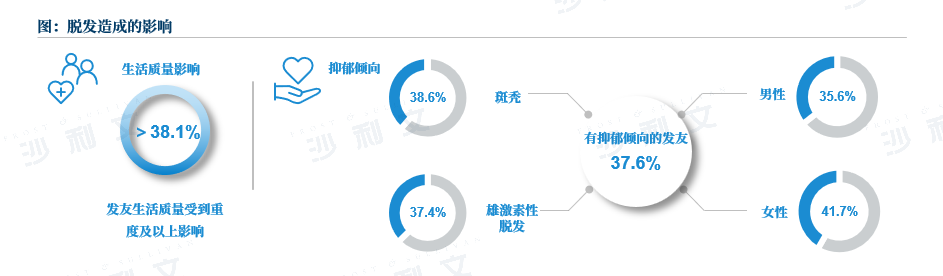
Hair loss not only reduces the quality of life for those affected but can also bring severe psychological burdens. According to data from the Chinese Journal of Dermatology, hair loss has an average impact level of moderate on quality of life, with over 38.1% of affected individuals experiencing severe or more severe effects. Poor psychological and mental factors can in turn exacerbate or cause recurrence of the condition. Efforts should be increased to raise public awareness of hair loss, promote early diagnosis and treatment of hair loss diseases, and avoid delays in treatment due to late visits to healthcare providers.
Data source: Literature search, Frost & Sullivan analysis
The White Paper sorts out the global overview of hair loss populations and age distribution, as well as the impact of hair loss on the mental health of hair loss sufferers. For more detailed content, please refer to the full report.
02
Development History of Surgical Hair Restoration Techniques
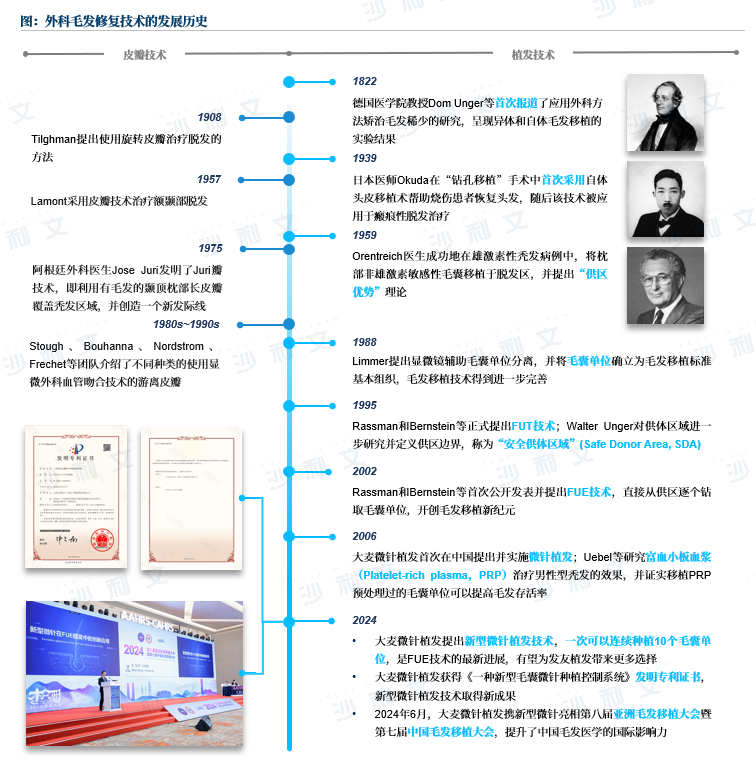
Hair transplantation technology and flap technique are two main directions for surgical repair of hair loss. Hair transplantation technology has a history of a hundred years, during which it has undergone upgrades such as Follicular Unit Transplantation (FUT) and Follicular Unit Extraction (FUE). The safety and effectiveness of hair transplantation have been continuously improved, as well as its market acceptance and popularity. In 2024, barley microneedle hair transplantation officially introduced a new microneedle technology and obtained an invention patent certificate for 'A New Microneedle Hair Planting Control System', which represents the latest progress in FUE technology. In June 2024, barley microneedle hair transplantation showcased its new technology at the 8th Asian Hair Transplant Conference and the 7th China Hair Transplant Conference, enhancing the international influence of Chinese hair medicine.
Source: Literature search, public data, Frost & Sullivan analysis
The White Paper sorts out the development history of surgical hair restoration technology, the development history and major breakthroughs of hair transplantation technology, etc. For more detailed content, please refer to the full report.
2
Modern hair transplantation technology and new micro-needle hair transplantation
01
Modern hair transplantation technology
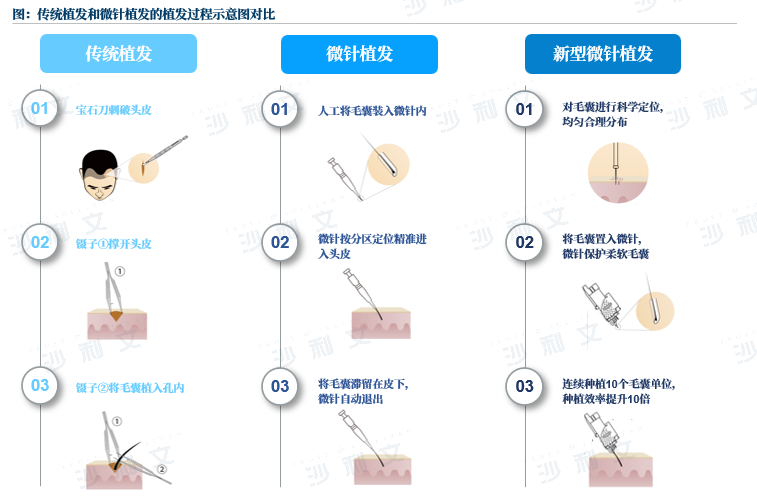
The main difference between FUT and FUE technology lies in the method of extraction. FUE technology causes less damage to hair follicles during extraction and leads to faster postoperative recovery. It is currently the mainstream technology in the hair transplantation industry and is highly favored globally. FUE technology can be divided into traditional hair transplantation and microneedle hair transplantation based on the method of follicle implantation. Microneedle hair transplantation is currently an internationally leading method of hair transplantation, first introduced into China in 2006 by Dermalogene, and has subsequently obtained five national invention patents. After years of innovation and upgrading by Dermalogene, the current level is on par with that of countries in Europe and America, and it holds a world-leading position in some fields.
Source: Literature search, company data, Frost & Sullivan analysis
The 'White Paper' sorts out the comparison between FUT and FUE technology methods, the comparison of FUE technique implantation methods, and the technical advantages of microneedle hair transplantation. For more detailed content, please refer to the full report.
02
New type micro-needle hair transplantation
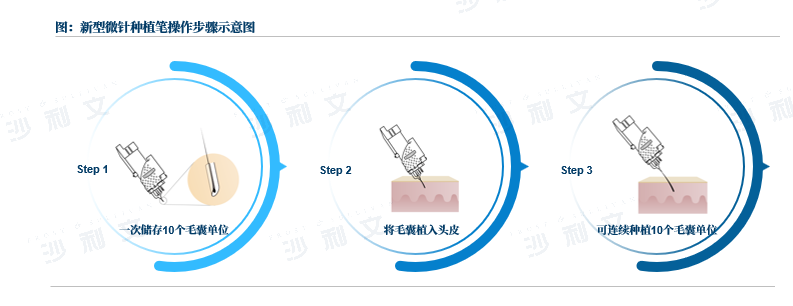
The new microneedle hair transplantation technology proposed by barley microneedle hair transplantation has reformed the hair transplantation instrument. While inheriting the advantages of microneedle hair transplantation technology, it has been specifically improved, making the surgical process safer and faster, and the surgical effect more excellent, with significant clinical advantages. The new microneedle hair transplantation is the latest progress in FUE technology, marking a advancement in the field of hair transplantation technology.
The new micro-needle implanting pen developed for barley microneedle hair transplantation contains 10 needles, capable of holding 10 individual hair follicles. Compared to previous micro-needle hair transplantation surgeries using a single needle implanting pen, this can significantly shorten the operation time and enhance the patient's surgical experience; it reduces the frequency of needle replacement, ensuring patient safety while improving the doctor's operational flow; moreover, by reducing the time hair follicles remain outside the body, it increases the survival rate of the follicles, thereby presenting a higher quality hair transplantation effect.
Data source: Company data, Frost & Sullivan analysis
The 'White Paper' sorts out the principles, technical advantages, standardized operating procedures (SOP), and surgical steps of new microneedle hair transplantation. For more detailed content, please refer to the full report.
Rice bran microneedle hair transplantation has already used the new microneedle technology to provide hair transplantation services for dozens of patients. After the treatment, the patients' condition has improved significantly, and the hair transplantation results are natural and aesthetically pleasing.
-
Case 1
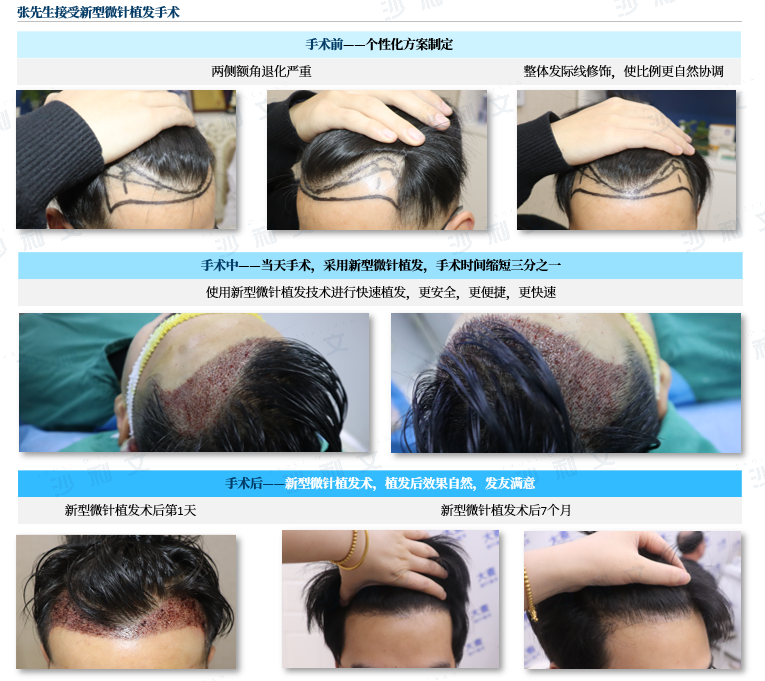
Mr. Zhang, male, 26 years old, has a naturally high hairline and wishes to lower it through hair transplantation. He has consulted several hair transplant institutions but has been hesitant due to concerns about the effectiveness and postoperative complications. By chance, he heard that Dama has introduced a new micro-needle hair transplant technology. With this idea of giving it a try, he came to Dama Micro-Needle Hair Transplantation. The attending doctor at Dama Micro-Needle Hair Transplantation diagnosed him with "congenital high hairline" through a detailed medical history, combined with specialized examinations and a hair mirror, and suggested that the patient lower his hairline through hair transplantation. The doctor also introduced the new micro-needle hair transplant technology, which features minimally invasive procedures, short operation time, high implant density, quick postoperative recovery, and natural results. The doctor also invited patients who had undergone the new micro-needle hair transplant technology on the same day for a live exchange, greatly enhancing their confidence in hair transplantation and deciding to have the new micro-needle hair transplant technology performed at Dama the next day. The surgery went smoothly on the day of transplantation, and the patient felt well throughout the process. The immediate postoperative effect was also very satisfactory. The patient came to the hospital for a follow-up and care as required, and 9 months after the surgery, the implanted hair had mostly grown out. The patient was satisfied with the postoperative results and has introduced relatives and friends to come to the hospital for treatment and hair transplantation.
Source: Public information, Frost & Sullivan analysis
-
Case 2
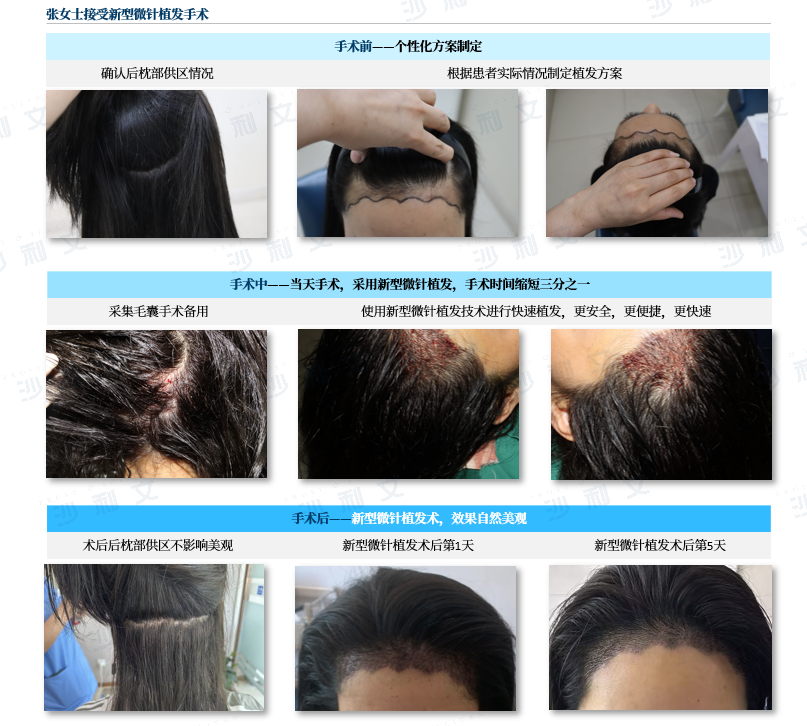
Ms. Zhang was troubled by hair loss and, on June 28, 2023, was confirmed by the barley grading diagnosis and treatment system to meet the needs for hair transplantation. After receiving the new type of microneedle hair transplantation, significant results were observed one day after the surgery. Compared to before the surgery, the hairline had improved significantly; seven days after the surgery, the transplanted hair follicles grew naturally with a high survival rate. After transplantation, the hair grew naturally with the original hair, effectively improving the hairline condition of the patient. At the same time, the extraction site did not affect one's own appearance. The overall hair transplantation effect was natural and highly recognized by patients.
Source: Public information, analysis by Frost & Sullivan
The White Paper sorts out case studies of new microneedle hair transplantation shared by hair enthusiasts. For more detailed content, please refer to the full report.
03
Barley Microneedle Hair Transplant Brand Value Proposition
As one of the representatives of China's hair industry, Daimai Micro-Needle Hair Transplantation aims for long-term success. By upgrading technology to bring about therapeutic improvements, and establishing trust between Daimai Micro-Needle Hair Transplantation and hair enthusiasts through the brand value proposition of 'Good Doctor + Good Technology = Good Results', it is the core path for Daimai to achieve overall industry scale expansion. The formulation of new micro-needle hair transplanting standards and the establishment of the company's new brand value proposition will further provide hair enthusiasts with higher-quality services and more comprehensive hair transplant solutions.




