Development Prospect of China's Digital Healthcare and Related Industries
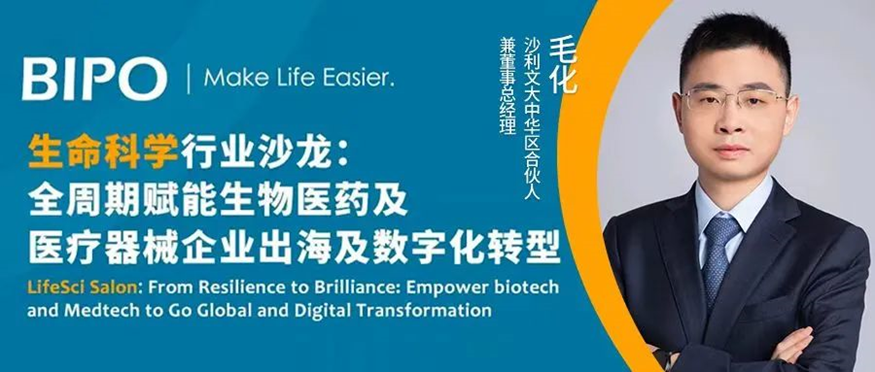
Against the backdrop of global market nurturing and the catalysis of the COVID-19 pandemic, the Chinese biopharmaceutical and medical device industry market is facing new opportunities. Going global has become an inevitable path for China's biopharmaceutical and medical device industry. Under the new circumstances, how can diverse outbound empowerment services and digital solutions help enterprises set sail?12month9dayBIPOThe successful holding of the Life Sciences Industry Salon invited biopharmaceutical, medical device companies, and industry experts to share practical experiences and insights from their respective fields. Frost & SullivanFrost & SullivanMao Hua, Partner and Managing Director of Frost & Sullivan's Greater China Region, was invited to attend the event and delivered a speech on the prospects for the development of digital healthcare and related industries in China.
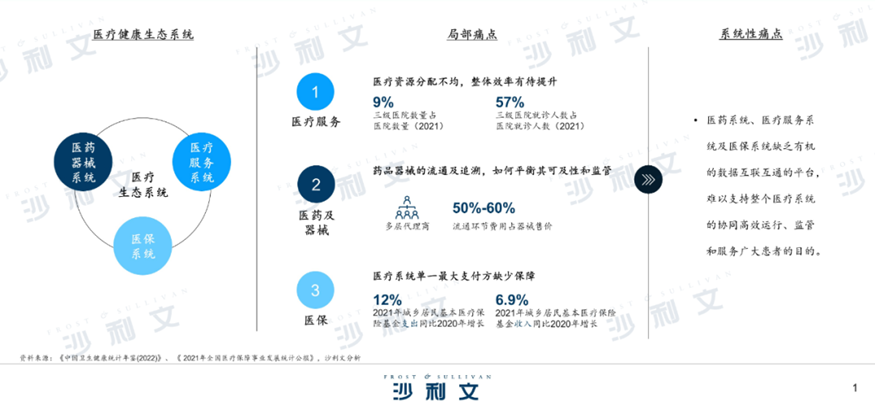
China's healthcare ecosystem consists of the medical device system, medical service system, and medical insurance system. Mao Hua said that there are currently local pain points in China's medical ecosystem, including uneven distribution of medical resources and poor traceability of drug and medical device circulation. There is also a lack of organic data interconnection between various components, making it difficult to support the coordinated and efficient operation of the entire medical system, as well as the purpose of supervising and serving the vast number of patients.
According to Mao Hua, the development of China's digital healthcare industry has gone through three stages: medical informatization, internet healthcare, and digital healthcare platforms. It has gradually evolved from addressing local pain points to solving systemic ones.
Medical informatization stage The first step of migrating medical system records to digital documents has been completed, improving the operational efficiency of the healthcare service system. This phase mainly serves2BEndpoints, but the informatization of each institution is relatively isolated.
Internet healthcare phase It utilizes internet technology to connect information silos (such as pharmaceutical distribution and medical services), serving a wide range of2CWhile further improving the operational efficiency of medical services, we also aim to increase patients' trust in pharmaceuticals/Accessibility to healthcare services.
since2018Since the launch of the annual digital healthcare platform, Building on traditional internet healthcare, major competitors have extended their business modules around the entire digital health ecosystem, including digital health management, digital health infrastructure services, and digital health insurance.2Band2CInterconnection has achieved a one-stop solution for coordinated adjustment and improvement of all aspects of the medical ecosystem.

"In recent years, China's healthcare industry has been continuously migrating towards digitization. However, compared to other industries, the current service delivery scenarios in the healthcare sector are still mainly offline, and the rate of digital migration is still at a low level. In the future, there is significant potential for healthcare digitization growth," said Mao Hua.
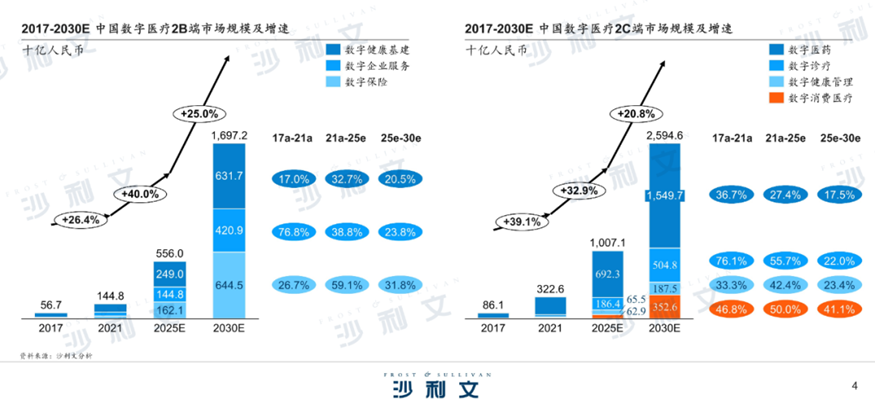
Data shows that in recent years2CThe terminal market has developed rapidly, with notable growth in digital diagnosis and treatment, as well as digital consumer healthcare sectors.2021In [year], digital healthcare in China2CThe market scale of the endpoint reaches3,226100 billion RMB, expected by2025The year will grow to10,071RMB 10 billion, with a compound annual growth rate of32.9%; Digital Healthcare in China2BThe market scale of the terminal reaches1,148100 billion RMB, expected by2025The year will grow to5,560RMB 10 billion, with a compound annual growth rate of40.0%future2BThe terminal market growth rate will exceed2CAmong them, digital enterprise services and digital insurance have great growth potential.
"The 'top-down' development path is more suitable for the implementation of digital healthcare technologies and the sustainable development of the industry." Mao Hua further explained that the so-called 'top-down' approach means that during an opportune period when technology is mature and feasible, the government implements supervision from the top level and issues incentive measures to standardize the scope of application, promote technological innovation and industrial upgrading, thereby shaping the development pattern and benefiting downstream consumers.
Mao Hua pointed out that, in the medical field,2BEnds are an important direction for current digital development.CThe endpoint service is built onBBased on end maturity, fromBEnd-seeking breakthroughs will drive the continuous expansion of the digital healthcare market.
According to a study by Frost & Sullivan,BThere are many pain points at the end-user level: From the regulatory perspective, government agencies lack sufficient data standardization, have low utilization rates, and insufficient emergency response capabilities. They also need to reduce waste in medical insurance expenditures and avoid over-medication; from the supply side, there is a need to improve the efficiency of doctors' diagnosis and treatment as well as research, while pharmaceutical and medical device companies face pressure to reduce costs and increase efficiency; from the payer's perspective, the sustainability of urban welfare insurance faces challenges, with high homogenization of commercial insurance products, lacking commercial insurance products tailored for different characteristic populations or specific diseases or stages of disease.
To promote industry development, in recent years, China has introduced a number of policies to actively advance the development of digital healthcare through macro guidance and clear binding indicators.
In terms of medical services and medical insurance payment, One of the development goals mentioned in the "14th Five-Year Plan" for comprehensive medical security is to build smart healthcare, construct a universal and convenient digital livelihood security system, and improve the "Internet+Medical Health ” Medical insurance services actively explore the use of information technology to optimize medical service processes.
In terms of the digitalization of the healthcare industry, The 14th Five-Year Plan2035The Outline of Long-Term Objectives mentions accelerating the promotion of digital industrialization, carrying out pilot demonstrations in key areas such as smart healthcare, improving databases for electronic health records and medical histories, electronic prescriptions, etc., and accelerating data sharing among healthcare institutions. The '14th Five-Year Plan' for National Health Informatization proposes to2025In [year], a preliminary construction was completed to form a unified, authoritative, interconnected national health information platform support and guarantee system, basically achieving full connectivity between public medical and health institutions and the national health information platform.
In terms of the construction of the population health and public health system, The '14th Five-Year Plan' for the construction of a high-quality and efficient healthcare service system proposes to accelerate the construction of digital health infrastructure, promote the development of a health care big data system, expand the coverage of high-quality medical resources, further narrow regional and urban-rural disparities, and better meet the public's demand for high-level medical services nearby.
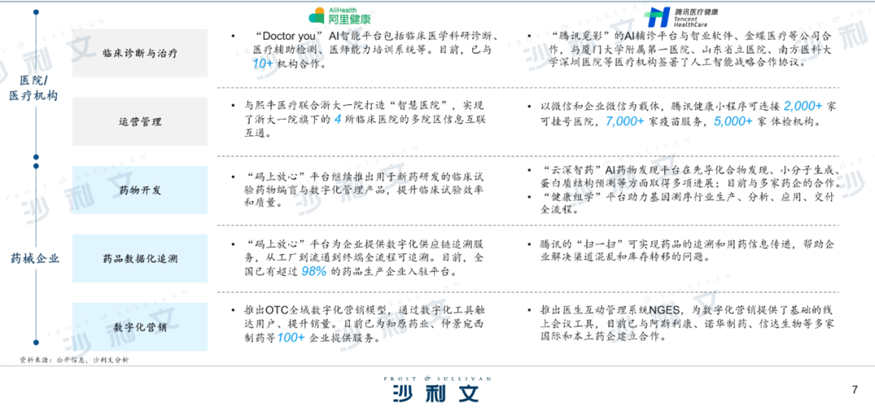
Driven and supported by various policies, major internet players such as Alibaba and Tencent have made layouts2BEnd, helping hospitals/Smart upgrades for medical institutions and pharmaceutical and medical device companies. Such as Tencent FindMeAIThe auxiliary diagnosis platform has cooperated with companies such as Zhiye Software and Kingdee Healthcare, and signed strategic cooperation agreements on artificial intelligence with medical institutions including the First Affiliated Hospital of Xiamen University, Shandong Provincial Hospital, and Shenzhen Hospital of Southern Medical University. Alibaba Health's “Doctor You’ AIThe intelligent platform includes clinical medical research and diagnosis, medical auxiliary testing, physician competency training systems, etc. At present, it has been integrated with10+institutional cooperation.
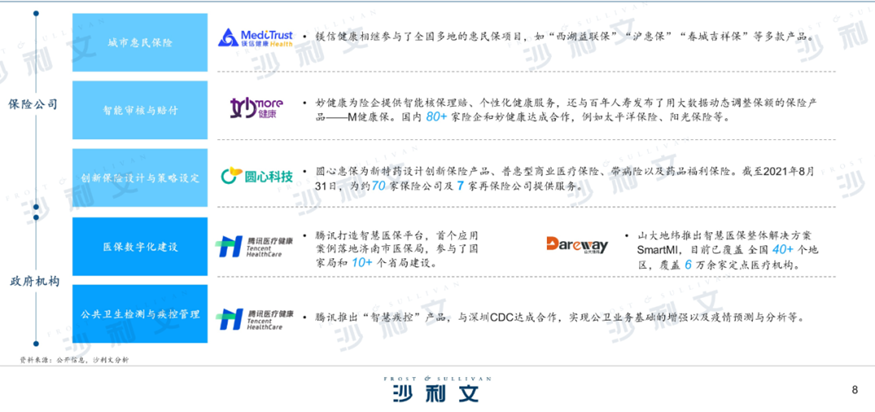
At the same time, as digital technology and government measures are integrated into healthcare insurance, it can meet the multi-level and personalized product needs of insurance companies. Digital technology will also assist institutions in building smart healthcare platforms and public health solutions. For example, Magnesium Health has successively participated in the People's Welfare Insurance projects across the country, such as "West Lake Yilianbao", "Shanghai Huibao", "Chuncheng Jixiangbao", and many other products; Tencent has launched the "Smart Disease Control" product, in conjunction with ShenzhenCDCAchieve cooperation to strengthen the foundation of public health services, as well as epidemic prediction and analysis.
Finally, Mao Hua summarized, 'The era of digital healthcare has arrived. In the future, the implementation scenarios of digitization in the pharmaceutical industry are expected to continuously expand cognitive boundaries, thereby comprehensively improving diagnosis and treatment levels, operational efficiency of industries, and regulatory capabilities.'
The major health industry is one of the core focus areas of research at Frost & Sullivan. Recently20Over the years, Frost & Sullivan's healthcare team has provided financing and financial advisory services to hundreds of outstanding domestic and international biopharmaceutical, medical device, and healthcare service companies.IPO listingIndustry advisory, strategic consulting, management consulting, and other services. In the field of digital healthcare, Frost & Sullivan has served many well-known enterprises such as Kingdee Healthcare, JD Health, Dangdang Kuaoyao, Ping An Health, Medlive, WeDoctor, and Jiahe Meikang.