 2023International Top 100 Future Agriculture and Food Conference
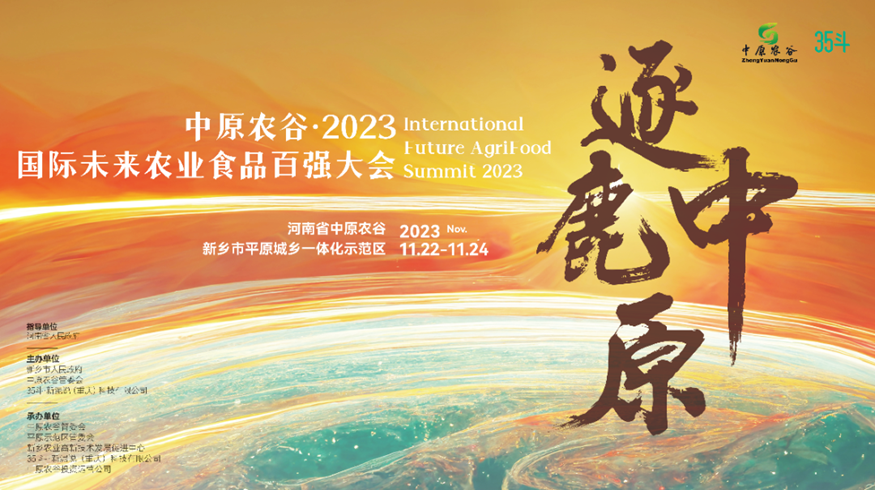
2023year11month22day-24Rizhong Agricultural Valley ·2023The International Top 100 Future Agriculture and Food Conference was successfully held in Xinxiang, Henan Province. This conference attracted over1000The event brings together entrepreneurs, investors, and scientists in the field of agricultural technology innovation, gathering new forces in the agricultural industry venture capital sector and promoting the construction of a new ecosystem for industrial venture capital.
The conference is organized by the Xinxiang Municipal People's Government, the Central Plains Agricultural Valley Management Committee, and35The event was co-planned and initiated by the organizers, with 'Technological Innovation, International Collaboration, and Regional Industrial Agglomeration' as the key theme. The main contents included exchange activities between host and guest countries, fresh technology collection activities, opening ceremony events, thematic forums, awarding dinner, project roadshow special sessions, government-enterprise exchange meetings, and visits. It showcased new technologies, products, models, and business forms in the field of agricultural science and technology both domestically and internationally. Discussions were also held on cutting-edge hot topics in the industry, creating a grand annual event in the field of agricultural science and technology. The scale of the conference, the caliber of guests, and the number of international enterprises set new highs.
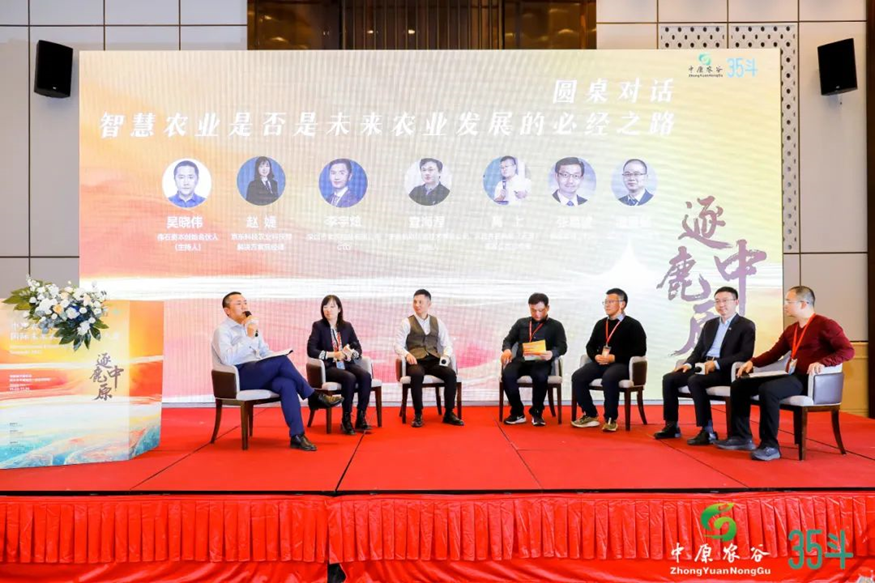
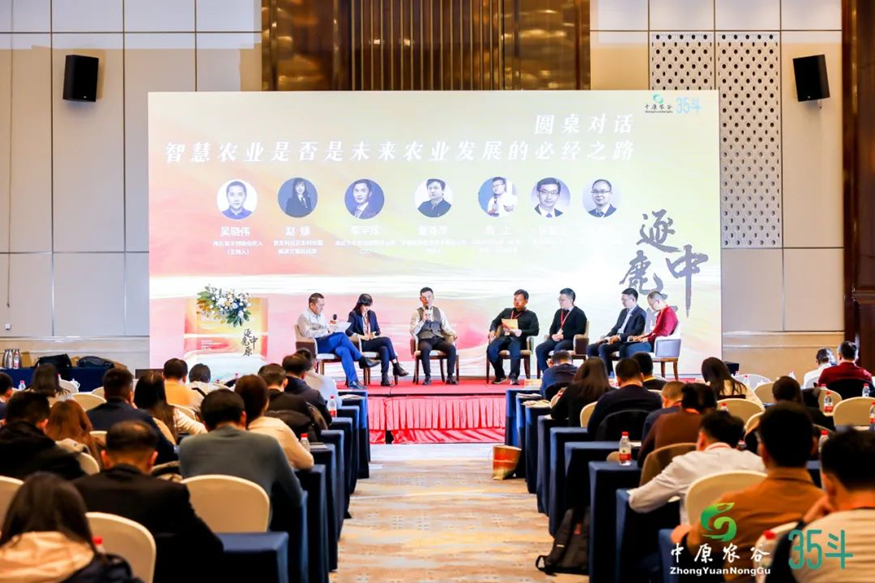
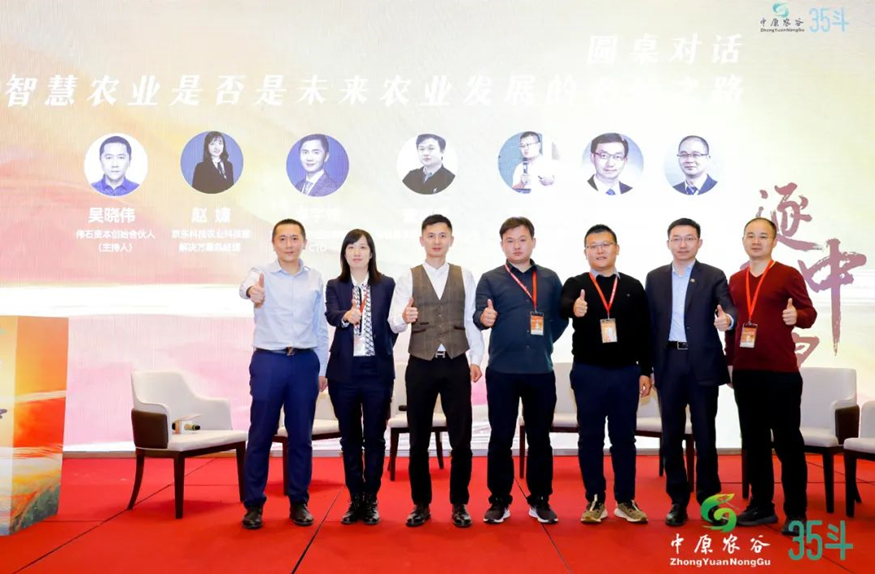
11month23Today, Frost & SullivanFrost & SullivanZhang Jian, Partner and Managing Director of Frost & Sullivan's Greater China Region, was invited to attend the Smart Agriculture Forum. He participated in a roundtable discussion themed 'Smart Agriculture: The Inevitable Path for Future Agricultural Development'. Discussions were held with experts, scholars and industry professionals present on how smart agriculture can move from laboratories to fields, how to achieve development tailored to local conditions, business model design and sustainable iteration.
The following is a summary of Zhang Jian's views:
How does intelligent breeding move from the laboratory to the fields?
Zhang Jian stated that advanced biotechnology breeding continues to iterate and upgrade, becoming a powerful driving force for the leapfrog development of China's modern seed industry. Technologies such as molecular design breeding, gene editing, haploid breeding, transgenic technology, and bioengineering are constantly innovating and achieving disruptive breakthroughs. These technologies are gradually being applied in crop breeding, significantly improving breeding efficiency. In the process of moving from laboratories to fields, smart breeding relies on advanced technology and information means, showing multi-faceted deep integration and promoting the upgrading and sustainable development of modern agriculture.
Firstly, laboratory technologies such as gene editing and high-throughput sequencing provide precise and efficient tools for breeding work. Scientists can delve into crop genetic information to accelerate the discovery and verification of genes related to key traits such as yield and resistance. This not only improves the scientific nature of new variety cultivation but also provides a more reliable reference for actual production.
Secondly, big data analysis and artificial intelligence technologies enable researchers to comprehensively consider various factors such as soil conditions, meteorological changes, and pest and disease situations, providing more comprehensive and accurate information support for the breeding process. This helps to cultivate crop varieties that are better adapted to diverse environments.
Finally, after laboratory verification, the new variety can be tested on a large scale in real farmland using advanced technology, with feedback and adjustments made at any time. This efficient combination of scientific research and practice enables the new variety to serve agricultural production more rapidly, accelerating the process of agricultural modernization. For example, the country's first and only agricultural industry science and technology innovation center in East China has been established in Nanjing.2018year5Since its inception, the Nanjing National Agricultural Innovation Center has achieved a series of results by focusing on three leading industries: bio-agriculture, smart agriculture, and functional agriculture. To facilitate the transfer of scientific research achievements from laboratories to fields, the center has actively carried out the construction of incubation bases. The first phase has included the completion of facilities such as intelligent multi-span film greenhouses and large-span single-span greenhouses. The center has also signed cooperation agreements with places like Siyang in Suqian, Dantu in Zhenjiang, and Jingjiang in Taizhou, providing incubation bases and application scenarios for the transformation and application of scientific and technological achievements.
How can smart agriculture achieve development tailored to local conditions?
Zhang Jian believes that the advancement of smart agriculture in our country requires full consideration of local realities, combined with the development status of industries and the adoption of advanced foreign experiences, to create an industrialized operation model that coordinates government, agricultural enterprises, and capital.
Firstly, we can draw on the experience of smart agriculture in developed agricultural countries, emphasizing the concepts of 'large integration, big data, and large collaboration'. By analyzing vast amounts of agricultural production data in detail, we provide farmers with personalized decision support. For example, the system can provide the optimal sowing time, pesticide usage, and harvest timing based on historical data and weather forecasts, achieving more personalized production management tailored to local conditions.
Secondly, the construction of digital agricultural platforms can promote better coordinated development of the agricultural ecosystem. These platforms integrate information from various aspects such as agricultural production, supply chain, and market sales, providing real-time communication and collaborative opportunities for each link, thereby achieving increased agricultural production, income for farmers, and prosperity for rural households.
Finally, precision agriculture technology is at the core of achieving development tailored to local conditions. With the help of global positioning systems (GPSUsing tools such as remote sensing technology and sensors, agricultural producers can obtain data on soil quality, vegetation status, meteorological information, etc., in real time. This helps scientists and farmers gain a deeper understanding of the agricultural conditions in specific regions, formulate precise fertilization, irrigation, and plant protection plans that suit the local actual situation, and maximize land use efficiency.
For example, urgent issues in the protection of black soil in our country include weakened fertility, thinning soil layers, and soil hardening. In response to these problems, Heilongjiang Province has formed an expert group on the protection and utilization of black soil, consisting of top national experts, dedicated to developing new technologies such as variable fertilization in paddy fields. In collaboration with the expert group, Heilongjiang has also developed the 'Longjiang Model' and the 'Sanjiang Model' to address soil issues. These two models have been listed as the main technologies for black soil protection nationwide. This example demonstrates the successful application of technology innovation tailored to local conditions in solving local land problems.
What are the future development trends of smart agriculture?
Zhang Jian stated that, first of all, low-cost and easy-to-operate smart agricultural equipment represents the leading trend of future development. Currently, the prices of smart agricultural equipment are relatively high, which limits their adoption by small and medium-sized farmers. However, with continuous technological progress, it is expected that equipment costs will gradually decrease. This will enable more farmers to afford these innovative technologies and improve production efficiency. At the same time, farmers usually lack professional skills, so easy-to-operate equipment will be favored. The development of smart agriculture should not only meet agricultural needs but also make farmers feel the convenience brought by technology, making it easier for them to accept and apply it. Therefore, the future smart agriculture industry will pay more attention to reducing costs and improving equipment usability to achieve broader agricultural intelligence.
Secondly, visualization technology is becoming a key trend in the development of smart agriculture. As consumers' concerns about food quality and production processes grow, they hope to understand the growth and production environment of agricultural products in an intuitive way. Visualization technology provides deep insights into farmland through real-time images and videos, enabling consumers to understand the entire production process of products more comprehensively. This transparency not only meets consumers' needs but also further promotes the digital transformation of the entire agricultural industry. Agricultural enterprises have optimized production processes, improved production efficiency, and laid the foundation for the sustainable development of smart agriculture by adopting visualization technology. This trend not only meets existing market demands but also promotes the innovation of agricultural production methods, making the entire industrial chain more intelligent and modernized.
Finally, in the future development trend of the smart agriculture market, industry integration will become a key driving force. This integration spans multiple fields, including agricultural technology, the internet, cloud computing, urban agriculture, etc. The integration of internet technology provides real-time monitoring and data sharing, while cloud computing supports the storage and analysis of large-scale data. At the same time, the combination with urban agriculture makes agricultural production more diversified and sustainable. This comprehensive trend not only promotes technological improvement but also expands application areas, bringing more business opportunities to agriculture. Take cloud computing as an example; it not only improves the utilization efficiency of agricultural big data but also enhances the intelligence level of agricultural production. The promotion of industry integration enables knowledge from different fields to blend, fostering the emergence of innovative solutions. This trend provides a new development direction for the comprehensive development of smart agriculture.
What are the expansion directions of smart agriculture application scenarios?
Zhang Jian pointed out that smart agriculture, as a cutting-edge technology, has been widely applied in areas such as production monitoring, greenhouse plant cultivation, precision irrigation, and the traceability of agricultural product quality and safety, demonstrating unique advantages. Although initial achievements have been made, the technology is still in its primary development stage and requires continuous innovation in products, technology, services, etc., by the industry to promote the healthy development of the smart agriculture industry.
The promotion of smart agriculture has led to the emergence of new agricultural business forms, including drone plant protection, autonomous agricultural machinery, and rural e-commerce. These innovative applications can more reasonably allocate limited resources across the entire agricultural industry chain and enhance the value of the entire agricultural industry chain. For example, drone plant protection technology provides efficient means of farmland monitoring and crop protection, autonomous agricultural machinery improves production efficiency, the promotion of rural e-commerce provides a broader market for agricultural products, and drives the upgrading of the agricultural ecosystem.
Overall, smart agriculture systems have brought about tremendous progress and transformation to modern agriculture, driving the development direction towards digitization, intelligence, and ecologicalization of agriculture. With the continuous upgrading and improvement of smart agriculture technology, its application prospects will be even broader in the future, and it is bound to create a greener, safer, more efficient, and sustainable production and development environment for agriculture and farmers.
How do you view the design of smart agriculture business models and their sustainable iteration?
Smart agriculture in China is facing a serious homogenization problem, which is particularly prominent whether it comes from technological or commercial entry points.
Currently, agricultural plant protection aerial spraying companies mainly focus on services such as aerial plant protection, with a relatively obvious homogenization issue; agricultural Internet of Things companies provide smart agriculture solutions using IoT technology; while agricultural big data companies are data-driven and extend into fields such as intelligent applications and artificial intelligence. Their profit models mainly include government procurement.BMainly procurement at the end of the chain.
To realize the true value of smart agriculture technology, smart agriculture companies need to rely on business model innovation. Some agricultural Internet of Things companies have begun to break away from traditional technology and hardware profit models, instead focusing on providing holistic solutions for agriculture, even promoting industrialization through fission. For instance, Jifei Technology has partnered with Alibaba to build future farms; Kebai Technology has established the Laiwu Kebai Smart Agriculture Industrial Park, while Senhe Smart Agriculture is dedicated to creating a corn industry model. These companies are gradually evolving from technology providers into disruptors and active participants in the entire agricultural industry.
In the future, the success of smart agriculture companies will depend on their innovation capabilities in business models. By expanding service areas, providing comprehensive solutions, and promoting the development of agricultural industry fission, smart agriculture companies can participate more comprehensively and deeply in the entire agricultural value chain, realizing greater value from technology. Such business model innovation not only helps to break through homogenization dilemmas but also lays a solid foundation for the sustainable development of smart agriculture.