According to Xinhua News Agency, a recent executive meeting of the State Council was held to determine cross-cycle adjustment measures to promote stable foreign trade development; arrangements were made for the implementation of the Regional Comprehensive Economic Partnership Agreement (RCEP) after its entry into force. The meeting pointed out that through the joint efforts of relevant international and domestic parties, the RCEP will officially come into effect on January 1, 2022. It is necessary to support enterprises to seize the opportunity of the agreement's implementation, enhance their competitiveness in the international market, further improve the level of trade and investment development, and force domestic industrial upgrading. On December 23, 2021, Gao Feng, spokesperson for the Ministry of Commerce, stated at a regular press conference that all preparatory work for the domestic implementation of the RCEP has been completed.
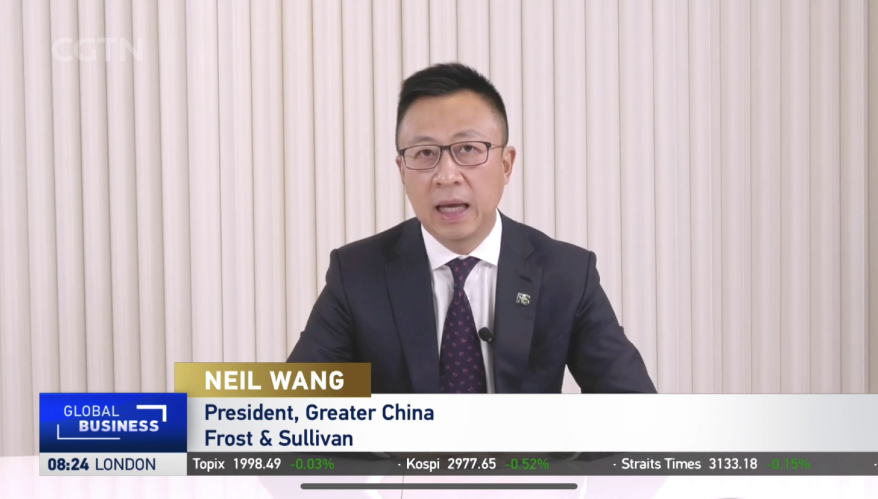
How to interpret China's formal accession to the RCEP? Which industries in China will benefit from the RCEP? After joining the RCEP, what changes are predicted to occur in China's global industrial chain layout? What impact does the RCEP have on China's foreign trade? How does the RCEP guide client enterprises to benefit from tariff reductions and find new opportunities? Dr. Wang Xin, a global partner at Frost & Sullivan (Frost & Sullivan, abbreviated as "Frost & Sullivan") and President of Greater China, recently spoke with the CGTN Global Business program of China International Television about his views on China's accession to the RCEP.
Reporter: What is Frost & Sullivan's interpretation of China's accession to the RCEP on January 1st?
Reporter: What is Frost & Sullivan's interpretation of China's official accession to the RCEP on January 1?
Neil Wang, Dr. of Economics, Nanyang Technological University: Thank you for your question. There is no doubt that the Regional Comprehensive Economic Partnership (RCEP) is important for Asia's regional economic integration and will drive the global economy closely around Asia, Europe, and North America.We believe that China's participation in the RCEP can promote China's international trade and outbound investment in many ways. By leveraging the closed-loop value chain in the RCEP region, we can achieve technological advancement, market integration, and industrial chain upgrading. This will reduce China's trade dependence on the United States and Europe and help further elevate China's international status.
Dr. Wang Xin: Thank you for your question. Undoubtedly, the RCEP is of great significance to the economic integration of the Asian region and will drive the global economy closely centered around Asia, Europe, and North America. We believe thatChina's accession to the RCEP can promote international trade and foreign investment in various aspects. By utilizing the closed-loop value chain within the RCEP region, it can achieve technological upgrading, market integration, and industrial chain upgrading. This will reduce China's trade dependence on the United States and Europe and help further enhance China's international status.

Reporter: In your opinion, which industries in China will benefit from RCEP?
Reporter: In your opinion, which industries in China will benefit from the RCEP agreement?
Neil Wang, PhD:To promote the upgrading of China's high-end manufacturing industry and enhance China's position in the global supply chain.
Dr. Wang Xin:Promote the industrial upgrading of China's high-end manufacturing industry and enhance China's position in the global supply chain.
The RCEP will help upgrade China's manufacturing industry by improving the quality standards of Chinese products and driving higher-quality development in the economy. The agreement covers international trade and competition, market openness, intellectual property rights, e-commerce, and other aspects. From the perspectives of investment protection, freedom, and convenience, it will have a systematic and comprehensive impact on our foreign trade and investment development. With the upgrade in China's industrial structure and the enhancement of mid-to-high-end manufacturing capabilities, China's manufacturing industry will gradually shift to high-tech, high-value-added activities in the international division of labor. The RCEP will guide and refine the regional trade division of labor, which is conducive to the extension of China's industrial chain and the upgrading of its value chain.
The RCEP will help upgrade China's manufacturing industry, improve the quality standards of Chinese products, and promote high-quality development of the Chinese economy. The RCEP agreement covers multiple aspects such as international trade and competition, market opening, intellectual property rights, e-commerce, etc., and will have a systematic comprehensive impact on the development of China's foreign trade and investment from perspectives such as investment protection, freedom, and facilitation. With the upgrading of China's industrial structure and the enhancement of the strength of mid- to high-end manufacturing, China's manufacturing industry will gradually shift towards high technology and high added value in the international division of labor. The RCEP will guide and refine regional trade division of labor, which is conducive to the extension of China's industrial chain and the improvement of its value chain.
Reporter: What changes do you expect to happen to China's position in the global industrial chain layout after joining the RCEP?
Reporter: After joining the RCEP, what changes do you predict will occur to China's position in the global industrial chain layout?
Neil Wang, PhD:China will take advantage of the RCEP to promote regional economic integration and global economic and trade cooperation.
Dr. Wang Xin:China will leverage the RCEP to advance regional economic integration and global economic and trade cooperation.
The signing of the RCEP Agreement means that tariffs, tariff barriers, and other trade restrictions of regional member countries will be significantly reduced; trade terms will be fair, reasonable, and transparent, promoting rapid circulation of factors in the region, free and convenient trade and investment, and closer cooperation between industrial chains and supply chains. This is conducive to further expanding China's import and export trade, as well as promoting regional economic integration.
The signing of the RCEP means that tariffs, tariff barriers, and other trade restrictions among member countries within the region will be significantly reduced; trade terms will become more fair, reasonable, and transparent. This will promote rapid factor flow within the region, free and convenient trade and investment, closer cooperation in industrial chains and supply chains, which is conducive to China's further expansion of import and export trade and the integration of regional economies.
Among the 15 RCEP countries, China is the absolute leader in terms of population and GDP, thus placing it in a key position in the value chain cooperation across the entire RCEP region. China has developed a technological lead, and with the labor advantage of ASEAN countries and the natural resources of Australia and New Zealand, a 'world factory' led by China is being formed at an accelerating pace. Multinational companies will prefer to locate their industrial chains in the RCEP region, and China's important position in the global industrial chain pattern will be further consolidated.
Among the RCEP 15 countries, China is definitely leading in terms of population and GDP. Therefore, China holds a key position in value chain cooperation across the entire RCEP region. China has already formed a technological leadership advantage. Leveraging the labor advantages of ASEAN countries and the natural resources of New Australia, a 'world factory' led by China is accelerating its formation. Multinational companies tend to locate their industrial chains in the RCEP region, further consolidating China's important position in the global industrial chain pattern.
Reporter: What are the impacts that foreign trade has brought to China?
Reporter: What impact does the RCEP have on China's foreign trade?
Neil Wang, PhD:From the perspective of foreign relations, the RCEP is conducive to promoting economic and trade cooperation among China, Japan and South Korea, easing trade tensions between China and the US, and reducing dependence on the US.
Dr. Wang Xin:From the perspective of foreign relations, the RCEP agreement is conducive to promoting economic and trade cooperation among China, Japan, and South Korea, alleviating Sino-US trade frictions, and reducing dependence on the US.
Among the 15 countries of the Regional Comprehensive Economic Partnership (RCEP), China, Japan, and South Korea account for approximately 80% of the total economic value. It is expected that cooperation among these three countries will be further improved under the framework of the agreement. Firstly, the RCEP is the first free trade agreement among China, Japan, and South Korea. Over the past decade, the overall trade volume of the three countries fluctuated due to trade frictions between China and the United States. The signing of the RCEP agreement is conducive to promoting smoother and steadier trade among China, Japan, and South Korea. Secondly, increased trade cooperation among the three countries will assist China's trade diversion. While stimulating China's trade and economic growth, the cooperation may reduce China's dependence on the US market, making China more proactive and favorable in Sino-US trade relations to compensate for the reduction in China's foreign trade caused by the friction between the US and China.
Among the RCEP 15 countries, the economies of China, Japan, and South Korea account for about 80%. Under the framework of the agreement, cooperation among these three countries is expected to deepen further. Firstly, RCEP represents the first time that China, Japan, and South Korea have reached a free trade agreement. In the past decade, affected by Sino-US trade frictions, the overall trade volume of the three countries has fluctuated significantly. The signing of the RCEP agreement is conducive to promoting smoother and more stable trade between China, Japan, and South Korea. Secondly, increased trade cooperation among China, Japan, and South Korea will assist in the transfer of China's foreign trade. While promoting China's trade and economic growth, it can help reduce China's dependence on the US market, enabling China to gain more initiative in Sino-US trade relations and compensate for the reduction in China's foreign trade caused by Sino-US trade frictions.
Overall, I believe that the RCEP can make China's existing international supply chain more stable and enhance China's ability to withstand risks, which will have positive effects on China's economic development, security, and stability. At the same time, when each member country can fully leverage its own advantages in factors of production, the RCEP will effectively empower the development of intra-Asia trade cooperation. By adjusting the layout of foreign trade and investment and optimizing resource allocation, member countries will strengthen the critical position of East Asia in the global economy. Thank you.
Overall, we believe that through the RCEP, China's existing international supply chain cooperation can be made more stable, enhancing its ability to resist risks and thus having a positive impact on China's economic development, security, and stability. At the same time, the RCEP will effectively empower trade collaboration within the Asian region. Each contracting party can fully leverage its production factor advantages, optimize resource allocation by adjusting foreign trade and investment layouts, and enhance the key position of East Asian economies in the global economy. Thank you.
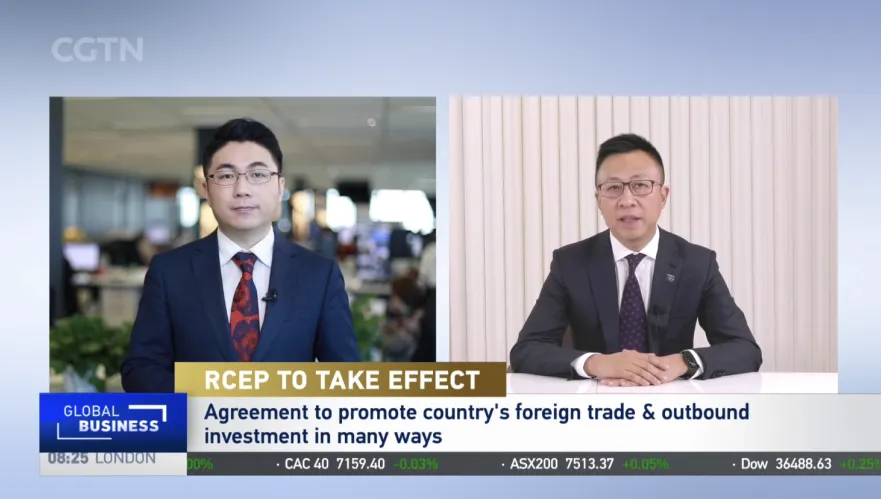
Reporter: "Thank you very much, Dr. Neil. You have just provided a comprehensive and in-depth explanation from a macro perspective. In fact, we are also very interested in the benefits of RCEP for the development of Chinese companies. Could you please discuss 'how can RCEP guide our corporate clients to benefit and explore new opportunities from tariff reduction'?"
Reporter: Thank you very much, Dr. Wang. You have just provided a comprehensive and in-depth interpretation from a macro perspective. In fact, we are also very concerned about the benefits that RCEP can bring to the development of Chinese enterprises. Could you please focus on how 'RCEP guides customer enterprises to benefit from tariff reductions and find new opportunities?'
Neil Wang:The RCEP's 'tariff-free' policy will bring huge development opportunities to Chinese enterprises in various industries.
Dr. Wang Xin:The RCEP 'zero tariffs' will bring tremendous development opportunities to enterprises in various industries across China.
The RCEP 'tariff-free' refers to the eventual achievement of zero tariffs on over 90% of the goods traded in the RCEP region once the agreement comes into effect, with immediate zero tariffs on some goods or zero tariffs for others within ten years. The introduction of this policy means that member countries will liberalize trade in goods in a short period of time. This enables beneficiary enterprises to significantly reduce production and investment costs, expand markets, and improve competitiveness globally.
RCEP 'zero tariffs' mean that after the agreement comes into effect, over 90% of the goods traded within the region will eventually achieve zero tariffs, with some immediately reduced to zero and others within ten years. The implementation of this policy signifies that contracting parties will liberalize trade in goods in a relatively short period, which will help reduce production and investment costs for our enterprises, expand market space, and enhance their international competitiveness.
In terms of imports, 'tariff-free' helps enterprises expand their procurement scale of raw materials, automotive, electronics, and other components at much lower costs, better meeting domestic market demands for consumer upgrading, cost reduction, efficiency improvement, and supply chain optimization.
From an import perspective, 'zero tariffs' help enterprises expand their procurement of raw materials, auto parts, electronic components, and other parts at lower costs, better meeting domestic market needs for consumer upgrading, reducing costs and increasing efficiency for enterprises, and optimizing the supply chain ecosystem.
Regarding exports, the 'tariff-free' policy will significantly reduce product prices, promoting more Chinese products to be marketed internationally and removing many challenges for enterprises in international markets. Especially for products with export advantages, 'zero tariffs' enable Chinese enterprises to enhance their competitiveness in global markets and replace market shares of non-member countries, leading to further export expansion.
From an export perspective, the 'zero tariffs' policy will significantly lower product prices, promote more Chinese products into international markets, and eliminate many challenges for enterprises in international markets. Especially for products with export advantages, 'zero tariffs' will enable Chinese enterprises to enhance their competitiveness in global markets, replace market shares of non-member countries, and further expand exports.
In addition, the RCEP cumulative rules of origin are very beneficial for small and medium-sized enterprise exports. It stipulates that when goods are exported to any RCEP member country, all intermediate goods and accessories from any RCEP country can be included in the value-added percentage of the origin to meet the regional value content requirement of 40%. This makes it easier for businesses to meet RCEP origin requirements, which may enhance the flexibility and autonomy of industry chain layout. Therefore, 'zero tariffs' bring optimization of supply chains, enhancement of market discourse, and expansion of global influence for Chinese enterprises with broader development space.
Furthermore, the RCEP cumulative rules of origin are highly advantageous for small and medium-sized enterprise exports. It stipulates that when goods are exported to any RCEP member country, intermediate goods and accessories from any RCEP country can be incorporated into the value-added percentage of the origin to meet the final export product's value-added requirement of 40%, significantly lowering the threshold for benefiting from these rules and enhancing the flexibility and autonomy of industry chain layout. Therefore, 'zero tariffs' provide a broad development space for Chinese enterprises to optimize their supply chains, enhance their market discourse, and expand their global influence.