China has established an "ambitious" carbon peak and neutrality goal, clarifying the need for deep adjustment of industrial structures and accelerating the construction of a clean, low-carbon, safe, and efficient energy system. Focusing on the opportunities presented by the "ambitious" goals, foreign companies in China are actively deploying efforts to transform their energy systems by focusing on management and technological energy conservation.
China's ambitious carbon reduction strategy has completed its top-level design. As business owners, how should they understand China's carbon policy system? What opportunities can be unlocked for foreign companies in China through the process of achieving the carbon peak targets? What are the biggest difficulties and challenges currently facing China in achieving its carbon peak targets? Dr. Xin Wang, Global Partner at Frost & Sullivan and President of Greater China, was interviewed by Xinhua Finance to discuss the path of "energy transformation" for foreign companies in China under the carbon policy framework.
Xinhua Finance
November 19th, Shanghai (Reporter: Pan Qing) China has established an "ambitious" carbon peak and neutrality goal, clarifying the need for deep adjustment of industrial structures and accelerating the construction of a clean, low-carbon, safe, and efficient energy system. Focusing on the opportunities presented by the "ambitious" goals, foreign companies in China are actively deploying efforts to transform their energy systems by focusing on management and technological energy conservation.
As part of the top-level design of the "ambitious" strategy, the "Opinions on Comprehensively and Accurately Implementing the New Development Concept and Doing a Good Job in Carbon Peaking and Carbon Neutrality" released in October proposed carbon reduction paths and key tasks.
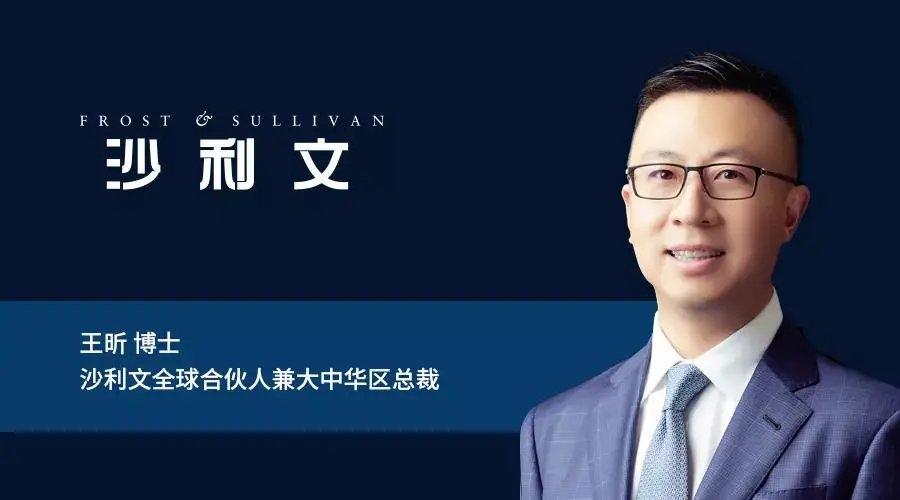
Dr. Xin Wang, Global Partner at Frost & Sullivan and President of Greater China, stated that from a specific quantitative perspective, energy transformation is the main path to achieving the "ambitious" carbon reduction goals. In areas such as structural, management, and technological energy conservation, there is tremendous potential for cooperation between multinational companies and Chinese enterprises.
Including the application of comprehensive contract energy management solutions, foreign companies in China have started early on emphasizing the use of management energy conservation to control their own and project carbon emissions levels.In terms of providing management energy conservation solutions and services to help Chinese enterprises reduce carbon emissions, foreign companies in China already have some successful practice cases.
In 2021, Guoshen Company of the State Energy Group proposed an "integrated two wings" development strategy, namely "optimizing coal-fired power integration, specializing in circulating fluidized beds, and refining new energy," and has made digitalization an important empowerment approach.
Relying on the Pl System data infrastructure provided by AVEVA, a well-known global industrial software company, Guoshen Company has implemented a series of digital application scenarios suitable for coal-fired power integrated operation enterprises, including coal integrated monitoring, local turbine monitoring, flue gas system monitoring, steam-water system monitoring, coal mine safety monitoring and control, real-time environmental protection data monitoring, desulfurization and denitrification diagnosis, etc. Among them, the visual application of real-time environmental protection data monitoring has helped 31 out of 32 units of Guoshen Company complete ultra-low emission renovations.
Dr. Zhiming Huang, Vice President of Pacific and Greater China Channels at AVEVA, stated that digital technology plays a crucial role in energy conservation and emission reduction, reducing carbon footprints. Visualization, digital twins, machine learning, and artificial intelligence are all key digital technologies that help enterprises achieve carbon reduction goals. In industries such as energy and chemical engineering, power, shipbuilding, and railways, AVEVA has helped many global enterprises upgrade their technology by optimizing production processes, improving operational efficiency, and reducing operational risks through software applications. AVEVA will also assist Chinese industrial customers in reducing carbon emissions, promoting the sustainable development of projects and operations, and maximizing emission reduction benefits.
Under the "ambitious" carbon reduction strategy, technological energy conservation is also seen as an important opportunity for foreign companies in China.
Zhu Yaming, Co-Head of Energy Resources at EY Global Greater China, believes that achieving carbon peak and even carbon neutrality targets must start with a transformation of the energy structure. Under the background of the "ambitious" goals, the transformation path of China's energy industry should be reflected in technical assistance represented by clean substitution, electric power substitution, energy interconnection, energy efficiency improvement, and carbon reduction technologies.
Dr. Xin Wang, Global Partner at Frost & Sullivan and President of Greater China, gave an example analysis: Relying on a huge market and proactive government support, China has cultivated a large number of new energy vehicle enterprises with outstanding technical strength in recent years. Against the backdrop of the global trend towards developing new energy vehicles, strengthening cooperation with Chinese enterprises, including joint ventures to produce related raw materials and battery equipment, will become an inevitable choice for relevant foreign companies in China. In areas where new energy vehicles and fuel vehicles are relatively common, such as chips and control equipment, Chinese enterprises need technical support from foreign-funded enterprises in the traditional automotive supporting field.
As a provider of next-generation mobility system products in automotive and industrial technology fields, CEP AppTec has been entering the Chinese market for 40 years. Currently, one-fourth of the group's sales come from the Asia-Pacific region, with China as the main body.
Dr. Haozhe Ke, Director of CEP AppTec Group, stated that electric drive, which can effectively reduce carbon emissions, is one of the core technical pillars of CEP AppTec. In China, CEP AppTec will provide fully localized electrified powertrain systems for complete vehicle manufacturers and has already established a complete R&D team and obtained sufficient orders. Two large electric drive factories located in Hangzhou and Shenyang will be put into use in 2022 and 2023 respectively. The 800V electric drive axles designed and manufactured by CEP AppTec for European and Chinese luxury brands will start mass production in China from the fourth quarter of 2023.
In the field of renewable resource power generation, CEP AppTec is also working with upstream and downstream partners to promote the popularization of green electricity. In 2021, the first batch of Vidar transmission systems produced by CEP (Tianjin) Wind Power Co., Ltd. have been successfully mass-produced.
“CEP AppTec is committed to supporting China's sustainable development goals of 'ambitious carbon reduction' by providing comprehensive technical solutions from software to hardware, and creating green, safe, comfortable, and affordable next-generation travel plans both in China and globally,” said Haozhe Ke.
A research report released by HSBC during the 4th CIIE showed that 76% of overseas companies believe that the green and low-carbon transformation has further enhanced the attractiveness of the Chinese market and are optimistic about the business opportunities brought about by the implementation of China's "ambitious" carbon reduction goals. More than half of the companies are planning to provide more environmentally friendly and sustainable products for the Chinese market, including green and low-carbon operations in business and energy conservation and emission reduction of production facilities.
Frost & Sullivan Insights · Extended Reading
Q: China's ambitious carbon reduction strategy has completed its top-level design. How do you understand China's carbon policy system?
A: The "Opinions on Comprehensively and Accurately Implementing the New Development Concept and Doing a Good Job in Carbon Peaking and Carbon Neutrality" is the top-level design of China's ambitious carbon reduction strategy and also the "1" in China's "1+N" carbon peaking and neutrality policy system. The "Opinions" decompose the carbon peak targets into three time dimensions and propose ten carbon reduction paths and thirty-one key tasks. We believe that from specific quantitative targets and carbon reduction paths, it can be seen that energy transformation is the main path for China to achieve its carbon reduction goals, and the gradual substitution of non-fossil energy for fossil energy is an inevitable path in achieving the carbon peak goals. Therefore, we expect that the development of the new energy industry will be a key point for China to achieve its carbon reduction goals, giving rise to many emerging fields such as photovoltaic power generation, hydropower generation, and hydrogen energy generation.
The "N" in the "1+N" policy system for carbon peaking and neutrality refers to specific implementation plans for carbon peaking in different sectors and industries including energy, industry, transportation, urban and rural construction, etc. The "Plan" makes ten action guidelines and three support mechanisms for the ten carbon reduction paths proposed in the "Opinions." The ten actions cover several major industries such as energy, industry, transportation, construction, carbon trading, and carbon capture technology. It is not difficult to see from the carbon reduction paths and action plans that the ambitious carbon reduction strategy will involve changes ranging from national policy systems to people's daily lives: changing China's economic growth mode, changing the energy structure of industrial and transportation systems, including people's lifestyles. China is gradually reducing carbon emissions through two approaches: controlling carbon emissions and developing green and low-carbon technologies. On the basis of achieving the carbon reduction targets, it is also necessary to ensure the normal development of the economy.
The carbon peak goal is a long-term strategic goal that requires the joint efforts of the whole country. However, now we have decomposed the ultimate goals of carbon peaking by 2030 and carbon neutrality by 2060 into time, industry, and field aspects through the "1+N" policy system, pointed out the action paths, and formulated specific action plans, breaking down the long-term goals into specific and controllable phased goals. The "1+N" of the carbon policy system represents the relationship between macro and micro, roadmap and construction plan. The formation of the "1+N" policy system marks that China's carbon reduction actions have entered a substantive implementation stage.
Q: What opportunities do you think the process of China achieving its carbon peak goals can unlock for foreign companies in China? Including both management and technological energy conservation.
A: Currently, relying on long-term development in new energy technologies such as new energy vehicles and photovoltaics, China has already stood at the first tier internationally. However, on the road to achieving the carbon peak goal, China still needs to further strengthen cooperation with foreign enterprises. Achieving the carbon peak goal is a long-term, complex, multi-link process, and it is not advisable to simply hope that a few single technologies can solve problems easily. It is necessary to solidly carry out each link, using various technical methods, including structural, management, and technological energy conservation, etc.
In terms of management energy conservation, leading foreign companies in the industrial automation sector, such as Siemens, ABB, and Bosch, have accumulated rich solutions and technologies in energy conservation management. Although China's energy conservation industry has currently undergone long-term development, there is still a significant gap compared to these foreign companies in terms of enterprise scale, industrial chain completeness, talent reserve, etc. Foreign companies in China have basically started early on emphasizing the use of management energy conservation to control their own and project carbon emissions levels. Most of these companies have a complete set of contract energy management solutions and have applied them well to their own projects. Under the grand goal of carbon neutrality, these management experiences will play a greater role. These foreign companies can provide relevant consulting services for Chinese enterprises.
In terms of technological energy conservation, we believe that foreign companies in China also have huge development opportunities. Taking the new energy vehicle industry as an example, relying on a huge market and proactive government support and encouragement, China has cultivated a large number of enterprises with outstanding technical strength. Similarly, foreign countries also need to vigorously develop the new energy vehicle industry in the future, strengthen cooperation with Chinese enterprises, combine the advantageous technologies and industries of both sides, which will become the focus in the next few years. For example, in the battery field, more and more foreign companies are building joint ventures with Chinese enterprises to produce related raw materials and battery equipment. Some relatively common equipment between new energy vehicles and fuel vehicles such as chips and control equipment also require technical support and cooperation from traditional automotive supporting enterprises such as Bosch. Mutual cooperation and win-win technology will become the mainstream of future development, and a large number of cooperative factories will bring specific investment and output.
Q: What do you think are the biggest difficulties and challenges for China to achieve its carbon peak goals?
A: Currently, China consumes a relatively high amount of coal and oil. The timeframes for achieving the 2030 and 2060 carbon reduction targets are urgent, and the whole industry urgently needs to accelerate the implementation of decarbonization actions and accelerate the transformation of energy supply and consumption. How to reduce the impact on industries with high carbon emissions, ensure their continuous development vitality during the transformation process, and reduce their impact on economic growth are currently the main challenges and difficulties for China to achieve its carbon reduction goals.
[Challenges in Economic Development]
Photovoltaics, wind power, energy storage, new energy vehicles, etc. are all current hot topics related to carbon reduction in the market. However, to achieve the carbon reduction goal, relying solely on these coverage areas is not enough. On the one hand, from the current situation, it is not realistic for China to completely abandon the traditional thermal power generation model within the carbon peak target time; on the other hand, some industries such as steel, non-ferrous metals, chemicals, and cement are typical industries that are difficult to reduce emissions. Currently, effective and economical emission reduction methods have not been completed. Unreasonable forced transformation will have a huge impact on industrial structure and economic development. This is the main difficulty for China to achieve its carbon reduction goals.
[Challenges in Emission Reduction Technologies]
To solve the above difficulties, there is an urgent need for innovation in emission reduction technologies, especially CCUS technology (Carbon Capture, Utilization, Storage technology). However, China's CCUS technology level is still relatively backward, and its development and application are unbalanced. At the same time, the cost is also huge, and it is currently only in the demonstration project stage with a small scale. Under the condition of ensuring the achievement of carbon reduction goals without affecting the healthy and orderly development of the economy, CCUS is one of the necessary means. A report from the
*This article is reprinted from "Xinhua Finance," with Reporter Pan Qing, and the original title is "Foreign Companies in China Are Actively Deploying Efforts to Transform Their Energy Systems in China."