


MasterBeef Group (stock code: Nasdaq: MB) successfully listed on the US NASDAQ on April 10, 2025. Since its establishment in 2019, the group has focused on Taiwanese specialty dining and currently operates 12 stores in Hong Kong, including 9 Niu Daren Taiwanese hot pot restaurants and 3 Anping barbecue restaurants. Frost & Sullivan (Frost & Sullivan, hereinafter referred to as 'Frost & Sullivan') provided exclusive industry advisory services for MasterBeef Group's listing in the US and hereby warmly congratulate it on its successful listing.
MasterBeef Group (hereinafter referred to as 'Mr. Beef') successfully went public on April 10, 2025, issuing 2 million shares at a price of $4, raising $8 million.
During the process of listing in the US, Frost & Sullivan mainly undertook the following tasks: helping the issuer accurately and objectively understand its positioning in the target market, using objective market data to discover, support, and highlight the issuer's competitive advantages, assisting the issuer, investment banks, and other intermediaries in completing the writing of relevant parts of the prospectus (such as the overview, competitive advantages and strategy, industry overview, business, and other important sections), helping the issuer communicate with the SEC and investors, assisting investors in quickly understanding the market ecosystem and competitive landscape, and assisting the issuer in completing feedback from regulatory authorities on various industry issues.
PART/1
Overview of Hong Kong's Catering Industry
Definition and Classification
A restaurant refers to an industry that provides customers with ready-to-eat food and beverages in a closed space for consumption. In Hong Kong, the catering industry is divided into four major categories, including full-service restaurants, casual restaurants, fast food outlets, and others.
A full-service restaurant refers to a restaurant that provides a complete set of table services. Customers can have their meals served at their tables by waiters and pay at the end of their meal. Compared to other types of restaurants in Hong Kong, full-service restaurants offer higher-quality food and table service, providing customers with a more spacious and comfortable dining environment. Customers usually spend about two hours or more dining in these restaurants. Therefore, full-service restaurants target customers with moderate to high spending power, typically located in high-end shopping centers, hotels, and commercial districts in Hong Kong. The average consumption per meal for each customer in a full-service restaurant is usually over HK$200.
A casual dining restaurant refers to a tea restaurant (or Hong Kong-style tea restaurant), café, teahouse, or bar that provides food and some table service in a relaxed dining environment. Customers usually dine at casual dining restaurants for about an hour, with each person consuming about HK$100 per meal.
Fast food restaurants refer to eateries that provide quick, stable food, with little or no table service, and simple decor. These restaurants have a specially designed and effective process from ordering to cooking, aimed at providing food quickly and efficiently. Customers usually order, pay, pick up their meals, and dine at the counter.
Other catering venues include takeout restaurants, roadside food stalls, event catering, and venues not mentioned in the above categories.
market scale
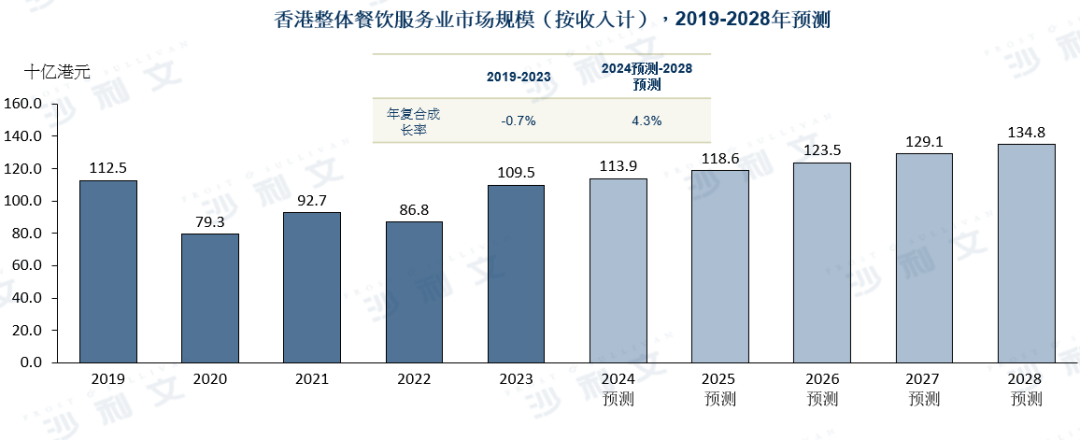
The COVID-19 pandemic has had a severe impact on the catering industry in Hong Kong, mainly due to social distancing measures and the decline in tourism. Many restaurants faced challenges such as reduced patronage and decreased revenue, leading to permanent closures. During the period from 2020 to 2022, the industry remained stagnant due to the ongoing pandemic. However, in 2021, with the reduction in COVID cases and the relaxation of catering restrictions, the Hong Kong catering industry was able to recover alongside the overall economy, including nominal GDP. As of 2023, with the cancellation of border controls and preventive measures, local demand rebounded and tourism resumed, driving the recovery of the Hong Kong catering industry. In 2023, the market size of the Hong Kong catering service industry reached HK$109.5 billion. Looking ahead, it is expected that from 2024 to 2028, the market size of the overall Hong Kong catering service industry will grow at a compound annual growth rate of about 4.3%, reaching HK$134.8 billion by 2028.
Source: Frost & Sullivan report
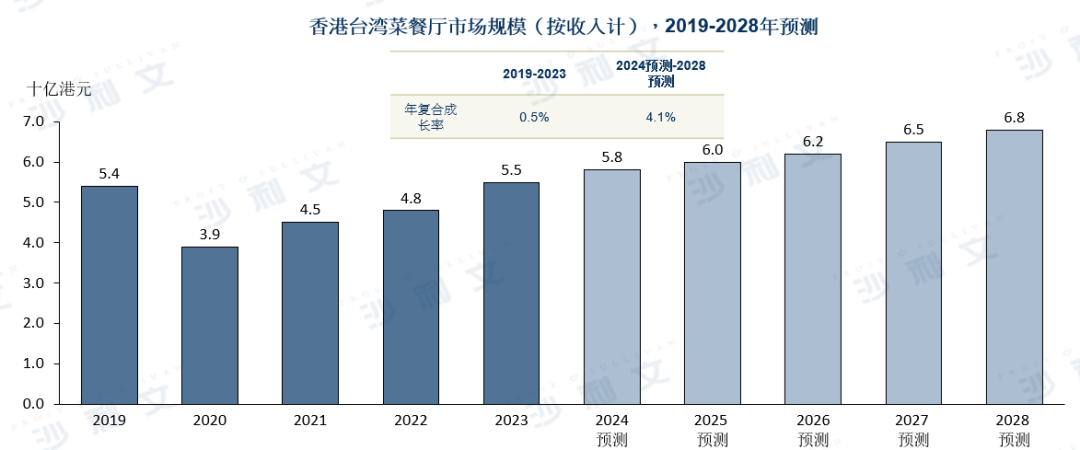
In Asian cuisine, in terms of revenue, Taiwanese cuisine accounted for 15.5% of the Hong Kong market in 2023. Taiwanese cuisine integrates Hakka, Minnan, and indigenous Taiwanese cultures, presenting a rich variety of flavors and dishes. This diverse culinary tradition has attracted adventurous foodies seeking novel and authentic dining experiences. In addition, it also caters to those who desire to taste Taiwan's unique local specialties such as hot pot and barbecue. It is expected that from 2024 to 2028, the Taiwanese cuisine market will grow at a compound annual growth rate of 4.1%, reaching approximately HK$6.8 billion by 2028.
Source: Frost & Sullivan report
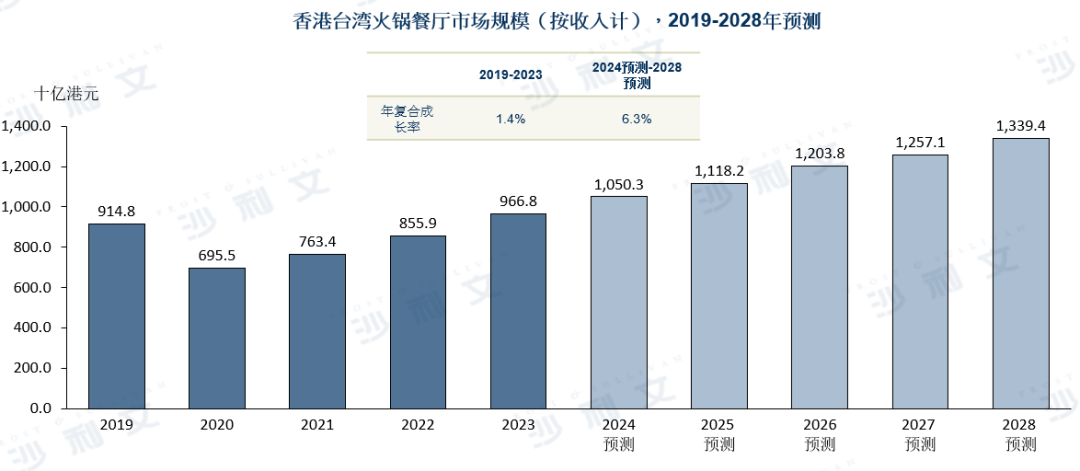
Taiwanese hot pot restaurants cater to the preferences of different ethnic groups, offering experiences of Taiwanese cuisine and culture. This can create a niche market and attract customers who are particularly interested in Taiwanese food in Hong Kong (a multicultural city with a diverse population). Taiwanese cuisine, including hot pot, is becoming increasingly popular in Hong Kong. The unique flavors, ingredients, and cooking techniques of Taiwanese hot pot have attracted a stable customer base, including locals and tourists. Following the decline in Hong Kong's catering services and the overall hot pot market during the COVID-19 pandemic, the Hong Kong Taiwanese hot pot market dropped from HK$914.8 million in 2019 to HK$695.5 million in 2020, but then rebounded. In 2023, the Taiwanese hot pot market reached HK$966.8 million, accounting for 34.5% of the Hong Kong specialty hot pot market by revenue. Well-known Taiwanese hot pot restaurant brands with a good reputation in Hong Kong are expanding their brand awareness into the city. Taiwanese hot pot restaurants introducing innovative concepts, such as fusion hot pots that combine Taiwanese and local flavors, unique dining experiences, or interactive technology integration, continue to generate interest and attract customers. With the reopening of Hong Kong's borders and economic recovery, it is expected that demand for the Hong Kong Taiwanese hot pot market will increase. It is estimated that from 2024 to 2028, the market scale of Hong Kong Taiwanese hot pot restaurants will grow at a compound annual growth rate of 6.3%, reaching HK$1.3394 billion by 2028.
Source: Frost & Sullivan report
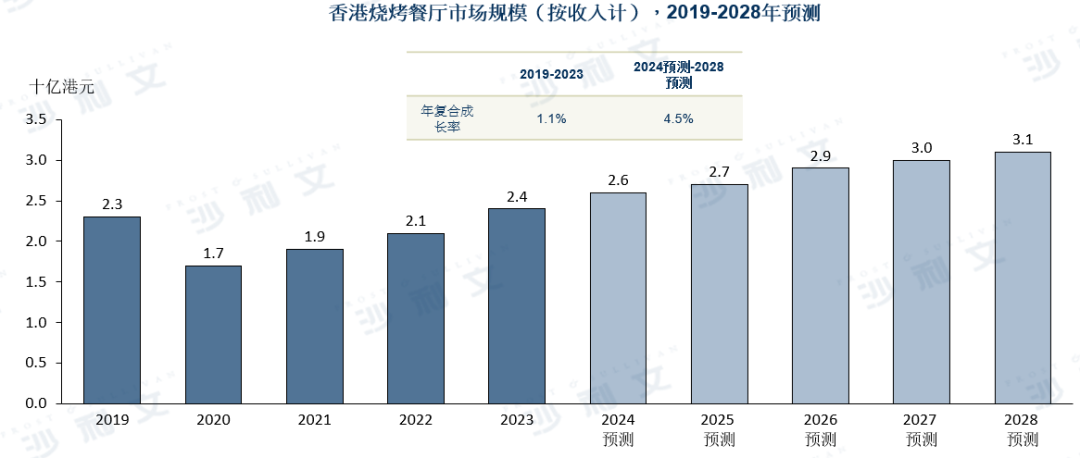
Barbecue restaurants, with their unique flavors and cooking methods, differ from traditional Chinese or Western dishes and serve customers seeking diversity and novelty. Asian-style barbecue (including Japanese, Korean, and Taiwanese barbecue) is becoming increasingly popular, reflecting the influence of global food trends and the growing demand for Asian cuisine. This has promoted the expansion of barbecue restaurants in Hong Kong. The decline in the market size of barbecue restaurants in 2020 was due to the outbreak of the COVID-19 pandemic and related social distancing measures. Overall, the market size of barbecue restaurants grew from HK$2.3 billion in 2019 to HK$2.4 billion in 2023, with an annual compound growth rate of 1.1% during this period. Due to their concept of communal dining, barbecue restaurants are often chosen as venues for social gatherings, celebrations, and special occasions. The shared experience of barbecuing and enjoying large chunks of meat creates a lively and interactive atmosphere, making it an ideal choice for group dining experiences. It is expected that the market size of barbecue restaurants in Hong Kong will increase from HK$2.6 billion in 2024 to HK$3.1 billion in 2028, with an annual compound growth rate of 4.5%.
Source: Frost & Sullivan report
Market Drivers and Opportunities
● As the level of affluence increases, the demand for dining out surges
As consumers become increasingly accustomed to the convenience provided by takeaways, it is expected that the upward trend of food delivery will continue. However, dining out is a multi-sensory experience that goes beyond just eating; it involves various tactile elements such as visual stimuli, taste, and smell. Moreover, dining out is considered a social occasion that cannot be simply replaced by food delivery. With the continuous increase in Hong Kong's population and income levels, the customer base for hot pot and barbecue restaurants is expanding. Specifically, the median monthly income of Hong Kong households increased from HK$29,000.0 in 2019 at an annual compound growth rate of 0.9% to about HK$30,000.0 by 2023. With the increase in disposable income, people can dine out more frequently and allocate more of their budget to high-quality hot pot experiences, including Taiwanese hot pot and barbecue restaurants that offer unique and exclusive products. The growing consumer power in the catering industry has driven the demand for hot pot and barbecue restaurants in Hong Kong.
● The recovery of the tourism industry and supportive government policies
In Hong Kong, the relaxation of epidemic prevention measures has led to a surge in tourism demand. To promote the recovery of the tourism industry, the government has implemented several incentive measures and initiatives targeting business activities. As a result, the number of tourists in Hong Kong increased from 600,000 in 2022 to 34 million in 2023, with an annual growth rate of about 5,666.7%. The Hong Kong government has taken a comprehensive approach to revitalize the tourism industry, such as launching multiple rounds of vouchers for dining, retail, and local attractions. These vouchers have encouraged local tourism and consumption. The influx of tourists, especially those seeking hot pot and barbecue, has played a key role in supporting local restaurants, particularly those located in popular tourist areas. Therefore, the tourism industry has become an important driving force for Hong Kong's catering service industry (including the Taiwanese food restaurant market).
● Taiwanese cuisine is becoming increasingly popular and receiving more attention
Taiwanese cuisine is becoming increasingly popular and sought-after among Hong Kong locals and tourists. Taiwanese cuisine is known for its diverse flavors, vibrant dishes, and rich cultural heritage, offering a unique culinary experience. As Hong Kong residents embrace more adventurous palates and are willing to explore different cooking products, the demand for Taiwanese cuisine has significantly increased. In addition, hot pot and barbecue have become prominent fixtures in Hong Kong's dining culture, especially among the younger generation and college students. The concept of sitting around a table, cooking fresh ingredients in boiling broth, has become familiar and widely appreciated. This cultural popularization and familiarity ensure that hot pot still has a high demand and continue to drive the development of hot pot and barbecue restaurants. Hot pot and barbecue cater to various customer needs, making them an ideal social activity. With a variety of soups and ingredients, these dining experiences allow a large group of friends and family to sit around a table, tasting the cooking process in a relaxed and enjoyable atmosphere. This inclusiveness and community nature further promote the enduring appeal and continuous growth of Taiwanese hot pot and barbecue restaurants in Hong Kong.
●The prominence of social media platforms' influence
Social media platforms play a crucial role in promoting food trends. Taiwanese cuisine has gained attention through engaging dish visuals, travel video blogs, and rich cooking tutorials. The exposure of Taiwanese cuisine on social media platforms has played a vital role in its increasing popularity and the growing curiosity of Hong Kong people about it. Platforms such as Instagram, Facebook, and food blogs provide an excellent way to showcase food, with vibrant dish photos like colorful dumplings, fragrant braised pork rice, and tempting night market snacks that can awaken people's appetite and curiosity. At the same time, travel enthusiasts and food lovers often share their culinary experiences in Taiwan through travel videos and blogs, which usually include explorations of local restaurants, night markets, and specialty snacks, accompanied by comments and recommendations. These travel videos and blogs not only gain attention on social media but also spread widely online, thereby enhancing Hong Kong's understanding of Taiwanese cuisine.
competitive landscape
Hong Kong's food and beverage service industry is highly fragmented, with a large number of domestic and international competitors. According to data from the Hong Kong Government Statistics Office, there were more than 14,900 food and beverage establishments in Hong Kong in 2022, of which about 90% are small and medium-sized enterprises with fewer than 50 employees. With the rapid recovery of tourism and the full reopening of border ports in 2023, the catering industry has a promising outlook, with the market expected to reach about 15,300 establishments in 2023. Given Hong Kong's highly diversified population structure and dietary needs, all food markets are competitive, with mainland Chinese cuisine still being the mainstream market, accounting for more than 30% of the total number of restaurants, while the rest are composed of Korean, Japanese, and other Western restaurants.
In the Chinese mainland and Asian food market, five groups represented by local chain stores, including Meixin Group, Daoxiang Holdings Limited, Fulin Group Holdings Limited, Lucky Tower Group, and Taste Gourmet Group, occupy about 9.2% of the Hong Kong market share through their diversified businesses.
As of December 31, 2023, the competition in the food restaurant market in Hong Kong Asia and Mainland China is fierce, with many mature local chain brands present. The top five groups account for about 9.2% of the market share. In Taiwan's food sector, the market was relatively fragmented in 2023. As of December 31, 2023, the revenue of the top three Taiwanese restaurant brands accounted for about 20.8% of the overall market share.
Our Group is the largest Taiwanese food company in Hong Kong, accounting for approximately 9.7% of the market share.
The market for specialty hot pot restaurants in Hong Kong was relatively concentrated in 2023. As of December 31, 2023, the revenue of the top ten hot pot restaurant brands accounted for approximately 69.4% of the overall market share of specialty hot pot restaurants.
As of December 31, 2023, the Group operates nine specialty Taiwanese hot pot restaurants in Hong Kong, accounting for approximately 15.2% of the specialty hot pot restaurant market share and 44.0% of the Taiwanese hot pot restaurant market share. In terms of revenue for 2023, the Group ranked first among all specialty hot pot chain restaurants and Taiwanese hot pot chain restaurants in Hong Kong.
entry barriers
●Initial capital
The initial startup cost of opening a restaurant in Hong Kong is very high. It includes space rent, interior decoration, employee recruitment, equipment procurement, and marketing costs. In addition, sufficient funds are also needed to maintain daily operating costs because it takes time for a new restaurant to reach break-even point and start generating profits.
●Relationships with suppliers
The relationship established with raw material suppliers is crucial for newly opened restaurants. Since the freshness and quality of food ingredients affect the taste of dishes, restaurants must find reliable suppliers to maintain food quality. For newcomers, cooperating with suppliers to provide high-quality products can also be a challenge, as existing competitors have an advantage in obtaining better quality ingredients.
●License Requirements
To open a new restaurant in Hong Kong, the restaurant owner needs to obtain multiple licenses before opening, including a general restaurant licence or takeaway licence issued by the Food and Environmental Hygiene Department, as well as a liquor licence issued by the Liquor Licensing Authority if selling alcohol. The process of obtaining licenses can take up to several months, so new entrants need to ensure they meet regulatory requirements to prevent delays in opening the restaurant.
Frost & Sullivan has extensive research experience in the consumer industry and has assisted many well-known companies in successfully listing on the capital market. Successful listings include New World Group (2530.HK), Grassroots Group (2593.HK), Mao Geping (1318.HK), Mengjin Garden (2585.HK), Laopu Gold (6181.HK), Fojing China (2497.HK), Yan's House (1497.HK), Daily Cook (NYSE:DDC), Youbao Online (2429.HK), Feifanlingyue (0933.HK), Shanghai Shangmei (2145.HK), JuZi Biotech (2367.HK), China COSCO (1880.HK), Midea Group (9896.HK), Jiulongwang Food (1927.HK), Vesync (2148.HK), Blue Moon (6993.HK), Poplar Mart (9992.HK), Midea Group (NYSE:MNSO), Nongfu Spring (9633.HK), Fengxiang Food (9977.HK), China Feihai (6186.HK), Taobop Sports (6110.HK), China National Tobacco International (6055.HK), Youpin 360 (2360.HK), Wugu Flour Mill (1837.HK), Baby Tree (1761.HK), Deying Holdings (2250.HK), Bingshi International (1705.HK), Golden Cat and Silver Cat (1815.HK), Miming Lifestyle Department Store (8473.HK), Kirin Foods (1475.HK), Debao Group (8436.HK), Seiko China (NASDAQ:SECO), Barbie Bebe (8297.HK), Asia Grocery (8413.HK), Chowking Duck (1458.HK), COFCO Meat (1610.HK), Dali Foods (3799.HK), Vientiane International (0288.HK), Chow Tai Fook (1929.HK), Jumei Youpin (NYSE:JMEI), and others.
Recommended Reads (Swipe up and down to view more)
Frost & Sullivan helps Newman's S.A. successfully go public in Hong Kong (2530.HK)
Frost & Sullivan helps Maogoping successfully go public in Hong Kong (1318.HK)
Frost & Sullivan helps Mengjin Garden successfully go public in Hong Kong (2585.HK)
Frost & Sullivan helps the established brand Gold successfully go public in Hong Kong (6181.HK)
Frost & Sullivan assists Yanzhiwu in successfully listing on the Hong Kong Stock Exchange (1497.HK)
Frost & Sullivan helps Rizhao Dadi Cook successfully go public in the US (NYSE:DDC)
Frost & Sullivan helps extraordinary successfully list on the GEM with its main board (0933.HK)
Frost & Sullivan assists Vesync in successfully listing on the Hong Kong Stock Exchange (2148.HK)
Frost & Sullivan assists Blue Moon in successfully listing on the Hong Kong Stock Exchange (6993.HK)
Frost & Sullivan helps Pop Mart successfully go public in Hong Kong (9992.HK)
Frost & Sullivan helps famous innovative products successfully go public in the US (NYSE:MNSO)
Frost & Sullivan helps China's Feihai succeed in listing on the Hong Kong Stock Exchange (6186.HK)
Frost & Sullivan helps Top Glove Sports S.A. successfully go public in Hong Kong (6110.HK)
Frost & Sullivan helps Youpin360 successfully go public in Hong Kong (2360.HK)
Frost & Sullivan helps Baby Tree successfully go public in Hong Kong (1761.HK)
Frost & Sullivan helps Golden Cat and Silver Cat successfully go public in Hong Kong (1815.HK)
Frost & Sullivan helps Nippon Sake & Foods Co., Ltd. successfully go public in Hong Kong (1475.HK)
*The above order is not sequential and is arranged in reverse chronological order based on listing time.




