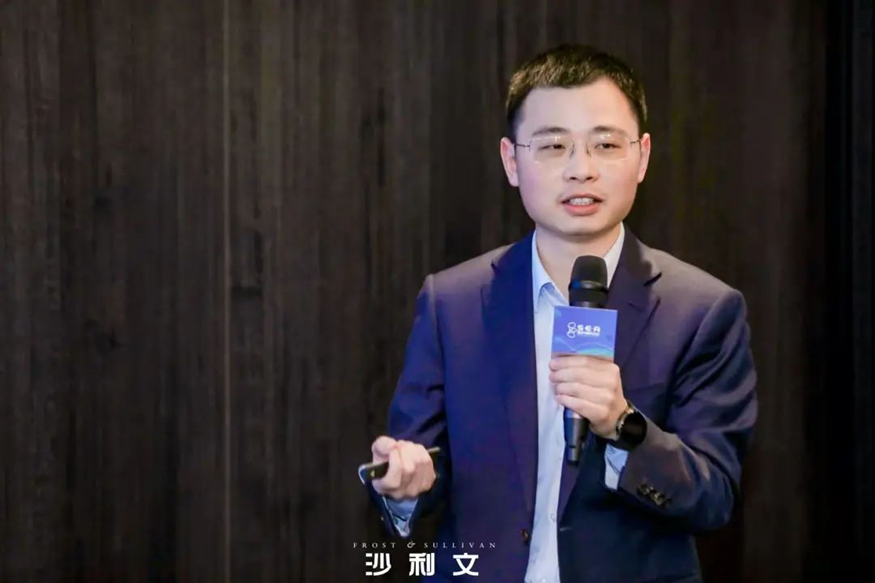
2022year1month5On the afternoon of the same day, the New Shanghai Businessmen's Health Research Society, co-hosted by the New Shanghai Businessmen Federation and Trace Capital,10periodC9China Medical Beauty Industry Venture Capital Forum ·No.3The roadshow was successfully held, bringing together healthcare innovation companies, investors in the medical industry, and consulting advisors to discuss innovations, investments, and asset securitization in consumer healthcare. They explored the 'appearance value' economic battlefield. Frost & SullivanFrost & SullivanMao Hua, Partner and Managing Director of Frost & Sullivan's Greater China Region, was invited to attend the event and delivered a speech on the market landscape and development trends in the consumer healthcare and medical aesthetics sector.
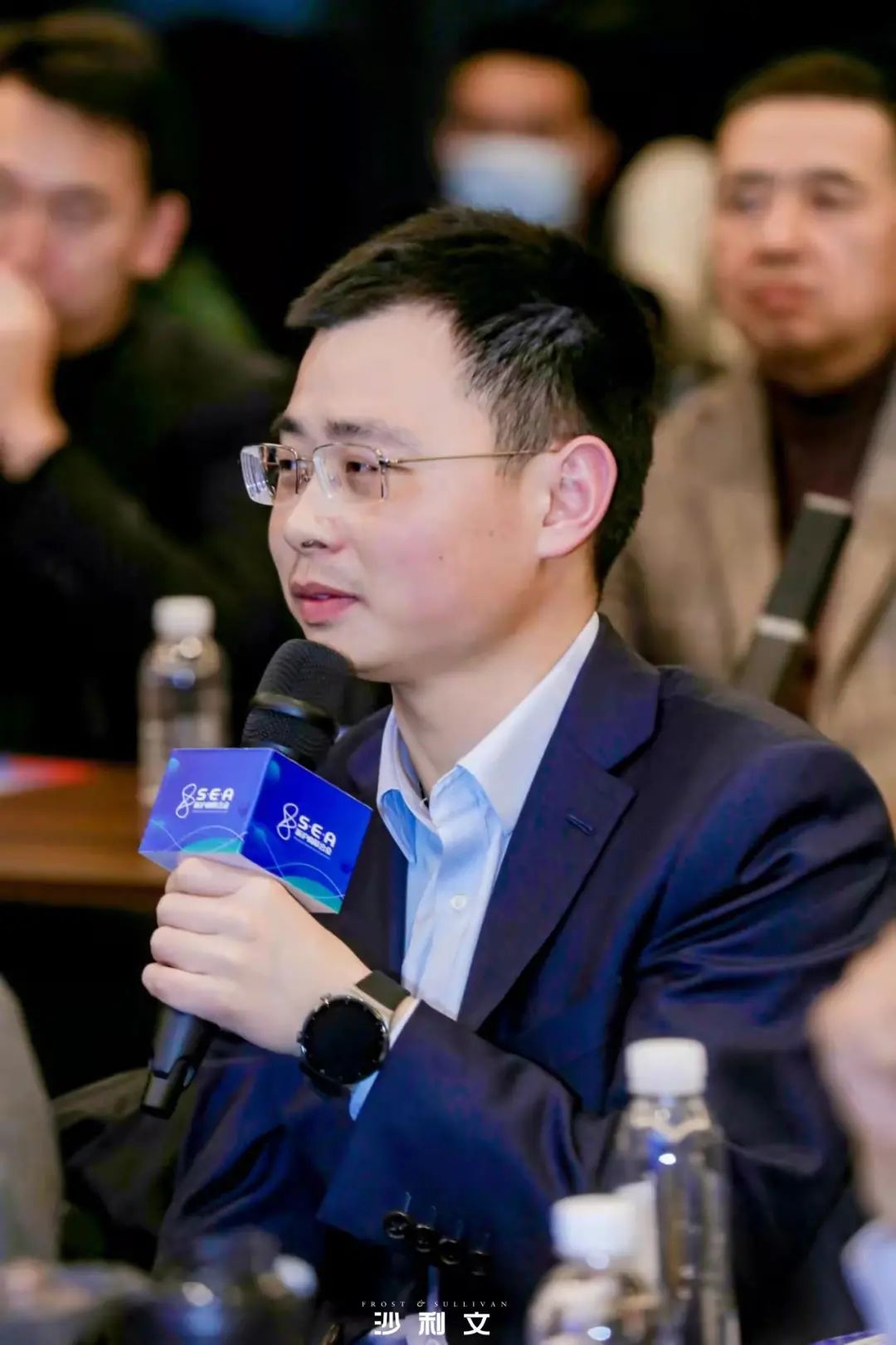
First of all, Mao Huaibing introduced the overall overview of the medical aesthetics industry to the guests present. He pointed out that the medical aesthetics industry possesses both medical and consumer attributes, with strong regulatory medical aspects ensuring a continuous increase in consumer trust.Adding to this, it has enhanced consumer recognition and can effectively promote the development of formal medical beauty service institutions and R&D companies.

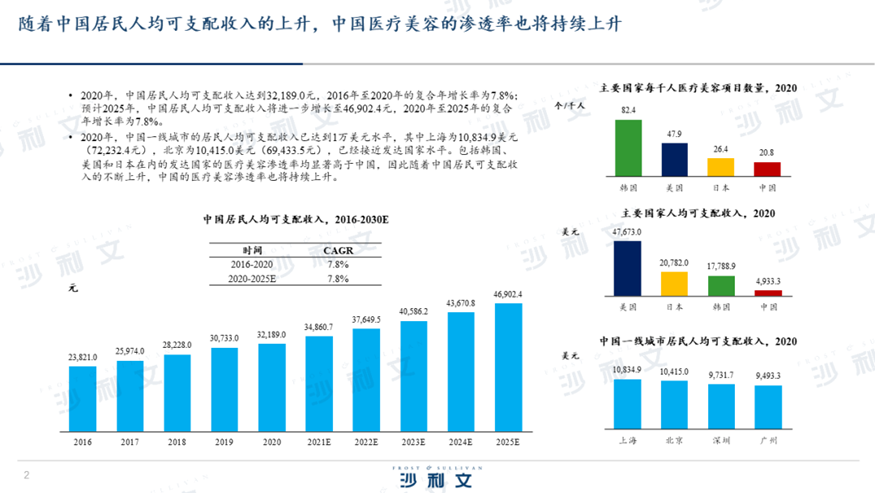
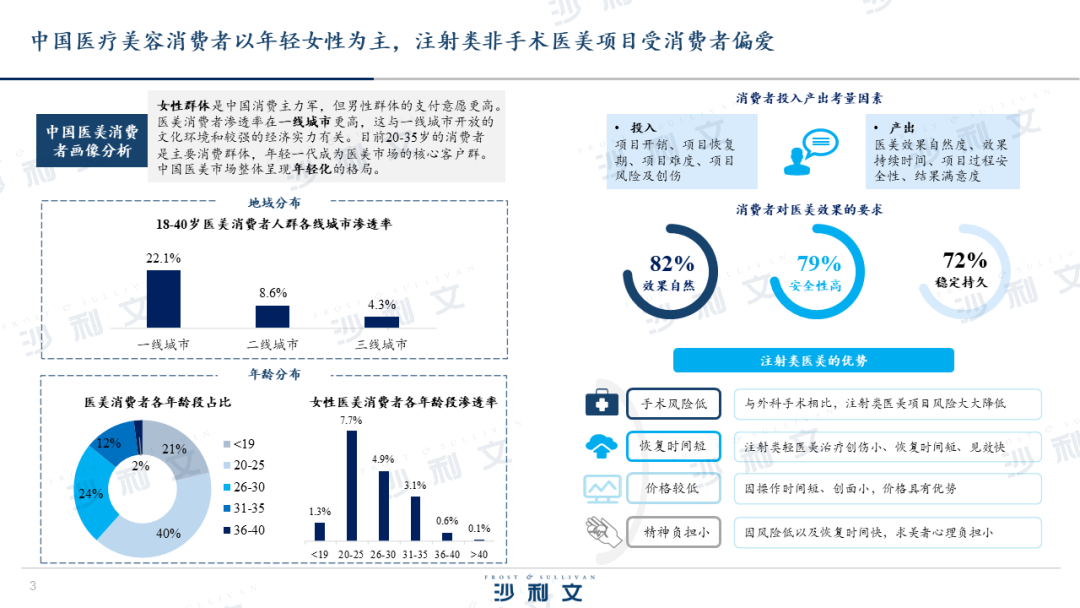
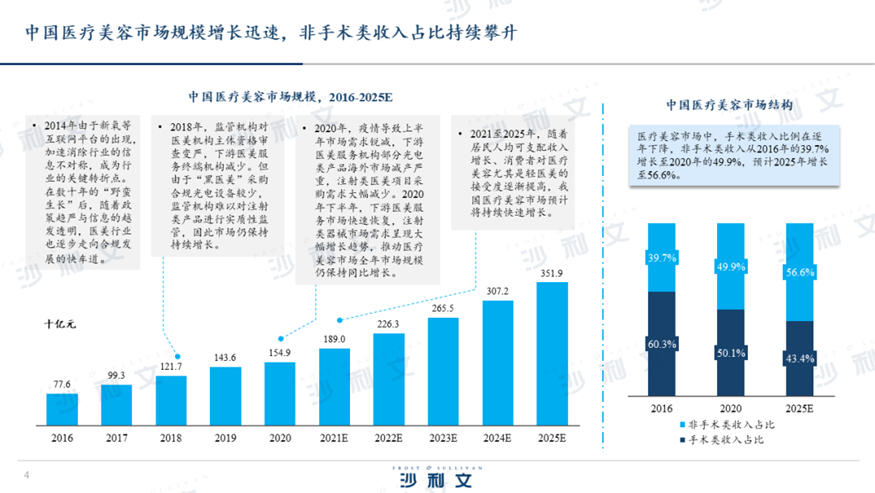
With the rise in per capita disposable income of Chinese residents, the penetration rate of medical beauty in China will continue to increase.2020In [year], the per capita disposable income of Chinese residents reached32,189.0yuan2016Year to2020The compound annual growth rate for the year is7.8%;estimated2025In [year], the per capita disposable income of Chinese residents will further grow to46,902.4Yuan. According to a Frost & Sullivan survey, Chinese medical beauty consumers are mainly young women, and the penetration rate of medical beauty consumers is higher in first-tier cities. Currently20 - 35Consumers aged 25-34 are the main consumer group, and the Chinese medical beauty market as a whole is showing a trend towards younger demographics. Among various medical beauty projects, non-surgical injectable procedures are favored by consumers due to their low surgical risks, short recovery time, lower prices, and less mental burden. In recent years, the scale of China's medical beauty market has grown rapidly, with the proportion of non-surgical income continuously climbing.


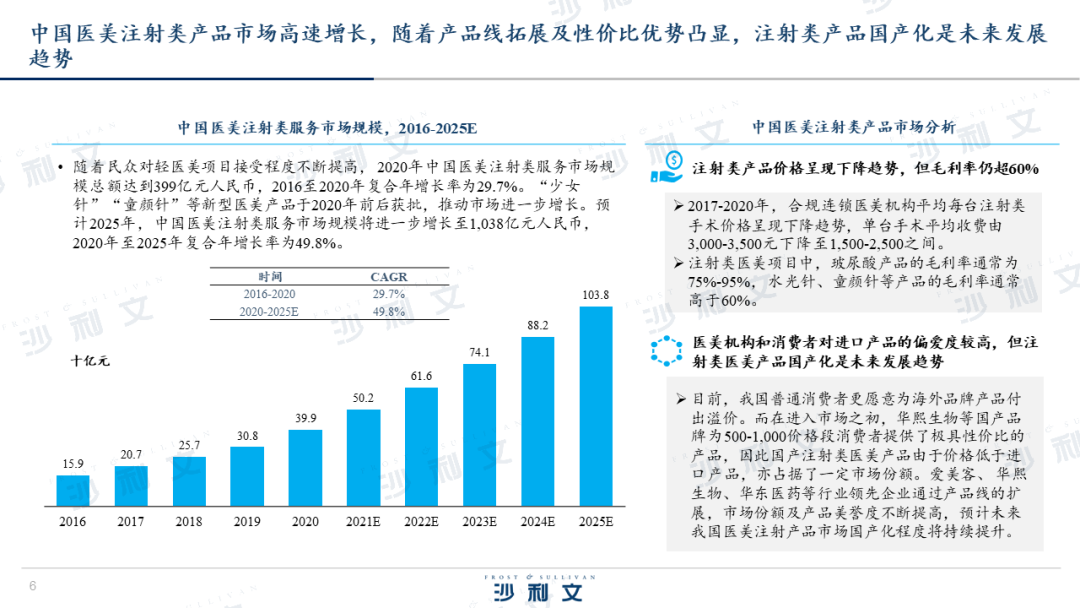
 Subsequently, Mao Hua elaborated in detail on the overall market situation of medical beauty injection products. Common medical beauty injection products in China are divided into two categories: medical devices and non-medical devices. The main application items of medical devices include hyaluronic acid, Juvenile Beauty Needle, Youthful Beauty Needle, etc., while botulinum toxin belongs to the category of non-medical devices. Data shows that as the public's acceptance of light medical beauty projects continues to increase, the market for medical beauty injection products in China is growing at a high speed.2020In China, the total market scale of medical beauty injection services reached399RMB 10 billion, expected2025In [year], the market scale of cosmetic injection services in China will further grow to1,038RMB 10 billion2020Year to2025Annual Compound Annual Growth Rate49.8%.
In addition, although ordinary consumers in China are still more willing to pay a premium for overseas brand products, domestically produced brands such as Huaxi Biotech are500 - 1,000Price segments have provided consumers with highly cost-effective products. Therefore, domestic injectable medical beauty products have also occupied a certain market share due to their lower prices compared to imported ones. Moreover, as domestic companies expand their product lines and highlight their cost-effectiveness advantages, the market share and reputation of domestic injectable medical beauty products continue to improve. It is expected that the degree of localization of China's medical beauty injectable product market will continue to increase in the future.
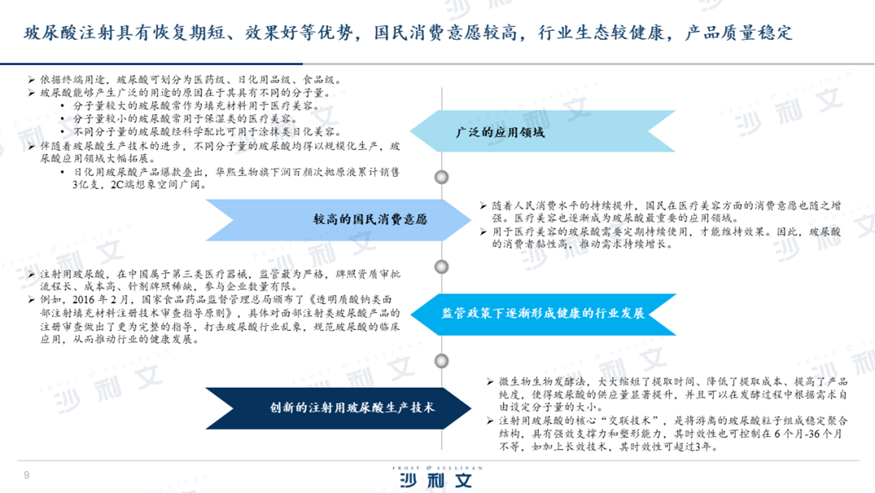
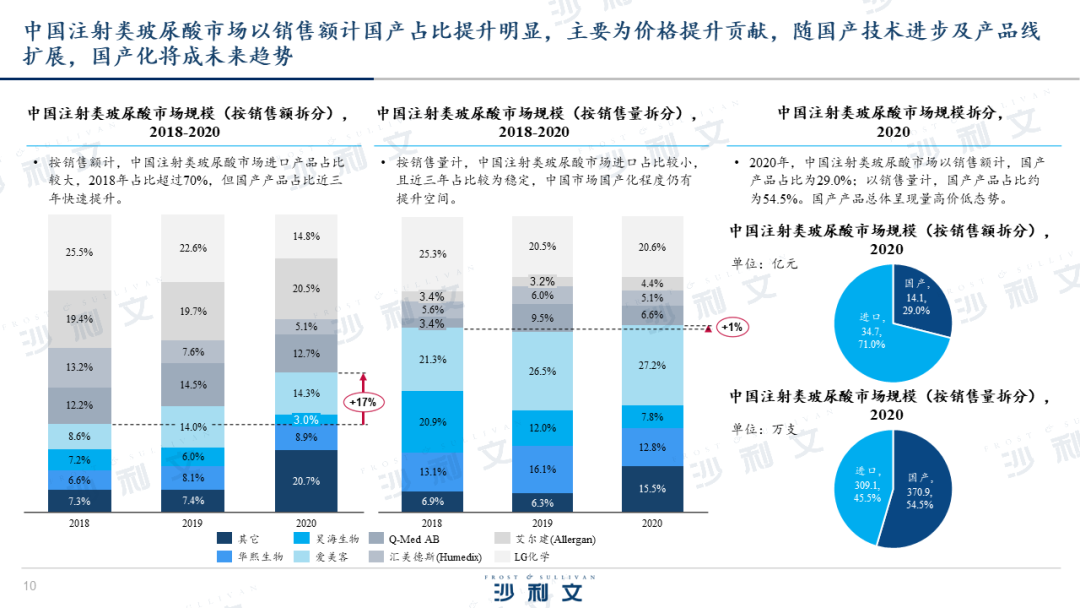
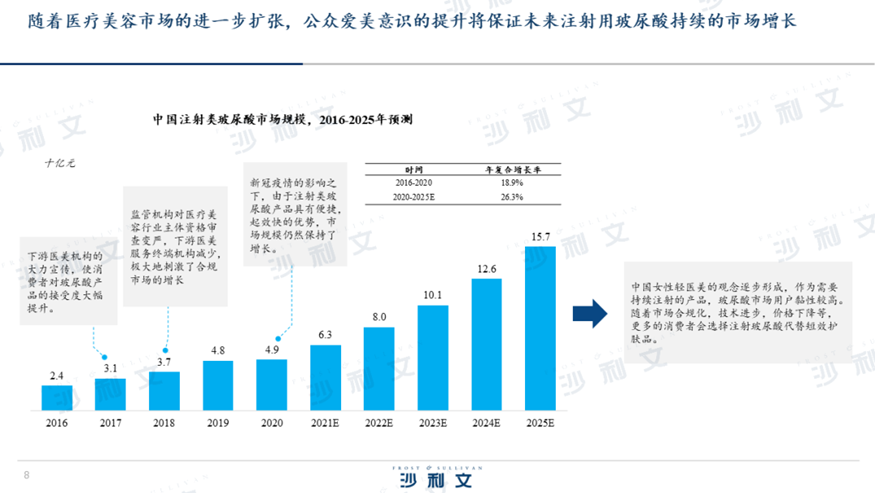
Compared to other medical aesthetic procedures, hyaluronic acid injections have advantages such as a shorter recovery period and better results. The national consumer willingness is high, the industry ecosystem is healthy, and product quality is stable. In recent years, due to the introduction of strict regulatory policies, the number of approved hyaluronic acid injections has gradually stabilized. Under the situation of high terminal prices for hyaluronic acid injections, the profit margins of midstream and downstream service institutions are at a high level in the entire industrial chain. Mao Hua said that with the gradual formation of the concept of light medical aesthetics among Chinese women, the medical beauty market has further expanded, becoming more compliant, with continuous technological progress and price drops. More and more consumers choose hyaluronic acid injections instead of short-term skincare products, which will ensure the sustained growth of the future hyaluronic acid injection market. At the same time, the proportion of domestic sales in China's injectable hyaluronic acid market has increased significantly, mainly contributing to the price increase. With the advancement of domestic technology and the expansion of product lines, localization will become a trend in the future.

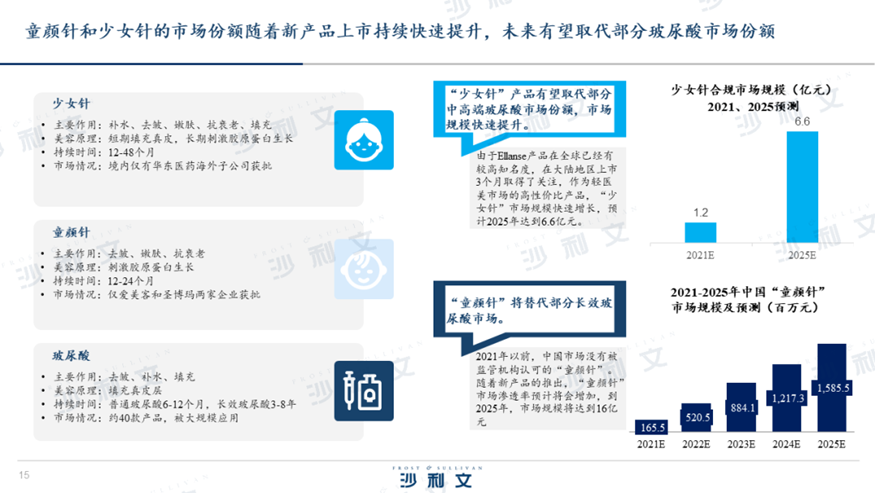
 The market share of Youthful Beauty Needle and Teenage Beauty Needle has shown a continuous and rapid increase with the launch of new products, and it is expected to replace some of the hyaluronic acid market share in the future. Among them, due to the high global recognition of Ellanse products, they have gained attention three months after their launch on the Chinese mainland as cost-effective products in the light medical aesthetics market. The market scale of 'Teenage Beauty Needle' has grown rapidly, with an estimated value reaching 660 million yuan by 2025. Before 2021, there were no 'Youthful Beauty Needle' products recognized by regulatory authorities in the Chinese market. With the introduction of new products, the market penetration rate of 'Youthful Beauty Needle' is expected to increase, reaching a market scale of 1.6 billion yuan by 2025. Both types of products belong to regenerative collagen products, and due to differences in composition and mechanism of action, there are differences between them in terms of injection depth, operation method, and onset time.
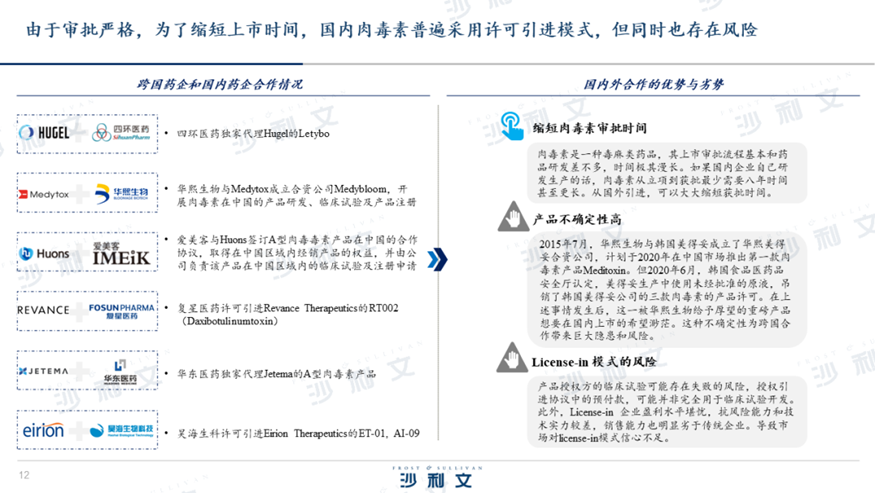
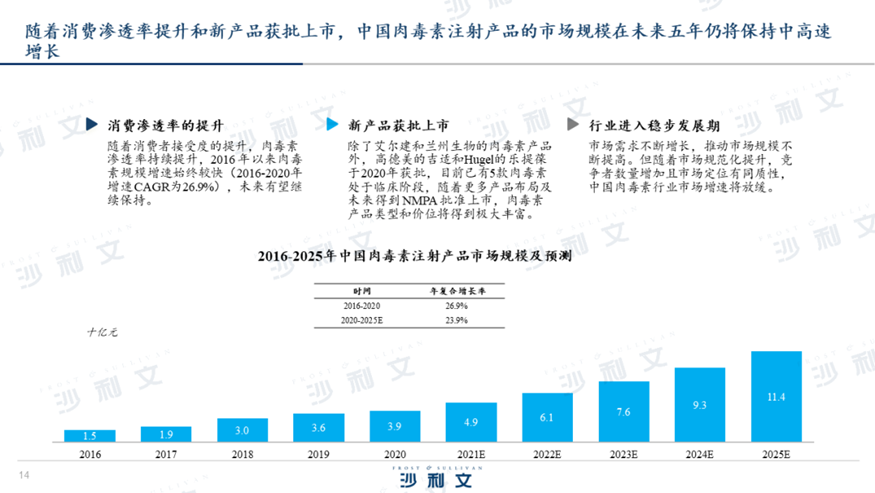
Another category of non-instrumental medical beauty projects - represented by botulinum toxin (Botox) - is widely used in the field of medical aesthetics and has good customer acquisition attributes. For instance, it can be used not only on multiple body parts but also combined with other treatments. It is highly safe, with most common adverse reactions being reversible. Additionally, due to the need for multiple injections to maintain results, the repurchase rate is relatively high, indicating a huge market potential. However, due to the strict approval process for Botox, domestic companies generally adopt a licensing model to shorten product launch times. This model carries certain risks. On the other hand, the production of Botox requires strict standards, demanding transportation conditions, and strong regulatory policies, resulting in relatively high industry barriers. Although these factors have constrained the development of the entire domestic industry to some extent, 'with the increase in consumer penetration and new product approvals for market release, the market scale of Botox injection products in China will continue to maintain medium-high growth over the next five years,' said Mao Hua.