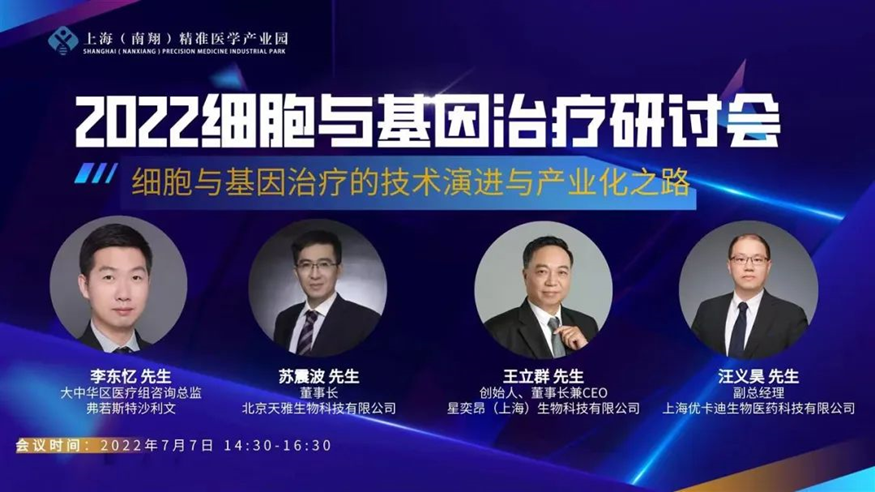
7month7On the day of2022The Symposium on Cell and Gene Therapy Technologies was held in Shanghai. Frost & SullivanFrost & Sullivan,Li Dongyi, the consulting director of Frost & Sullivan's Greater China Healthcare Team, was invited to attend the event and deliver a speech.

Li Dongyi stated that cell and gene therapyCGT) has become one of the hottest fields in China's biopharmaceutical industry, ChinaCGTThe amount of field financing is from2020year117.4RMB 10 billion rose to2021year162.0100 billion RMB, driven by capital injectionCGTThe industry is booming and expanding.CGTUse cases, accelerationCGTThe pace of commercialization in the field.
At the same time, domesticallyCGTThe industry has formed a relatively complete industrial chain, mostly focusing on the development of downstream treatment products. In the upstream field of key raw materials and production processes, imported brands still dominate, leaving significant room for domestic substitution.
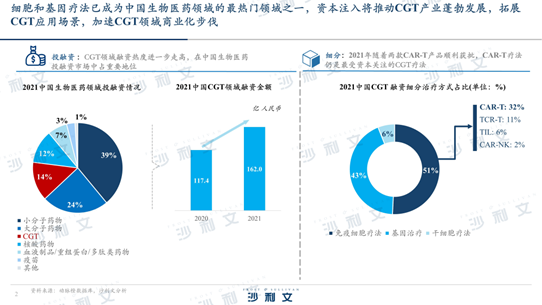
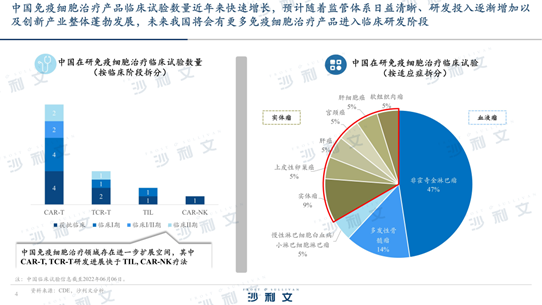
Immunocyte therapy mainly includesCAR-T, TCR-T, TILandCAR-NKIt is a highly promising tumor immunotherapy strategy and has become the fourth major technology for tumor treatment after surgery, radiotherapy, and chemotherapy. Data shows that the number of clinical trials for immune cell therapy products in China has been growing rapidly in recent years. It is expected that with the increasingly clear regulatory system, gradually increasing R&D investment, and the overall vigorous development of innovative industries, more immune cell therapy products will enter the clinical research and development stage in the future.
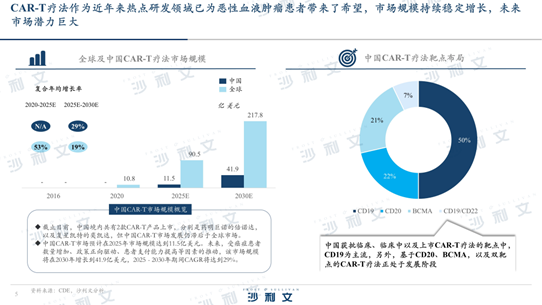
CAR-TTherapies, as a hot research and development field in recent years, have brought hope to patients with malignant hematological tumors. As of now, there are2modelCAR-TThe products have been launched, namely WuXi AppTec's Benoxa and Fosun Kite's Yikaida, but in ChinaCAR-TThe development of the market lags behind that of global markets. chinaCAR-TThe market is expected to be at2025The annual market scale reached11.5Billion US dollars. In the future, driven by factors such as an increase in the number of cancer patients, positive policy incentives, and improved patient affordability, the market size is expected to be2030Year-on-year growth to41.9billion dollars.
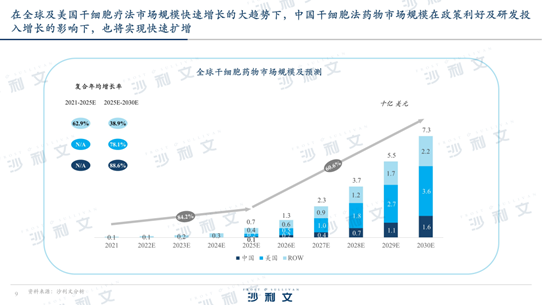
"The development of stem cell therapy in China has moved from disorder to order, and now the research on stem cell applications in our country is entering a virtuous development track under the scientific supervision of national policies," said Li Dongyi. Based on multiple mechanisms of action, the development potential of stem cell-based pharmaceuticals is enormous, offering new treatment options for many complex diseases that are ineffective with traditional therapies.
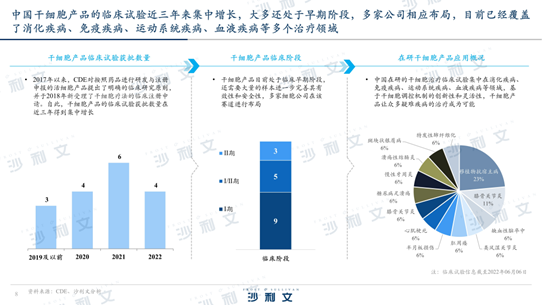
It is reported that pluripotent stem cells have significant advantages over adult stem cells in terms of drug development. Existing studies have demonstrated good efficacy and safety, which will promote the rapid development of 'stem cell drugs'.2017Since the beginning of this year,CDEClear clinical research principles were put forward for live cell products developed and registered for drugs, and2018Clinical registration applications for stem cell therapies were newly accepted in the year. Since then, the number of clinical trial approvals for stem cell productsVolumes have seen concentrated growth in the past three years. Most stem cell products are still in their early stages, and several companies have made corresponding arrangements, currently covering multiple therapeutic areas such as digestive diseases, immune diseases, musculoskeletal system diseases, and blood diseases. Li Dongyi believes that, under the general trend of rapid growth in the global and US stem cell therapy market scale, coupled with favorable policies and increased R&D investment, the market scale of stem cell-based drugs in China will also achieve rapid expansion.
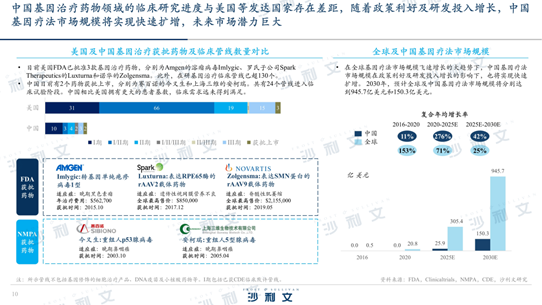
Currently, all approved gene therapy drugs in China are for tumor treatment. The ongoing gene therapy clinical trials are concentrated on tumors and blood diseases./In the fields of circulatory system, ophthalmic diseases, and neurological diseases, tumors account for more than70%Most of the gene therapy clinical pipelines are oncolytic viruses, with adenovirus and herpes simplex virus vectors being used in most cases, and poxvirus vectors used in a few.25%Clinical trials for gene replacement therapies, most of which areAAVCarrier drug, oncolytic virus and basedAAVGene replacement therapy with vectors remains the mainstream treatment strategy.
On the other hand, carrier optimization and large-scale production remain challenges in the research, development, and production of gene therapy. In the future, gene therapy in China will expand from tumors and rare diseases to common diseases, with more diverse vectors and technical approaches, which will drive gene therapyCDMORapid development.
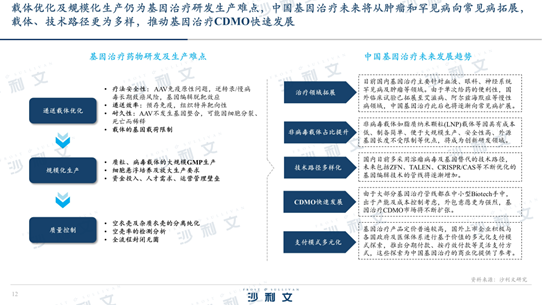
Li Dongyi pointed out that there is still a gap in the clinical research progress of gene therapy drugs in China compared to developed countries such as the United States. In recent years, the global market for gene therapies has grown rapidly.2016Year to2020The compound annual growth rate for the year reached153%. Under this major trend, along with favorable policies and continuous growth in R&D investment, the market scale of gene therapy in China will also experience rapid expansion. It is estimated that2020Year to2025The annual compound annual growth rate will reach276%The overall market has great potential for future development.