As the largest electric two-wheeled vehicle market, China's ownership has already exceeded3Hundreds of millions. The promulgation of the new national standard has put forward strict requirements and regulations for electric two-wheelers from multiple aspects, promoting the development of the electric two-wheeler industry towards standardized production and safe driving. The development of the electric two-wheeler market has entered a new stage. At the same time, rangeability has always been a core concern for most consumers when purchasing electric two-wheelers, and range issues are also one of the most prominent user pain points in the current electric two-wheeler industry.
In response, leading electric two-wheeled vehicle manufacturers such as Yade have been dedicated to enhancing battery endurance through technological innovation. For example, Yade's graphene batteries are a pioneering product in the industry, capable of extending battery life, charging speed, and charge-discharge stability. With their high performance, sales since their launch have exceeded4,500Ten thousand.
Overview of the Electric Two-Wheeled Vehicle Market Background
Over the past two decades, China's electric two-wheeled vehicle industry has undergone changes in product demand, vehicle usage, and purchasing channels. At the same time, policy regulation has also influenced the overall market situation. With the promulgation of new industry policies, the development of the electric two-wheeled vehicle market has entered a new stage, and the market harbors tremendous development opportunities.
· Changes in demand and supply
The urban congestion problem has worsened, and the growth in commuting demand has driven up the sales of electric two-wheelers. In addition, the consumer group for electric two-wheelers is gradually getting younger, placing higher expectations on products, and also having higher standards for vehicle appearance, intelligence, and related performance.
· Market competition
After the release of the new national standard policy for electric two-wheelers, industry standards have set higher requirements for vehicle configuration and performance. This has led to a mass exodus of small-scale producers from the market, enhancing the professionalism of the electric two-wheeler industry. The market concentration of electric two-wheelers is gradually increasing, consumer brand awareness continues to rise, and sales of first-tier brands such as Yade continue to grow.
· Brand Strategic Development
In the past few years, brand owners have mainly expanded their market by deploying a dealer network nationwide. With the saturation of the electric two-wheeled vehicle market in first- and second-tier cities, as well as the introduction of 'motorcycle bans' in many cities, electric two-wheeled vehicle brands are gradually shifting to lower-tier cities and rural areas. In addition, with the development of internet technology and e-commerce, consumer touchpoints have undergone significant changes, and brand owners are also gradually transforming their marketing models to use emerging channels for promotion and sales.
· New policy
The new national standard sets strict requirements and regulations for electric two-wheelers from multiple aspects, promoting the development of the electric two-wheeling industry towards standardized production and safe driving. At the same time, the 'Helmet and Seatbelt' initiative is committed to enhancing safety awareness and cultivating standardized driving behaviors at the consumer level. For enterprises and merchants that value independent research and development, high quality, and environmental protection, the new national standard is both a regulatory requirement and an opportunity for development.
· New trends
asGPSLocation, Internet of Things,5GThe development of emerging technologies such as artificial intelligence and biometrics, as well as the Internet+With the advent of the pandemic, electric two-wheelers are gradually entering an era of intelligence. Intelligence has become an important product upgrade direction and technological breakthrough point in the electric two-wheel industry. On the other hand, relevant national departments are also accelerating research on battery standardization issues, promoting the application and dissemination of power battery charging and swapping technologies.
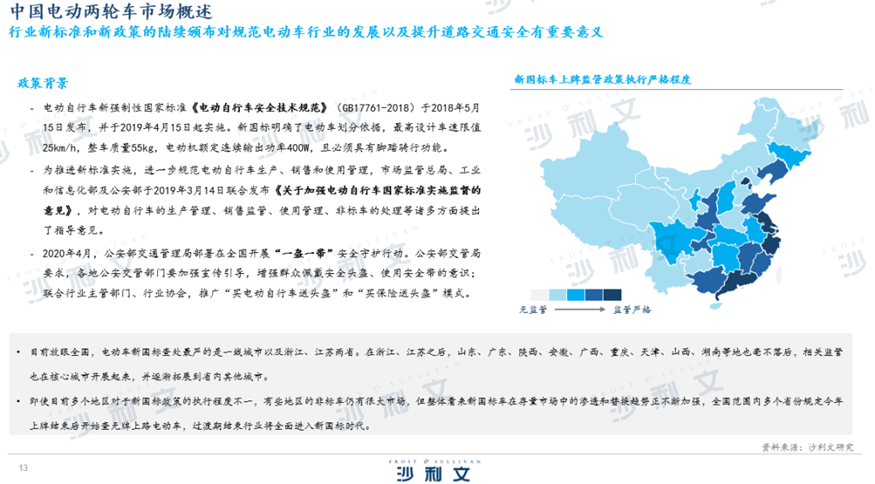
The new national standard promotes the standardized development of the industry
New Mandatory National Standard for Electric Bicycles: 'Safety Technical Specifications for Electric Bicycles'GB17761 - 2018) on2018year5month15Published daily, and2019year4month15It shall come into effect on the date indicated. At the same time, in order to promote the implementation of the new standards and further standardize the production, sales and use management of electric bicycles, the State Administration for Market Regulation, the Ministry of Industry and Information Technology and the Ministry of Public Security shall2019year3month14On the same day, a joint release of 'Opinions on Strengthening the Supervision over the Implementation of National Standards for Electric Bicycles' was made, providing guidance on various aspects such as the production management, sales supervision, use management of electric bicycles, and the handling of non-standard vehicles.
The successive promulgation of new industry standards and policies is of great significance for regulating the development of the electric two-wheeled vehicle industry and enhancing road traffic safety. It further promotes the increase in sales of new national standard electric two-wheeled vehicles, as follows:
- Standardize the production of electric two-wheelers and enhance road safety management
The new national standard sets strict requirements and regulations for electric two-wheelers from multiple aspects, including vehicle identification, overall safety, mechanical safety, electrical safety, fire resistance performance, flame retardancy, radio interference characteristics, etc. The new national standard for electric bicycles has strict regulations on key indicators such as speed, weight, appearance, and battery, promoting the development of the electric two-wheeling industry towards standardized production and safe driving. At the same time, the proposal of the 'Helmet and Seatbelt' initiative also means that the industry's attention to road safety driving of electric two-wheelers is continuously increasing, committed to enhancing safety awareness and developing standardized driving behaviors at the consumer level, thereby promoting the harmonious development of the industry.
· Promote industry survival of the fittest, integration and upgrading
For manufacturers and merchants that have been steadfast in producing high-power electric two-wheelers for years, the new national standard is undoubtedly a storm; however, for those enterprises and merchants that value independent research and development, quality, and environmental protection, the introduction of the new national standard can be an opportunity. Producing electric two-wheelers that meet the new national standards can actually enhance market competitiveness. For electric two-wheeler companies that comply with the new national standards, the standard is both a regulatory requirement and an opportunity blueprint.
· The demand for vehicle replacement has boosted the sales of new national standard vehicles
With the implementation of the new national standard nationwide, localities have successively introduced regulations and requirements for electric two-wheeled vehicle registration, leading to a demand for vehicle replacement and upgrading. Especially in provinces with strict supervision, consumers pay more attention to the implementation of the new national standard earlier and choose new national standard electric two-wheeled vehicles when purchasing them, or actively participate in the exchange program for old vehicles for new ones, thereby driving a new growth in overall sales of the electric two-wheeled vehicle industry.
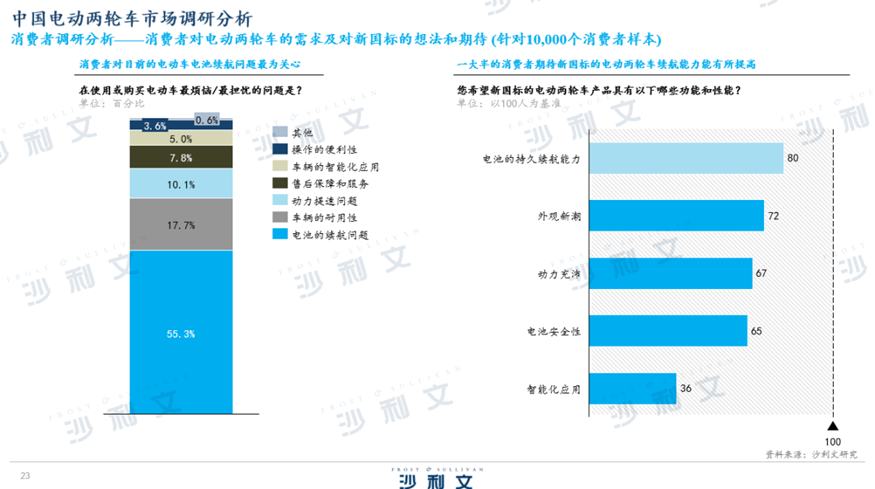
Consumers are anxious about mileage and have higher requirements for battery endurance.
To further understand consumer needs in China's electric two-wheel vehicle industry, Frost & Sullivan conducted10,000A questionnaire survey was conducted among consumers of electric two-wheelers. According to the survey results, the most concerning issue for consumers regarding electric two-wheelers is battery range. For new models of electric two-wheelers that meet the new national standards, what consumers are most looking forward to is still an improvement in vehicle range.
In the face of consumers' 'range anxiety', improving the battery endurance of electric two-wheelers is key. Participants in the electric two-wheeled industry have begun to focus on increasing battery energy density or reducing the cost per unit of energy, so that electric two-wheelers can carry higher-capacity batteries. Currently, graphene batteries have a higher energy reserve per unit volume and can achieve longer range than conventional batteries. The use of graphene in batteries has become an important application direction in the industry.
As a leading brand in the electric two-wheeled vehicle industry, Yade's pioneeringTTFARGraphene batteries have a lifespan longer than that of ordinary batteries3times, with ultra-high rechargeable and dischargeable cycles1,000times. Graphene is21One of the important new materials of the century, graphene has high electrical conductivity, thermal conductivity, and flexibility. The use of graphene in batteries has resulted in longer battery life, faster charging speeds, and stable charging and discharging cycles under extreme cold conditions.TTFARgraphene3on behalfPlusThe battery boasts industry-leading low-temperature resistance technology. By adding antifreeze electrolyte to the battery, it can effectively enhance the diffusion rate of the electrolyte and improve the battery's reactivity, enabling the battery to withstand winter's low temperatures head-on. Moreover, while increasing capacity, it also takes into account low-temperature performance, ensuring that the battery can maintain long-range capabilities even in winter.
Yadi graphene battery technology leads industry innovation
8month18On the 1st, a “Super Call-in Session” was held at Yade Technology Group's (hereinafter referred to as “Yade”) Wuxi headquarters. Ultra-long battery life2022At the annual Yandi Technology Group Energy Technology Conference, Yandi presented at the event siteTTFARgraphene3on behalfPlusbattery, andTTFARcarbon fiber2.0Lithium batteries underwent extreme tests such as rolling, freezing, and capacity testing, and industry-leading three-year warranty was issued.TTFARgraphene4The BYD Battery, once again proving Yade's technical R&D strength to the market.
at the same time, The graphene battery developed by Yade is a first in the industry. It is the largest-capacity lithium battery for new national standard electric two-wheelers, with cumulative sales exceeding4,500Ten thousand. This not only signifies that Yade has made scientific research breakthroughs and performance upgrades in battery energy, but also marks Yade as pioneering a new era of long-range electric mobility with technological innovation as its engine.
Since its establishment, Yade has always been led by innovation, continuously launching products that meet market expectations. Today, as the electric mobility sector enters an era of consumption upgrading, Yade remains firmly holding onto the innovation engine. At this event, Yade's technological innovation capabilities were once again recognized by authorities, and it received the industry's first graphene battery certification and the largest capacity lithium battery dual certification for electric two-wheelers according to Yade's new national standard from Frost & Sullivan. This has once again made this globally leading intelligent manufacturing enterprise of electric two-wheelers a focal point of attention in the industry and media.
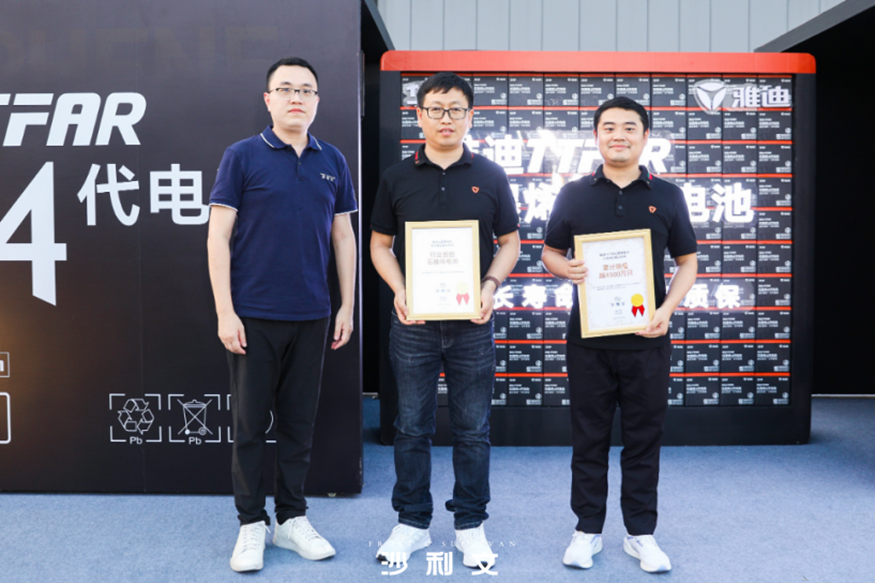
Mr. Lu Jing, Partner and Managing Director of Frost & Sullivan Greater China, presented the certificate to Yade's representative.
Yadi graphene battery returns with honors, and its sales have exceeded since its launch4,50010,000 units, achieving cumulative sales exceeding4,500Ten thousand certificates of authentication.
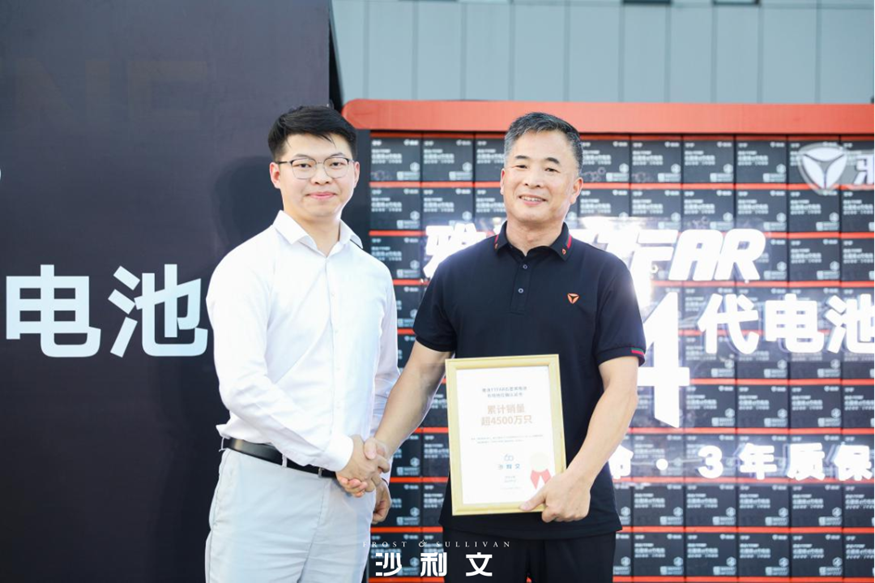
Mr. Xiang Weili, Executive Director of Frost & Sullivan Greater China, presented the certificate to Mr. Yan Di, Representative of Yadee
Yade Electric Vehicle has proven its strength to the market with significant technological advancements in battery energy technology, motors, electronic control, chargers, and other aspects. It is at the international forefront.TTFARMotor, optimized magnetic circuit design, increased power density, improved motor efficiency, more efficient operation, and longer cruising range;TTFARGallium nitride charger, utilizing leading gallium nitride materials, is smaller and more convenient. Intelligent communication technology ensures overcharging protection for the battery, effectively extending its lifespan;TTFARIntelligent driving electronic control core, newly addedTTFAR+SPORTThe dual riding mode is the best solution that balances power range and mileage.
At this stage, the use of graphene in batteries has become an important direction for the industry. As a pioneer and leader of new technologies, Yade will continue to explore new opportunities in the industry, promote industry development and sustainable innovation while achieving self-breakthroughs, demonstrate China's technological strength to the world, and lead the industry towards more internationalized and high-end markets.