Metaverse Industry Innovation Forum
2022Over the past year, the concept of the metaverse has accelerated its implementation, and the integrated effect of market confidence, technological breakthroughs, and policy convergence has begun to emerge.7In January, Shanghai released an action plan for cultivating the new 'Metaverse' track. The Zhangjiang Digital Economy Chain (Metaverse) characteristic industrial park centered around Shanghai Pudong Software Park has become one of the important carriers for Shanghai to develop in the new Metaverse track.
As Shanghai Pudong Software Park30One of the annual series of events,2022HuizhiTEKThe launch ceremony of the Metaverse Industry Innovation Forum and PRCSoft Startup Camp (Eighth Session) is about to take place. The event will last for three days, focusing on industry innovation forums, industry demand matching, and exchanges at the Women's sub-forum. It will also unveil the special session on the metaverse for the PRCSoft Startup Camp (Eighth Session).
Frost & SullivanFrost & SullivanWang Chenhui, Partner-in-Chief and Executive Vice President of Frost & Sullivan Greater China Region, Co-founder and President of LeadLeo, was invited to attend the Metaverse Industry Innovation Forum and share2022The latest research findings from the 'China's VR/AR/MR Industry Development White Paper' for 2023.
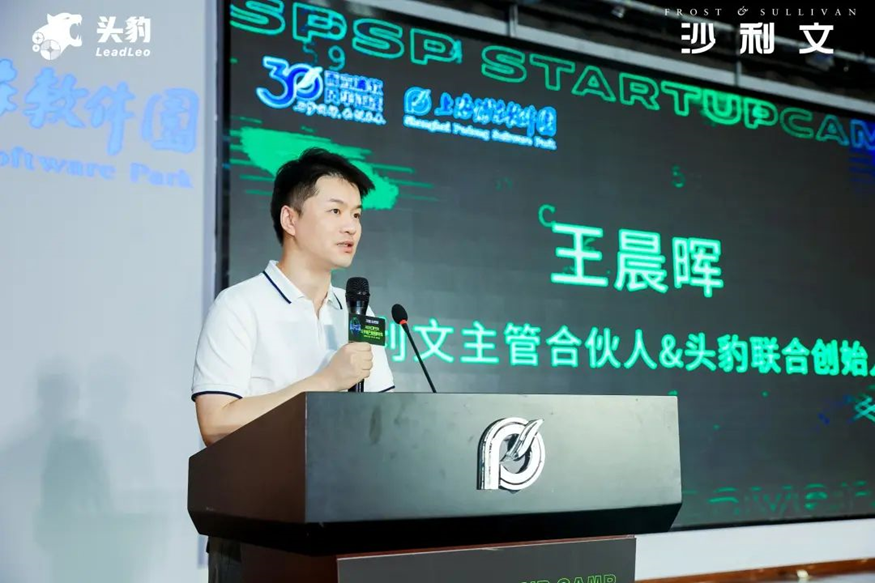 Wang Chenhui, Managing Partner and Executive Vice President of Frost & Sullivan Greater China, Co-founder and President of LeadLeo
According to Wang Chenhui, MetaverseMetaverse spaceThe term 'originates from the writer'Neal StephensonThe science fiction novel 'Snow Crash' describes a world where people interact with various software in three-dimensional space using virtual avatars.
Metaverse spaceA word is composed ofMetaandversecomposition,MetaRepresents transcendence,verseRepresenting the universe, 'transcending universe' implies a man-made virtual space that operates parallel to the real world.
The metaverse connects virtual and reality, featuring a real design and economic environment that can connect everyone.3DIn the virtual world, users possess their own virtual identities and digital assets within the metaverse. They can interact freely in the virtual world, engage in productive activities, and create value.
Wang Chenhui pointed out that the metaverse provides users with rich consumer content, a fair creative platform, a reliable economic system, and an immersive interactive experience. It can express people's emotions, giving users a sense of psychological belonging. Users can make friends in the digital world, create their own works, conduct transactions, and participate in educational meetings and other social activities.
Technically, on top of the traditional internet, the metaverse has set higher standards for immersion, participation, and sustainability. Therefore, it will be supported by many independent tools, platforms, infrastructure, protocols, etc. asAR,VR,5GWith the maturity of technologies such as cloud computing, the metaverse is expected to gradually move from concept to reality.
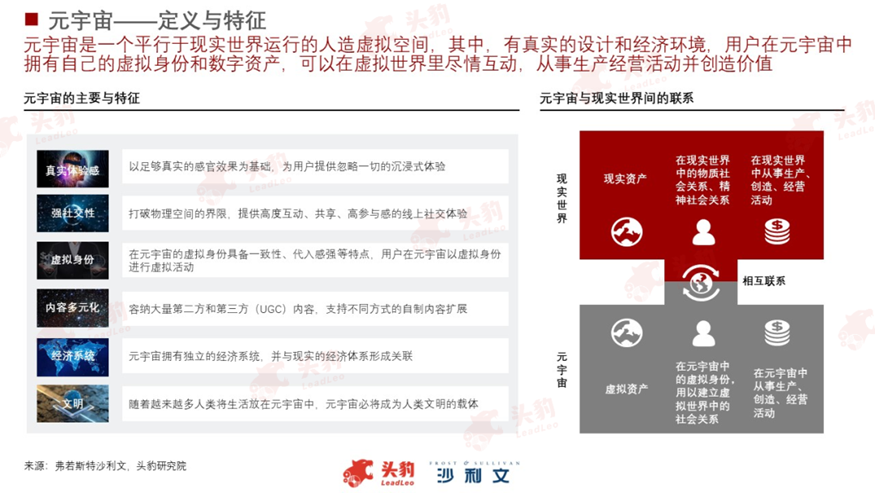
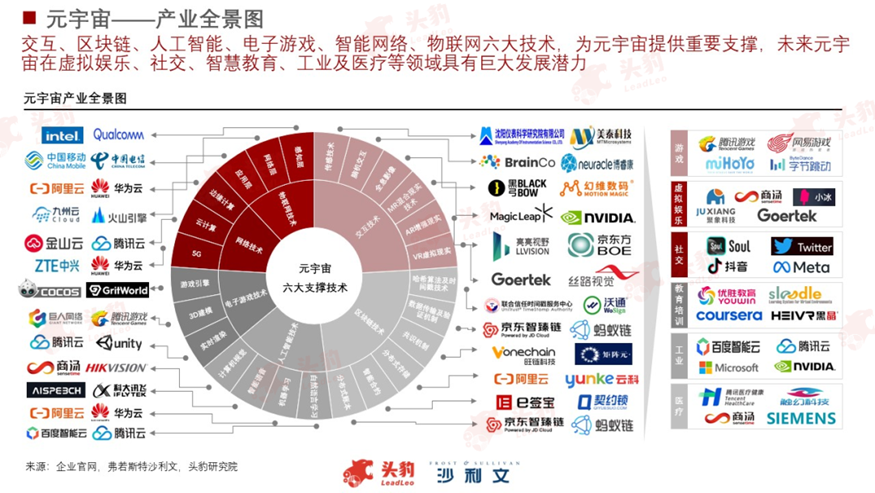
Wang Chenhui stated that the metaverse industry involves six supporting technologies, namely interaction technology, blockchain technology, Internet of Things technology, network technology, video game technology, and artificial intelligence technology. The main application areas include gaming, virtual entertainment, social networking, education and training, industry, and healthcare.
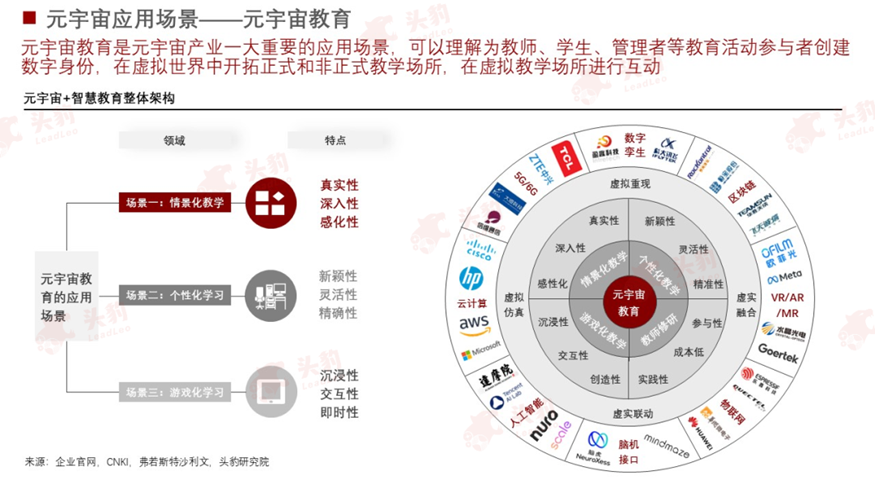
Next, Wang Chenhui further explored the application scenarios of the metaverse. Taking metaverse education as an example, The integration of virtual and real, online and offline features in the education metaverse will promote changes in teaching concepts and models.
From a definition perspective, the educational metaverse can be understood as an environment where participants in educational activities such as teachers, students, and administrators create digital identities. They open up formal and informal teaching spaces in virtual worlds and interact within these virtual teaching venues.
From a fundamental technology perspective, Wang Chenhui stated that the education metaverse utilizes VR/AR/MRDigital Twin,5GThe virtual-real integrated education environment shaped by emerging information technologies such as artificial intelligence and blockchain is a high-level form of intelligent education that fully interweaves virtual and reality, connects humans with machines, and engages schools with society.
From the perspective of current development, Wang Chenhui believes that the metaverse has already achieved initial applications in the field of education. For example, the United States established the world's first virtual reality high school—American High School—and the University of California, Berkeley recreated its campus using the sandbox game 'My World' and held an online graduation ceremony. The Seoul National Hospital in South Korea utilizedVR/ARThe technology enables real-time sharing of surgeries, symbolizing the initial attempt at applying the educational metaverse in the field of medical education.
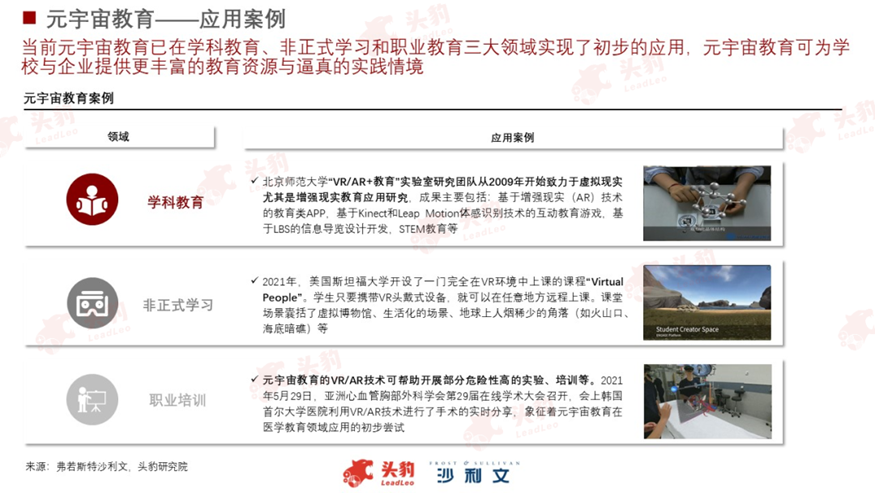
The educational application cases in the metaverse have begun to show results. According to Wang Chenhui, in the field of subject education, Beijing Normal University willVR/ARTechnology is integrated into teaching activities, and augmented reality-basedARTechnical educationAPP.
In the field of informal learning, Stanford University willVRThe device is applied in virtual, domestic scenarios, museum settings, and various other scenarios that are difficult to access in daily life.
In the field of vocational training, Seoul National University utilizesVR/ARThe technology enables real-time sharing of surgeries, andVR/ARTechnology is better applied in practical training.
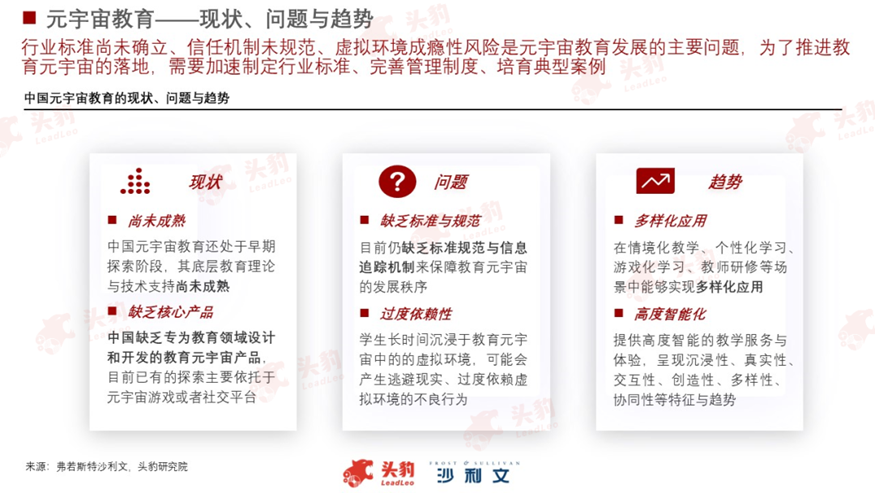
Wang Chenhui further pointed out that virtual reality education is currently still in the early exploration stage, with its theory and practice lagging behind technological development. At the same time, China still lacks educational virtual reality products designed and developed specifically for the education sector, and existing explorations mainly rely on virtual reality games or social platforms.
Wang Chenhui believes that at present, the main issues in the development of metaverse education include the lack of established industry standards, unregulated trust mechanisms, and the addictive risks associated with virtual environments.
At the same time, Wang Chenhui also stated that in the future, with the improvement of technology and industry standards, products related to metaverse education may experience relatively rapid growth.
From the perspective of application scenarios, the future education metaverse can achieve diverse applications in situational teaching, personalized learning, gamified learning, teacher training, and other areas. It will provide more intelligent teaching services and experiences, presenting characteristics and trends such as immersion, authenticity, interactivity, creativity, diversity, and collaboration.
From the perspective of industry development trends, as enterprises related to education metaverse accelerate the formulation of relevant standards, gain control over the industry's development direction, and lead the technological development path and implementation applications of education metaverse, there may be a relatively rapid growth in related products in the future.
Another major application scenario of the metaverse is metaverse social networking. Based on the characteristics of the metaverse, metaverse social networking is different from traditional social networking, and it has3DVisualizations, strong interactivity, and immersive experiences can quickly bridge the gap between strangers.
Wang Chenhui stated that the diverse playstyles in metaverse social interactions will fully activate social scenarios and enhance strangers' enthusiasm for socializing. For examplesoulTaking gamified social experience as one of its core features, through FaceID,3DFace pinching and other diverse group chat party rooms,soulGameplay like Werewolf makes it easier for users to build relationships.
The emphasis on virtual identities in metaverse social networking has made stranger interactions the main component of social patterns in future metaverse worlds. However, acquaintance interactions may gradually shrink their share in the metaverse market due to the lack of online second identities. Stranger interactions will gradually increase their market space in the metaverse.
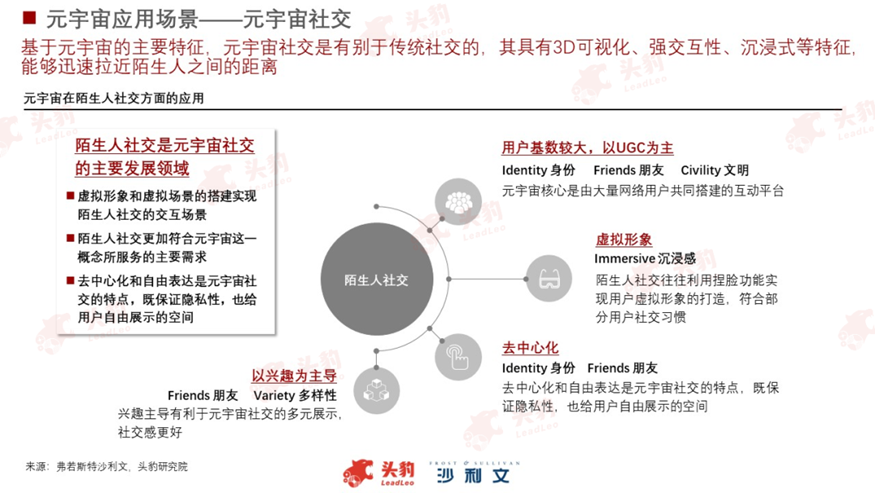
Wang Chenhui pointed out that there are currently no truly mature metaverse social applications on the market. The metaverse social applications mentioned in the existing market all involve some of the key elements, such as making friends with strangers.APP——soulIt possesses the three key elements of the metaverse: virtual identities, social networking, and synchronous interactivity.
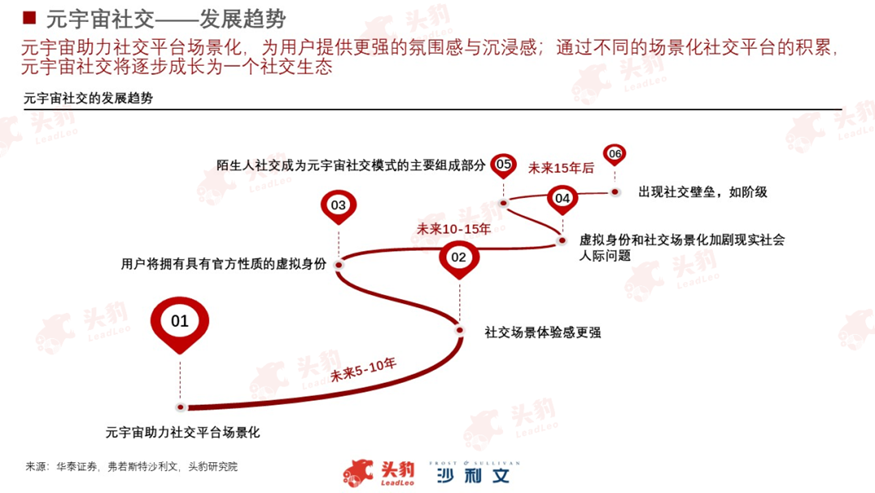
Regarding the future development trend of metaverse socialization, Wang Chenhui pointed out that scenario-based socialization is one of the value sources of the metaverse. Compared to the ubiquitous instant messaging, scenario-based social experiences offer a better user experience. This is because scenarios make it easier for users to feel immersed in an atmosphere, and they can also interact in real-time within scenario-based platforms. With the accumulation of different scenario-based social platforms, the social metaverse will gradually grow into a social ecosystem. Further realizing the scenarios and scale of the social metaverse will become an important trend in future metaverse social interactions.
On the other hand, Wang Chenhui also believes that5GThe gradual popularization has provided a larger stage for metaverse social interactions.XRThe development of device technology has provided assistance for the synchronization and real-time nature of virtual images in metaverse social interactions. Interaction is the most important element in social networking, and the metaverse enables3D,XRBased on technical foundations, it provides users with accurate ways of expressing body language, better facilitates interaction, combines the real world with the virtual world, breaks through text and traditional social methods, and enables communication and interaction among different social groups in different time and space settings.
Finally, Wang Chenhui summarized and looked ahead to the overall development trend of the metaverse. He said,2021Year-end2025In [year], with the continuous development of technology, it is expected that major internet giants and some leading companies focusing on gaming and social media will develop a series of independent virtual platforms.
2026Year to2030In [year], as the pan-entertainment immersive experience platform has made significant progress, the metaverse will expand beyond its current base to include more experiences. It is expected that some consumer, educational, conference, and work-related behaviors will shift to virtual worlds. At the same time, as consumption in virtual worlds continues to heat up, along with digital currencies such as the Digital RMB andNFTThe digital information has been assetized, and the economic system has begun to establish itself. This has subsequently driven the realization of transactions, social interactions, and other exchanges between some virtual platforms.
2030After the Spring Festival, which marks the third phase of the metaverse, Wang Chenhui believes that starting from this stage, each virtual platform will serve as a sub-universe, gradually forming a complete set of standard protocols to achieve the aggregation of various sub-universes and create a true metaverse. These sub-universes still maintain their independence, but they achieve interconnectivity through the unification and standardization of interfaces such as interaction and economy through standard protocols. At this stage, The form of the metaverse will expand with the advancement of technology, and various industries will pour into the metaverse system, blurring the boundaries between virtual and reality. As a result, the metaverse enters an era of digital coexistence between virtual and real worlds across all industries.
Recommended Reading
 "The2022China's Metaverse Industry White Paper 2023