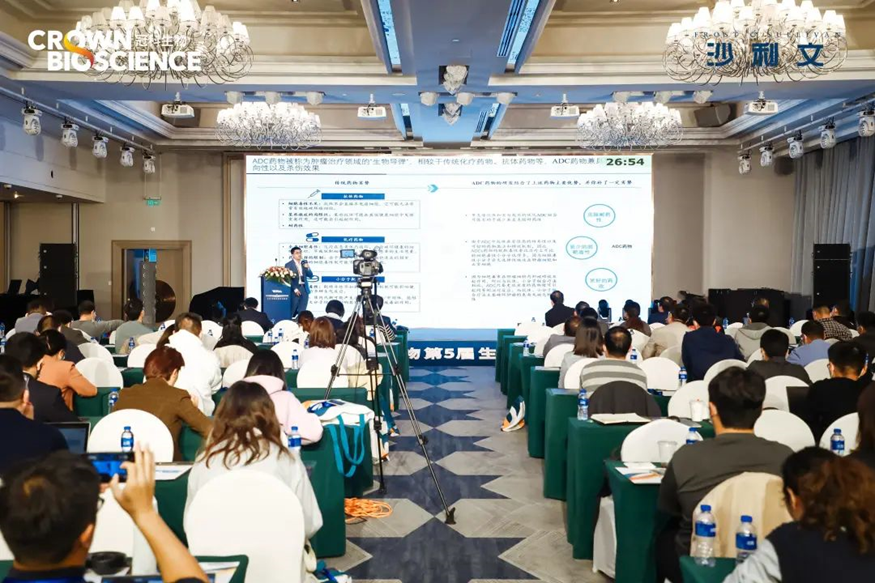
20222year11month7 - 9day2022 IDCThe YMT New Drug R&D Influence Conference was held in Shanghai.7day2022The 5th Biomedical Symposium of Guanke Biology kicked off first. This symposium focused onADCDrug Differentiated R&D, fromADCThe commercialization prospects analysis of the drug has begun, with a focus on discussionADCInviting R&D teams from innovative pharmaceutical companies to participate in core topics such as early drug research and development, clinical studies, product pipeline layout, and promotion, to jointly exploreADCThe path of drug research and development innovation. Frost & SullivanFrost & SullivanLiu Weiqi, Executive Director of Frost & Sullivan Greater China, was invited to attend the event and delivered a speech on the current market situation and development trends of antibody conjugate drugs.

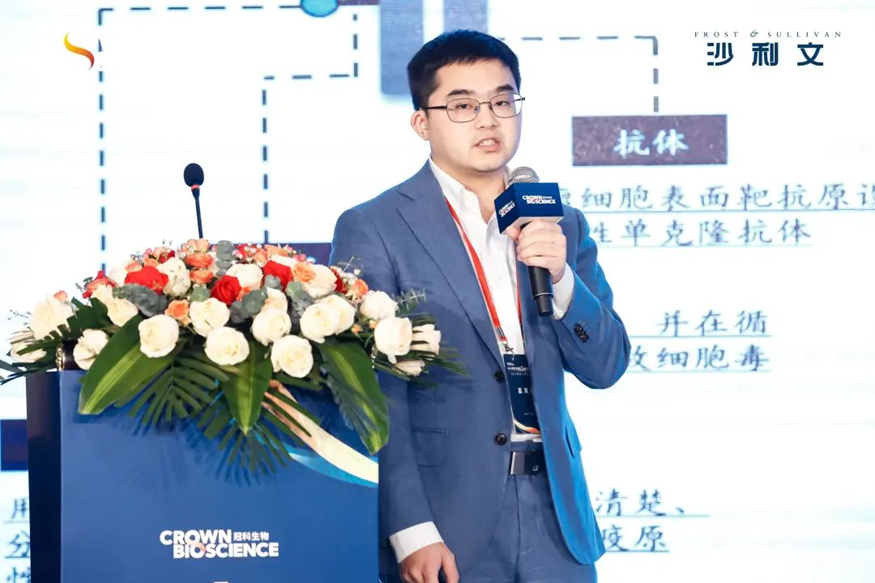
Executive Director, Greater China, Frost & Sullivan Liu Weiqi
Antibody conjugate drugAntibody-drug conjugates,ADCAntibodies conjugated with cytotoxic drugs form a drug that can deliver toxins precisely to the tumor site without affecting normal tissue, thereby increasing the patient's treatment window.
Liu Weiqi pointed out, successful developmentADCThe key factors of a drug include target antigen, antibody, linker, cytotoxic agent, and conjugation method. Among them, the target antigen is the key factor determining its development, the antibody is the key factor determining its efficacy, the linker is the key factor determining its safety, cytotoxic drugs are the key factor determining their activity, and the conjugation method is the key factor determining their homogeneity.

According to Liu Weiqi,ADCDrugs are referred to as the 'biological missiles' in the field of tumor treatment. Compared to traditional chemotherapy drugs, antibody drugs, etc.,ADCThe drug possesses strong targeting properties as well as lethal effects.
Compared with traditional drugs,ADCThe drug has the following characteristics:
Overcoming drug resistance: Optimization of monoclonal antibodies and payloadsADCCombination may help reduce or even overcome drug resistance;
Less off-target toxicity: Due toADCNeutralizing antibodies possess high specificity and controllable drug activation and release mechanisms, thereforeADCsThe off-target toxicity of drugs is much lower than that of comparable small molecule therapeutics, as small molecule cytotoxic agents selectively attack tumor cells and normal cells;
Better efficacy: Because cytotoxins are released and act within tumor cells, compared to antibody-drug conjugate therapies,ADCAs long as a lower concentration of the drug can cause an equivalent therapeutic response, antibody-drug conjugate therapy mainly destroys the tumor surface or lacks specificity.
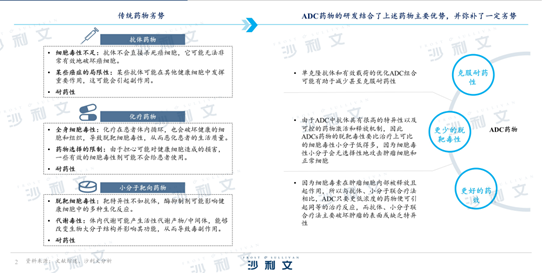
ADCDrug research and development are currently mainly carried out through collaboration, with a surge in approvals in the past three years.ADCThe pace of domain innovation has accelerated, sales have grown rapidly, and blockbuster products have been launched frequently.
Data shows, domesticallyADCRecent in the field of medicine3In the year, there were multiple large-scale financing events, such as Rongchang Biotech's2020The year marked the first time that Hong Kong's capital market was accessed through32.24RMB 10 billion in financing, and2022The number of users accessing the Sci-Tech Innovation Board in a yearDecember 26RMB 100 million in financing. Liu Weiqi pointed out that the injection of capital has contributed toADCThe pharmaceutical industry is developing rapidly.

2021Year, globalADCThe market scale of drugs reaches55billions, expected to2021This number will grow to167billion dollars2021Year to2025The annual compound average growth rate is expected to reach32%. "globallyADCUnder the general trend of rapid growth in the pharmaceutical market size and continuously climbing capital enthusiasm, ChinaADC"The pharmaceutical market has the potential to continue expanding and achieve rapid growth," said Liu Weiqi. Expected ChinaADCThe market size of the pharmaceutical industry will be2025Year-on-year growth to11billion US dollars2021Year-end2025The annual compound average growth rate will reach116%.
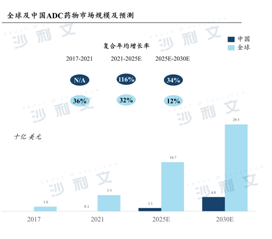
Data source: Analysis by Frost & Sullivan
In the future,ADCThe pharmaceutical market will exhibit the following three development trends:
1Expansion of indications: Currently,ADCThe indications for drugs are concentrated in the oncology field, with fierce competition in the development of oncology indications. Looking atADCThe proportion of hematological malignancies in early clinical trials at the field R&D release bureau has increased.
2)ADCGrowth in drug sales: Already listed14modelADCThe drug is expanding into global markets, and the Chinese market has just begun to embrace itADCThe craze for drugs, already5The product has been approved, and it is expected to see rapid sales growth in the future.
3The capital market remains hot: With the continuous accumulation of enterprise technology, capital onADCThe domain's popularity is constantly climbing, recently3Domestic volume exceeded10Home layoutADCEnterprises obtaining financing, of which approximately7becomeCPrevious company, expected future in ChinaADCInvestment and financing events in the pharmaceutical sector will continue to be active.
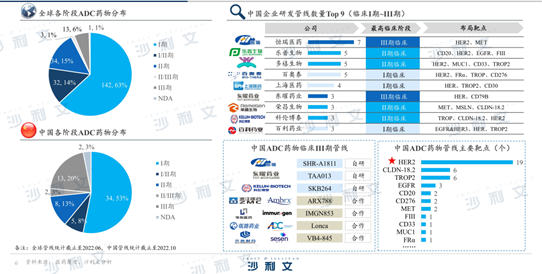
According to a study by Frost & Sullivan, as of2022year6In the month, there were more than200In clinical developmentADCDrug pipeline, which is currently still clinical.IPrimarily early-stage projects; domesticADCThe current approach to drug research and development is 'in-house R&D'.+The number of cooperation ”combined models" is also increasing continuously. The number of R&D pipelines of Chinese enterprisesTop 9Among them, Hengrui Medicine has7Pipeline projects in progress, including Lepu Biotech, Duoxi Biotech, and Bio-Thera5pipeline under research. In addition, ChinaADCThe main layout of the drug pipeline focuses onHER2,CLDN-18.2,TROP2go up.
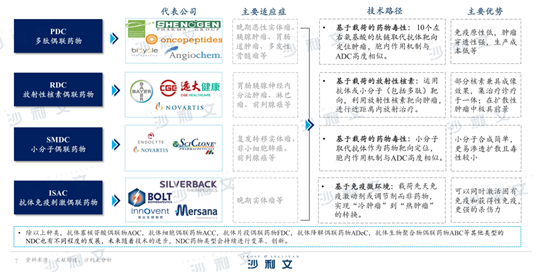
Liu Weiqi said, based on traditionADCNovel conjugated drugs of the modeNDC) emerging in droves, toPDCThe new type of coupling system represented by it is expected to usher in the next generationADCTechnology upgrade.
He further introduced that, for examplePDCPeptide conjugated drug,RDCradioactive nuclide conjugated drug,SMDCsmall molecule conjugated drug,ISACAntibody immunostimulatory conjugates, in addition to this, there are antibody oligonucleotide conjugatesAOCAntibody cell conjugate drugACCAntibody fragment conjugated drugFDCAntibody-degradable conjugated drugADECAntibody biopolymer conjugated drugsABCand other typesNDCThere has also been development to varying degrees, and it is expected that with future technological progress,NDCDrug types will continue to undergo transformation and innovation.
In recent years, withADCdrug andNDCThe continuous maturation of pharmaceutical technology,ADCThe specificity and cytotoxicity of drugs have been gradually improved, enabling the rapid development of antibody conjugation technology. Driven by factors such as the emergence of a large number of biotechnology companies, increased R&D investment, and the capital market's investment and financing boom, the futureADCDrug research and development show the following development trends:
1) dual target/dual table bitADC: In the future, combined with bispecific antibodiesADCAdvantageous dual antibodiesADCMedication, or it could become a new solutionADCEffective solutions to the existing issues of drug endocytosis, toxicity, and resistance; currently, several domestic companies have made arrangements for bispecific antibodiesADCR&D, including BeiGene, Biorad, Sichuan Bailing, CanSino Biologics, Xuanzhu Biology, etc., are all in clinical development.IPhase or preclinical state.
2Expansion of treatment areas: The treatment field has expanded from solid tumors, hematological malignancies, and other disease areas to non-tumor areas such as ophthalmic diseases and inflammatory infections.
3) Use two different payloads: Dual payload using two different cytotoxins as the active payloadsADCReducing drug resistance. Delivering two synergistic payloads into cancer cells in precise proportions can increase drug effectiveness, and with the application of payloads with different mechanisms, the incidence of resistance will be significantly reduced.
4)UsageADCTargeted mutant protein:ADCEndocytosis and intracellular transport pathwaysADCThe cytotoxic activity has a critical impact; compared to wild-type proteins, mutant proteins typically have higher levels of ubiquitination, making them more readily internalized and degraded. If usedADCTargeted mutant proteins may have significant clinical effects.
5) Novel conjugated drugsNDC): Newly developed conjugated drugs globallyNDCThe R&D enthusiasm continues to rise, and there are currently multiple peptide conjugatesPDCProduct launch; a variety of novel drug conjugate combinations are actively being developed to explore new therapeutic possibilities.
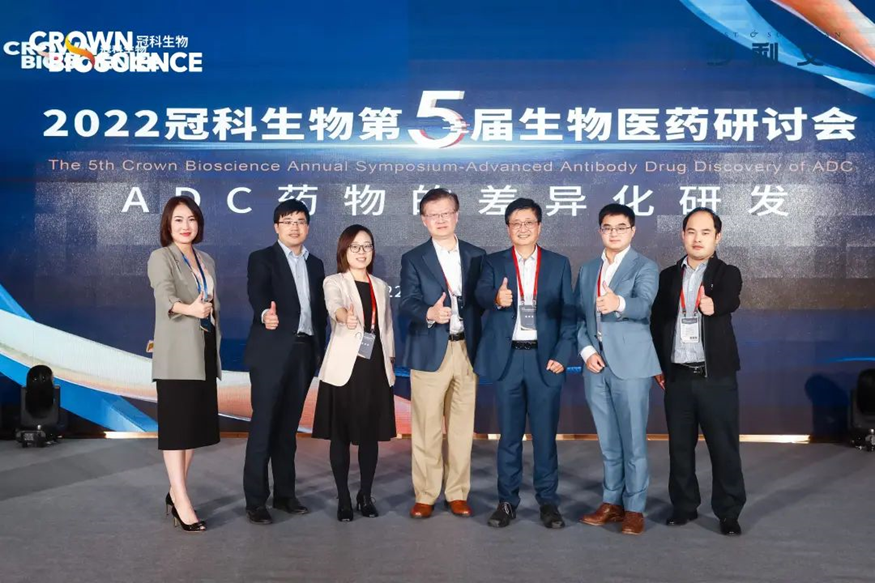 Group photo of seminar speakers