Huawei2023Site Energy's Top Ten Trends Conference
2022year12month29On the same day, Huawei held the “2023The release of "Ten Trends in Site Energy" and a heavyweight white paper will be held at the event. At the press conference, Yao Quan, President of Huawei's Site Energy Business Unit, comprehensively interpreted the ten major trends in site energy, including energy digitization, low-carbon networks, and greener site power supply. Frost & SullivanFrost & SullivanFrost & Sullivan's consulting manager for Greater China, Fu Jiangyu, was invited to attend the event online.
The ten core trends interpreted by Huawei at this press conference provide a good direction for the realization of the vision in the site energy domain. As a long-term strategic partner of Huawei globally, Frost & Sullivan will join hands with Huawei to jointly assist in promoting the upgrade and transformation of site energy towards extreme simplification, greening, and intelligence. Together, they aim to build a low-carbon target network for site energy and accelerate the achievement of carbon neutrality in the network.
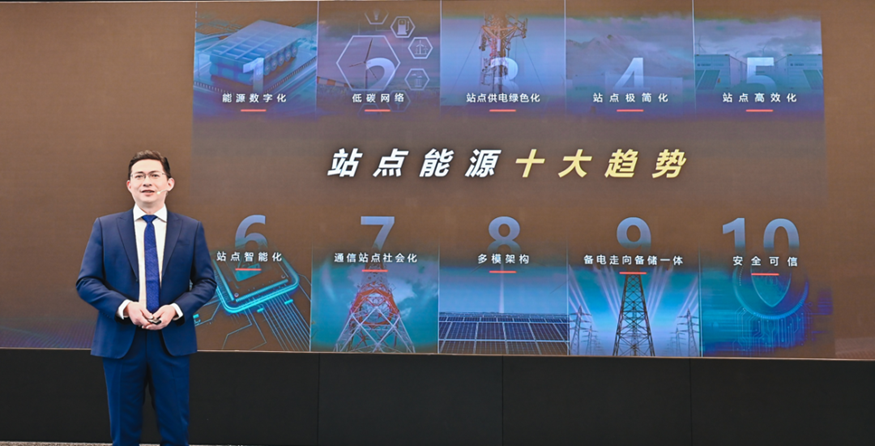
Yao Quan, President of Huawei's Energy Business Group
Highlights of the conference
Yaoquan said,2022The year was an extraordinary one, with oil prices and electricity costs continuing to rise against the backdrop of a global energy crisis. OperatorsOPEX expenseThe demand has skyrocketed, drawing increasing attention to site energy. Against this backdrop, Huawei shares ten trends in site energy, aiming to jointly advance the upgrade and transformation of site energy towards extreme simplification, greening, and intelligence with the industry, helping operators accelerate the realization of network carbon neutrality.
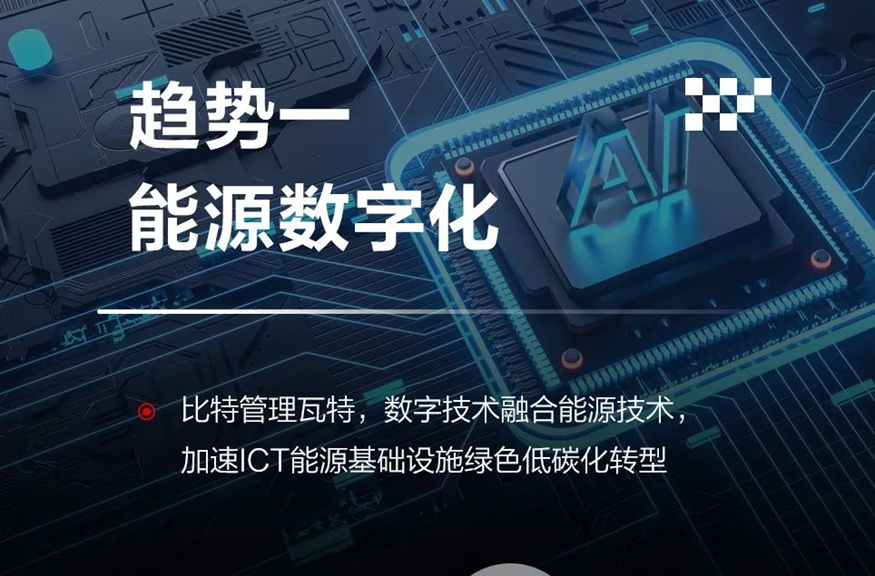
- Trend 1: Energy digitization
On the road to carbon neutrality,ICTThere are mainly two core tasks, one isICTIts own green and low-carbon development, namelyGreen ICTSecond,ICTEmpowering industries across sectors to reduce carbon emissions, namelyICT for GreenFor all of this, digital technology and power electronics technology are the foundation. By integrating digital technology with power electronics technology, energy flow with information flow, we accelerate the digitization of energy, achieve 'bits managing watts', and thereby promote the green and low-carbon transformation of the energy industry and society. In the foreseeable future, whether forICTFor all industries, the digitization of energy is an unstoppable trend.
- Trend 2: Low-carbon networks
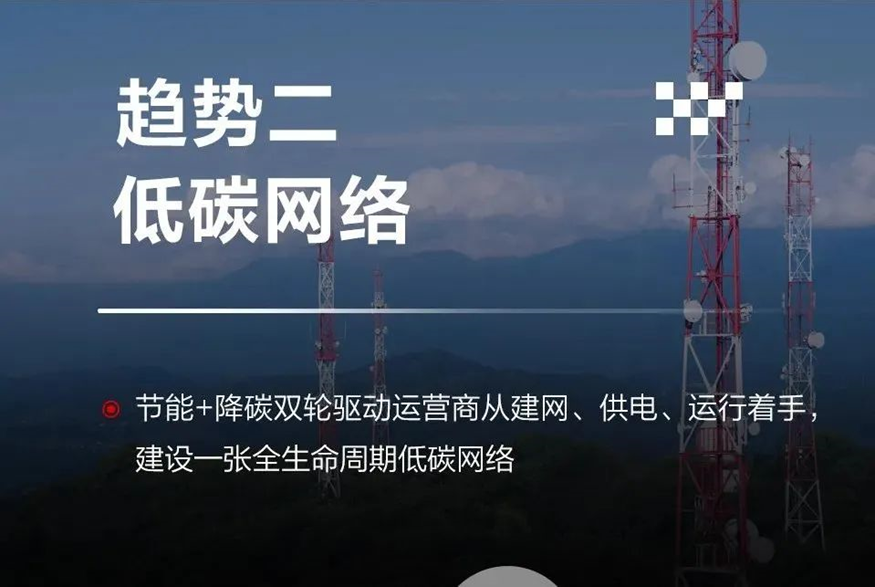
ICTTechnology has improved social operational efficiency and changed people's lives, but at the same timeICTNetwork evolution has also led to an increase in power consumption and carbon emissions. Especially against the backdrop of the energy crisis and carbon neutrality, operators are actively taking action to build a green and low-carbon network that spans from network construction, power supply, to operation throughout its entire lifecycle.
On the network side, the site extends from transformers to cabinets and from cabinets to poles, constructing a very simple and low-carbon network. On the power supply side, by increasing the stacking ratio of sites, green electricity becomesICTThe main power supply of the site reduces the consumption of mains electricity. On the operational side, through digitalization and intelligent operation and maintenance of the site, manual on-site operation and maintenance are reduced. Abnormal energy consumption and carbon emission sites are identified to further reduce the site operation and maintenance costs and carbon emissions.
- Trend 3: Greening of Site Power Supply
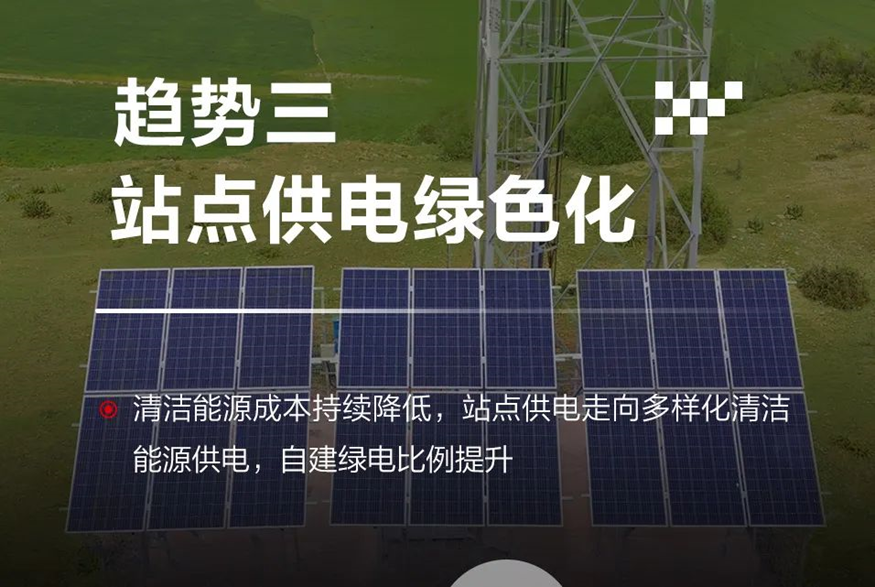
In the past, the power supply for sites mainly relied on mains electricity or diesel generators, with only about1%With the advancement of new energy technologies and the emergence of new business models, clean energies such as solar, wind, and hydrogen are becoming increasingly important in station power supply. The power supply at sites is showing a trend towards diversified clean energy. With rising electricity and oil prices, coupled with further reductions in the cost of clean energy, operators willPPAIncrease the proportion of self-built green electricity on top of purchasing green electricity.
- Trend 4: Site Minimization
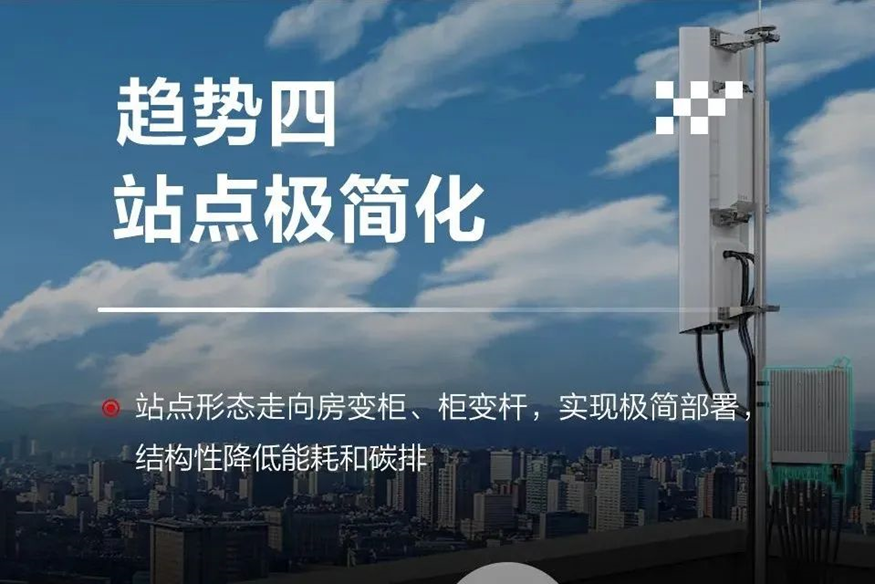
Traditional site construction often involves using computer rooms or cabinet stations, which are characterized by high air-conditioning energy consumption, low efficiency, and high costs.5GTimes have changed, with a dramatic increase in the number of sites and soaring construction costs, making traditional models unsustainable. Therefore, Site forms need to evolve towards cabinets within rooms and cabinets within poles, achieving extremely simple deployment while structurally reducing energy consumption and carbon emissions.
- Trend 5: Site Efficiency
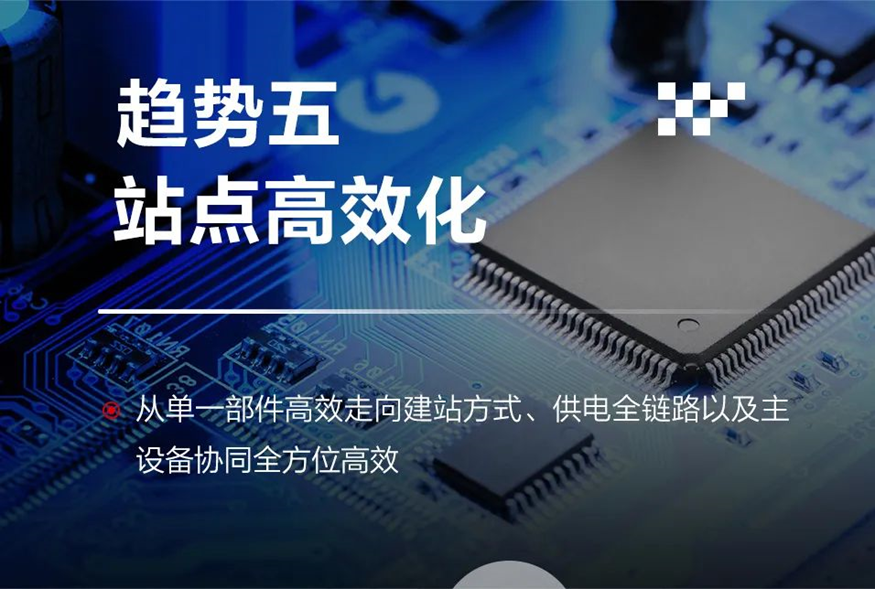
The site has evolved from a single component approach to an efficient multi-site architecture, with full-link power supply and coordinated primary equipment supporting all aspects of efficiency.
lIn terms of form efficiency: The site has evolved from a room to cabinets, and then to poles. Energy efficiency can be significantly improved.97%Reduce floor space and simplify deployment.
lIn terms of efficient power supply: In the past, efforts were focused on improving the efficiency of rectifier modules. With the increased commercialization of new semiconductor materials and digital technology enabling intelligent power management, site power supply is evolving towards efficient generation, transmission, storage, distribution, and full-link capabilities.
lIn terms of collaborative efficiency: Power electronics technology is integrated with digital technology, enabling bit watts to be linked together. Energy equipment and wireless devices work in coordination to achieve precise energy efficiency management and optimization of energy consumption.
- Trend 6: Comprehensive Intelligence
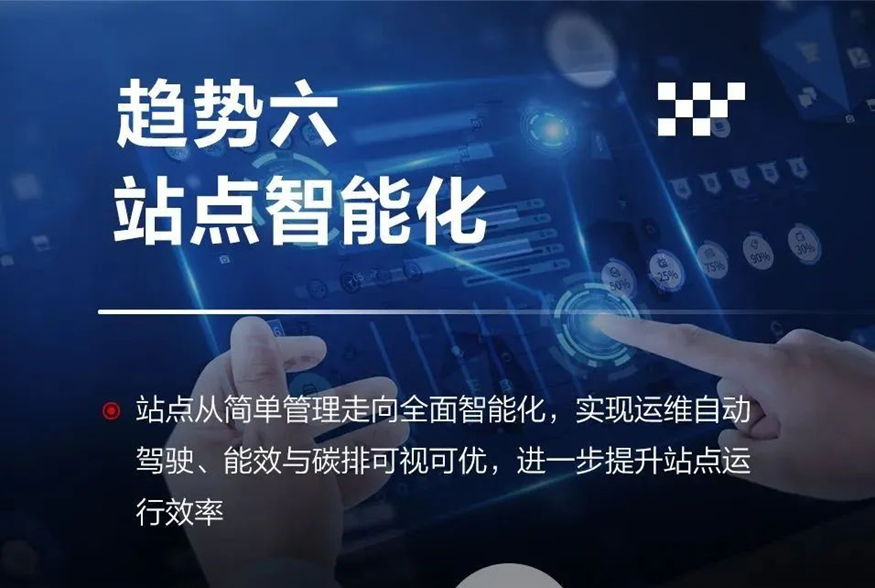
Traditional sites often have many dumb components, with extensive management practices. Site energy consumption and carbon emissions are not visible, making it difficult to start saving energy or reducing carbon emissions. Additionally, site maintenance requires manual on-site operations, which is inefficient and leads to high maintenance costs. By digitizing the site, The site will evolve from simple management to comprehensive intelligence, achieving autonomous operation and maintenance, real-time visualization and optimization of energy efficiency and carbon emissions, and further enhancing the operational efficiency of the site.
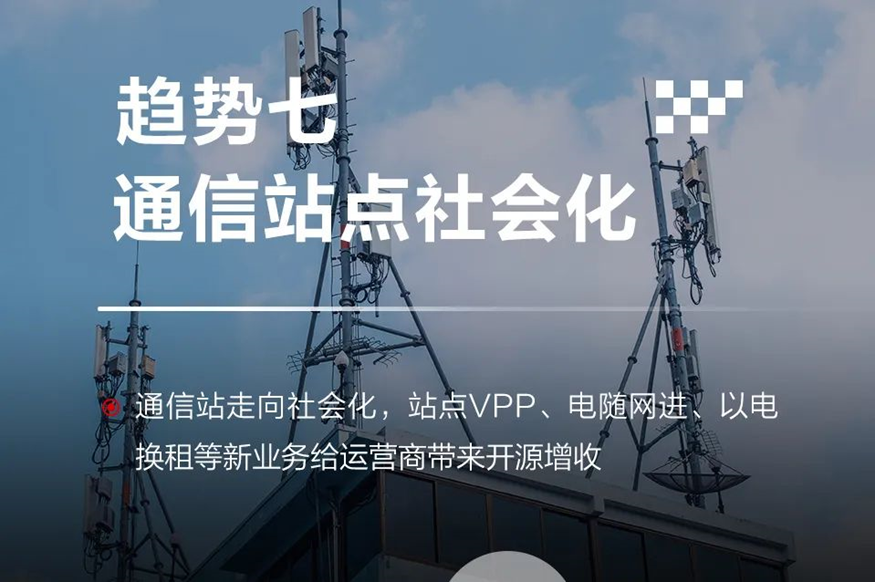
- Trend 7: Socialization of Communication Sites
Massive communication sites contain huge business opportunities, but in the past, due to a single business model, site resources were not fully utilized. In the future, on one hand, communication sites will move towards socialization, with operators evolving from single communication operators to comprehensive service providers. On the other hand, in addition to powering communication equipment, sites can also supply backup power for other devices such as civil affairs, electricity, oil and gas, leading to diversified customer needs. Moreover, site business models are becoming more diverse, such as virtual power plants.VPPNew services such as internet access powered by electricity and electricity-based rental models have brought new sources of revenue to operators, maximizing the value of communication sites.
- Trend 8: Multi-Model Architecture
As the site's power supply shifts from traditional single sources such as mains or diesel generators to a mix of mains, diesel generators, wind energy, solar energy, and other renewable sources, the site becomes more socialized. This will lead to the need for multi-mode power output to supply backup power to different industries and equipment with different types of systems. Adopting a multi-mode architecture design, site power supplies capable of multiple energy sources and multiple output modes will become increasingly popular. , becoming the mainstream deployment.
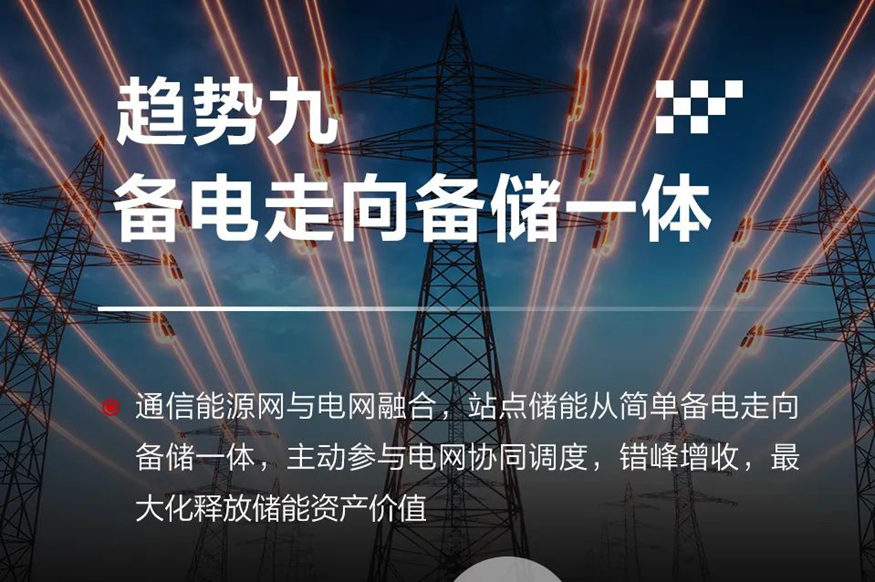
- Trend 9: Backup power is moving towards integrated backup and storage
Traditional communication sites often only provide backup power for communication equipment, with a single function and idle assets. With the emergence of policies such as peak-valley electricity prices, more and more operators are exploring staggered power consumption and virtual power plants.VPPThe business model involves integrating energy storage assets into grid coordination scheduling. Site energy storage has evolved from simple standby power to integrated standby and storage, moving towards circular applications. For operators, this can activate idle assets, increase revenue, and save on electricity bills; for the grid, it provides an additional power supply guarantee and improves grid stability.
- Trend 10: Secure and Trusted
For site energy, security and reliability are of utmost importance. It encompasses two aspects: the first is network security, and the second is hardware security. Under the trend of significant development in energy digitization, how to reduce attack risks and inherent security risks has become a focus that countries and industries are paying more attention to. A series of security specification requirements, including network security and hardware security itself, will continue to be introduced.
Seize the present and look ahead to the future. The top ten trends in site energy will lead to the construction of a more minimalist, greener, and intelligent communication energy network. Huawei looks forward to continuing exploration with the industry to jointly build a low-carbon target network for site energy and accelerate the realization of carbon neutrality in the network.
Interpretation of Frost & Sullivan
Analysts from Frost & Sullivan's digital energy sector said: "Driven by the dual carbon goal and new infrastructure policies, advancedICTTechnology is leading the digital transformation of our country into deeper waters, playing a significant role in carbon reduction and emission mitigation during the transformation process across various industries. At the same time, with the intensification of the global energy crisis and the rapid development of China's digital society, as well as the continuous expansion of traffic scale, the energy foundation of the communication industry itself urgently needs to be upgraded towards low-carbon, intelligent, and efficient directions.
For the site energy domain, how can these concepts be deeply integrated into core stages such as communication site construction, operation, and maintenance through powerful products and solutions, and how can they be restructured for 'power generation-transformation-Power storage-In all aspects of 'electricity use', forming a green, low-carbon, safe, and trustworthy network throughout the entire lifecycle remains a core issue that the industry needs to work together to solve in the future. The ten core trends interpreted by Huawei at this press conference provide a good direction for the realization of this vision.