paragraph19period “Li+Academy "Theme Salon"
12month20 - 22On the 7th, the 7th International Summit on Power Battery ApplicationsCBIS2022) Held in Shanghai, China.22On19period“Li+The 'Academy ” themed salon was successfully held. This session focused on 'Opportunities and Challenges Faced by Investment in the European and American Lithium Battery Industry'. The participating guests engaged in exchanges and discussions on the analysis of new battery regulations and carbon tax policies in Europe and America, comprehensive evaluation of the business environment, current situation and layout of local battery factories in Europe and America, cases and practices of Chinese enterprises' overseas investment, etc.
As a strategic partner of this event, Frost & SullivanFrost & SullivanCai Yufan, consulting manager of Frost & Sullivan's Greater China region, attended the event and delivered a keynote speech.
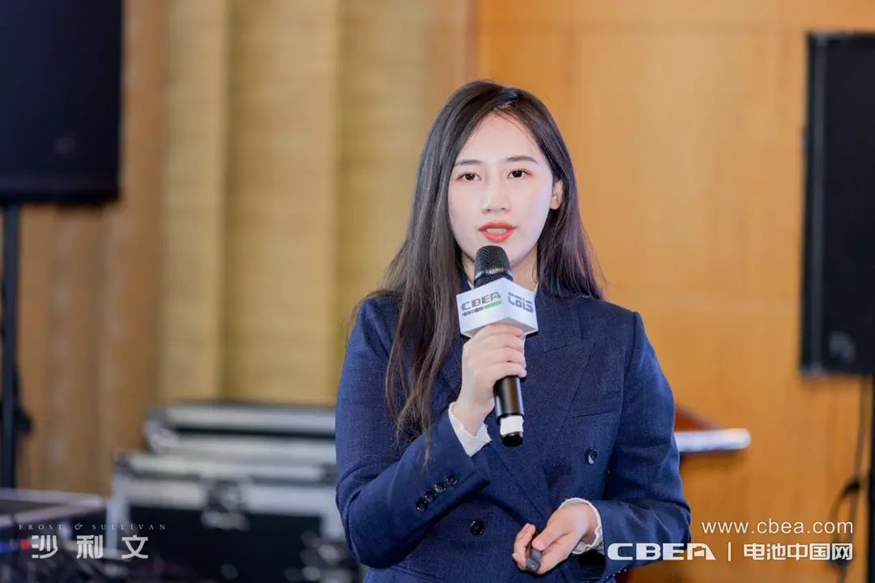
Consulting Manager, Greater China, Frost & Sullivan Cai Yufan
In recent years, the EU and European countries have successively proposed carbon neutrality goals and commitments to address the global warming climate and environmental issues. They actively participate in carbon emission reduction actions and establish carbon trading markets to achieve carbon peak and carbon neutrality targets. For example, Norway and Finland have set a target of achieving carbon neutrality2030year2035In2040In [year], Germany and Sweden have set it at2045Year. The UK launched the "Net Zero Strategy," stating that it will vigorously develop offshore wind energy, advance research and development of new-generation nuclear energy, and accelerate the promotion of electric vehicles; Germany in2019year11In January, the Climate Protection Act was passed, establishing Germany's medium- and long-term greenhouse gas emission reduction targets for the first time in legal form, requiring that by2030The total greenhouse gas emissions in the year are1990Decrease by at least55%.

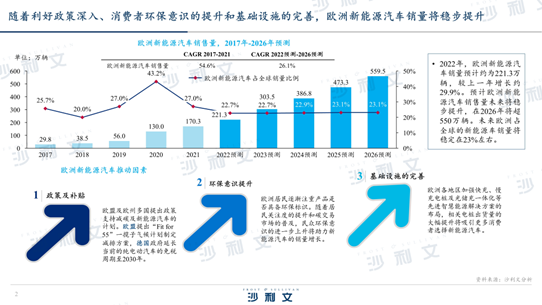
Cai Yufan pointed out that, against the backdrop of 'dual carbon', many European countries and automakers have set timeframes for transitioning from traditional fuel vehicles to new energy vehicles, making the new energy transformation in the automotive industry an inevitable trend. In the future, with the deepening of favorable policies, the enhancement of consumers' environmental awareness, and the improvement of infrastructure, the sales volume of new energy vehicles in Europe will steadily increase. 2022In [year], the sales volume of new energy vehicles in Europe is expected to be about221.310,000 units, an increase of about29.9%, is expected to arrive2026The year will exceed55010,000 units. In the future, Europe's share of global new energy vehicle sales will remain stable at23%left and right.
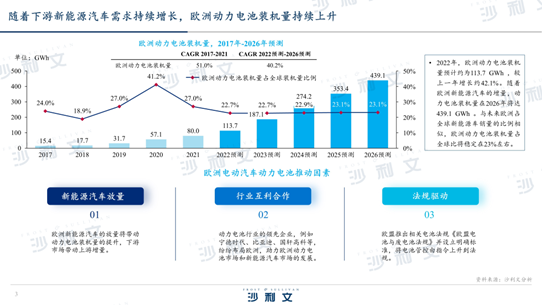
Meanwhile, with the continuous growth in downstream demand for new energy vehicles, driven by favorable factors such as industry mutual benefit cooperation and regulatory incentives, the installed capacity of power batteries in Europe will also continue to rise. The data shows,2022In [year], the installed capacity of power batteries in Europe is expected to be about113.7 GWh, an increase of approximately compared with the previous year42.1%, is expected to arrive2026Year is coming439.1 GWhSimilar to the proportion of future European new energy vehicle sales in the global market, the installed capacity of power batteries in Europe will remain at23%left and right.
Subsequently, Cai Yufan interpreted the 'zero carbon' policies and trends in lithium battery-related fields of some key countries.
· Germany
In order to achieve2045To achieve the goal of "carbon neutrality" by 2020, the German government is expanding the use of renewable energy across the country.
Germany's power battery industry has received strong support from the government. The government has introduced a variety of policy measures to promote the development of lithium batteries, including subsidies for wind and solar panels, electric vehicle subsidies, etc. With the dual boost of synergistic effects in the industrial chain and favorable policy support, Germany's power battery industry has made significant progress over the past few decades, cultivating a series of local power battery manufacturers, including BYD.(BMZ Group)And Valta(Varta)wait.

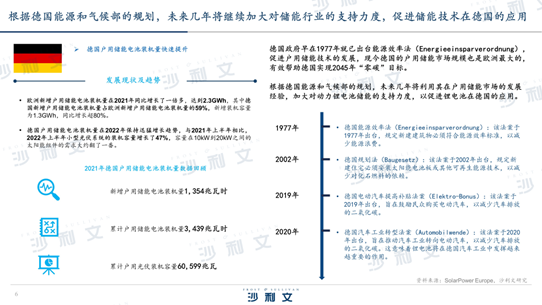
In addition, the German government as early as1977The Energy Efficiency Act was introduced in [year], promoting the development of household energy storage technology. Currently, Germany's market size for household energy storage is also the largest in Europe, which will effectively help Germany achieve2045Annual "zero carbon" target.
2021In the year, the installed capacity of new household energy storage batteries in Europe more than doubled year-on-year, reaching2.3GWhAmong them, the newly installed capacity of household energy storage batteries in Germany accounted for59%, with the newly added installed capacity being1.3GWh, a year-on-year increase of more than80%.
According to the plans of the German Ministry for Energy and Climate, in the coming years, Germany will leverage its development experience in the household energy storage market to increase support for power lithium battery energy storage, in order to promote the application of lithium batteries in Germany.
· United Kingdom
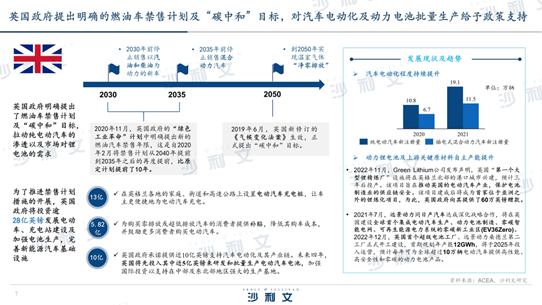
The UK government has clearly put forward a ban on the sale of fuel vehicles and an 'ambitious carbon neutrality' target, which has driven up the penetration rate of pure electric vehicles and market demand for lithium batteries. To advance the implementation of the ban on fuel vehicle sales, the UK government will invest more than28Develop electric vehicles, build charging stations, and strengthen battery production and infrastructure at a cost of billions to improve the new energy vehicle infrastructure.
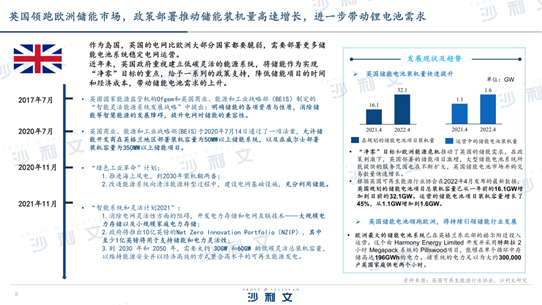
On the other hand, as an island nation, the UK's power grid is more vulnerable than that of most European countries and requires the deployment of more energy storage battery systems to stabilize grid operations. In recent years, the British government has placed emphasis on establishing a low-carbon and flexible energy system, focusing on energy storage as a key to achieving the 'net-zero' goal. It has provided a series of policy supports to reduce the time and economic costs of energy storage projects, driving up demand for energy storage batteries.
According to2022year4The latest data released in the month shows that the total installed capacity of planned energy storage battery projects in the UK has16.1 GWIncreased to the current level32.1 GWThe installed capacity of energy storage battery projects operated by the Group has increased.45%, from1.1GWincreased to1.6 GWBritish energy storage batteries have already taken the lead in Europe and are expected to continue leading the development of the energy storage industry in the future.
· France
France is one of the first countries to propose sustainable development and green economy concepts, and it is also the second-largest producer of sustainable energy in Europe. In order to actively promote the progress of France's carbon neutrality implementation path, France's 'Energy and Climate Law (Draft)' has set out a relevant timeline. The French government has also successively passed2030National Investment Plan for 2019" and "France RelancePlan ”, subsidize related fields.
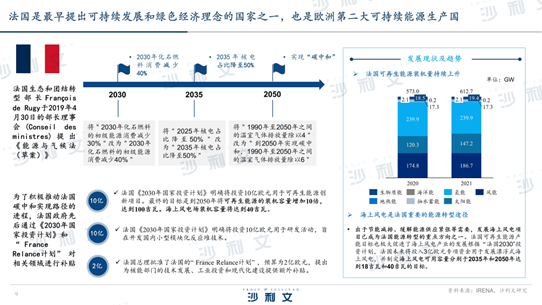
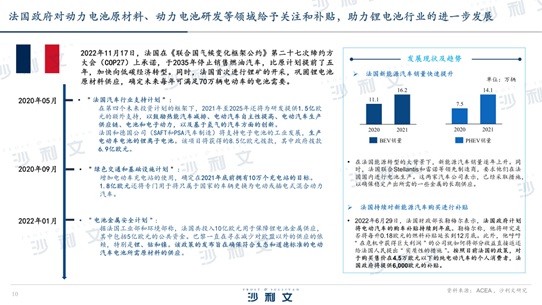
2022year11Last month, France committed at the Glasgow Climate Change Conference2035The sale of fuel vehicles will cease in 2024, five years ahead of the original plan, accelerating the transformation towards a low-carbon economy. At the same time, France has carried out lithium mining for the first time, consolidating the supply of raw materials for lithium batteries and ensuring that it can meet the demand in the future each year.70The batteries for 10,000 electric vehicles are needed.
In addition, the French government has successively introduced the 'French Automotive Industry Support Plan', 'Green Transport and Infrastructure Plan', and 'Battery Metal Safety Plan', further promoting the development of the lithium battery industry chain including upstream raw materials such as nickel and cobalt, infrastructure charging stations, power batteries, and new energy vehicles.
Finally, Cai Yufan briefly analyzed the development layout of lithium battery-related manufacturers in Europe.
The European lithium battery industry is accelerating its rise, providing favorable development opportunities for leading Chinese lithium battery companies with the capability to 'go global'. "2017Since the beginning of this year, Europe has increased its investment in the lithium battery industry chain and policy support, driving the overall new energy vehicle market to grow at an accelerated pace. A number of leading European domestic and overseas battery manufacturers have begun to accelerate their layout of lithium battery businesses in Europe. "Cai Yufan said.
For example, CATL has battery production lines in Germany and Hungary;LGNew energy plans to open battery factories in Poland; Honeycomb Energy is building cell factories for the European market in Germany; local European lithium battery companiesNorthvoltBy deeply integrating with OEMs, establishing joint ventures with Volkswagen and Volvo, and jointly building lithium battery production bases.
Cai Yufan believes that the rapid advancement of electrification in Europe and the successive implementation of large-scale power battery projects have brought new development opportunities to global lithium battery cathode and anode material enterprises. Leading enterprises are seizing the opportunity of the rapid development of the European new energy vehicle market, increasing their layout in the European cathode and anode material markets. In the future, competition in the lithium battery cathode and anode material industry will revolve around comprehensive strength in technology, customer base, products, capital, supply chain, and other aspects.
Rise Communications plans to build an annual production capacity in Europe10Tens of thousands of tons high-nickel power lithium battery cathode material production base; BTRYTEC is located at2022year7Moon and British battery developer and manufacturerBritish voltSigning a cooperation agreement to build factories in Europe; BASF (a German local enterprise) in2021year8In October, it acquired Sunward Power, a leading enterprise in lithium battery materials in China.51%Equity.
On the other hand, due to the lack of a complete lithium battery material supply chain, some battery projects in Europe are facing the risk of missing material supply support. Therefore, more and more diaphragm companies are accelerating their overseas expansion into the European market to meet the European customers' demand for stable and timely supply of diaphragm products.
For example, Enjie Co., Ltd. on2020year11The company announced plans to build a factory in Hungary; Xingyuan Materials2020announced in20A billion was invested to establish a diaphragm factory in Sweden;LGChemical and Toray have announced that they will establish a joint venture in Hungary to produce battery separators, with plans for2028Ensure that the annual production capacity of battery separators exceeds8100 million square meters.
In addition, the process of electrolyte exports is accelerating, with electrolyte companies from various countries accelerating their layout in Europe. Not only can it provide nearby supporting services, promptly respond to customer needs, and explore markets in neighboring countries, but It is conducive to ensuring product quality, avoiding the negative impact of long-term maritime transportation on the performance of electrolytes. At the same time, localized production of electrolytes can also optimize transportation costs and enhance product competitiveness.
If the Heavenly Gift Materials set up subsidiaries in Czech Republic, Germany, South Korea, etc., and currently start annual production in the Czech Republic10Tenth Thousand Tons Lithium Battery Electrolyte Project; Jiangsu Guotai plans to establish a company in Poland, implementing an annual production2610,000-ton battery electrolyte project;Dongwha EnterpriseAnnouncement of investment3,210Ten million euros are invested to establish two factories in Budapest, Hungary, producing electrolyte and recycling solvent respectively, providing industrial chain supporting services for its battery customers in Europe.

paragraph19period“Li+Group Photo of Guests at the "Xue She" Themed Salon