2020 - 2022In the year, under the impact of global public health events, the protective glove industry at home and abroad underwent significant changes.2023In [year], as terminal procurement sentiment returned to rationality and the demand pattern in the downstream sector changed, the protective glove market faced new challenges and opportunities. Technological breakthroughs in the industry, product quality improvement, cost-price control, and diversified development became key factors in corporate competition.
Against this backdrop,3month1day after tomorrow2On the day, sponsored by Shandong Longzhong Information Technology Co., Ltd. and co-organized by Shandong Ruibang Intelligent Equipment Co., Ltd., “2023The 'Nianlongzhong Information China Protective Gloves Supply and Demand Exchange Conference' was successfully held in Zibo, Shandong. Frost & SullivanFrost & SullivanCai Yufan, consulting manager of Frost & Sullivan's Greater China region, was invited to attend the conference and delivered a speech on the current market situation and development trends of disposable gloves.

Consulting Manager, Greater China, Frost & Sullivan Cai Yufan
As a commonly used protective item, disposable gloves can effectively prevent cross-infection and are suitable for various occasions. According to quality grade and purpose, they can be divided into medical-grade and non-medical-grade. Medical-grade gloves refer to products that need to meet the quality certification system or access standards of the target country's medical market. They are mainly used in fields such as medical surgery, medical examinations, and medical care. Disposable medical gloves are currently mainly classified intoPVCThere are three categories: gloves, latex gloves, and nitrile gloves.
Cai Yufan stated that after the mutation of the novel coronavirus, global cases surged significantly, and the domestic epidemic situation became complex. While accelerating inventory consumption, the demand for disposable gloves was released again, driving the steady growth of the glove market.
Data shows that since the outbreak of the COVID-19 pandemic, there has been a significant increase in the demand for disposable gloves for long-term care and emergency rescue.2021The global sales volume of disposable gloves reached approximately7,670100 million, estimated2026Its annual sales volume will reach11,503Hundreds of millions. Affected by the continuous increase in the sales volume and rapid price hikes of disposable gloves,2021The global sales revenue of disposable gloves for the year was from2017approximately75Billion dollars rose rapidly to2021The year's promise264billion US dollars, with an annual compound growth rate during that period reaching37.0%.
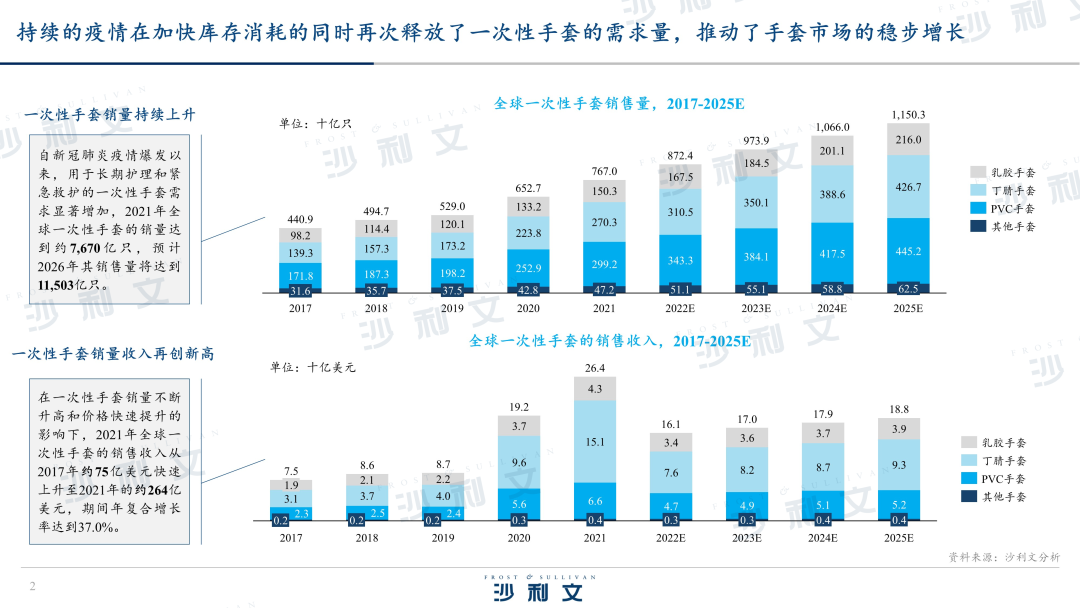
In the post-pandemic era, the disposable glove market has gradually returned to normal. The supply and demand relationship and market environment have changed, leading to reduced corporate revenue and profits. Some small and medium-sized manufacturers that entered the market during the pandemic will be gradually phased out. At the same time, with the increasing health awareness of people, it is expected that market demand will experience permanent growth, and the market will continue to grow steadily in the future.
Cai Yufan pointed out,2022Over the past year, some countries and regions have still been severely affected by the COVID-19 pandemic, leading to a continued strong demand for disposable gloves. The industrial reshaping under the pandemic and the increasing demand for permanent gloves have had varying degrees of impact on regions around the world.
Developed regions such as Europe and America The population has a relatively high standard of living and income, coupled with strict public health regulations. This region has always been the world's largest consumer of gloves and will continue to be a major export area in the future.
china yesPVCThe largest producer of gloves, with domestic enterprises gradually expanding the production capacity of nitrile gloves, is expected to further seize market share in the future by leveraging its strong supply chain advantage. In addition, the outbreak of the COVID-19 pandemic has greatly enhanced the health protection awareness of Chinese residents, leading to a gradual increase in per capita glove consumption. The release of a series of new policies by the Chinese government has also promoted the standardization process of glove use.
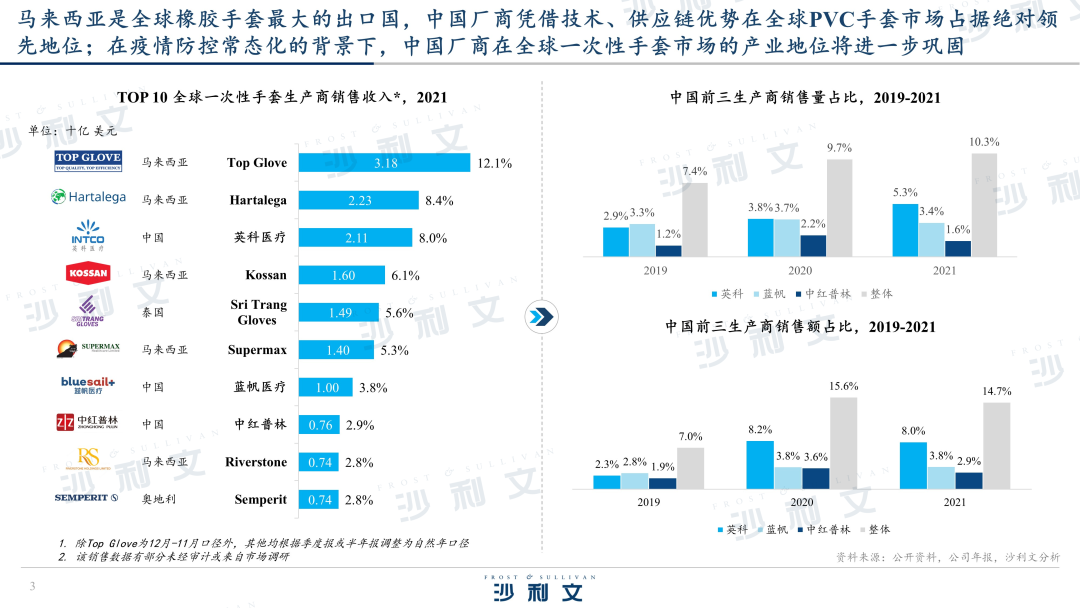
Relying on the advantages of rubber-producing countries, the main producers of latex gloves and nitrile gloves are concentrated in Malaysia. In the post-pandemic era, regions such as Vietnam will attract a group of overseas manufacturers to invest in setting up factories due to their low labor costs and policy incentives.
For emerging markets such as the Middle East and South America, The objective demand for medical supplies reserves in various countries is continuously increasing, and public health protection awareness is constantly strengthening. The incremental demand during the pandemic is also expected to settle into a long-term increase over the coming years.
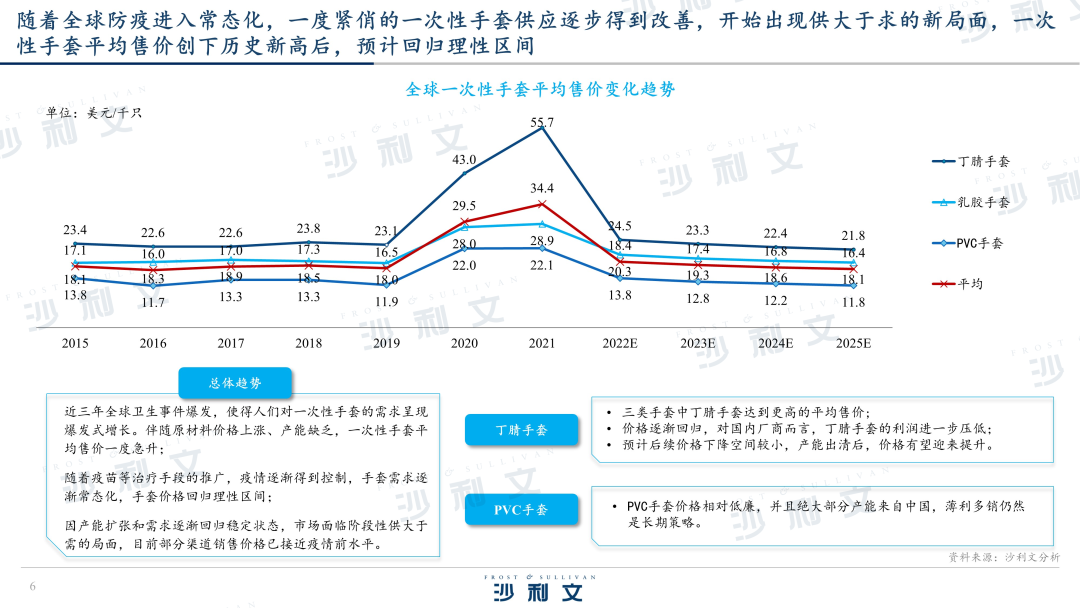
Subsequently, Cai Yufan analyzed the production and sales environment of disposable gloves. She pointed out that the outbreak of global health incidents in the past three years has led to a surge in demand for disposable gloves. With rising raw material prices and a lack of production capacity, the average selling price of disposable gloves soared; as treatment methods such as vaccines were promoted, the epidemic was gradually brought under control, glove demand normalized, and glove prices returned to a rational range; Due to capacity expansion and the gradual return of demand to stability, the market is facing a new situation where supply exceeds demand temporarily. Currently, the sales prices of some channels have approached pre-pandemic levels.
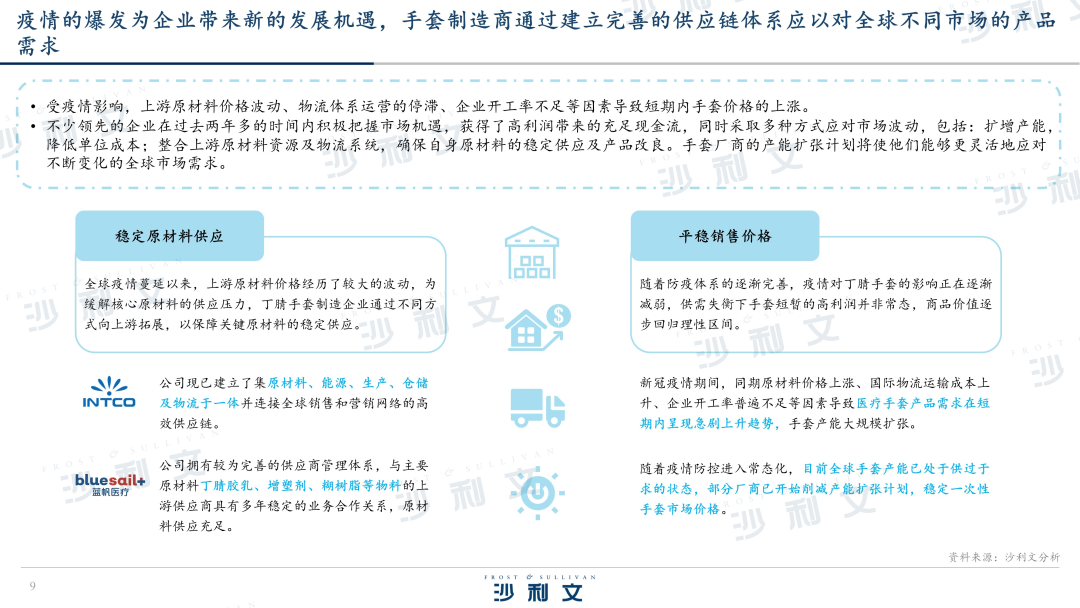
"The outbreak of the epidemic has brought new development opportunities to enterprises, Glove manufacturers establish a comprehensive supply chain system to meet the product demands of different markets around the world. Cai Yufan further explained that previously, affected by the pandemic, factors such as fluctuations in upstream raw material prices, stagnation in logistics system operations, and insufficient enterprise start rates led to a short-term increase in glove prices. However, many leading enterprises have actively seized market opportunities over the past three years or more, gaining sufficient cash flow from high profits. At the same time, they have adopted various methods to cope with market fluctuations, including expanding production capacity and reducing unit costs; integrating upstream raw material resources and logistics systems to ensure stable supply of their own raw materials and product improvement.
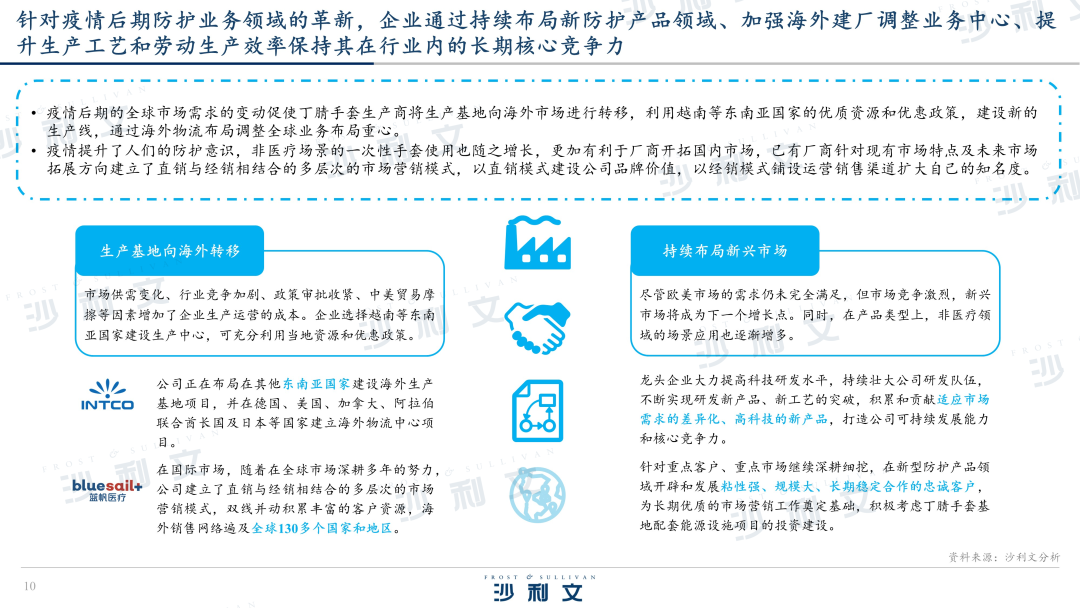
In response to the innovation in the field of protection services during the later stages of the epidemic, Cai Yufan proposed that enterprises can maintain their long-term core competitiveness in the industry by continuously deploying new protection product areas, strengthening overseas factory construction to adjust business centers, and improving production processes and labor productivity.
On the one hand, factors such as market supply and demand changes, intensified industry competition, tightened policy approvals, and Sino-US trade frictions have increased the costs of production and operation for enterprises. Can be fully utilized Vietnam and other Southeast Asian countries, with their high-quality resources and preferential policies, are building new production lines to adjust the global business layout focus through overseas logistics distribution.
On the other hand, the pandemic has heightened people's awareness of protection, leading to an increase in the use of disposable gloves in non-medical scenarios. This will be more conducive for manufacturers to explore domestic markets. For instance, some manufacturers have established a multi-level marketing model that combines direct sales and distribution based on the characteristics of the current market and future market expansion directions. They use the direct sales model to build corporate brand value and the distribution model to lay out operational sales channels to expand their visibility.