 6month13day-15On25The 8th Shanghai International Biotechnology and Medicine SymposiumBIO-FORUM 2023held in Shanghai The conference brought together approximately200Well-known domestic and international scholars in biotechnology and medicine, as well as senior corporate executives, Exchange, discussion, and promotion will be carried out on new technologies, new developments, new policies in professional fields such as disruptive technologies, nucleic acid drugs, synthetic biology, new vaccines, cell and gene therapy, management of human genetic resources and biosafety, biomedical engineering, as well as the transformation of international innovative technological achievements.
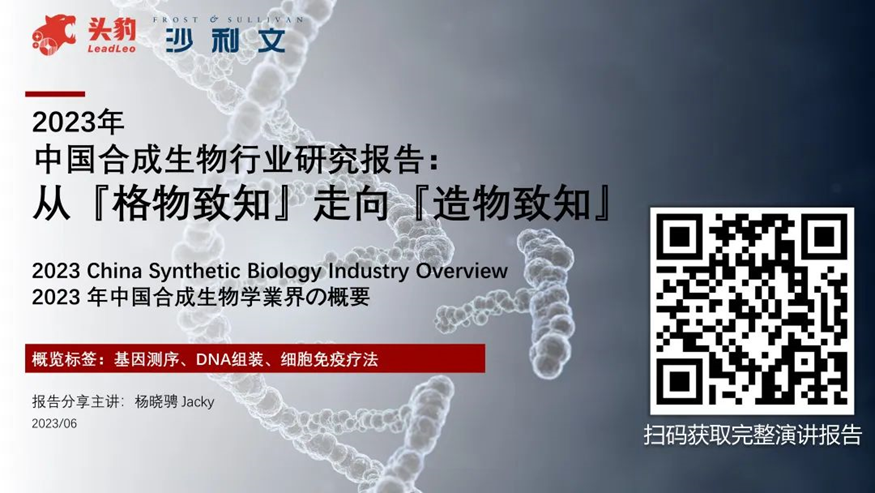
Frost & SullivanFrost & SullivanPartner and Managing Director of Frost & Sullivan Greater China Region, Co-founder of LeadLeoCEOYang Xiaocheng was invited to attend the Youth Forum of this conference and delivered a report on the research report of the synthetic biology industry From 'investigating things to acquire knowledge' to 'creating things to acquire knowledge' "The keynote speech."
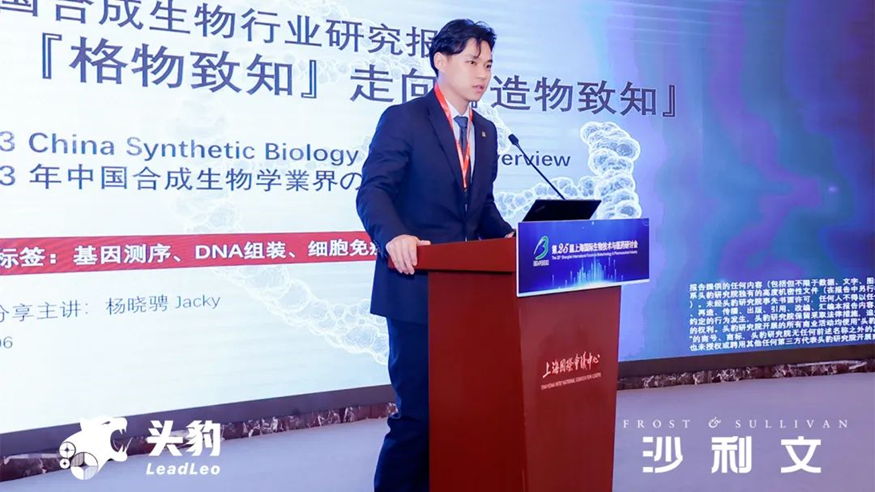
Partner and Managing Director of Frost & Sullivan Greater China, Co-founder of LeadLeoCEOYang Xiaocheng
According to Yang Xiaocheng, synthetic biology(Synthetic Biology)It is an interdisciplinary field that refers to the targeted design, modification, or creation of organisms with unnatural functions under the guidance of engineering concepts, known as 'artificial life'. Synthetic biotechnology can directionally transform biological systems into efficient cellular systems for large-scale production and processing.
The main tools in synthetic biology includeDNAsequencing technology,DNAAssembly technology, intracellular logic gates, genome editing tools, and riboswitches can be used to construct two types of synthetic biology systems:1.Design and construct new biological components, modules, and systems;2.Optimize and transform existing natural biological systems.
As a revolutionary and progressive technology, synthetic biology is environmentally friendly throughout the entire process, helping to reduce the dependence on non-renewable energy in various application fields.
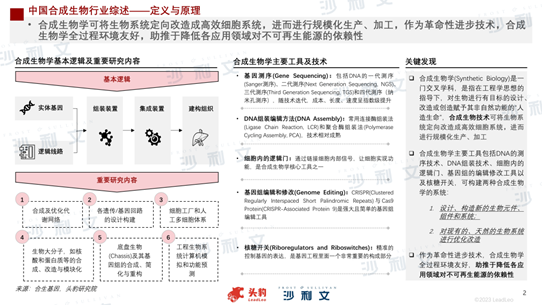
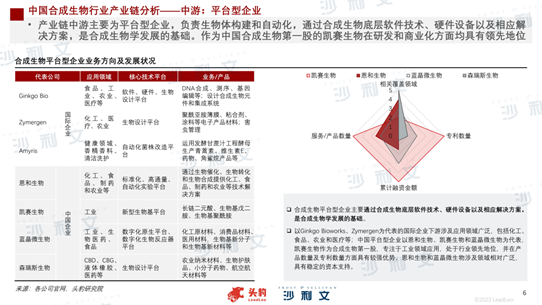
Yang Xiaocheng pointed out, 'Design-Construct-testing-Learning ”loop(DBTL)It is the core R&D model of synthetic biology It can effectively screen and optimize the required biosynthetic devices and system functions. The above model is realized with mainstream technologies such as gene editing technology, and the future technological development direction will also transition towards low cost, automation, and integration.
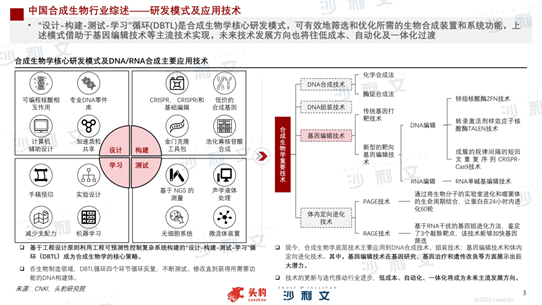
Yang Xiaocheng stated that the dividends brought about by the continuous development of synthetic biology technology are gradually being reflected at the market level. projected2027The overall market volume in 2023 will reach nearly $40 billion: With the increase in application scenarios and technological improvements, the synthetic biology industry is rapidly expanding. .2022The global synthetic biology market size is139.8billions, expected to2027The global market scale reached387.3billions. Among them, healthcare will become the largest sub-market,2027The annual market scale accounts for26.6%.
The synthetic biology market has enormous potential, with high growth prospects reflected in multiple fields. Among them, food and beverages, as well as agriculture, are expected to be the fastest-growing sectors in the future. Animal and plant selective breeding,DTCGene testing, microbial-based beauty products, etc., bring broad prospects for application.
From the perspective of the industrial chain, Yang Xiaocheng pointed out that the synthetic biology industry chain consists of a tool layer, software and hardware layers, and an application layer. The industrial ecosystem covers a vast range of areas, with diverse implementation directions for different technologies and industries. Enterprises are developing towards full integration of the entire industrial chain, aiming to reduce business risks and enhance competitiveness by connecting all parts of the chain.
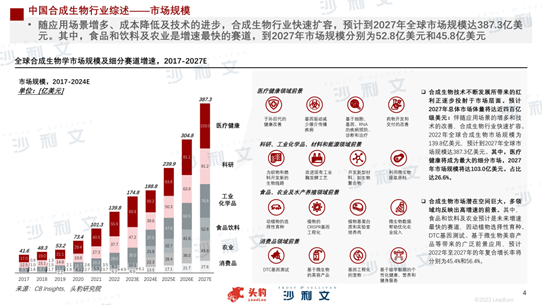
In terms of the upstream part of the industrial chain, gene editing involves inserting, deleting, modifying, or replacing specific locations in the genome of an organism.DNAGene editing relies on genetically engineered nucleases, also known as 'molecular scissors'.
Gene editing technology has come from1996First-generation gene-editing technology of the yearZFNDesigned to go2012yearCRISPRTechnology has emerged and gone through three iterations.CRISPR/Cas9 technologyThe editing capability has made a significant leap.
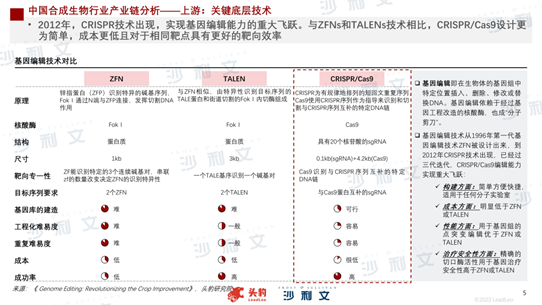
In the midstream of the industrial chain, there are mainly platform-based enterprises responsible for organism construction and automation. By developing underlying software technology, hardware equipment, and corresponding solutions for synthetic biology, they form the foundation for the development of synthetic biology. As the first stock in synthetic biology in China, Kaisai Biotech holds a leading position in both research and development and commercialization.
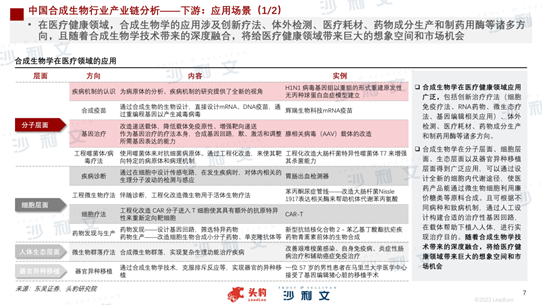
In the downstream of the industrial chain, synthetic biology is widely applied in the healthcare field, including innovative treatment therapies (cell immunotherapy,RNADrug, microbiome therapy, gene editing-related applications), in vitro testing, medical consumables, drug ingredient production, pharmaceutical enzymes, and many other directions.
Synthetic biology has been widely applied at the molecular, cellular, ecological, and organ xenotransplantation levels. By designing entirely new intracellular metabolic pathways, pharmaceutical products can be synthesized using cheap sugars and other raw materials through microbial cells. Moreover, suitable therapeutic gene circuits can be artificially designed and constructed according to different disease types and pathogenic mechanisms, and implanted into the human body with the help of vectors to achieve therapeutic goals. With the deep integration brought about by synthetic biology technology, it will bring tremendous imagination space and market opportunities to the field of healthcare.
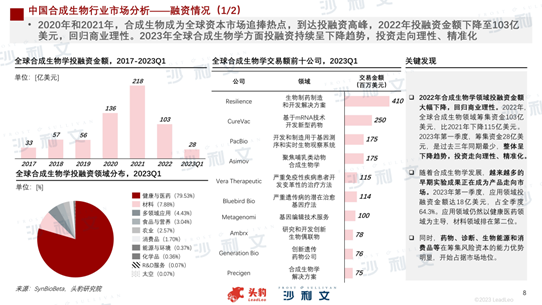
Immediately afterwards, Yang Xiaocheng analyzed from the perspective of the investment and financing market. He believes that2022In the year, investment and financing in synthetic biology dropped significantly, returning to commercial rationality. 2022In [year], global synthetic biology raised funds103billion US dollars, than2021Decrease in annual value115billion dollars.2023Raising funds in the first quarter of the year28Billions of dollars, the lowest amount in the same period over the past three years, showing an overall downward trend. Investment is moving towards rationality and precision.
On the other hand, with the development of synthetic biology, more and more early experimental results are becoming products that are entering the market.2023In the first quarter of 2021, the amount of investment and financing in the application field reached18billions of US dollars, accounting for the full quarter64.3%The application areas are still dominated by the health and pharmaceutical sector, with the materials sector ranking second. At the same time, sectors such as drugs, diagnostics, bioenergy, and consumer goods have a clear advantage in raising venture capital and are beginning to occupy market positions.
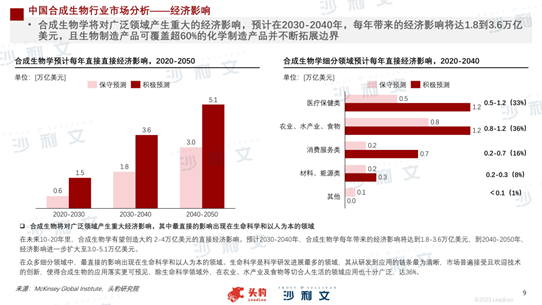
Regarding economic impact, Yang Xiaocheng said, in the future10 - 20In the year, synthetic biology is expected to create approximately2 - 4Trillion-dollar direct economic impact. Forecast2030 - 2040In [year], synthetic biology will have an annual economic impact of1.8 - 3.6trillion dollars, to2040 - 2050In [year], the economic impact further expanded to3.0 - 5.1trillion dollars.
Among the many sub-sectors, the most direct impact is seen in life sciences and people-oriented fields. Life sciences are the area where scientific research and development have made the most progress, with a clear chain from research and development to application. The market generally accepts and welcomes technological innovation, making the implementation of synthetic biology applications more predictable. In addition to the life sciences, applications are also very widespread in fields such as agriculture, aquaculture, and food that are closely related to human life, reaching36%.
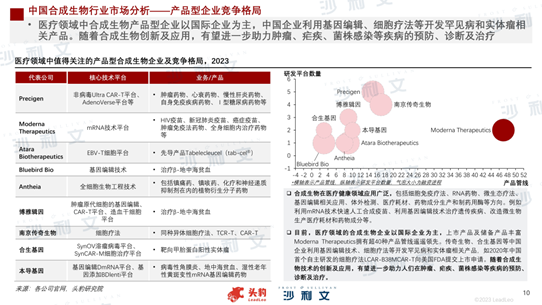
So, what is the current state of the overall market competition landscape? Taking product-based companies as an example, Yang Xiaocheng believes, Synthetic biology is widely applied in the field of healthcare, including cell immunotherapy.RNADrug, microbiota therapy, gene editing-related applications, in vitro testing, medical consumables, drug ingredient production, pharmaceutical enzymes, etc. For example, utilizemRNATechnologies include rapid artificial synthesis of vaccines, the use of gene editing technology to treat genetic diseases, and the modification of microorganisms to produce medical consumables and pharmaceutical components.
Currently, synthetic biology companies in the medical field are mainly international enterprises. , Rich in listed and reserve productsModerna TherapeuticsPossess super40The product pipeline is far ahead. Chinese companies such as Legend Biotech and Synobiogen are developing products related to rare diseases and solid tumors using gene editing technology, cell therapy, etc., such as2020China's first independently developed cell therapyLCAR-B38MCAR-Tto the United StatesFDASubmit the listing application. With the innovation and application of synthetic biology technology, there is hope that it will further assist in the prevention, diagnosis, and treatment of diseases such as tumors, malaria, and strain infections.
Finally, Yang Xiaocheng pointed out that the synthetic biology industry currently presents two major development trends.
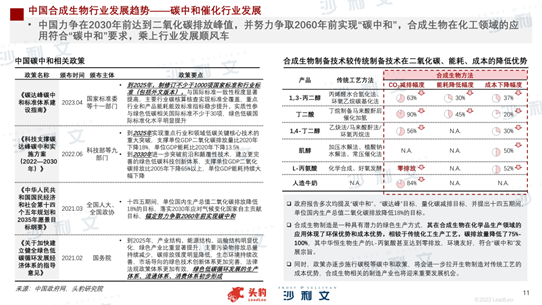
First, the development of carbon neutrality catalytic industries. The government report has repeatedly mentioned the goals of "carbon neutrality" and "carbon peak", quantified carbon emission reduction targets, and proposed to2025Realized GDP per unit of GDP in the yearGDPCarbon dioxide emissions ratio2020Decrease in annual value18%goals.
Synthetic biology manufacturing is a promising green production method. Its application in the field of chemical production by synthetic organisms demonstrates environmental protection and cost advantages. Compared to traditional chemical production processes, carbon emissions have been reduced.75%-100%Among them, produced by Huaheng BiologyL-Alanine even achieves zero emissions, making it environmentally friendly and in line with the development purpose of 'carbon neutrality'.
At the same time, policies such as carbon taxes for carbon neutrality are gradually being implemented, which will further widen the cost advantage of biomanufacturing over traditional processes. The manufacturing industry related to synthetic biology will also embrace important development opportunities.
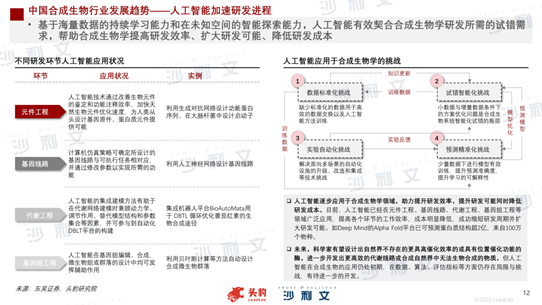
Second, artificial intelligence is gradually being applied in synthetic biology to help improve R&D efficiency. While enhancing R&D possibilities, it may also reduce R&D costs. Currently, artificial intelligence has been widely applied in fields such as component engineering, genetic circuits, metabolic engineering, and genome engineering, improving work efficiency in various stages, significantly reducing costs, successfully shortening R&D cycles, and expanding R&D possibilities.Deep MindofAlpha FoldThe platform can now predict protein structure up to2Yi, from100Tens of millions of species.
In the future, scientists are expected to design enzymes with higher catalytic efficiency or position-specific catalytic functions that do not exist in nature, and further develop more efficient metabolic pathways or synthesize substances that cannot be biosynthesized in nature. However, the application of artificial intelligence in synthetic biology is still in its infancy, and there are limitations and challenges in data, algorithms, evaluation indicators, etc., which require further development.
Recommended Reading
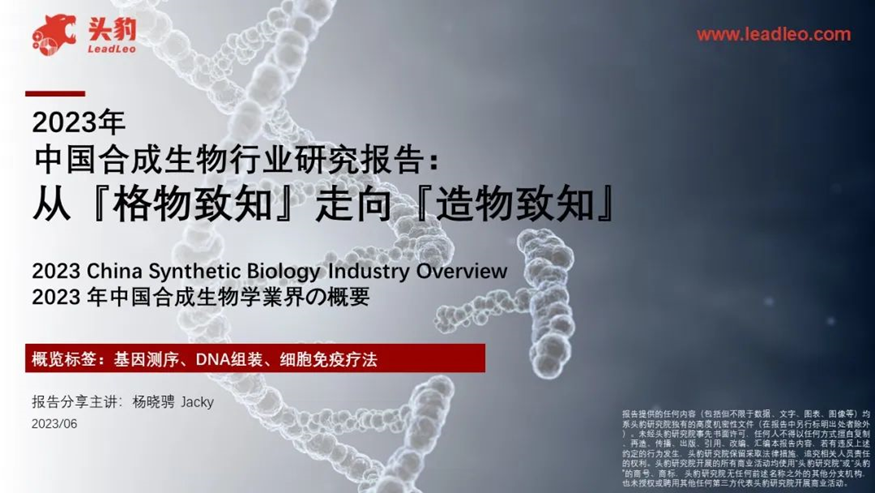
"The2023China Synthetic Biology Industry Research Report 2019