 2023WWECEducators' Conference
2023year8month20day-22day, ninth sessionWWECThe Educators' Conference was successfully held in Shanghai. This session of the conference Initiated by Mr. Song Hui, with the guidance of the China Private Education Association, Shanghai Modern Service Industry Federation, and Shanghai Private Education Association, and hosted by Jiajia Youpin, with Junxue Academy, Yanchuan Book Culture Media, Duojing, Lianhehui,EMBAThe Resource Center, in collaboration with Youpenglai Technology, brings together experts, scholars, and social elites from various fields such as capital, academia, education, culture, politics, and business. Centered on education, it conducts collisions and exchanges at multiple levels and dimensions through keynote speeches, roundtable forums, seminars, and sharing sessions.
since2013starting fromWWECThe Educators' Conference has been successfully held in Shanghai for eight sessions, becoming a large-scale comprehensive brand event that brings together multiple institutions, brands, elements, and forms from both inside and outside the industry. It has won widespread praise from people of all walks of life in China and abroad and has been hailed by mainstream media at home and abroad as the highest-standard annual event in the Chinese education sector.
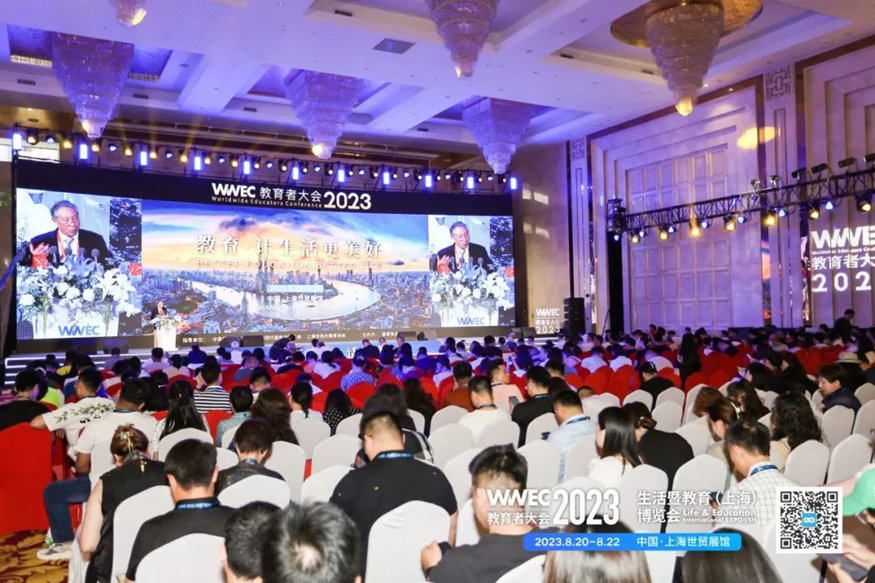
2023WWECThe Educators' Conference focuses on 'Education Makes Life Better'. The ultimate goal of education is to serve life, and it becomes true education through the power of life. Participants will discuss how education can play a key role in personal growth, social harmony, and global sustainable development, consider how to improve the quality and fairness of education, and how to cultivate students' innovative abilities and global awareness. Education is about enabling everyone to create and also to better enjoy life.
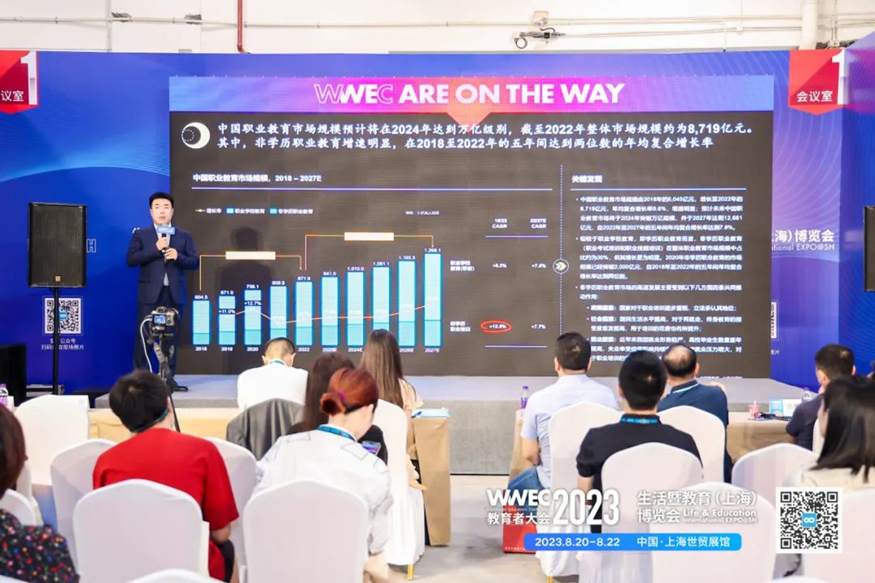
Frost & SullivanFrost & SullivanLiu Wenjun, Executive Director of Frost & Sullivan Greater China, was invited to attend the conference and delivered a keynote speech titled 'Strengthening Foundations, Cultivating Core Competencies, Upholding Integrity and Innovation: The Trend of Vocational Education Development in China in the New Era'.
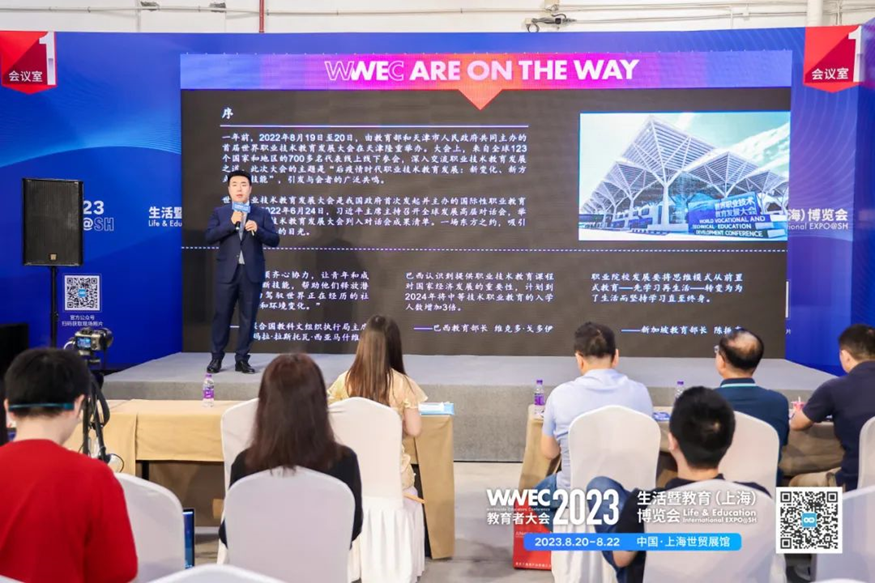
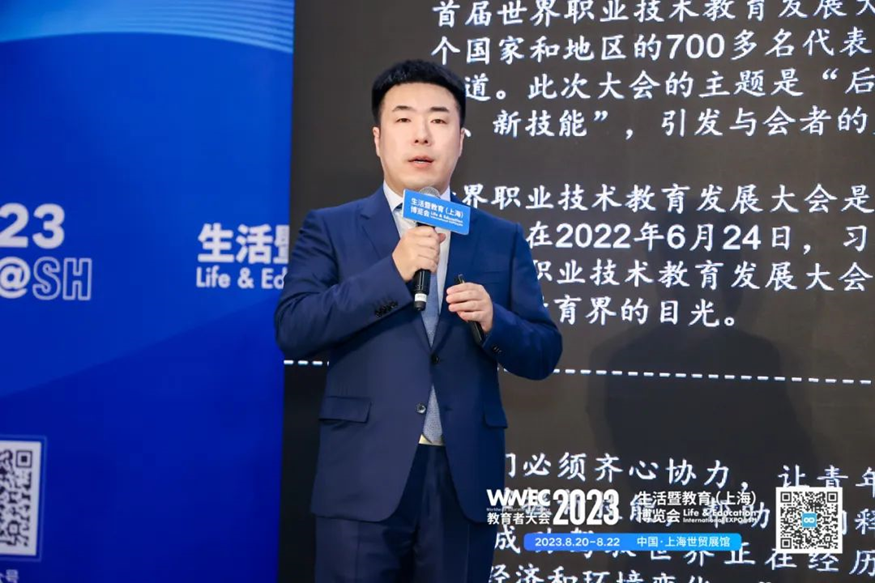
Executive Director, Greater China, Frost & Sullivan Liu Wenjun
Liu Wenjun pointed out, The three main factors driving the development of vocational education in China are: people's livelihood and economic development, which are endogenous demands for vocational education development; the government's primary role in the process of vocational education development; and social forces, which are an important supplement to modern vocational education development.
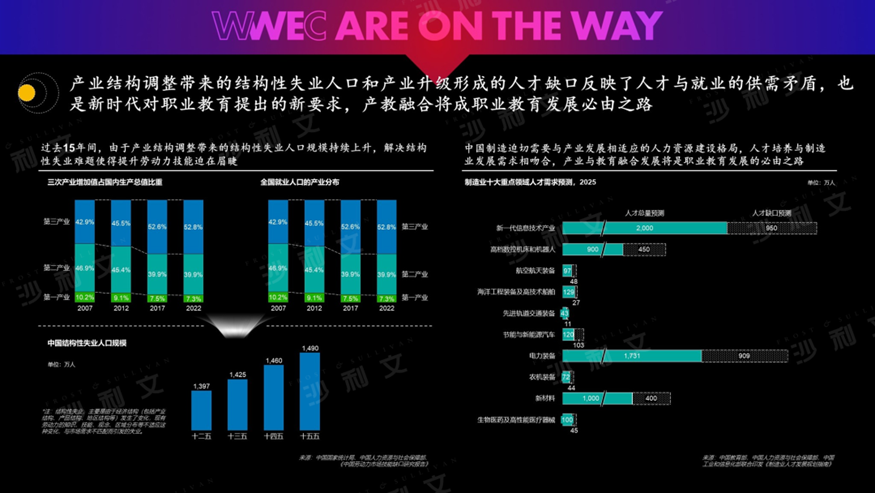
past15During the year, due to the continuous rise in the scale of structural unemployment caused by industrial structure adjustment, solving the problem of structural unemployment has become an urgent task to improve labor skills. At the same time, The structural unemployment population and the talent gap formed by industrial upgrading reflect the supply-demand contradiction between talent and employment. Made in China urgently needs a human resource development pattern that is compatible with industrial development, and the integration of industry and education will become the inevitable path for the development of vocational education.
The data shows, China has the largest number of students enrolled in universities globally, nearly twice as many as in the United States, and more than ten times that of major developed European countries. With the rapid development of the macroeconomy, higher education in China has evolved from the last century80The elite education phase of the era, having gone through2002 - 2018The popularization stage in2019The year officially entered the popularization stage.
Different from the characteristic of developed countries where applied talent cultivation accounts for a high proportion, China has a disproportionately high proportion of research-oriented talent cultivation represented by postgraduate and undergraduate students. In the past decade, the number of graduates from general higher education institutions in our country has doubled, and it is expected2023The number of college graduates reached a high in1,158Tens of thousands, and the continuously rising number of college graduates has also created sustained pressure on the employment side. Liu Wenjun stated that the imbalance in talent cultivation structure has made the employment problem of college graduates under the background of higher education popularization particularly prominent. It is urgent to promote the adjustment of higher education talent cultivation structure and vocational education reform.
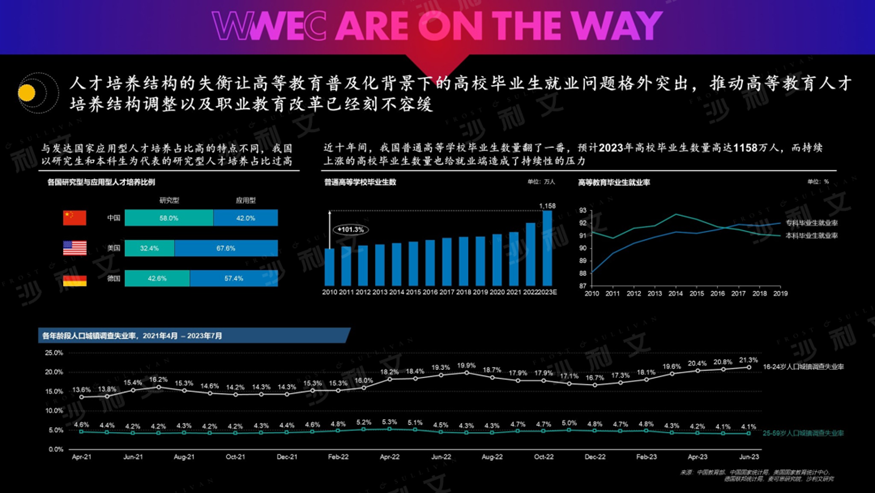
From the perspective of policy trends, vocational education is entering a new era of policy 'trendsetter' opportunities. As the country's emphasis on vocational education continues to rise, favorable policies have also come one after another. Especially since the 19th National Congress of the Communist Party of China, the Central Committee and the State Council have issued consecutive documents to deploy vocational education reform work at a high level.2022year5month1The new Vocational Education Law, which came into effect on this day, clarifies the modern vocational education system, which is defined as 'equal emphasis on vocational school education and vocational training, integration of vocational education with general education, effective connection between different levels of vocational education, and serving the lifelong learning of all citizens.'
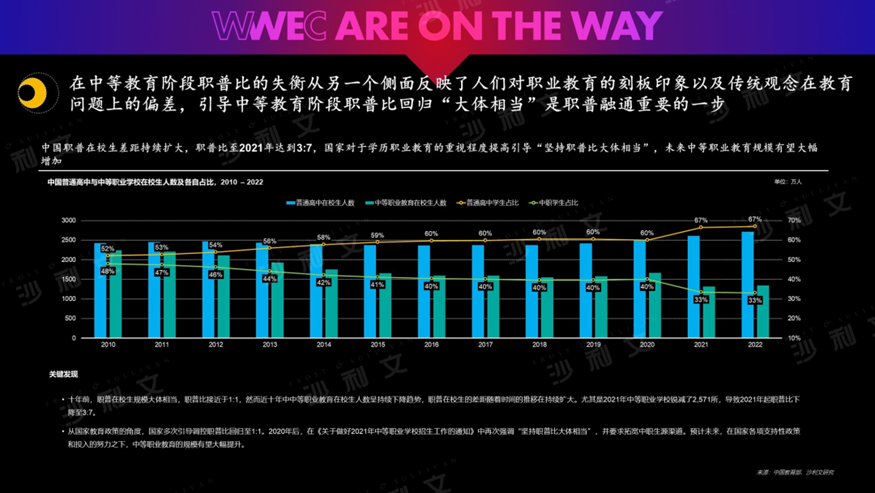
" The imbalance in the vocational-education-to-primary-secondary education ratio at the secondary education stage reflects, from another perspective, people's stereotypical views of vocational education and the deviation of traditional concepts in educational issues, guiding the vocational-education-to-primary-secondary education ratio at the secondary education stage to return to a more balanced state.'Generally comparable'It is an important step in the integration of vocational education and general education." Liu Wenjun further added,2010Around the Spring Festival, the scale of vocational and general education students on campus was roughly the same, with a vocational-to-general education ratio approaching1:1However, in the past decade, the number of students enrolled in secondary vocational education has been on a continuous decline, and the gap between vocational and general education students has been widening over time. Especially2021The number of secondary vocational schools in the year decreased sharply2,571resulting in2021The annual general practitioner ratio decreased to3:7.
In recent years, the state has guided and regulated vocational education to return to its normal proportion at the policy level on multiple occasions1:1.2020After the Spring Festival, in "On Doing a Good Job2021The 'Notice on the Enrollment Work of Secondary Vocational Schools in the Year' once again emphasizes 'adhering to a general proportionality between vocational and general education', and requires broadening the sources of students for secondary vocational schools. It is expected that in the future, with various supportive national policies and investments, the scale of secondary vocational education is likely to see a significant increase.
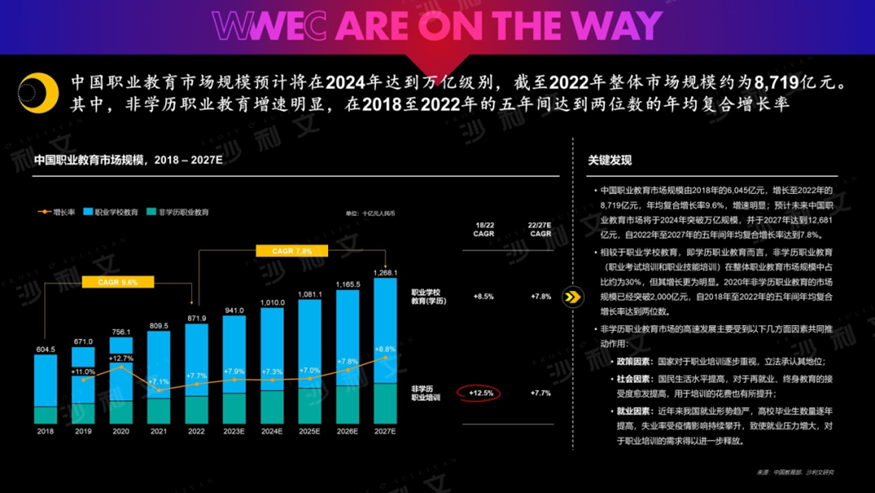
According to a Frost & Sullivan study, the scale of the vocational education market in China is from2018year6,045Yuan, increasing to2022year8,719100 million yuan, with an average annual compound growth rate9.6%The growth rate is significantly positive; it is expected that the vocational education market in China will be2024The annual scale exceeded one trillion, and in2027Annual achievement12,681yuan, since2022Year-end2027The average annual compound growth rate over the five years of7.8%.
In addition, compared with academic vocational education, non-academic vocational education (vocational training) accounts for approximately30%However, its growth is more pronounced.2020The market scale of annual vocational training has exceeded2,000yuan,2018Year-end2022The average annual compound growth rate over the five years of the year reached double digits.
Looking at the capital market as a whole, since2017Since the beginning of the year, investment and financing in the education industry have gradually cooled down and continued to break through their lowest points. 2022The year is a transformative one for the education industry, with the number of financing events in the sector decreasing to121Beginning, insufficient2018One-fifth of the year, compared to its peak2016Decreased by [X]% annually86%The enthusiasm for industry financing has continued to decline, with rationality and prudence becoming the main themes for capital markets in investing and financing in the education sector.
"Vocational education and vocational training have benefited from favorable policies, with active investment and financing in recent years, making them a popular track favored and pursued by capital within the entire education industry." Liu Wenjun further explained,2022In the year, there were a total of63For online financing, the amount of a single financing can range from several million RMB to hundreds of millions RMB, and the number of vocational education investment and financing transactions is higher than2021Throughout the year, the number of investment and financing events has been steadily increasing.
Liu Wenjun stated that, affected by the overall activity of the capital market, vocational education and vocational training companies that have entered the capital market in the past two years have seen a vastly different scale of fundraising compared to the past few years. Moreover, due to the combined effects of the pandemic and regulatory policies, stock prices in the education sector have fluctuated significantly. In the future, with the full relaxation of epidemic policies, economic recovery, and the country's high emphasis on vocational education, the vocational education sector will further move towards high-quality development.
2023Frost & Sullivan's New Investment Conference