“Cloud collaboration to create new cloud value” —— The Huawei Cloud and Huawei Terminal Cloud Service Innovation Summit 2022 was grandly held in Beijing. During the conference, a “Media and Social Industry Summit Forum” themed “New Media and Entertainment, New Experiences, New Opportunities” was held on the morning of December 29th for the entertainment and social industry. Guests from the fields of internet culture, entertainment, social networking, media, etc., gathered together to look ahead to the future of the media and social industry.Mr. Guo Ming, Executive Director of Frost & Sullivan's Greater China region, was invited to attend the event and delivered a keynote speech titled “Trends and Development in the 2022 Media and Social Industry.”
In the past 20 years, the internet has profoundly changed people's work and life, shaping a new pattern for global economic development, but this is just the beginning of the digital wave. Internet companies at the forefront of digital innovation face the challenge of seizing development opportunities in the trend of the next-generation internet and achieving higher-quality growth. This has become an important proposition shared by enterprise managers, industry experts, and policymakers. This summit invited representatives from Huawei Cloud and industry consulting firm — Frost & Sullivan, as well as guests from the internet media and social industry, for in-depth discussions and sharing.
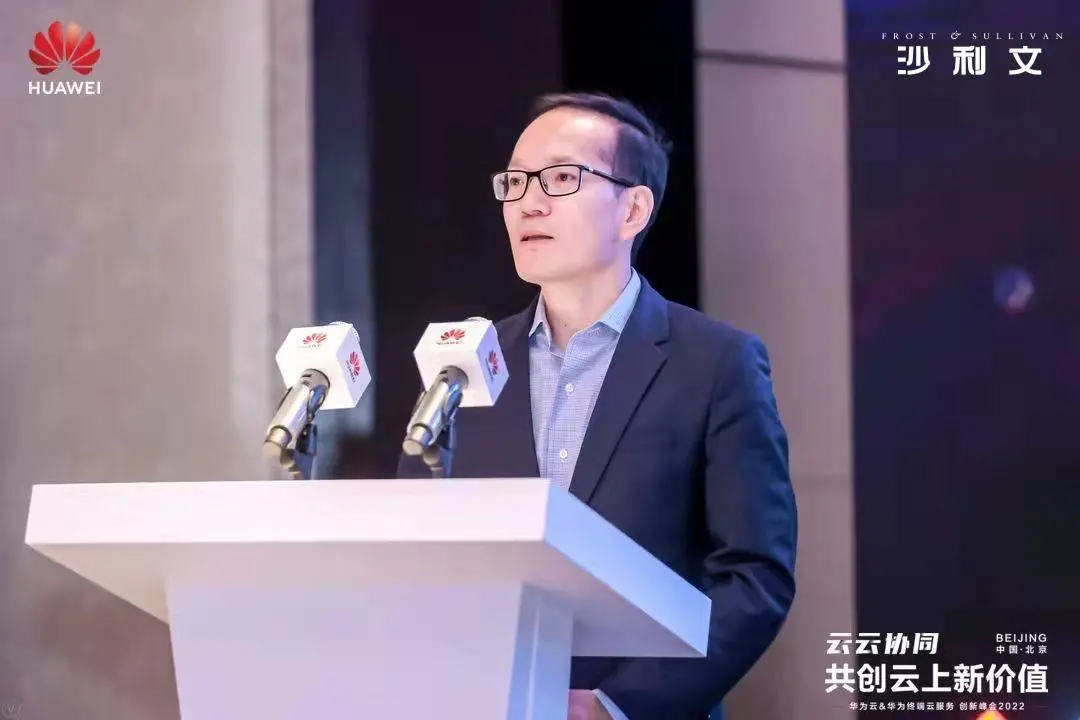
Mr. Lü Yangming, President of Huawei Cloud's Media Services
Mr. Lü Yangming, President of Huawei Cloud's Media Services, delivered an opening speech, stating: The internet is entering a space video era characterized by immersion, personalization, and real-time interaction. Huawei Cloud MetaStudio uses cloud-native media services such as audio and video, AI, blockchain, etc., to better empower culture, enhancing the “content power” and realizing “everything is a service”!

Mr. Lu Zhenyu, General Manager of Huawei Cloud's Video Services
Mr. Lu Zhenyu, General Manager of Huawei Cloud's Video Services, also said: Huawei Cloud MetaStudio uses one MetaStudio solution that includes two major engines for graphics and space, a communication collaboration platform, a full-scenario media AI platform, and an NFT-based content management platform as its three major platforms, practicing technology as a service, making continuous innovation in the media and social industry within reach. At the same time, the cloud collaboration between Huawei Cloud and Huawei Terminal Cloud also brings the possibility of 1+1 > 2 for high-value growth of enterprises.

Mr. Guo Ming, Executive Director of Frost & Sullivan's Greater China region
Mr. Guo Ming, Executive Director of Frost & Sullivan's Greater China region, was invited to share insights and trends in the entertainment industry in 2022.
Firstly, Mr. Guo Ming shared four overall trends observed by Frost & Sullivan in the Chinese media and social industry in recent years: entertainment videoization, media socialization, image virtualization, and audit intelligence.
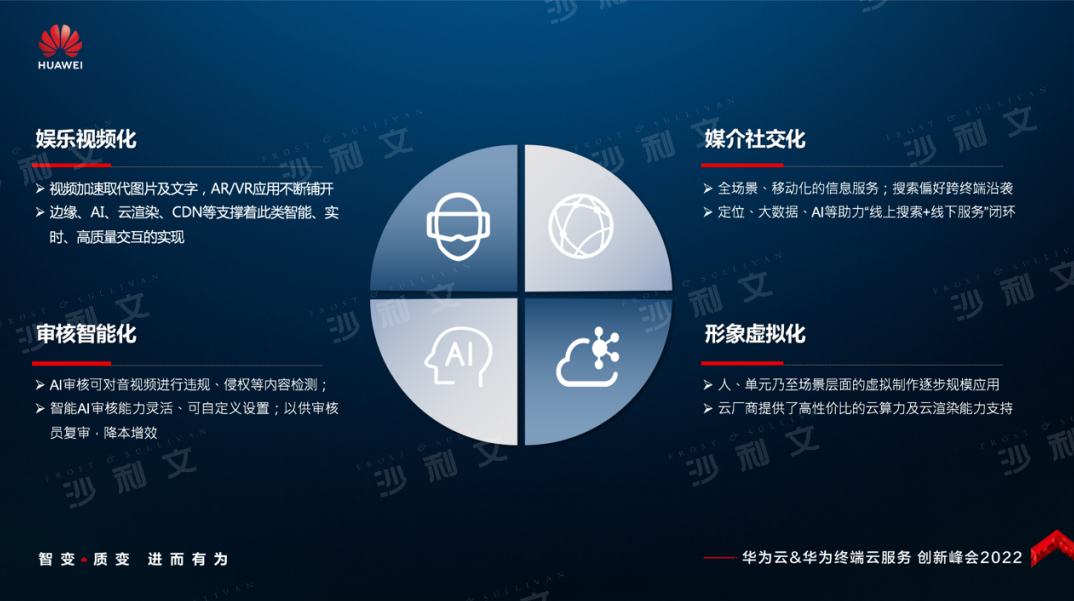
(1) Entertainment Videoization
Compared to traditional picture, voice, and text communication, videos carry higher-dimensional information density, are more real-time and interactive, and can fully enhance content interest and mobilize users' fragmented time.
Data shows that short videos and live broadcasts have become internet products with the most significant increase in user usage duration; as of 2021, the scale of short video users in China reached 873 million, astonishingly accounting for 88.3% of the total 989 million netizens; while the scale of online live broadcast users in China has currently exceeded 630 million, accounting for nearly 65% of the total.
The integration of the short video and live broadcast industries with multiple industries continues to deepen, the dissemination scenarios are expanding, and the dividend period is still worth looking forward to; related technologies such as edge cloud, AI, cloud rendering, CDN, etc., support the realization of such intelligent, real-time, and high-quality interactions.
(2) Media Socialization
Today's new media dissemination models have undergone profound changes, and interpersonal relationship networks are regarded as an important infrastructure for mass information dissemination.
The innovative integration of technologies such as positioning, big data, and AI can enable users to obtain full-scenario, mobileized information services (such as real-time weather forecasts, sports event reminders, etc.), and also boost the closed-loop of “online localization search + offline service”. Under a unified account system, users' search preferences can be more easily inherited across terminals.
(3) Image Virtualization
Whether in the domestic game production field or film and television shooting field, virtual shooting and production at the person, unit, and even scene levels have gradually entered the stage of large-scale application; currently, the precision of a certain leading domestic content producer has reached the centimeter level; if digital assets can reach millimeter-level precision, entering a virtual shooting platform is like going to Hengdian to shoot movies, and the shooting effect will be more realistic. In this process, cloud vendors provide cost-effective cloud computing power and cloud rendering capabilities to accelerate the virtualization process.
(4) Audit Intelligence
Nowadays, everyone is in an era of “everyone is an author”, and social news platforms generate massive amounts of information every day. Relying on manual audit not only has low efficiency but also difficult costs to bear.
Against this background, intelligent AI audit capabilities allow for custom settings, extremely high flexibility, and can specifically detect infringement, pornographic content, violence, political violations, and other multimedia information. The results after AI audit can be reviewed by auditors, greatly achieving cost reduction and efficiency improvement.
Subsequently, Mr. Guo Ming shared his insights into the three industry segments of social news, audio and video, and electronic games.
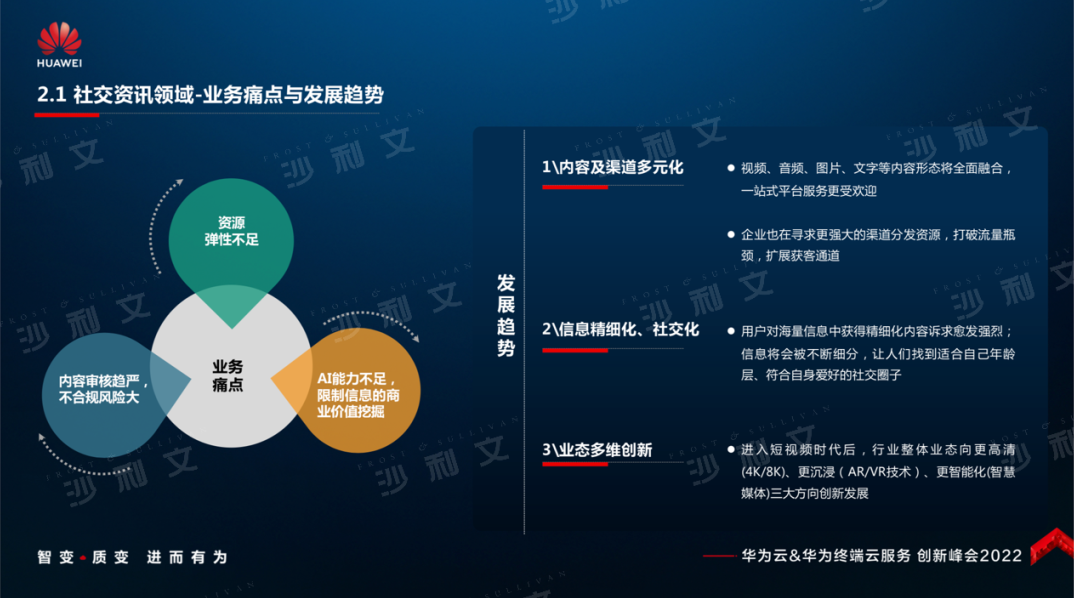
He said that in the social news industry, the main pain points faced by the business are: (1) insufficient resource elasticity, (2) mismatched AI capabilities, inability to fully tap the commercial value of information, (3) stricter content review and supervision, and non-compliance risks. The most obvious trends are (1) diversification of content and channels, (2) refinement and socialization of information, (3) multi-dimensional innovation of business forms.
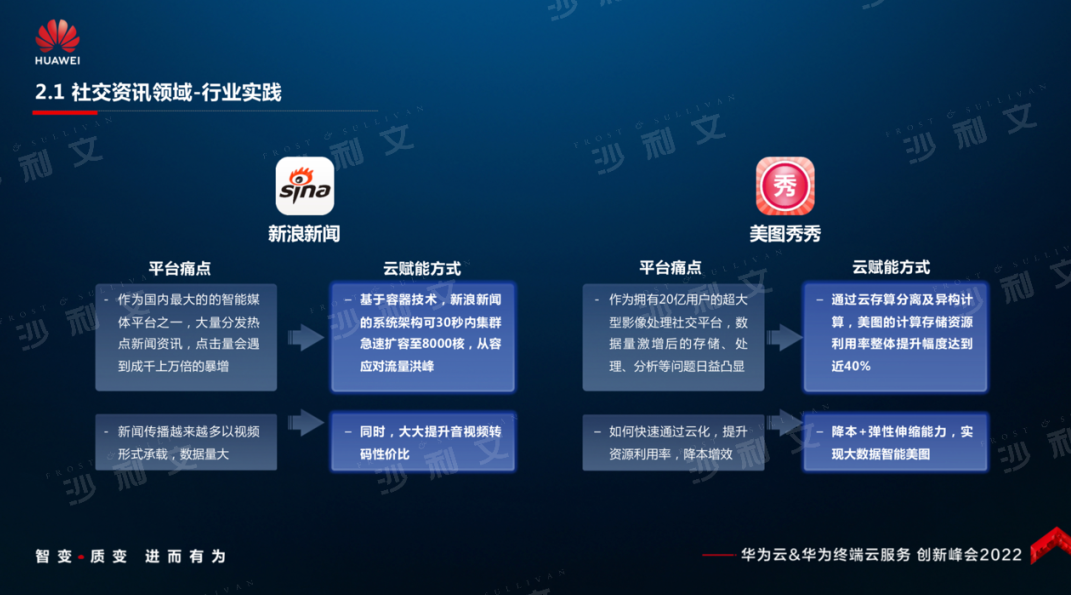
Mr. Guo Ming pointed out that cloud services and related technologies have greatly empowered domestic leading media social platforms. For example, Sina News uses container technology provided by cloud vendors, enabling the system architecture to quickly allocate computing resources when breaking news arrives, rapidly expanding the cluster to 8000 cores within 30 seconds, and easily handling traffic peaks. Meitu XiuXiu uses cloud storage and computing separation and heterogeneous computing solutions, increasing the overall utilization rate of Meitu's computing and storage resources by 40%, achieving cost reduction while obtaining elastic scaling capabilities.
Regarding the audio and video field, Mr. Guo Ming said that for a long time, the pain points of the business have included: (1) various experience problems such as lag, latency, echo, etc., (2) high development costs of audio and video, (3) lack of innovation and experience upgrades in video content.
However, with the acceleration of 5G and the deep integration of fields such as cloud computing and artificial intelligence, the development potential of the audio and video industry is infinite. Technological innovation in the new stage will play an even more important role, and the audio and video industry will make a qualitative leap, specifically reflected in three aspects: high definition, strong interaction, and intelligence.
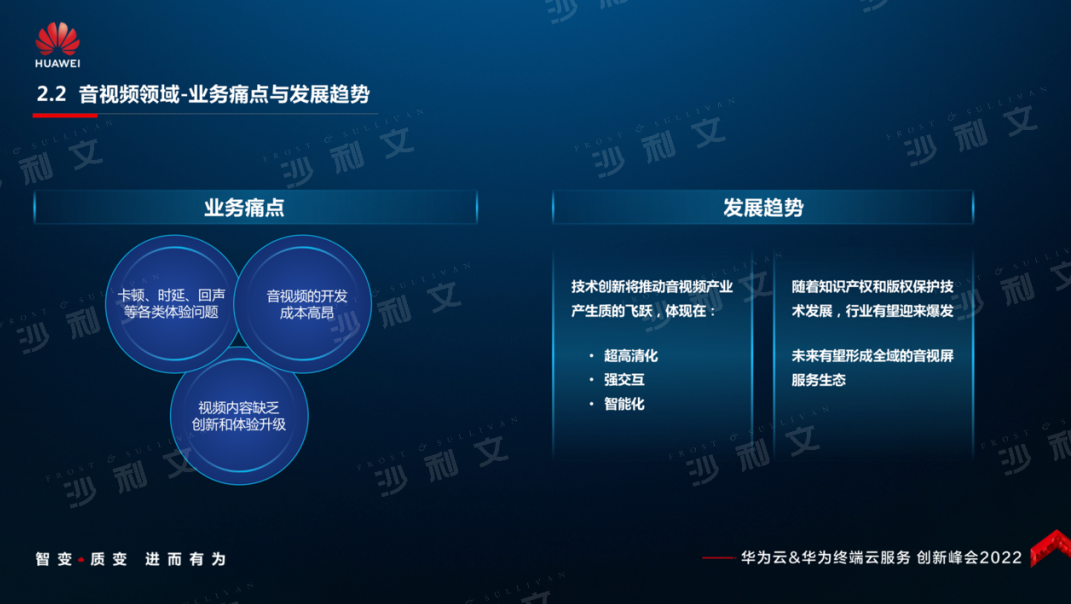
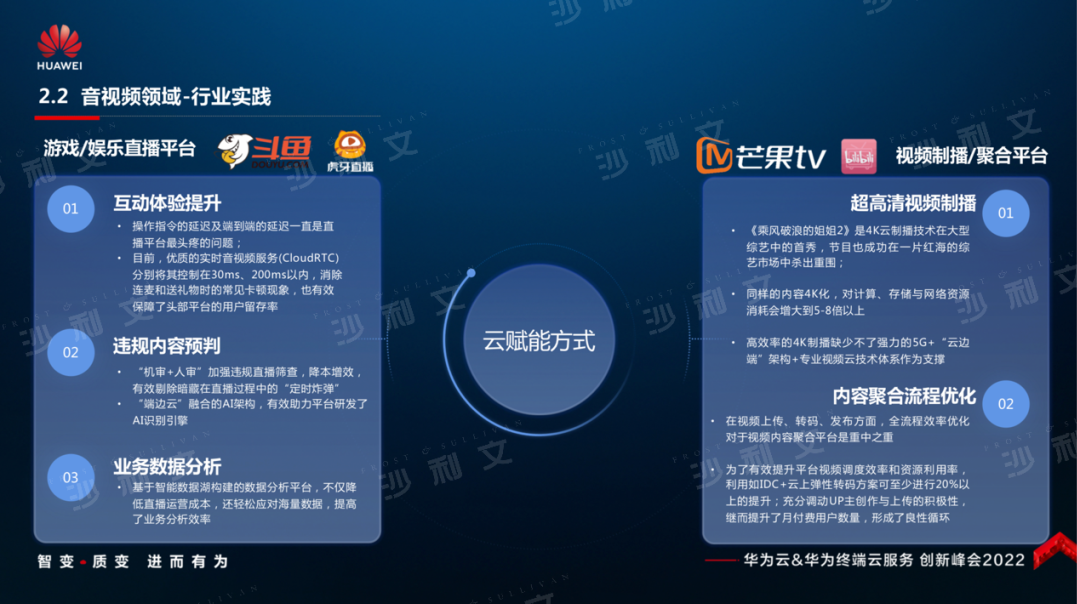
In the audio and video field, the empowerment of game/entertainment live broadcast platforms by cloud vendors is mainly reflected in improving interactive experience, accurately identifying illegal content, and efficiently conducting operational analysis; while for internet video resource platforms, the empowerment of cloud vendors is mainly reflected in ultra-high-definition video production and broadcasting, optimization of content aggregation processes, etc. Generally speaking, cloud-based technology and services have brought about changes in production, processing, and distribution models for partners in the audio and video field.
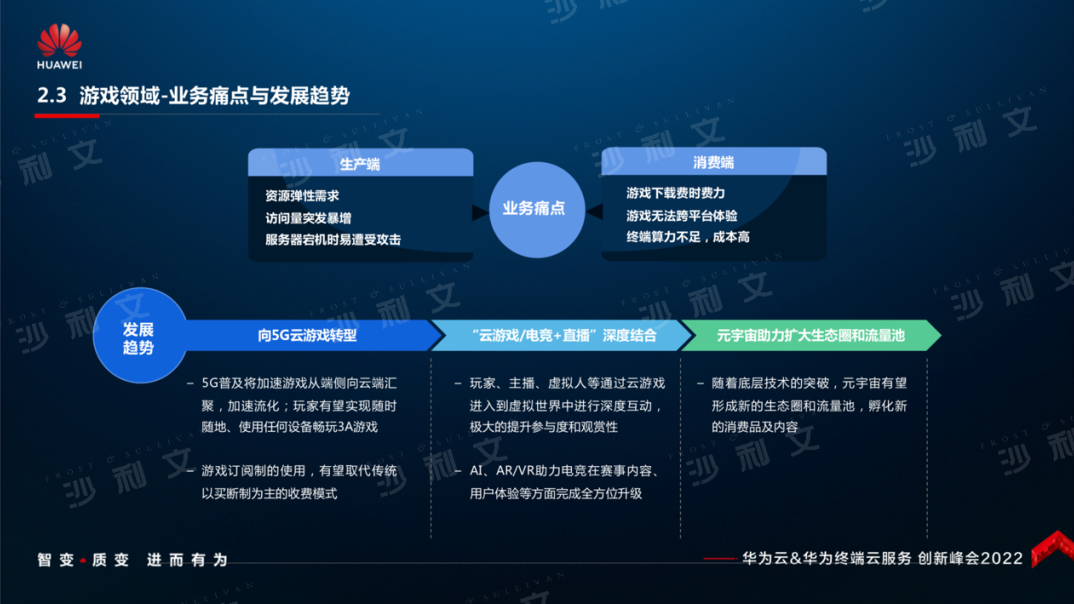
Speaking of the electronic game field, Mr. Guo Ming analyzed the business pain points from both the production and consumption sides. The domestic game industry generally faces pain points in the production side such as resource elasticity requirements (i.e., different development and testing stages have different network bandwidth, CPU, memory, disk capacity, etc.), business peak periods, traffic stability, security protection, etc.; while on the consumption side, players face pain points such as time-consuming and laborious downloads, inability to cross-platform play, insufficient terminal computing power, high costs, which greatly affect player experience and are not conducive to the growth of the number of game players.
“With the development and popularization of high-speed networks such as 5G and optical fiber, games will accelerate convergence from the terminal side to the cloud, accelerating streaming; 5G cloud gaming will become an inevitable trend in the game industry. Players are expected to be able to play AAA games anytime, anywhere using any device, and this trend will effectively boost the output value of the domestic game industry within the next few years; at the same time, the use of game subscription models is also expected to replace the traditional pay-as-you-go model.” Mr. Guo Ming said.
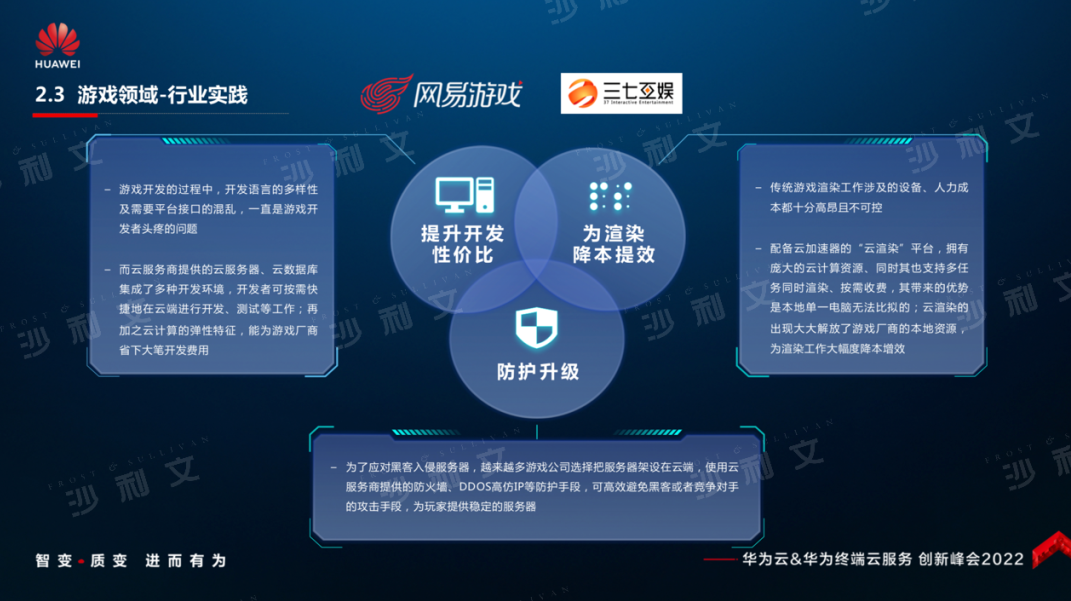
Finally, Mr. Guo Ming said that more and more game companies are adopting one-stop cloud service solutions provided by cloud vendors. Relying on the overall collaborative optimization of “cloud-network-edge-terminal-AI”, cloud vendors empower industry customers to achieve goals such as improving development cost-effectiveness, reducing rendering costs and efficiency, and upgrading protection.
Looking ahead to 2022, Frost & Sullivan hopes to see domestic leading cloud vendors relying on software-hardware collaboration and “cloud-cloud collaboration” to provide partners in the media and social industry with ultra-high-definition, low-latency, and strong interactive media capabilities covering content production, distribution, and application. Together, they will bring a new “blue ocean” to the domestic media and social industry.