Scene:How does the AI development platform define a leader?
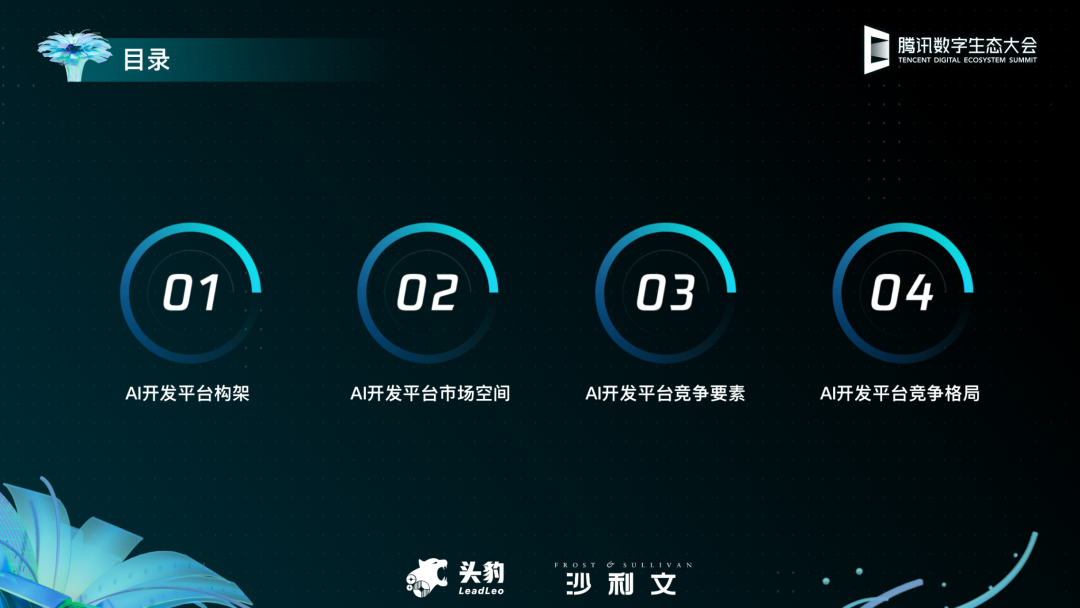
At the meeting, Yang Xiaocheng shared from four aspects: AI development platform architecture, market space, competitive elements, and competitive landscape.
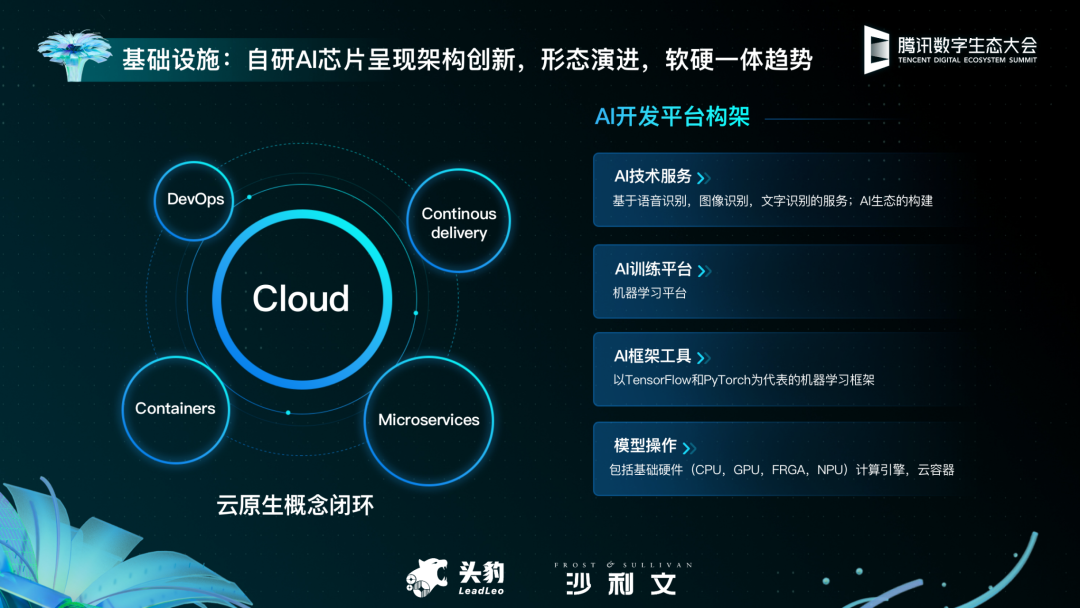
Firstly, Yang Xiaocheng started with the architecture of AI development platforms, pointing out that their key elements include infrastructure, training platforms, frameworks, and application technology services.Currently, the mainstream trend concepts surrounding these four elements include AI self-developed chips, cloud-native architecture, elastic computing, and DevOps (automated deployment).
In terms of infrastructure, enterprises have developed their own AI chips to adapt the chip circuit architecture to their algorithms, maximizing operational efficiency. Self-developed chips also show trends such as architectural innovation, morphological evolution, and integration of software and hardware. In terms of elastic and distributed training, cloud-native deep learning training platforms can achieve complete containerization deployment and use, and provide elastic scaling of resources based on Kubernetes, compatible with a variety of CPU and GPU processors.
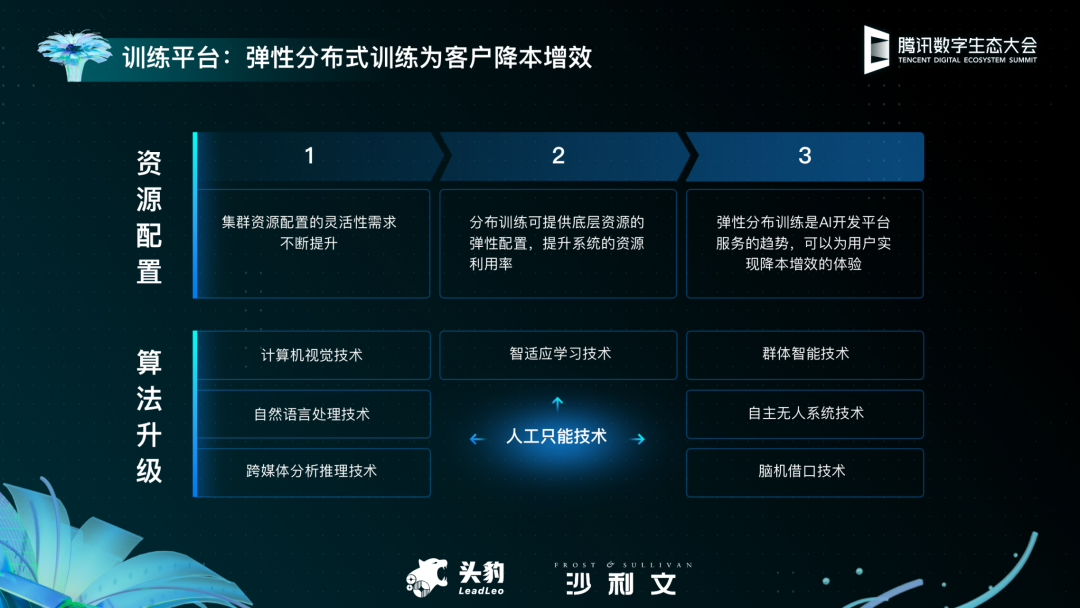
Distributed training can provide elastic configuration of underlying resources, improve system utilization, and enable users to achieve cost reduction and efficiency enhancement. At present, with the expansion of cluster scale, the probability of machine failures occurring at a given moment in the cluster is increasing. While the complexity of training models is rising, the fault tolerance of tasks is decreasing, and the demand for flexibility in cluster resource allocation is also constantly strengthening.
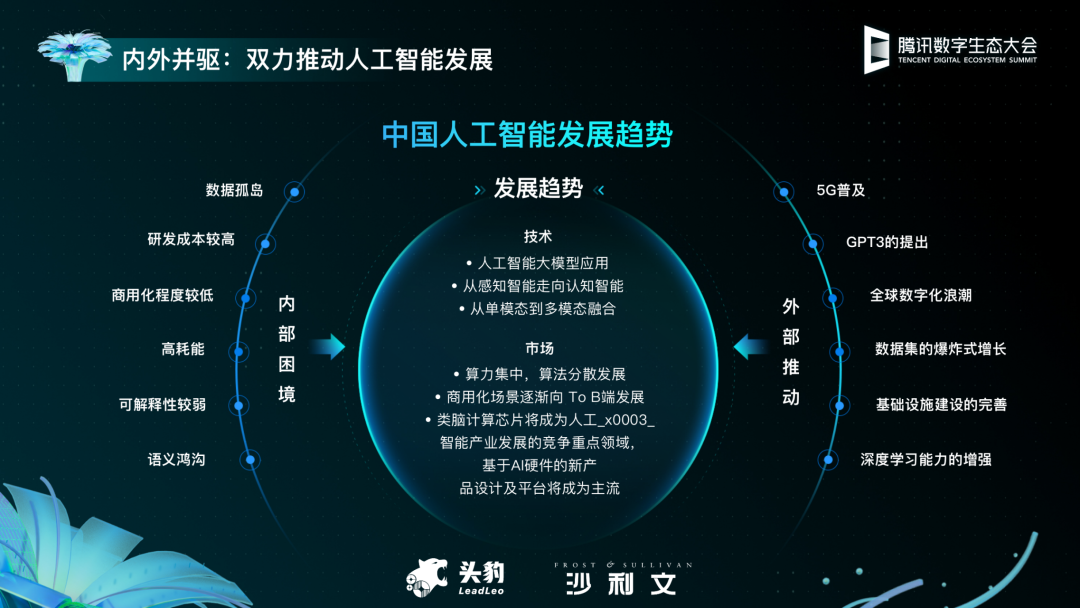
Subsequently, Yang Xiaocheng led everyone to understand the current market situation and trends of AI development platforms. The report shows that the market size currently exceeds 20 billion yuan, with a stable growth in existing space.From the perspective of the development trend of application technology in the entire artificial intelligence industry, there have been the proposal of large models, the transformation from perceptual intelligence to cognitive intelligence, and the integration from single-modal to multi-modal.
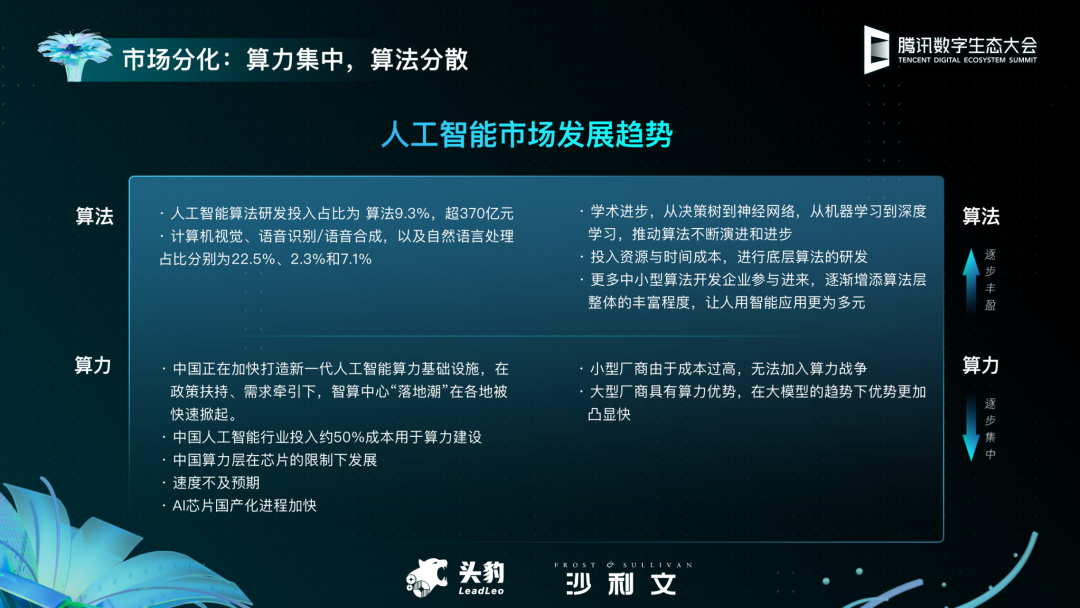
From an algorithmic perspective, the R&D investment in artificial intelligence algorithms accounted for 9.3%, exceeding 37 billion yuan. Computer vision, speech recognition/synthesis, and natural language processing accounted for 22.5%, 2.3%, and 7.1% respectively. In terms of computing power, China is accelerating the construction of a new generation of artificial intelligence computing infrastructure, with the 'implementation wave' of intelligent computing centers rapidly emerging across various regions. The AI industry in China invests about 50% of its costs in computing power construction, but development speed at the computing power level has not met expectations due to chip limitations, leading to an acceleration in the localization of AI chips.
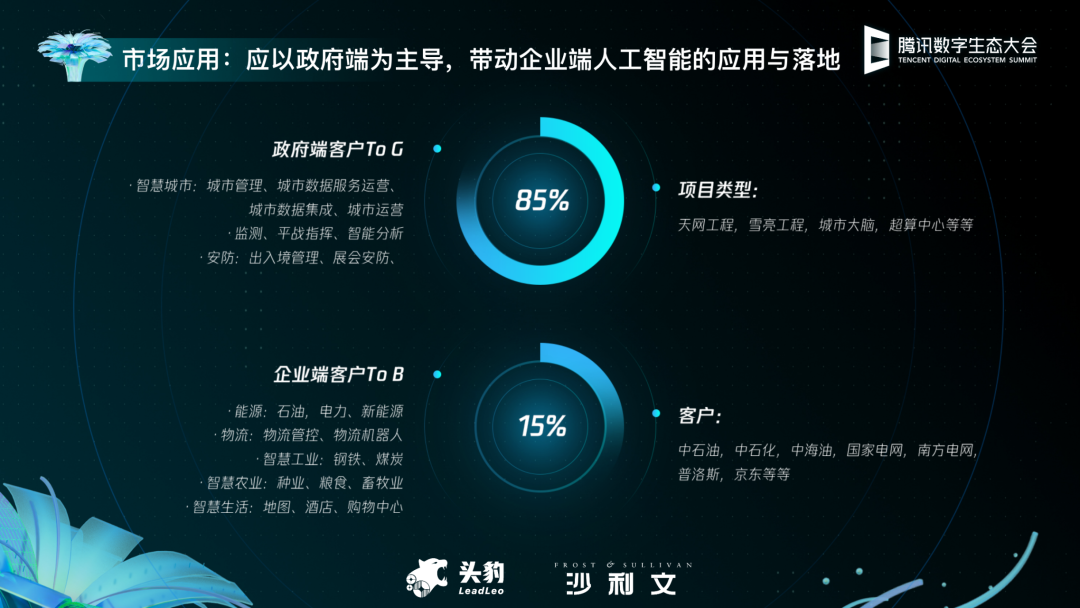
From the perspective of application needs, currently, it is still dominated by the government. Smart cities, which involve urban management, operation, intelligent analysis and security, account for 85% of the market share. On the ToB side, which focuses on energy, logistics, industry, consumption, etc., it is still mainly led by industry leaders. Currently, leading enterprises have already carried out large-scale applications in the field of artificial intelligence, and in the future, the artificial intelligence market will penetrate into small and medium-sized enterprise users.
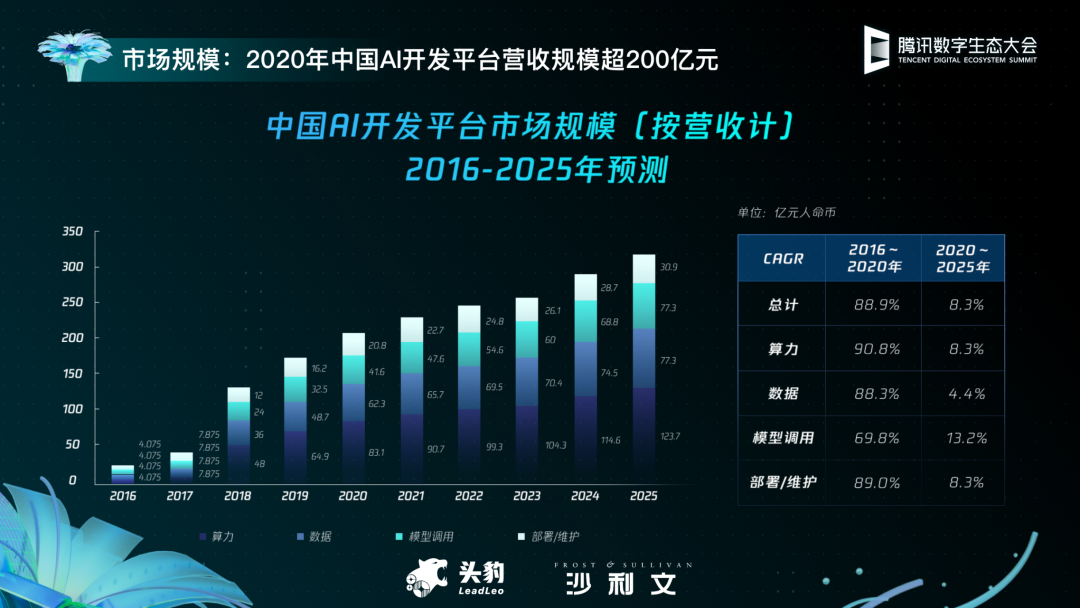
Data shows that from 2016 to 2020, the revenue scale of AI development platforms in China expanded rapidly, with the revenue of Chinese AI development platforms exceeding 20 billion yuan in 2020. At present, the revenue proportion of four businesses: computing power, data, model invocation, deployment, and maintenance is approximately 4:3:2:1. In the future, as AI applications deepen in various vertical scenarios, the revenue proportion of model invocation business is expected to increase.
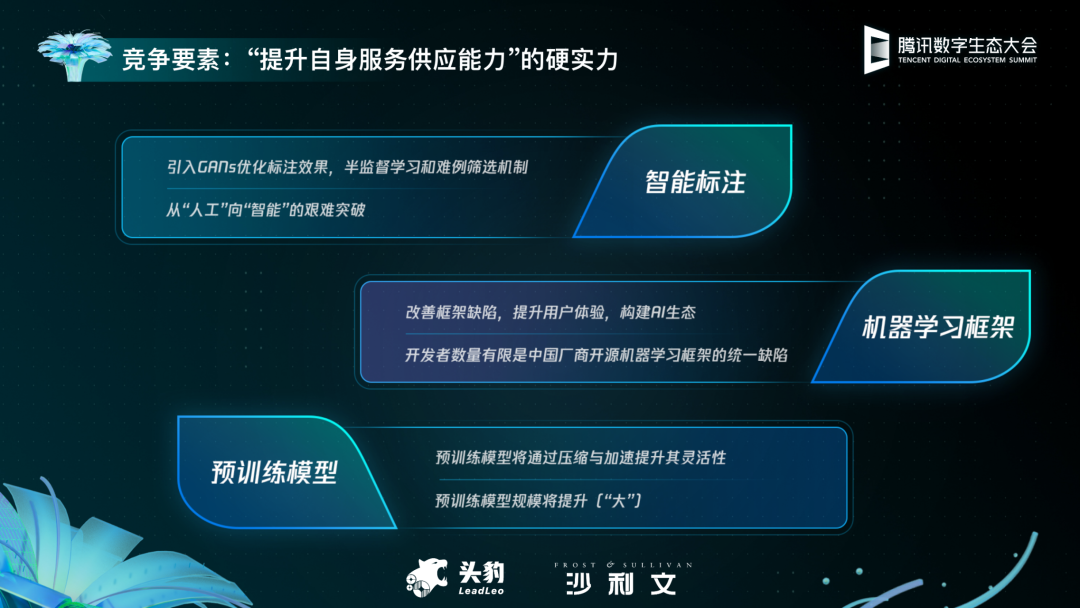
Yang Xiaocheng stated that the core competitive element of AI development platforms is how to create a platform that is more suitable for developers.He believes that efforts should be focused on two directions: enhancing the hard power of service supply capabilities and meeting customer needs through soft power.
In terms of hard power: First, intelligent annotation of data is a difficult leap from manual to intelligent methods. Second, machine learning frameworks need to gradually improve their defects, enhance user experience, and build an AI ecosystem. Third, pre-trained models should be made more flexible through compression and acceleration while scaling up in size.
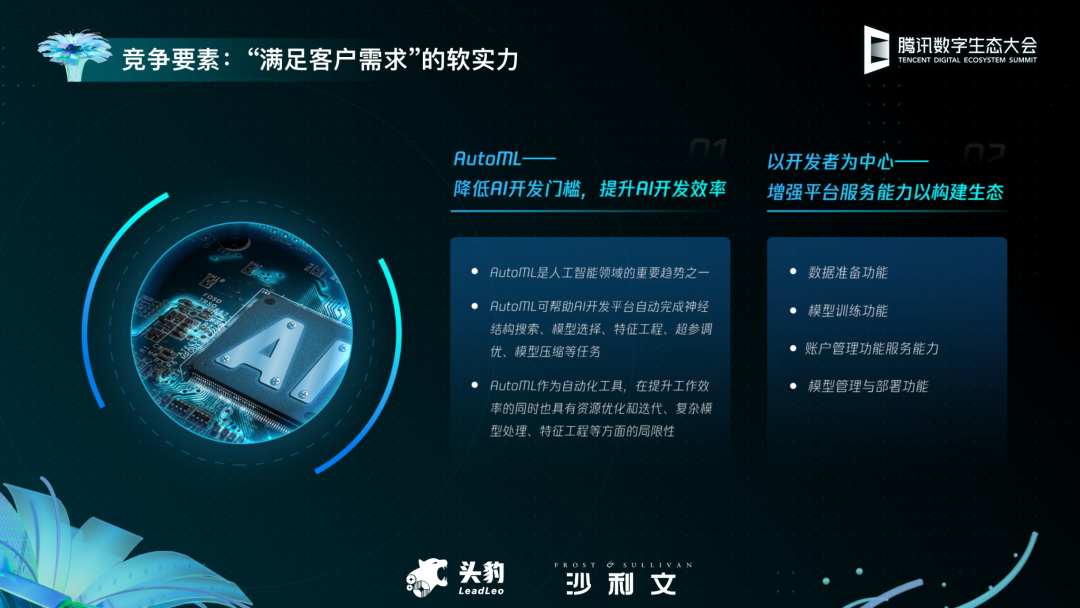
In terms of soft power: First is AutoML, one of the important trends in the field of artificial intelligence. It can help AI development platforms automatically complete tasks such as neural structure search, model selection, feature engineering, hyperparameter tuning, and model compression. Second is a developer-centric approach, which enhances platform service capabilities in multiple aspects including data preparation, model training, model management and deployment, and account management to build an ecosystem.
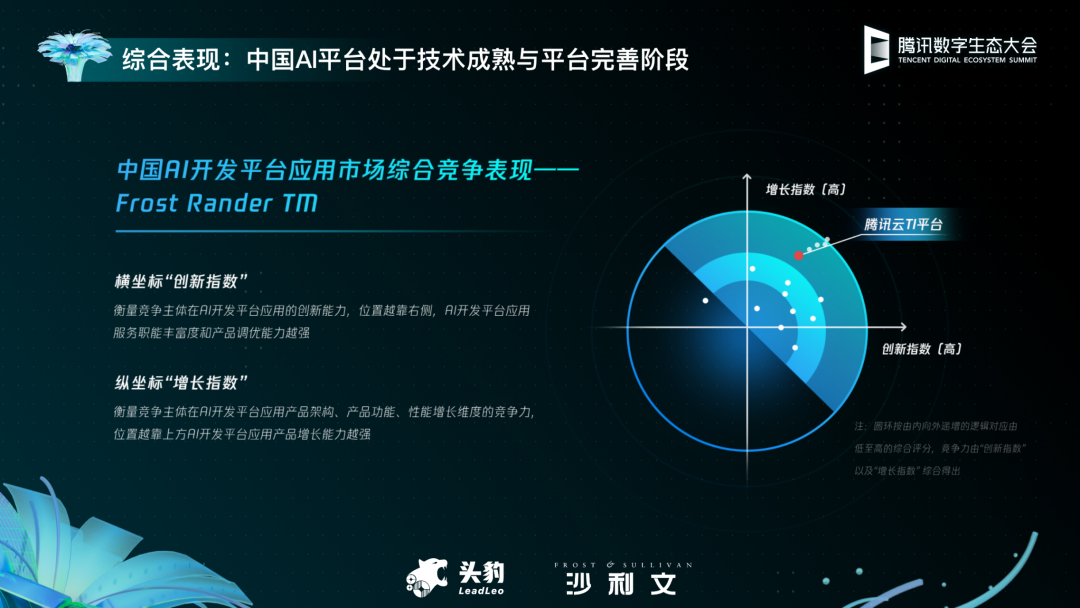
Finally, Yang Xiaocheng mentioned that Frost & Sullivan and LeadLeo Research Institute released a frost radar chart on AI development platforms in September this year. They established two scoring dimensions: innovation index and growth index, to evaluate and analyze AI development platforms. The results showed that Tencent Cloud is positioned in the leader quadrant.
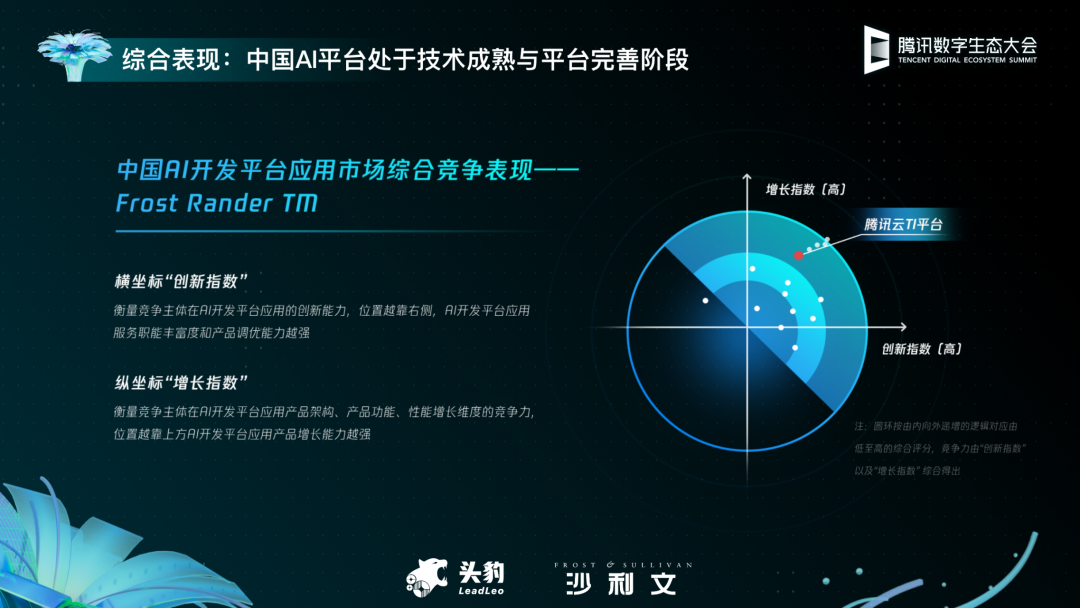
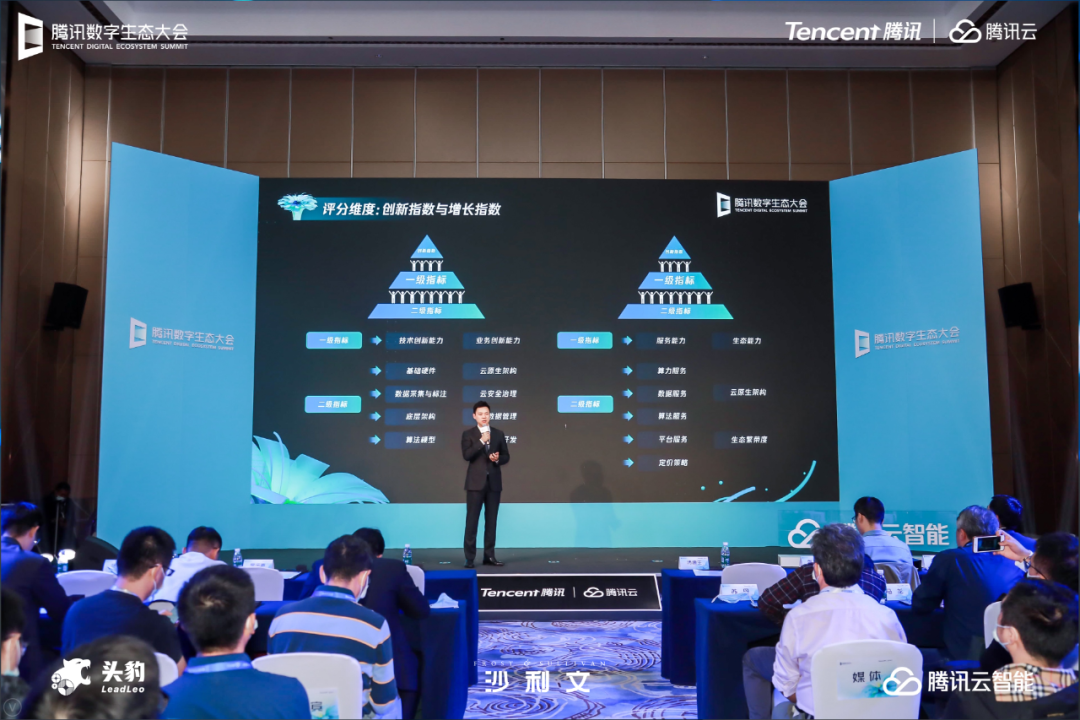
According to its introduction, the innovation index consists of two primary indicators—technological innovation capability and business innovation capability. Among them, technological innovation capability has four sub-indicators that examine basic hardware, data collection and annotation, underlying architecture, and algorithm models. The growth index, on the other hand, starts from services and ecosystems. Looking at the overall performance, the AI development platform market in China is in a stage of technical maturity and platform improvement. Competitors have competitive advantages in terms of both innovation capability and growth capability for AI development platform products.
"We can see that China's AI technology is still in the process of continuous development and improvement. I believe that in the future, AI development platforms will become more mature and affordable to implement earlier," said Yang Xiaocheng.