Under the global trend of carbon neutrality, jointly build a sustainable development ecosystem for PET bottles
01. Overview of the 'carbon neutrality' background, overview of the 'plastic restriction' background, sustainable development path for PET bottles, and the impact of sustainable development of PET bottles on carbon neutrality
Last century, industrialization developed in countries around the world, significantly accelerating the rate of carbon dioxide emissions. The greenhouse effect intensified, and climate change led to frequent extreme natural disasters.
Since the beginning of the 21st century, in order to mitigate the greenhouse effect and improve the natural environment, carbon emission governance has become one of the important international issues actively discussed by various countries. The concept of 'carbon neutrality' has gradually gained popularity globally, and many countries have reached a consensus on carbon neutrality issues, setting target times for achieving their own carbon neutrality goals and making relevant commitments.
Among them, the Chinese government also proposed at the 75th session of the United Nations General Assembly in September 2020: to strive to peak carbon dioxide emissions by 2030 and achieve carbon neutrality by 2060.

Under the backdrop of carbon neutrality, China, as the world's largest producer and consumer of plastics, has been committed to increasing its national contribution. It has formulated detailed laws and regulations for the production, use, and recycling of plastics. By adopting more robust 'plastic restriction' policies and measures, it strengthens the management of plastic use and minimizes the environmental impact caused by plastics as much as possible.

As a type of plastic, PET is made from petroleum through refining and polymerization. Both its production and processing processes lead to the emission of greenhouse gases such as carbon dioxide. Therefore,"Plastic restriction" is an effective way to achieve carbon neutrality. From the perspective of development's ultimate goal, reducing plastic usage in PET bottles involves consumer acceptance of lightweight PET bottles, production-side reduction in PET plastic consumption, consumer recycling of PET bottles, and the recovery and regeneration treatment of PET bottles. These are all effective measures to implement "plastic restriction.",Therefore, it can also be considered a sustainable development approach that helps with carbon emission reduction.

How much impact can the sustainable development of PET bottles have on carbon neutrality?
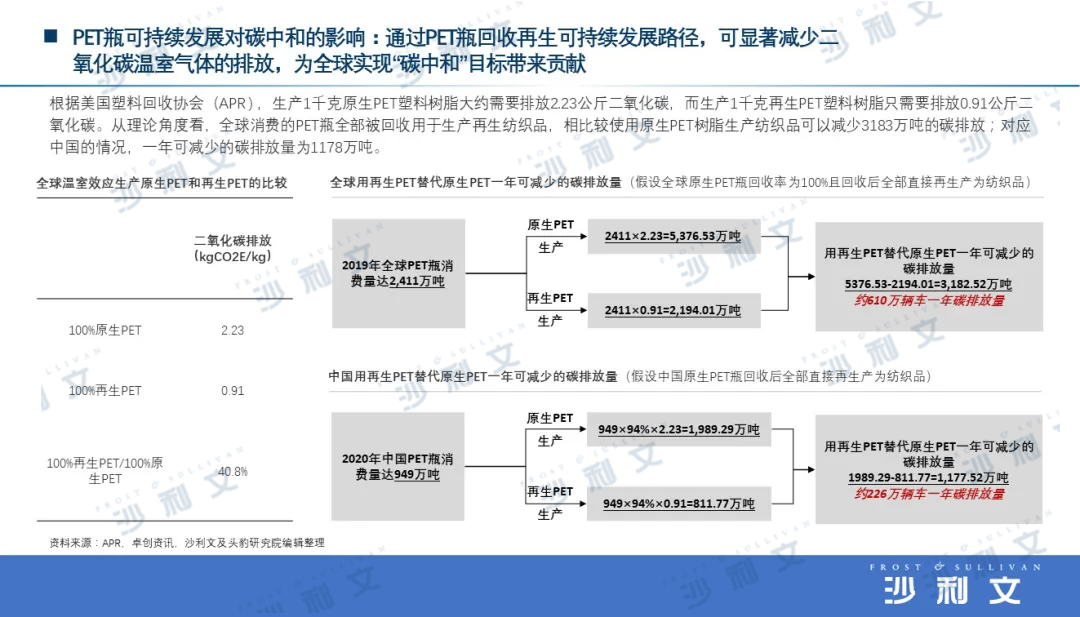
According to the American Plastics Recycling Association, producing 1 kilogram of virgin PET plastic resin requires approximately 2.23 kilograms of carbon dioxide emissions, while producing 1 kilogram of recycled PET plastic resin only emits 0.91 kilograms of carbon dioxide. If calculated through the sustainable development path of recycling PET bottles, assuming that all 24.11 million tons of PET bottles consumed globally in 2019 are recycled for the production of recycled textiles, it can reduce carbon emissions by 31.83 million tons compared to using virgin PET resin to produce textiles, which is equivalent to the annual carbon emissions of about 6.1 million vehicles.
It can be seen that by adopting a sustainable development path for PET bottle recycling, carbon dioxide greenhouse gas emissions can be significantly reduced, which will make a significant contribution to achieving the global 'carbon neutrality' goal.
02. China's PET bottle consumption, plastic reduction in PET bottles, recycling of PET bottles, and regeneration of PET bottles
In terms of consumption volume, the consumption of PET bottles in China has continued to grow, increasing from 6.33 million tons in 2016 to 9.49 million tons in 2020. Looking at the distribution of downstream consumer sectors for PET bottles in China, bottled water and beverages are the main consumption areas, accounting for a total of up to 75%.
Among them, bottled water consumption accounts for 41%, making it the primary consumer segment for PET bottles. Due to the characteristics of PET bottle materials such as being non-toxic, odorless, tasteless, and capable of direct contact with food-grade products, PET bottles have become the preferred packaging material in the beverage industry.

Lightweight bottles, as an important plastic reduction method in the sustainable development of PET bottles, can effectively reduce the consumption of PET materials and energy. At the same time, they can improve the production efficiency of related enterprises and lower their production costs.Currently, the global lightweight bottle technology has become quite mature.
From 1990 to 2019, taking 500 milliliter bottled water as an example, through technological innovation, food packaging supplier Sidel has reduced the weight of the bottle body by 66%. This can save 1,485 tons of PET per year and reduce energy consumption by 335,000 kilowatts.

PET bottles are also a type of plastic packaging material with high recyclability, capable of being 100% recycled. According to the United Nations Environment Programme, among all signatories of packaging goods and retail sectors, the beverage sector accounts for 88% of the total weight of plastic packaging, making its recyclability far exceed that of other sectors' plastic packaging. This is due to the widespread use of PET materials in beverage packaging. Looking at the global recycling rate of PET bottles, there are significant differences between countries. China leads the world with a recycling rate of 94%, which benefits from having an efficient PET bottle recycling system driven by economic interests and adapted to the country's national conditions, fully demonstrating its flexibility and uniqueness.

Currently, recycled PET bottles are cleaned and broken down into recycled PET flakes, which are supplied to chemical fiber factories. These flakes are then reprocessed into recycled PET pellets, which can be used to make clothes or bags. In China, from PET bottles to recycled PET, the consumption of chemical fiber-based recycled PET products accounts for as high as 81% in the downstream consumption of the entire PET recycling industry chain, making it the highest consumer sector for recycled PET at present.
Globally, the recycling industry, including China, is continuously moving towards the recycling end. Building a complete and mature plastic recycling system and packaging stations helps improve the quality of PET bottle recycling, thereby increasing the recycling rate of PET bottles. This is also an effort towards achieving sustainable development of PET bottles.

03 Development Challenges: The awareness of recycling and environmental protection is weak among the general public, consumers have low acceptance of lightweight bottles and recycled PET, and the commercial application of new biobased PET materials needs continuous exploration.
Challenge One: Through comparison, the recycling rate of PET plastic bottles in China is now at a relatively high international level. It can be said that sustainable development of PET bottle production in China has achieved good results. However, there is still room for improvement in public education on PET bottle environmental protection.
Compared to countries like Norway, Germany, and Japan, which also have high recycling rates, China's challenge lies in the fact that the public's awareness of active and correct PET bottle recycling is still relatively weak. China's solid waste recycling work, such as plastic bottles, relies more on 'scavengers' and 'traders' to complete. However, with the gradual establishment of new solid waste laws, if these roles gradually withdraw from the market, the future trend of PET plastic bottle recycling rates may require continuous attention. Moreover, public environmental education efforts need the joint efforts of the government, enterprises, and relevant organizations.

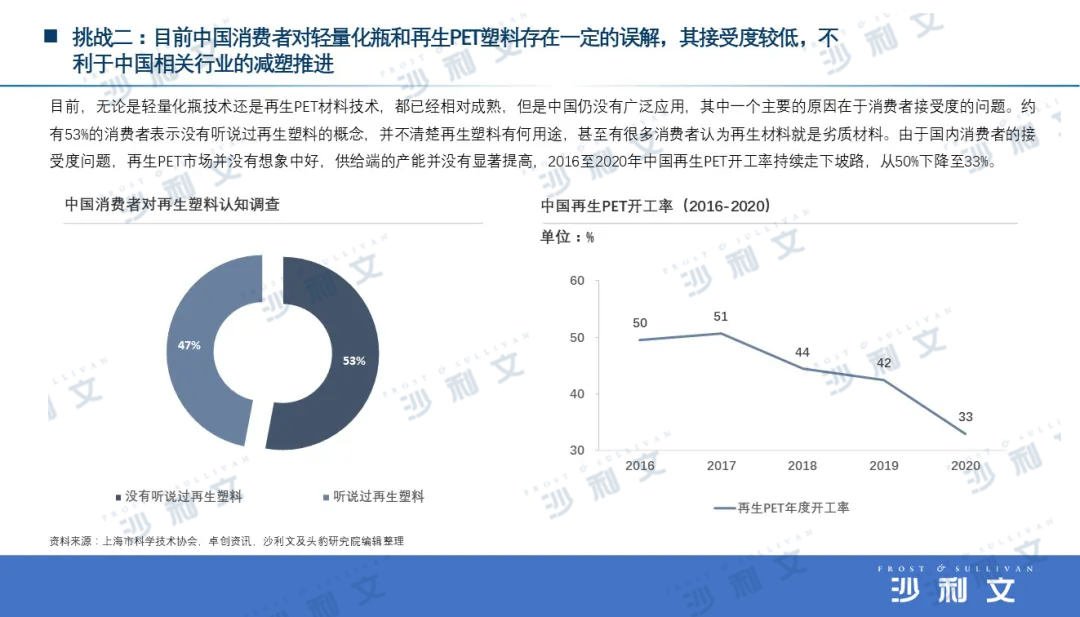
Challenge two: Consumers have low acceptance of lightweight bottles and recycled PET. With economic development, Chinese consumers have put forward higher quality requirements for products, gradually reducing their acceptance of lightweight bottles that are lighter in weight and softer to the touch. Consumers even mistakenly regard the use of lightweight bottles and recycled PET products as counterfeit goods, leading to a misunderstanding that 'businesses are cutting corners,' which is not conducive to the industry's progress in 'plastic reduction.'
Due to acceptance issues, even in a technically favorable environment, the recycled PET market has not been as good as expected. Affected by the consumer side, production capacity on the supply side has not significantly increased. From 2016 to 2020, China's recycled PET operating rate continued to decline, falling from 50% to 33%.
Challenge 3: The commercial application of bio-based PET materials needs continuous exploration. Bio-based PET is a more environmentally friendly new material, with all or part of its production raw materials coming from biomass. Its production, recycling, and reuse processes can effectively reduce carbon emissions and fossil fuel consumption.
Although the environmental benefits of biobased PET are prominent, its cost is about 1.25 to 1.5 times that of fossil-based PET. To achieve mass production of biobased PET, it is still necessary to overcome large-scale manufacturing technology and further reduce the process costs of producing biobased PET materials. This is also the direction where China needs to continue working hard on the path to sustainable development of PET bottles in the future.

Practice Cases and Future Prospects
Currently, whether globally or in China, some related enterprises have begun to actively practice sustainable development of plastics. By the end of 2020, 126 corporate institutions had signed the 'New Plastics Economy Global Commitment.' Among them, packaging product companies, packaging manufacturers, and retailers are the largest signatories. This includes PepsiCo in the beverage industry and Unilever in the personal care industry, with a total of 89 signatories. The environmental social responsibility of these enterprises is of significant importance for the global sustainable development of plastics.

Case 1: Persisting in the Recycling and Reuse of PET Bottles
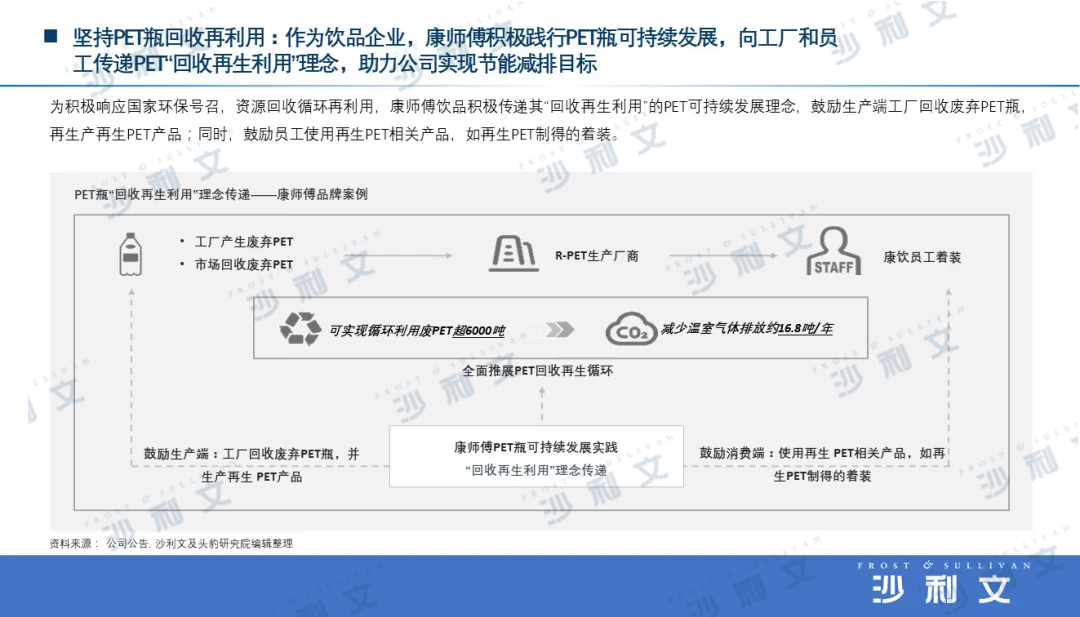
In the practice case of PET bottle recycling and reuse, in response to the national call for environmental protection and resource recycling, Master Kong Beverage actively promotes its 'recycling and reuse' PET sustainable development concept. It encourages factories at the production end to recycle discarded PET bottles to produce recycled PET products. At the same time, it encourages employees to use recycled PET-related products, such as clothing made from recycled PET. Master Kong Beverage has reached a brand partnership with Veolia, and subsequently, each supply chain department of Master Kong Beverage plans to fully implement a PET recycling and reuse plan, recycling about 6,000 tons of waste PET per year, which can achieve a reduction of 16.8 tons of greenhouse gas emissions.
Case 2: Becoming a force in 'plastic reduction'
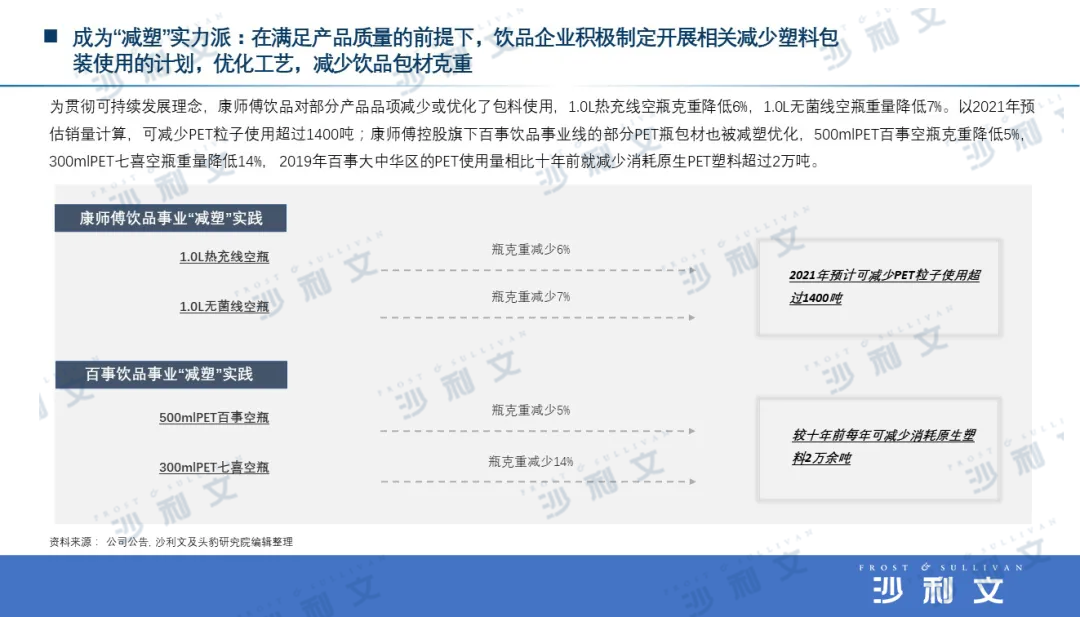
In the 'plastic reduction' initiative, various beverage companies are also actively formulating plans to reduce the use of plastic packaging, optimizing processes and reducing the weight of beverage packaging materials. Among them, both Master Kong's beverages and Pepsi-Cola's beverage business lines have carried out various 'plastic reduction' practices and achieved corresponding energy conservation and emission reduction results.
Case 3: Public Environmental Protection Education and Promotion
At the same time, in order to disseminate correct environmental protection concepts and methods to the public, some beverage brands have participated in environmental education public welfare activities related to PET bottles. For example, Master Kong Beverages has organized science popularization parent-child activities with the theme of PET bottle recycling, a water education public welfare activity themed 'Know Water, Love Water, Save Water', and a Pepsi Zero Waste Public Education Project, all of which actively convey the sustainable development concept of PET bottles to the public and have received positive social responses.

Future Outlook: China has achieved certain results in the sustainable development of PET bottles, but there are also some problems and challenges.
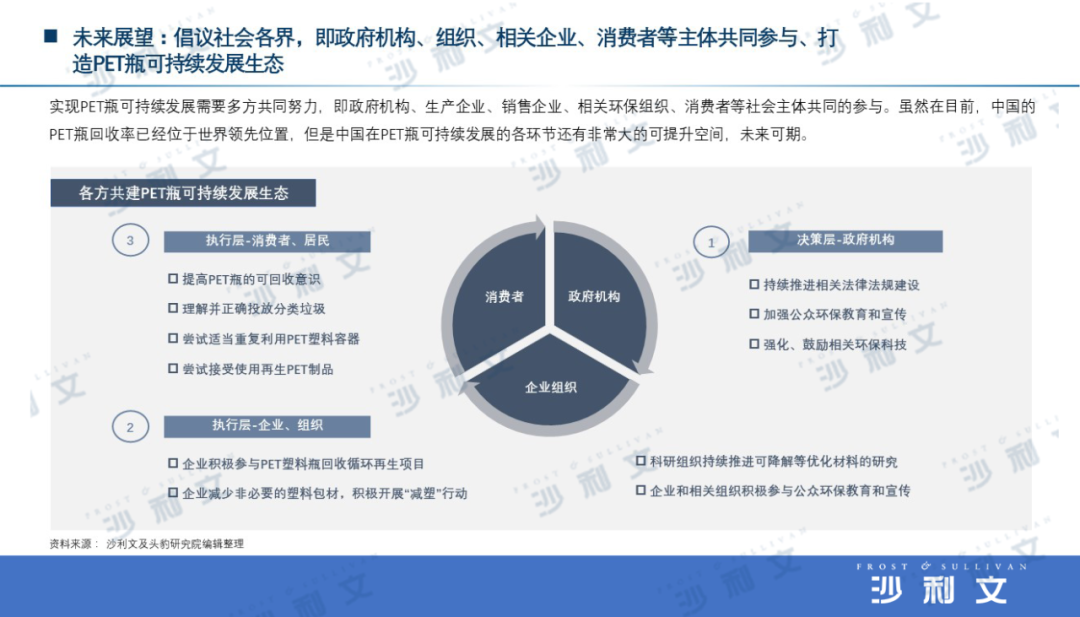
We advocate that all sectors of society, including government agencies, related enterprises, organizations, consumers, and other entities, jointly participate in creating a sustainable PET bottle ecosystem.Government agencies have introduced policies and regulations conducive to the recycling of empty bottles based on China's national conditions; relevant enterprises and organizations can strengthen environmental protection cooperation and exchanges; consumers should actively accept public education to enhance their awareness of active recycling.
It is reported that the PET project released this time is part of Master Kong's sustainable development vision for PET. It aims to call on and support the government in developing the PET recycling processing industry chain, and actively educate and promote public participation in PET bottle sorting and recycling.