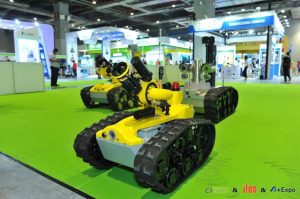
Today (July 10th), the four-day 8th China International Robotics Exhibition officially kicked off at the National Convention and Exhibition Center (Shanghai). The China International Robotics Exhibition (CIROS) is one of the four major robotics exhibitions globally and serves as a platform for domestic and international exhibitors and visitors to exchange and learn. In addition to showcasing robot bodies, related components, and integrated applications, this year's exhibition will also feature cutting-edge innovative technology achievements in the field of robotics manufacturing, attracting well-known domestic and international enterprises such as ABB, Fanuc, Yaskawa, Kawasaki, and Shenyang Xinsong to actively participate.
Source: CIROS China International Robotics Exhibition official website
The difficulty in terminal distribution has drawn attention from all sectors to automated delivery robots
Terminal distribution is the final and most critical link in the entire logistics process, facing three major difficulties: difficult driving conditions for delivery vehicles, challenging site selection for delivery points, and difficulties in receiving and dispatching parcels. Traditional manual distribution methods are struggling to keep up with the development speed of logistics, prompting various sectors to consider solutions for terminal distribution problems. Among these, automatic delivery robots are widely considered one of the solutions to future challenges in terminal distribution. Currently, Chinese and foreign e-commerce giants as well as robotics startups have begun research on automatic delivery robots.
Focusing on autonomous driving technology as the core development, continuously launching innovative solutions
Technology is at the core of the development of autonomous delivery robots. Currently, autonomous delivery robots have not yet met the commercial application requirements in terms of stability and safety. Core technologies in areas such as robot motion control, navigation and positioning, obstacle avoidance mechanisms, scene perception, and human-machine interaction still require continuous innovation solutions to achieve effects close to human driving.
Source: CIROS China International Robotics Exhibition official website
Source: CIROS China International Robot Exhibition official website
As a leading industry advisory firm listed in Hong Kong and overseas, Frost & Sullivan has continuously conducted in-depth research on multiple fields such as industrial automation, mechatronics, and logistics, resulting in rich research outcomes. Among these, the research on robots includes core technologies such as artificial intelligence, cloud computing, and big data, covering multiple areas such as AI chips, deep learning, and motion control. Since providing investment and financing advisory services for corporate leaders and their management teams, Frost & Sullivan has helped nearly 500 companies successfully list in Hong Kong and overseas. Since 2018, it has accounted for 56% of the market share of industry advisory services for companies going public in Hong Kong, contributing to the prosperity of China's economy.
Frost & Sullivan-related research
Source: Drawn by Frost & Sullivan Research
As of the end of June 2019, the Frost & Sullivan office in Greater China has assisted more than 30 industrial automation and mechatronic enterprises such as Junmao Technology, Hengda Technology, and Kangli International in going public. In the future, Frost & Sullivan will continue to leverage its rich research findings to contribute to the development and popularization of robots in China.
Focus on the China International Robotics Exhibition,Frost & Sullivan Releases an Excerpt from the White Paper on Automated Delivery Robots in China
Industry Definition and Classification of Automated Delivery Robots
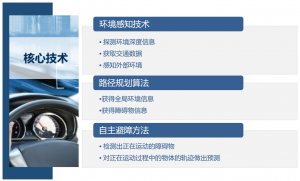
An autonomous delivery robot refers to a device that uses emerging technologies centered on autonomous driving to automatically travel on the road, sense road conditions, and interact with users through human-computer interaction. It can deliver express deliveries or other items to users at any time. Autonomous delivery robots are new products in the era of smart logistics, with the purpose of solving the 'last mile' distribution problem and alleviating the prominent contradictions in the development of traditional manual distribution methods at this stage. The core technology of autonomous delivery robots is built on a software operating system centered on autonomous driving, with environmental perception technology, path planning algorithms, and autonomous obstacle avoidance methods being the main development directions for robot products.
Core technology of automatic delivery robots
Source: Developed by Frost & Sullivan Research
China's automatic delivery robot industry industrial chain
The industrial chain of China's automatic delivery robot industry, from top to bottom, can be divided into the upstream core component industry, the midstream body manufacturing industry, and the downstream application scenarios.
China's automatic delivery robot industry industrial chain
![]()
Source: Drawn by Frost & Sullivan Research Institute
The upstream industry is centered around core components, including AI chips, sensors, controllers, navigation and positioning devices, etc., which are used to enhance the level of automatic delivery robots in terms of perception, execution, and decision-making. In the future, automakers may participate in the development of higher-specification core components for automatic delivery robots, utilizing mature automotive production lines to mass-produce core components such as automotive-grade electronic control chassis, powertrain, steering system, and drive/brake systems.
The midstream is the manufacturing industry, with participants including e-commerce giants, internet companies, catering delivery enterprises, and startups in robotics. Among the participants in the midstream of the industrial chain, JD.com Group was the first to initiate research and development on automatic delivery robots. At this stage, there are no mature automatic delivery robot products for reference, and participating enterprises are generally in an exploratory phase. Therefore, the maturity of autonomous driving technology will be a key element for automatic delivery robots to achieve full-scenario regular distribution.
The downstream includes food delivery and last-mile express delivery. Automated delivery robots can replace couriers and food delivery workers in future daily distribution tasks. In the long run, with the gradual disappearance of the demographic dividend and a decline in the labor force, the gap in labor costs between China and developed countries is continuously narrowing. The demand for robots to replace manual labor is becoming increasingly strong, creating development conditions for the large-scale application of automated delivery robots in China.
Analysis of Driving Forces for China's Automatic Delivery Robot Industry
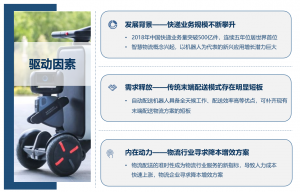
★ The scale of express delivery business continues to climb
Based on the prosperity of e-commerce, improved logistics efficiency, and optimized policy environment, China's express delivery business has maintained a rapid growth momentum for a long time. In 2018, China's express delivery volume exceeded the 500 billion piece mark, surpassing the total express delivery volume of developed economies such as the United States, Japan, and Europe, ranking first in the world for five consecutive years. Automatic delivery robots, which integrate emerging technologies such as artificial intelligence, big data, and the Internet of Things, are emerging applications of smart logistics in the distribution sector and have continuous growth potential.
★ Traditional last-mile delivery models have obvious shortcomings
Traditional end delivery methods face three major difficulties: difficult driving for courier vehicles, challenging site selection for delivery points, and difficulty in picking up and delivering parcels. Intelligent delivery methods have become an effective solution to these end delivery problems. Automated delivery robots have advantages such as round-the-clock operation and high delivery efficiency, which can make up for the shortcomings of existing end delivery logistics solutions.
★ The logistics industry is actively seeking cost reduction and efficiency improvement solutions
With the continuous improvement of express delivery timeliness standards, logistics companies are investing more in distribution efforts, that is, continuously recruiting end-terminal delivery personnel. This will lead to a rapid increase in labor costs for enterprises, resulting in a continuous climb in the proportion of labor costs in total logistics costs. The logistics industry is a labor-intensive sector, and using automatic delivery robots to replace end-terminal delivery personnel for distribution work is an effective way to achieve cost reduction and efficiency improvement goals.
Driving factors of China's automatic delivery robot industry
Source: Developed by Frost & Sullivan Research
Development Trend of China's Automatic Delivery Robot Industry
★ Improvement in autonomous driving-related technology levels
Technology is the core of the development of autonomous delivery robots. Currently, autonomous delivery robots have not yet met the commercial application requirements in terms of stability and safety. In the future, with the iterative development of technologies such as sensor systems, emergency braking systems, path planning systems, and artificial intelligence systems, the perception, movement, and thinking capabilities of autonomous delivery robots will gradually converge with those of humans.
★ The cost of robot delivery will be lower than that of manual delivery.
With the maturity of core component technologies such as lidar, cameras, and motors, the industrial chain is gradually becoming complete, and the prices of core components have room for a certain decline. Compared to manual distribution, automatic delivery robots have no working hours restrictions and can work continuously. In the case of a large number of delivery orders, robot delivery costs are expected to be lower than those of manual distribution.
During the testing phase, automatic delivery robots can only deliver goods in specific scenarios with less human and vehicle traffic, such as campuses and office parks. In the future, with the widespread application of advanced devices like sensors and radars, the endurance, cargo-carrying methods, and load capacity of automatic delivery robots will be significantly improved, enabling them to adapt to more complex and extensive application scenarios.
Development Trend of China's Automatic Delivery Robot Industry
![]()
Source: Developed by Frost & Sullivan Research
Dr. Wang Xin, Global Partner of Frost & Sullivan, Vice President of Global Market Strategy Planning and President of the China Region, pointed out that automated delivery robots are a new product in the era of smart logistics, and replacing humans with robots is an important development trend for the logistics industry in the future. Among them, autonomous driving technology is at the core of the development of automated delivery robots, determining their distribution safety and reliability in actual scenarios. In the future, automated delivery robots also need to undergo long-term testing in different scenarios to improve autonomous driving algorithms, so as to be capable of completing distribution tasks in various different scenarios.