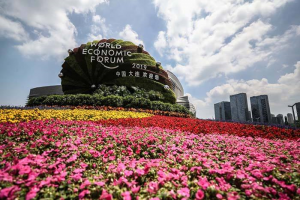
The 2019 Summer Davos Forum officially kicked off in Dalian, China today (July 1st). It is reported that more than 1,900 representatives from politics, business, academia, and the media from over 100 countries have gathered in Dalian to participate in this global economic event. Chinese government officials attending the forum include: Premier Li Keqiang of the State Council of the People's Republic of China, Minister of Science and Technology Wang Zhigang, Director of the State-owned Assets Supervision and Administration Commission Hao Peng, Director of the State Administration for Market Regulation Xiao Yaqing, Deputy Administrator of the General Administration of Customs Zou Zhiwu, Governor of Liaoning Province Tang Jun, and Governor of Hebei Province Xu Qin. In addition, there are 8 co-chairs and more than 1,000 business leaders participating, including 100 founders and CEOs of innovative startups, representatives from the cultural and artistic, academic, and media sectors. Premier Li Keqiang will deliver a special speech at the opening ceremony on the morning of July 2nd, meet with Forum Chairman Schwab and foreign leaders attending the forum, and engage in dialogue with industry, commerce, finance, think tank, and media professionals. Mr. Aroop Zutshi, Global President and Global Partner at Frost & Sullivan, Dr. Wang Xin, Global Partner, Vice President of Global Market Strategy Planning and President of Greater China, and Ms. Neeta Joshi, Executive General Manager of Strategy Execution, have been invited to participate in this forum.
△Photo/Xinhua News Agency
Four major topics of the Davos Forum
The four main topics of this forum are "Achieving Technological Leadership," "Maintaining Economic Leadership," "Enhancing Responsible Leadership," and "Cultivating Agile Industry Leadership." Around these four themes, more than 200 seminars will be held, and a series of important research reports and other statements will be released, including "Top Ten Emerging Technologies," "Tech Pioneers for 2019," "Young Scientists of 2019," and "Incentivizing Safe and Responsible Innovation."
Four major topics of the Davos Forum
Source: Developed by Frost & Sullivan Research
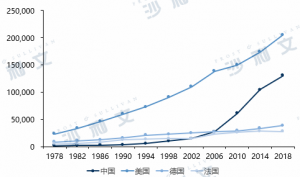
Overview of the economies of major participating countries at the Davos Forum
★ Major participating countries of the Davos Forum
This summer's Davos Forum brought together elites from more than 100 countries, with the majority of participants coming from economically powerful nations such as the United States, Germany, and France. On one hand, this reflects the importance placed by various countries on technological innovation; on the other hand, it demonstrates the recognition of China's achievements in economic growth and technological development by economically strong nations like the United States, Germany, and France.
★ Since the reform and opening up, China has achieved remarkable economic success
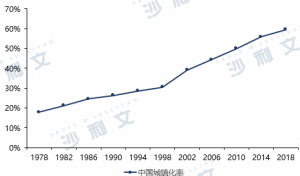
Over the past 40 years since the reform and opening up, China has achieved remarkable economic development. China's Gross Domestic Product (GDP) increased from $149.5 billion in 1978 to $1304.79 billion in 2018, a nearly 90-fold increase. The total GDP rose to second place in the world, only after the United States. In addition, China's economic structure has undergone significant changes, with remarkable improvement in development coordination and sustainability. In 2018, the service industry's proportion increased to 52.2%, nearly 29 percentage points higher than in 1978, contributing 59.7% to economic growth, an increase of 31.3 percentage points. Economic growth shifted from mainly relying on the secondary industry to jointly driven by the primary and tertiary industries. In 2018, China's urbanization rate of permanent residents was 59.6%, a 41.7 percentage point increase compared to 1978, with an average annual increase of 1 percentage point. The income gap between urban and rural residents continued to narrow, with rural residents' actual income growth for eight consecutive years since 2010 faster than that of urban residents.
Total GDP (in billions of US dollars) of major participating countries at the Davos Forum
Source: National Bureau of Statistics, compiled by Frost & Sullivan data center.
China's contribution rate of tertiary industry to GDP (%)
Source: National Bureau of Statistics, compiled by Frost & Sullivan data center.
Urbanization rate (%) of China
Source: National Bureau of Statistics, compiled by Frost & Sullivan data center.
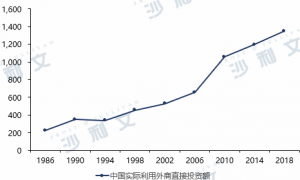
China's foreign economic exchanges are becoming increasingly frequent, forming a multi-level and all-round open pattern that has achieved leapfrog development. China's total import and export volume of goods increased from $20.6 billion in 1978 to $4.62 trillion in 2018, achieving nearly 224 times the growth, with the total import and export trade volume ranking first in the world. China's economic ties with major countries and regions around the world are growing stronger, and both bilateral trade volumes and the total amount of foreign investment are also increasing year by year.
Total Import and Export Trade Value of China (in billions of US dollars)
Source: National Bureau of Statistics, compiled by Frost & Sullivan data center.
Total Actual Utilization of Foreign Direct Investment in China (in billions of US dollars)
Source: National Bureau of Statistics, compiled by Frost & Sullivan data center.
★ Since the reform and opening up, China has made remarkable technological progress
The high-speed and high-quality growth of the Chinese economy is the result of China's adherence to an inclusive and open stance in integrating into the global system, sharing the dividends brought by the economic development of various countries in terms of politics, institutions, scale, trends, and technology. It is also a result of China's active assumption of international responsibilities and participation in global governance. In the wave of globalization, adhering to conforming to development trends and focusing on technological innovation is the winning strategy for China under the new era background. The scientific and technological progress China demonstrates to the world is comprehensive, covering various aspects such as aerospace, military, transportation, and civilian life. From 'Made in China' to 'Intelligently Made in China', China has made significant progress in cutting-edge technology fields such as artificial intelligence, cloud computing, and big data. A number of advanced technology companies such as iFlytek, SenseTime Robotics, Turing Robotics, Cambricon, and SenseTime Technology have focused on cutting-edge scientific research and achieved takeoff with the power of capital, leading technological development.
△Photo/Xinhua News Agency
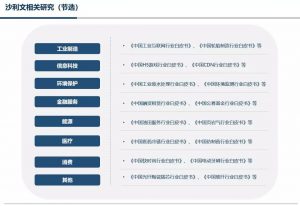
As a leading industry advisor listed in Hong Kong and overseas, Frost & Sullivan continuously monitors the development of China's politics, economy, culture, technology, and other aspects. It has conducted in-depth research on multiple fields such as intelligent technology, environmental protection, and energy, and has accumulated rich research results. Among these, the research on intelligent technology includes three core technologies: artificial intelligence, big data, and cloud computing, covering multiple areas such as autonomous driving, security and smart cities, and intelligent manufacturing.
Frost & Sullivan-related research
Source: Drawn by Frost & Sullivan Research
As of the end of June 2019, the offices of Frost & Sullivan in Greater China have assisted nearly 30 technology companies such as WeCom, CenturyLink, and Wankala Group in going public. In the future, Frost & Sullivan will continue to leverage its rich research findings to contribute to the enhancement of China's technological leadership.
Focusing on technology topics at Davos, Frost & Sullivan released an excerpt from its China Intelligent Technology White Paper
Definition and Classification of China's Intelligent Technology Industry
Chinese intelligent technology is supported by big data and encompasses application methods, tools, and technologies such as simulation, extension of human thinking and wisdom. Intelligent technology enables intelligent products to perform complex tasks that were previously only capable of humans with intelligence. It is a cutting-edge science and technology that has a significant impact on promoting the development of all industries and the progress of human society. Common application fields of intelligent technology include: machine perception and human-computer interaction, intelligent information processing, network intelligence and mobile computing, intelligent control and decision-making, robots and intelligent systems, etc. Chinese intelligent technology can be mainly divided into three core technologies according to technical types: artificial intelligence, big data, and cloud computing. Each of these three technologies has its own unique development history in China. Among them, the development history of artificial intelligence is the longest, starting in the 1970s. Big data started in 2004, and in recent years, the big data market has experienced explosive growth. Cloud computing technology started late but has developed rapidly.
Market scale of China's intelligent technology industry
Thanks to the active entry of the capital market, the scale of the intelligent technology industry has entered a period of explosive growth in recent years. The market scale of China's artificial intelligence industry increased from 7.17 billion yuan in 2014 to 36.78 billion yuan in 2018, with an annual compound growth rate of 50.5%. The market scale of China's cloud computing industry increased from 28.74 billion yuan in 2014 to 88.79 billion yuan in 2018, with an annual compound growth rate of 32.6%. The market scale of China's big data industry increased from 180 billion yuan in 2014 to 678.21 billion yuan in 2018, with an annual compound growth rate of 39.3%. In the next five years, benefiting from the accelerated implementation of industrial policies, continuous technological breakthroughs, and large-scale commercial applications, the development prospects of China's intelligent technology market are broad.
Market scale of China's artificial intelligence industry, 2014 - 2023
Source: Software compilation by fsTEAM, prepared by Frost & Sullivan's data center.
Analysis of Key Policies in China's Intelligent Technology Industry
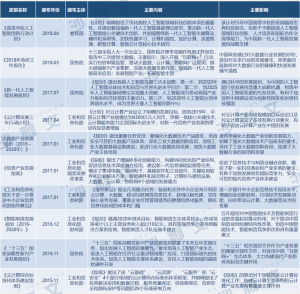
In recent years, intelligent technologies represented by artificial intelligence, big data, cloud computing, and other technologies have been widely applied in various fields of the economy and society. The prosperity of the information economy has also begun to be regarded as an important indicator for evaluating a country's overall economic strength. Therefore, multiple relevant departments such as the State Council, the National Development and Reform Commission, and the Ministry of Industry and Information Technology have elevated the development of intelligent technology industries to a national strategic level, introducing policies specific to different areas of intelligent technology to promote the healthy and rapid development of the industry and accelerate China's modernization process.
Relevant policies on intelligent technology in China
Source: Developed by Frost & Sullivan Research
Development Trends of China's Intelligent Technology Industry
★ Automotive and autonomous driving
Autonomous driving, as one of the applications expected to be implemented most quickly with artificial intelligence technology, has become an unstoppable technological trend and is sought after by capital markets. Currently, IT manufacturers, suppliers, automakers, and tech newcomers have entered the market and are vigorously expanding the research and development of intelligent driving technologies. Intelligent driving focuses on enhancing the driver's driving experience, providing drivers with massive, clear driving information, intuitive human-computer interaction, and intelligent driving assistance. It is currently at the forefront of the field where substantial achievements are expected to be realized first. The future development of intelligent driving can be summarized into three points: hardware integration, information fusion, and intuitive interaction. In traditional cars, systems function separately, information is scattered, and the interaction between humans and cars is simple and direct. Although technological progress and automotive electronics development enable drivers to obtain more information in the cockpit, the separate cockpit layout system makes it difficult for drivers to effectively process and master more functions and information. Intelligent driving will feature a core system of hardware integration, information fusion, and intuitive human-computer interaction based on powerful chip computing capabilities, advanced automotive electronics technology, and artificial intelligence technology. It integrates systems such as in-car infotainment, LCD dashboards, head-up displays, and rear-seat entertainment into an integrated driver-human-machine interaction system, providing an immersive driving experience.
★ Security and Smart Cities
The development of smart cities in China is still in its infancy, and future development will go through three stages. The first stage is the construction of urban informatization and digital cities. Smart city systems integrate and analyze data based on urban informatization and urban geographic information, coordinating resources and forces among various urban departments to achieve the goals set for overall urban development. Without a good infrastructure, the construction and operation of smart cities cannot proceed smoothly or sustainably. The second stage focuses on gradually advancing smart city capacity building with application systems as the priority. Smart city application maps are extensive, and cities across the country will make single-point breakthroughs and comprehensive coverage based on their respective development priorities, thereby enhancing smart capabilities. The focus of the third stage lies in breaking down the information silos between systems after the full development of digital cities and the completion of various subsystems. After that, smart cities need to break through the state of isolated information between systems, discover and solve urban pain points by collecting and analyzing massive amounts of data from urban operations, and achieve coordinated cooperation between subsystems. Currently, in the field of smart cities, security, traffic intelligence, e-government, and urban-level Internet of Things (IoT) are the main areas of implementation. The application scenario of artificial intelligence at the urban level has started with security. Smart city security systems follow an evolutionary trend from "visible" (simulation) to "clear" (video HD) and then to "understandable" (AI video structured processing). At this stage, due to the increasing progress of HD technology, HD cameras and networked surveillance are gradually becoming popular, generating massive unstructured video big data. There is an urgent need for intelligent technology to analyze and process this massive data, using computer vision recognition and video structured extraction to effectively identify information, thereby improving supervision efficiency, preventing and stopping illegal and criminal activities, and major public security incidents. With the wave of the arrival of the era of large-scale security, security monitoring systems will develop towards integrated and intelligent models, and smart city security systems will gradually evolve into intelligent comprehensive management platforms.
Source: Developed by Frost & Sullivan Research
★ Intelligent Manufacturing Field
Intelligent factories and intelligent production are two major development areas of Industry 4.0. Intelligent factories are a key component of future infrastructure, focusing on the research and implementation of intelligent production systems and processes as well as networked distributed production facilities. In intelligent factories, machine communities will organize themselves autonomously, supply chains will automatically coordinate with each other, unprocessed products will send data required for processing to machines, which then convert them into commodities. Products and machines can communicate with each other and exchange data. In the future, factories will largely optimize and control their manufacturing processes autonomously, rather than through traditional central control centers, which increases the degree of flexible production. Intelligent production is an integrated human-machine system composed of intelligent machines and human experts, focusing on applying advanced technologies such as human-machine interaction, intelligent logistics management, and 3D printing to the entire industrial production process. Compared to traditional factory lines that can only produce homogeneous products, intelligent production lines can achieve large-scale personalized customization or tailor-made goods for consumers. The manufacturing environment of factories will widely apply artificial intelligence technology, adopting integrated intelligent systems, and 'industrial automation' and 'intelligent robots' will play a greater role in production.
![]() Dr. Wang Xin, Global Partner of Frost & Sullivan, Vice President of Global Market Strategy Planning and President of the China Region, pointed out that China has made significant breakthroughs in core areas of intelligent technologies such as artificial intelligence, cloud computing, and big data, thereby increasing the penetration rate of intelligent technologies in downstream application fields. The Chinese government has introduced a series of policies requiring accelerated industrial structure adjustment, encouraging the development of intelligent technologies, and accelerating China's modernization process. The market scale of China's intelligent technology industry will continue to show an upward trend.
Dr. Wang Xin, Global Partner of Frost & Sullivan, Vice President of Global Market Strategy Planning and President of the China Region, pointed out that China has made significant breakthroughs in core areas of intelligent technologies such as artificial intelligence, cloud computing, and big data, thereby increasing the penetration rate of intelligent technologies in downstream application fields. The Chinese government has introduced a series of policies requiring accelerated industrial structure adjustment, encouraging the development of intelligent technologies, and accelerating China's modernization process. The market scale of China's intelligent technology industry will continue to show an upward trend.