Huawei Cloud's Industry Experts on "Containers" - New Momentum
In recent years, the application rate of containers has been continuously increasing. However, how to improve efficiency, manage, optimize costs when containers are used in different environments, and how to decompose the complexity brought about by large-scale deployments are issues that developers are currently closely paying attention to.
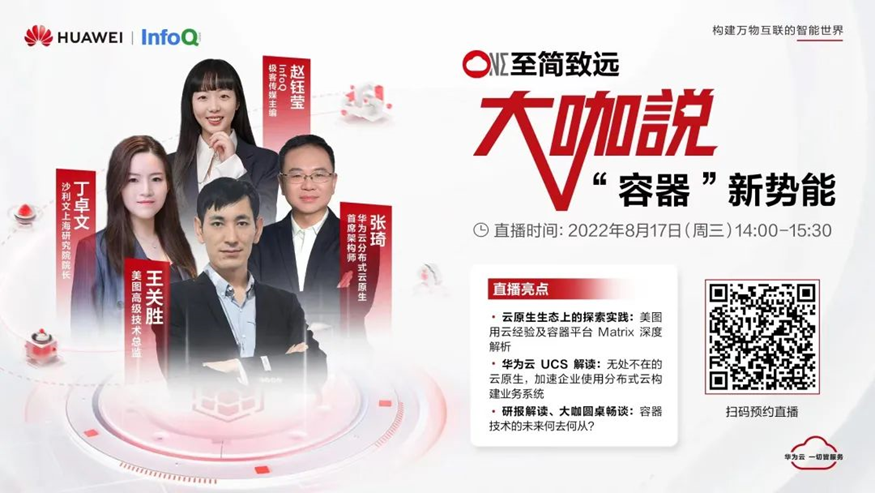
Against this backdrop,8month17On the same day, Huawei Cloud's expert column organized a special live broadcast on containers themed "New Momentum of Containers". Frost & SullivanFrost & SullivanDing Zhuowen, President of the Shanghai Research Institute (referred to as 'Frost & Sullivan'), was invited to participate in a sharing session. Together with Zhang Qi, Chief Architect of Distributed Cloud Native at Huawei Cloud, and Wang Guansheng, Senior Technical Director at Meitu, they focused on the current status of container technology, and jointly discussed the difficulties, solutions, and future optimization directions for container deployment in distributed cloud and multi-cloud environments.
The application rate of containers continues to climb, bringing revolutionary changes to software development. From the perspective of the technology adoption lifecycle, has container technology approached maturity? What is the current development status, explicit characteristics, technical challenges, and future evolution?
During the theme sharing session, Ting Zhuowen interpreted the recently released '2022Annual Report on the NFR Market: Container Chapter She pointed out that, looking at the development histories of cloud-native and container technologies respectively, container technology is a key foundation of cloud-native systems, and their development complements each other. The era of cloud-native applications began with the innovation of container image application packaging.Dockerat2013After its launch in 2021, container technology has gradually matured with the help of the cloud-native ecosystem.
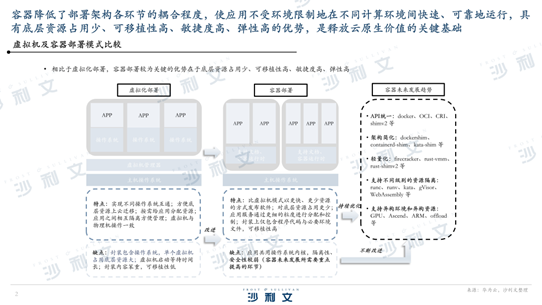
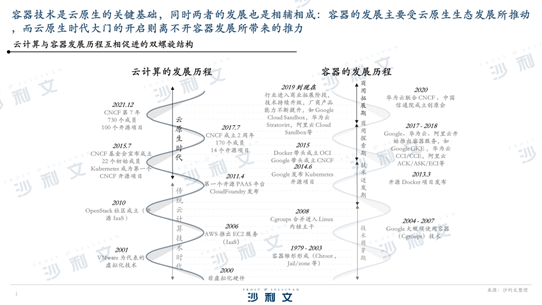 Containers reduce the coupling between various aspects of deployment architecture, allowing applications to run quickly and reliably across different computing environments without environmental constraints. They have the advantages of low underlying resource consumption, high portability, agility, and elasticity, making them a key foundation for unlocking cloud-native value.
Currently, container technology still needs further improvement in terms of isolation and security, which is also a key focus for the development of the entire industry in the future. In addition to this,APIUnified, simplified architecture, lightweight design, support for different levels of resource isolation, and support for heterogeneous environments and resources are also the future development trends of containers.
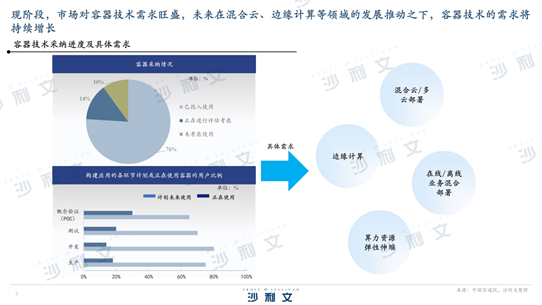
From the perspective of the demand side, So far, the concept of cloud-native has gradually become clear, especially since Huawei Cloud first introduced cloud-native in the industry2.0Following the concept, Frost & Sullivan believes that the industry will enter a new development phase, and the true value of cloud computing will be better realized. Entering the cloud-native phase, enterprises can make the most of the services provided by cloud-native vendors, improve resource utilization and flexibility, fully leverage the value of the cloud, develop and operate applications more efficiently and focusedly, and promote business development.
The most critical demand scenario at this stage is the deployment of multi-cloud and hybrid clouds. In addition, containers can also solve challenges in cloud-edge collaboration, unified deployment and management, as well as achieve hybrid deployment of offline and online businesses. The high elasticity advantage of containers has also been very effectively demonstrated in enabling enterprises to quickly deploy resources and achieve elastic scaling.
From the perspective of the supply side, both general cloud service providers and specialized cloud computing vendors are jointly driving the development of cloud-native and containerization industries. General cloud service providers possess abundant resources and can accelerate the market education for containers by leveraging some advantages of their public cloud business. In contrast, specialized cloud computing vendors focus on in-depth development of private clouds, and through precise customization services, they can increase the penetration rate of containers in private clouds.
Today, various vendors are actively embracing the open-source ecosystem, and the domestic cloud-native open-source ecosystem is gradually growing. "In the report, Frost & Sullivan has constructed a comprehensive competitiveness system for cloud service providers' containers from three dimensions: application, product, and ecosystem. It evaluates the competitive advantages and barriers of mainstream providers, among which Huawei Cloud performs quite well in all ratings," said Ding Zhuowen.
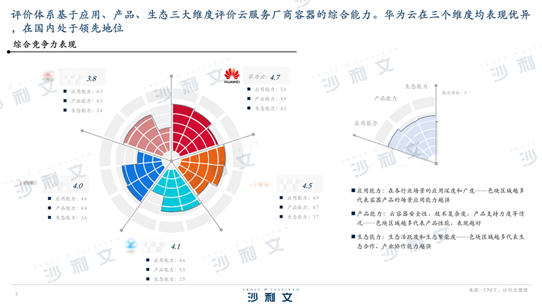
It is worth mentioning that Huawei Cloud has joined hands with the Cloud Native Technology FoundationCNCFChina Academy of Information and Communications Technology (CAICT) has jointly established the Chuangyuan Association, which has promoted the improvement of the cloud-native ecosystem from multiple dimensions such as standards, technology, and practice. It has accelerated the integration of cloud-native with industries and businesses, and facilitated industrial development.
The application rate of containers continues to climb, bringing revolutionary changes to software development. From the perspective of the technology adoption lifecycle, has container technology approached maturity? What is the current development status, explicit characteristics, technical challenges, and future evolution?
During the theme sharing session, Ting Zhuowen interpreted the recently released '2022Annual Report on the NFR Market: Container Chapter She pointed out that, looking at the development histories of cloud-native and containers respectively, container technology is a key foundation of cloud-native systems, and their development complements each other. The era of cloud-native applications began with the innovation of container image application packaging.Dockerat2013After its launch in 2021, container technology has gradually matured with the help of the cloud-native ecosystem.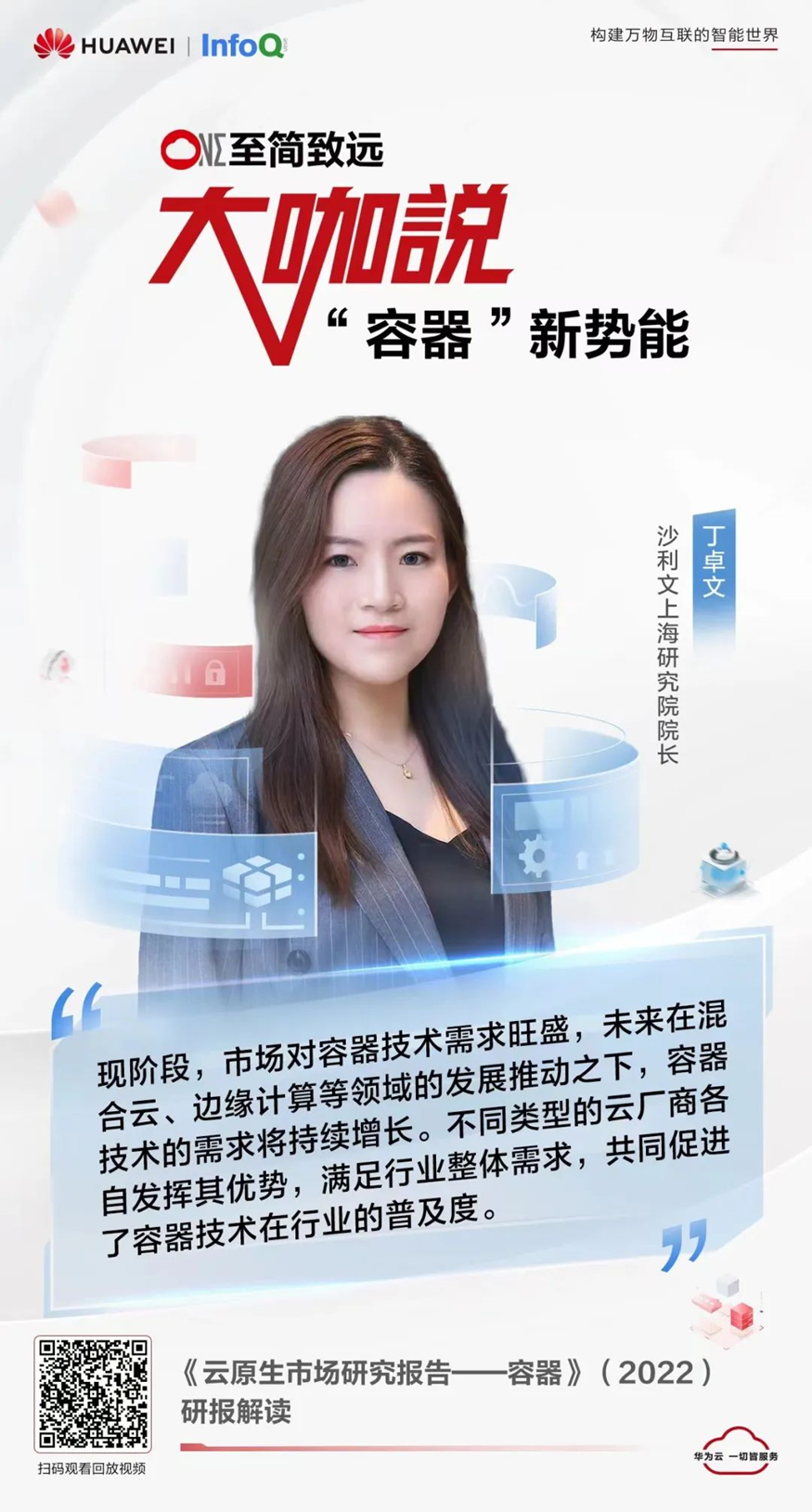
During the subsequent roundtable discussion, Ding Zhuowen, together with two guests, jointly explored the future development of cloud-native containers.
Q: Current cloud-native container technology has entered the commercial expansion phase. Does this mean that container technology is fully mature? What is the next stage of container technology?
Ding Zhuowen: Entering the commercial expansion phase, it more reflects the determination of the commercial form of container products and the overall market trend. The penetration rate of products in the market is significantly increasing, so it cannot be said to be completely equivalent to the confirmation of container technology maturity. From a commercial perspective, the next phase of container technology should be to enhance application capabilities across different domains, better serving the needs of enterprises and users, such as cloud-edge collaboration, multi-cloud hybridization, and so on. At the technical level, the core of evolution should be how to achieve security while also being user-friendly.
QEdge computing is known as the new frontier of cloud-native applications. What new potential can container technology unleash?
Ding Zhuowen: Currently, container technology's application in edge computing mainly addresses two issues: unified cloud-edge operations and improving resource utilization at the edge. Cloud-Edge Collaboration It is definitely a major development trend for the future as a whole. Many applications that have been implemented now are becoming more and more scalable, user needs are becoming more complex, and businesses are becoming richer. In this process, container technology is combined with different technologies to meet increasingly complex requirements. The container technology's capability in unified Ops control will become more stable and reliable during product iterations by major vendors, including Huawei Cloud.
Q:KuberentesWill the usability issues be completely resolved in the future?
Ding Zhuowen: It should be solvable, probably through two methods. One is that enterprises can directly use some products provided by cloud providers. Cloud providers, such as Huawei Cloud, actually have very professional teams and have excellent practices in different niche application scenarios. The other method is that enterprises use open-source tools to simplify operational complexity.
QWhat is the current trend in the scale of container utilization by enterprises, and what signals does this trend send to developers and enterprises?
Ding Zhuowen: All current studies show that enterprises are continuously expanding their use of containers, both in terms of breadth and depth. In terms of breadth, many industry scenarios have actually been covered; in terms of depth, container technology is being utilized across different business scenarios within enterprises, with a deep integration between container technology and business scenarios taking place.
But whether it's containers or cloud-native, they are actually inseparable from open-source. What we can see is that current cloud vendors and contributors to the open-source community are working hard to improve the open-source ecosystem, and related products are becoming more user-friendly. The entire industry is developing in a very healthy manner.
Recommended Reading