As ofAt 12 noon on August 13, the Hermès bicycle, which went on sale online on August 11 at a price of 165,000 euros, was sold out. On July 29, Hermès Group announced its interim report for 2022, showing that the company's revenue in the first half of the year was 5.474 billion euros, a year-on-year increase of 29%; net profit was 1.641 billion euros, a year-on-year increase of 40%.
Looking at the semi-annual performance reports of several major luxury groups globally, only Hermès maintained a high growth rate in Asia during the second quarter. Data shows that it was not affected by the pandemic in China. What could be the reasons for Hermès' strong performance? Why have other luxury groups failed to resist the impact of the pandemic? What are Hermès's special strategies in China? Frost & SullivanfrostSullivan,hereinafter referred to asCai Jinfeng, Executive Director of Frost & Sullivan Greater China, was interviewed by Huxiu to discuss the underlying logic behind Hermès's strong performance.
tiger smell
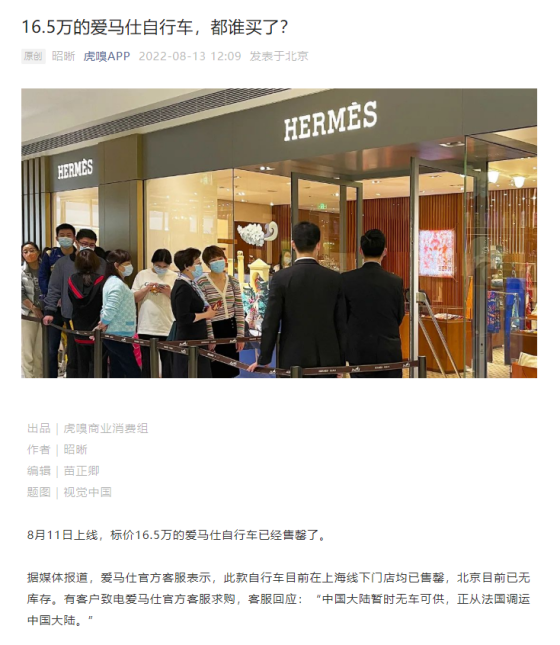
Launched on August 11th, Hermès bicycles priced at 165,000 yuan have been sold out.
According to media reports, Hermès' official customer service stated that this bicycle has been sold out at all Shanghai offline stores and there are currently no stocks in Beijing. Some customers have called the Hermès official customer service to place orders, and the customer service responded:"There are currently no vehicles available on the Chinese mainland, and they are being transported from France."
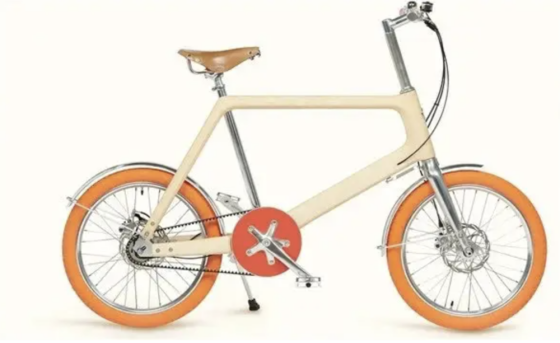
Released this timeOdyssee Terre compact cargo bike
Image source: Hermès official website
I promised"The weak consumption" does not seem to be upon us.
On July 29, Hermès Group announced its interim report for the second half of 2022. In the first half of the year, Hermès' revenue was 5.474 billion euros, a year-on-year increase of 29%; net profit was 1.641 billion euros, a year-on-year increase of 40%.
Against the backdrop of the impact of the pandemic in China in the second quarter, Hermès' performance in Asia-Pacific is particularly impressive. In the first half of the year, Hermès in the Asia-Pacific region (Hong Xiu Note: Excluding Japan) Sales amount is2.665 billion euros, a year-on-year increase of 15%.
In recent years, Asia has grown into the region with the strongest consumer power and the fastest growth rate, becoming a battleground for luxury groups. In the first half of 2022, Asia accounted for 61% of Hermès Group's total revenue, with China being one of its most important markets.
Early August, BeijingThe entrance to SKP Hermès stores is lined with a long queue, bustling like an early morning market selling New Year's goods. Yan Bo, the store manager of the Beijing physical store of Fuhu Luxury Goods, said that since the outbreak of the pandemic, "inventory distribution" (Huoxiu Note: It refers to purchasingBirkin, KellyFor popular products, consumers need to purchase other items of a certain amount in combination. EquivalentUnder the 'Allocation' amount, the more niche, unattractive, impractical, and less cost-effective products you purchase, the higher your chances of acquiring popular products.) The cost is higher: Currently, Chinese consumers need to reachThe 'inventory-to-shipment ratio' is about 1.2 to 1.3 times, and sometimes even higher.
forA bicycle worth 165,000 yuan has led some netizens to joke: It's just for 'shipping', not for riding.
It's not just Hermès that's eyeing Asia and China. At Kailun GroupIn the mid-year report for 2022, China was mentioned as many as 31 times. More macroscopically, the '2020-2021 China Luxury Goods Report' shows that in 2021, the Chinese luxury goods market reached $146.5 billion, accounting for as high as 46% of the global luxury goods market.
Cai Jinfeng, Executive Director of Frost & Sullivan Greater China, told Huoxiu:"Under the epidemic prevention and control policies implemented in different regions of China, The inventory turnover, order shipping, and distribution of luxury goods groups have all triggered a negative chain reaction. As the core city for luxury consumption in China, Shanghai holds approximatelyTwenty percent of luxury stores contribute about 30% to luxury consumption. The epidemic in Shanghai has dealt a heavy blow to the luxury business model, which highly relies on offline store experiences.
This is not difficult to explain; several other major luxury groups have coincidentally mentioned the impact of the pandemic and uncertainties in the Chinese market in their financial reports, delivering an expected outcome:LVMH Group's Asian sales declined in the second quarter8%; KAY Group's sales in the Asia-Pacific region fell by 8% in the first half of the year; Prada The performance of the Asia-Pacific market declined in the first half of the year6.7%.
In such a context, Hermès's Asian results are even more worth pondering: why is it likeWhy can Hermès find incremental growth in Asia while its peers are experiencing an 'Asian trough', when products like 'sky-high priced' bicycles always seem to be bought by those who can afford them?
"China Strategy"
Gallant Research data shows that there are approximately70 million. There are 4.7 million high-net-worth clients in China with net assets exceeding ten million yuan, accounting for only three per thousand of the population, yet they contribute to 80% of luxury consumption; Among them, there are high-net-worth clients with net assets exceeding 100 million.Fifteen hundred thousand people, accounting for less than one ten-thousandth of the population, contribute 23% to the entire luxury consumption.
"
Cai Jinfeng believes that the driving factors for the growth in luxury consumption within China can be divided into three levels: active growth, active repatriation, and passive repatriation due to pandemic restrictions."In the proactive growth segment, the main factor contributing to the decline in performance in the second quarter of 2022 was the continuous pandemic, which led to changes in customer base structure—marginal consumers gradually leaving the market while the core consumer base remained relatively stable. As a result, there was an overall slowdown in growth rates," he told Huxiu.
And Hermès is able toThe reason for maintaining rapid growth in Q2 2022 lies in its precise customer segment positioning and operational strategy Abandon a large mass customer base (niche consumers) and focus on cultivating a small number of core consumer groups.
In China, the core consumers of Hermès are mostly high-net-worth individuals. The second-hand luxury platform Redbridge has observed that Hermès users have high incomes, rapid income growth, and are generally not affected by the pandemic. Therefore, this group of consumers will not continue to be impacted by the pandemic on their luxury consumption, and they also have a lower sensitivity to price increases in luxury goods.
In extreme cases, the value of brand positioning is highlighted. During the pandemic, Hermès has become a preferred choice for some customers. Wang Fan used toFendiA loyal customer, but since April this year, she switched her focus to Hermès, embarking on a journey she once despisedThe journey of 'shipping out orders'. She told Huxiu that this change was not due to reasons like 'saving face' or 'hiding value', but rather a subtle subjective feeling: 'My financial situation hasn't been affected, but I always feel that everyone's wallets are tightening. So should I buy or not?'
The pandemic has also brought pressure to Hermès, with many customers feeling a recent anomaly in the brand"Diligent". After Xi'an Hermès suspended operations due to the epidemic, netizen Song Wei received a WeChat message from a store clerk for the first time, offering to queue up for her and wait for her order. A Beijing netizen said that she wanted to take a chance at Hermès in the Guomao district and unexpectedlyI got the black gold-tone buckle one for “free delivery”Lindy30.
Meanwhile, Hermès is quietly testing its presence on the Chinese mobile traffic side. More than a dozen employees earn a monthly salary ofBetween 10,000 and 30,000 yuan, young users living in first-tier and new first-tier cities told Huxiu that they had seen Hermès advertisements in their Moments. But most of them said they don't have the ability to consume Hermès. A WeChat user who sells Hermès told Hsuoxiu that he has never seen Hermès advertising on Moments, but has seen it on NetEase Cloud.
Hermès clearly hopes to expand its market in China, but there are doubts about the precision and logic of its placement efforts.
Hermès values Chinese consumers and what lies behind themThe intention behind 'wallet' is clear. Hermès CEOAxel Dumasindicates,In the first half of 2022, Hermès opened its first store in Henan; in the second half, Hermès will increase its investment in e-commerce and advertising marketing in China, while opening two new exclusive stores at Shanghai's Qiantan Times Square and Wuhan Henglong Plaza.
Hermès"Chinese permissions" are held by the group headquarters. Zhang Peiying, a luxury industry consultant, told Huoxiu that other luxury groups will make some moves to cater to Chinese consumers. However, Hermès has strict control over its brand strategy and rarely engages in placement marketing in China. It has not signed any Chinese endorsers either. (Huoxiu Note: Hermès has never signed a global spokesperson in its history) .
However, the Chinese region also has a certain degree of autonomy. Hongbulin learned that Chinese Hermès stores have full freedom in purchasing goods and will choose to stock items based on sizes that are more popular among the Chinese. However, unlike countries such as Japan and France where Hermès can often be purchased without matching inventory, in ChinaThe 'distribution' policy is currently the strictest globally.
capacity"Allocating inventory" and scarcity
"
Cai Jinfeng said:"The key to luxury business models lies in enhancing consumers' perception of the quality and brand culture of luxury goods, and ensuring exclusivity through discipline over quantity and price, thereby increasing the value of brand assets."
maintain"Scarcity" is Hermès' consistent strategy.
Firstly, unlike other luxury brands that stockpile goods in stores, Hermès products are in short supply for a long time. Wang Fan entered Hermès boutique for the first time and was ready"I'm preparing for 'shipping', but the clerk insisted that there are no stockpiles of the style I want." "I've asked about four or five colors of the same model, and none are available."
"The limited production capacity due to manual customization" has long been Hermes' explanation for the shortage of leather goods. In fact, capacity capsetting has occurredThe fourth quarter of 2021 had a significant impact on the performance of the leather goods sector, with revenue down by 3.2% year-on-year. The unexpected result led to an almost 5% drop in Hermès' stock price on the pan-European exchange.
Hermès said that the group will in the futureOpen 5 new leather workshops within 5 years, including2023The upcoming completion of the Lourvières (Eure) and Sommenne (Ardennes) workshops, The Rillon (Domène Province) workshop to be completed in 2024, the Lille Dépêche (Charente Province) workshop to be completed in 2025, and the Lup city to be built in 2026 (France, Guilleronne) Atelier.
The increase in production capacity will not change Hermès' consistent sales strategy.
"
Cai Jinfeng explained the scarcity of Hermès products in this way"Distribution" policy: "Bagging leather goods is subject to limited production capacity due to the scarcity of upstream raw materials, complex manufacturing processes, and long cycles. Leading brands can form strong barriers in procurement, branding, and sales channels, creating a highly concentrated competitive landscape that also drives growth in sales of other categories such as footwear and apparel."
HermèsThe 'inventory replenishment' strategy has perfected this logic, driving demand for leather goods and greatly boosting sales of other categories. In the first half of 2022, Hermès's ready-to-wear sales amounted to 1.458 billion euros, a year-on-year increase of 36%; the popular category of silk and textiles saw sales of 372 million euros, a year-on-year increase of 29%.
Asset management companyFlornoyPortfolio ManagerArnaud CadartOnce stated:"Since 2014, Hermès has hardly destroyed any inventory and sold everything off the shelves," a consumer joked on Chinese social media: "Products that are not selling well were sold as 'gifts', so of course the inventory pressure is reduced."
Conclusion
At the earnings conference, one point that attracted industry attention was,AxelDumasIt is made clear that although the rapidly growing second-hand luxury market has attracted some attention from peers, Hermès is not interested in it. He believes that second-hand platforms are a threat, causing premiums and potentially fostering fraud. He also suggests cooperating with second-hand traders."It will harm the interests of our customers."
Previously, some luxury giants entered the second-hand luxury industry, either by entering into cooperative partnerships or expanding their channels. Kaimun Group has invested in an online trading platform for second-hand luxury goods.VestiaireCollective, its brandsGucciHeereshou E-commerceTheRealRealAchieve strategic cooperation relationships;Prada The Group has established a strategic partnership with Siku; Lippo Group acquired an e-commerce platform for second-hand wristwatchesWatchfinder.
Hermès's move and the luxury goods industry"Defining clear boundaries" can further enhance the brand's channel control and closely monitor the circulation of products in the market.
But the relationship between Hermès and the second-hand luxury industry is"The more you cut it, the messier it gets." Hermès classic bag collectionBirkinand Kelly is the most sought-after and popular bag model in the second-hand luxury market, with prices rising accordingly. Yan Bo told Huoxiu that Hermès often sells its bags at a two-fold premium to their retail price, and since the beginning of this year, the sales volume of Hermès cases at Panghu's physical stores has increased by more than 20%. The second-hand luxury market has not only inflated the popularity of Hermès but also strengthened the consumer's perception of its value preservation attributes.
Hermès's self-positioning is"The Contemporary Craftsmen, which began in 1837," are the critical years for the birth of bicycles: around 1840, the Scottish inventor Macmillan made the first pedalable bicycle; in 1874, Henry Lawson used chains to achieve power transmission; in 1888, the inventor Dunlop finally invented pneumatic tires—thus, the "main frame" of human bicycles was basically finalized. At that time, the craftsman Eames focused on more noble and traditional modes of travel, galloping on horseback.
Thierry&Middot; Hermès (Thierry When Hermès opened its first leather goods boutique in the Madeleine area of Paris, it probably didn't expect that nearly two centuries later, its brand would own a bottle opener worth 2,350 euros, a tray worth 10,450 euros, a five-seater corner sofa worth 796,850 euros, and a bicycle worth 165,000 euros.
Over the years, Hermès has repeatedly set its sights on bicycles"An ancient friend," and it was marked with increasingly astonishing prices.
I love Hermès a lot.
*This article is reprinted from Huoxiu.com , author clarity , Original title: Who bought the Hermès bicycle worth 165,000 yuan? ">
Frost & Sullivan insights·Extended Reading
Q: Several major luxury groups around the world have released their semi-annual results. In the second quarter, only Hermès maintained a high growth rate in Asia, and the data shows that it was not affected by the pandemic in China. What might be the reasons for Hermès' strong performance?
A: The driving factors for the growth in luxury consumption within China can be divided into three levels: active growth, active repatriation, and passive repatriation due to pandemic restrictions.
OverallThe 'V-shaped' high growth of the luxury industry in 2021 was not stable, as a significant portion of the growth was driven by restrictions on overseas luxury purchases due to the pandemic, which passively induced consumption backflows. Chinese consumers account for about 35% of global luxury purchases, with one-third occurring domestically and two-thirds abroad. The pandemic did change the distribution pattern of luxury consumption channels to some extent, attracting a large amount of consumer backflows. However, as overseas epidemic prevention policies were relaxed in the second half of 2021 and cross-border logistics capacity gradually recovered, passive consumer backflows will slowly decrease.
In the proactive growth segment, there isThe main factor contributing to the decline in performance in the second quarter of 2022 was the continuous pandemic, which led to changes in customer demographics—marginal consumers gradually leaving the market while the core consumer base remained relatively stable. As a result, there was a general slowdown in overall growth rates. Marginal consumers generally spend less than 2,000 euros per year, contributing about half of the sales. During the economic downturn triggered by the pandemic, 'marginal consumers' will restrain discretionary spending due to reduced personal income, thereby affecting the overall sales performance of luxury goods. Core consumers spend more than 5,000 euros per year, accounting for about 5% of the customer base but contributing nearly 40% to luxury consumption. This high-net-worth group has relatively stable consumption levels and behavior and is an important pillar ensuring the stability of luxury goods sales.
Hermès is able toThe reason for maintaining rapid growth in Q2 2022 lies in its precise customer segment positioning and operational strategy—abandoning a large number of mass customers (marginal consumers) to focus on a small number of core consumer groups.
By reducing shipments, increasing the distribution rate, setting price increases and high-price strategies, we have raised the purchasing threshold for consumers, highlighting our brand strength and scarcity. At the same time, we have carried out offline marketing activities targeting the core consumer group to increase their loyalty.In the second quarter of 2022, under the impact of the pandemic, the company achieved impressive performance growth by consolidating and deeply cultivating its high-net-worth core customer base.
Q: What are Hermès's special strategies in China, especially in terms of traffic?
A: The key to luxury business models lies in enhancing consumers' perception of the quality and brand culture of luxury goods, and ensuring exclusivity through discipline in quantity and price, thereby increasing the value of brand assets. Hermès is an industry leader in maintaining brand scarcity and consolidating brand value. Its strategies mainly include the following methods:
"Hunger Marketing" strategy: Unlike other luxury brands that stock up on goods in stores, Hermès products are in short supply for a long time. The bags and accessories displayed in stores are only for display and cannot be purchased directly. Consumers who decide to purchase must go to the store in person to place an order and determine product customization details such as leather color and metal buckle style. Due to limited production capacity for handcrafted customization, customers need to wait longer to receive their products, continuously increasing the scarcity of the items.
Price increase strategy: Hermès' irregular price increases are often aimed at consolidating its brand value. Appropriate price hikes help maintain its investment and collectible attributes, stimulating consumers' desire to buy. At the same time, Hermès bags typically have lower product inventory risks and no pressure to reduce inventory, so corresponding price increase strategies can counteract the impact of sales during the pandemic.
Distribution Strategy: The distribution system and the price increase of allocated goods are actually a form of implicit"Price increase." When purchasing classic Hermès bags, assortments (such as clothing, accessories, etc.) are required. Depending on the style, color, and popularity, the price ratio between assortments and the purchased bag ranges from 1:1 to 1:2. The essence of the assortment policy is to maintain brand scarcity, raise the purchase threshold for core products, and shape a higher brand positioning.
Word-of-mouth marketing strategy: Different from most luxury brands that invest heavily in marketing for fashion shows, celebrity endorsements, and media advertising exposure, Hermès has minimized its media advertising expenses. It directs funds towards target customers and retail outlets where it comes into the closest contact with the target consumer group, such as urban store renovations and displays, and employee training is dedicated to providing consumers with a one-on-one differentiated shopping experience.
Q: What are the special strategies of LVMH, OpenCloud Group, Prada and other luxury brands in China?
A: LVMH: It has more than 60 subsidiaries, each of which is a highly renowned luxury brand. Currently, the main growth engines in China include brands such as Dior, Celine, LV, Tiffany & Co., etc.; among them, LV is a pioneer in actively exploring digital marketing within luxury brands. From opening its official self-operated e-commerce to 12 cities in China for the first time in 2017, to providing purchase and delivery services to all cities in China in 2018, and launching WeChat boutique stores and mini-programs with limited-time sales, to being the first luxury brand to officially open an account on Rednote and present interactive original live content, LV has always led the entire industry in digital marketing within China's luxury market.
Kaiyun Group:Gucci is the core brand of Kering Group's luxury business in China and a major driver of performance growth. Brands such as BV and Balenciaga have not yet achieved significant success in China. Gucci has achieved performance growth in China by attracting Generation Z consumers. Currently, with the saturation of luxury stores in first-tier cities in China, Gucci has made a major push into new and second-tier markets, actively seeking more consumer market share among the middle class.
Q: What are the trends in China's luxury market?
A: In the long run, the return of luxury consumption is a major trend. With the reduction of tariffs and adjustments in domestic and international price differentials, the phenomenon of purchasing luxury goods abroad or through agents will gradually decrease. In addition, although the pandemic has had a phased impact on consumer purchasing channels, after the pandemic ends, some domestic consumption habits for luxury goods may also be retained.
The online penetration rate of e-commerce is accelerating, and omnichannel operation strategies are emerging. During the pandemic, luxury groups vigorously developed online channels. The online penetration rate of China's luxury industry, measured by retail sales,The proportion surged from 7.3% in 2019 to 10.7% in 2021. In terms of online channel layout, the WeChat ecosystem has benefited from customized services and precision marketing, becoming the main sales channel, accounting for 40%-50%, with the highest average consumer spending. Official website channels and e-commerce platforms each account for about 20%-30%, among which on e-commerce platforms, there are mainly self-operated luxury brands on Tmall, wholesale models, and franchise models. Online channels remain a major product exposure channel, and currently, the categories invested in are mainly fragrances with low average order values, rather than core high-price categories. As an industry that values offline shopping experiences, physical stores are already the mainstream consumption channel for luxury goods. However, online channels, as a product marketing channel, can better bring new customer growth to offline stores.
The competitive landscape of key categories determines brand tone and growth. Luxury goods ownershipLuxury brands have high-quality products and unique styles to attract their consumer customers, especially in categories with simplified SKUs and high unit prices. Among them, the (hard luxury) jewelry watch and (soft luxury) bag and leather goods industries have the highest concentration, maximum differentiation, and fastest growth rates. Due to the scarcity of upstream raw materials, complex production processes, and long cycles, the production capacity for jewelry and bag and leather goods is limited. Leading brands can form strong barriers in procurement, branding, and sales channels, creating a highly concentrated competitive landscape that also drives the growth of sales in other categories such as footwear and apparel.
The consumer group is changing generationally, and customer consumption preferences are shifting. The younger generation, especiallyThe Z generation and millennials are increasingly contributing to the consumption of luxury goods and fashion items. This consumer group prefers freshness, avant-garde design, and new concepts, redefining market preferences. In addition, the continuous improvement in women's purchasing power is catalyzed by The 'Women's Economy' reveals the improvement in women's social status and economic independence, stimulating women consumers' demand for impulse spending or self-giving consumption. In addition, 'Buy better, buyThe concept of 'less' has gradually been embraced and accepted by consumers, who use it as an important consideration when consuming luxury goods. This mental shift also has a profound and positive impact on the luxury market.