Frost & Sullivan insights
3month24day, “the “ninth31Global Financial Centres Index Report (GFCI 31"The official release has been made. Hong Kong's overall ranking remains third globally. Despite the impact of the Asian financial crisis, global economic crisis, and COVID-19 pandemic, Hong Kong's international competitiveness and global influence have not only not been affected by slow economic growth but have achieved leapfrog development. Hong Kong's core competitiveness and development foundation as an international financial center remain solid."
Hong Kong financial market upon return25What changes have taken place over the past year? Frost & Sullivan What businesses have been carried out in Hong Kong and what achievements have been made? In the global financial competition, what competitive advantages does Hong Kong still possess and what major challenges has it faced? Frost & SullivanFrost & Sullivan,Dr. Wang Xin, Global Partner and President of Greater China at Frost & Sullivan (hereinafter referred to as 'Frost & Sullivan'), was interviewed by China Economic Weekly to discuss the advantages and challenges Hong Kong faces in global financial competition.
China Economic Weekly
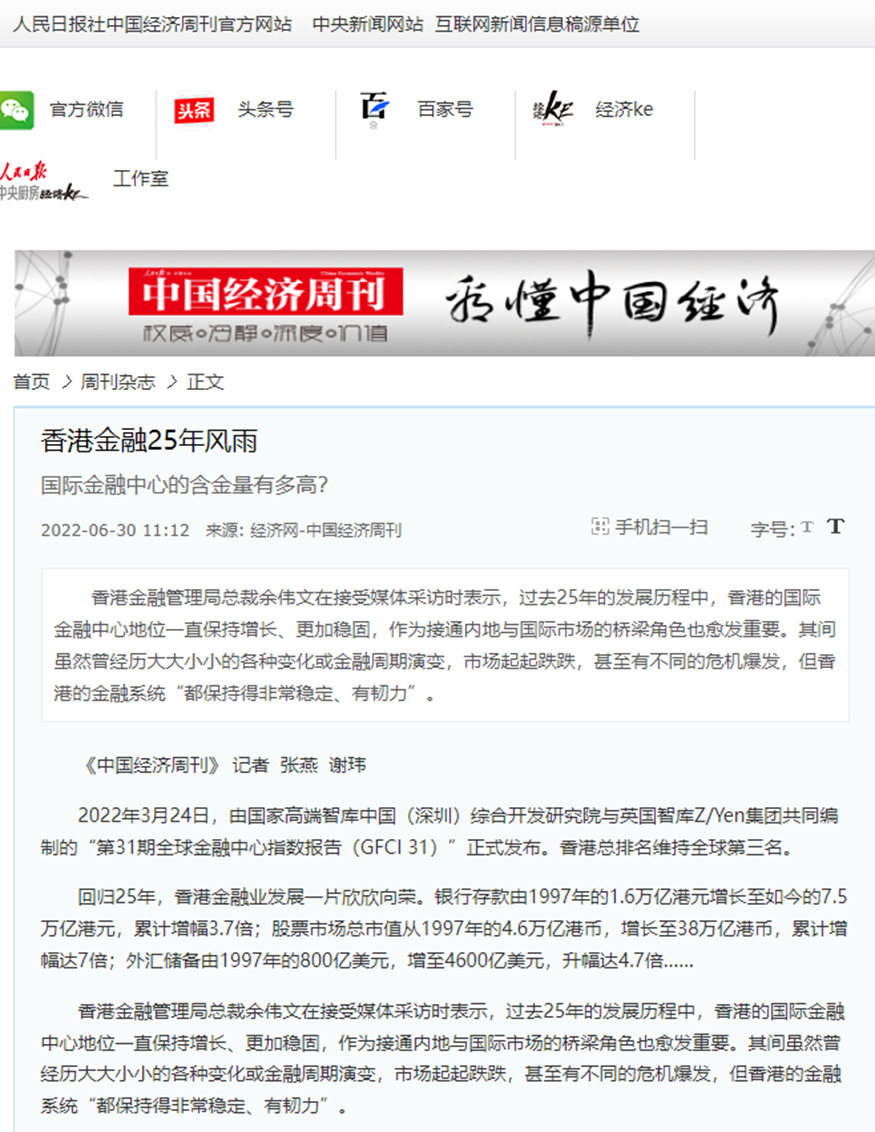
2022year3month24On the day, the China (Shenzhen) Comprehensive Development Research Institute, a national high-end think tank, and the UK think tankZ/YenGroup-compiled 'The “31Global Financial Centres Index Report (GFCI 31) ”Official release. Hong Kong's overall ranking remains at third place globally.
Since the return, Hong Kong's socio-economic system has shown strong resilience against the backdrop of the robust support from the motherland's economy. The international competitiveness and global influence of the financial industry have not only been unaffected by slow economic growth but have also achieved leapfrog development. Hong Kong's core competitiveness as an international financial center and its development foundation remain solid.
25In the year, Hong Kong's financial industry developed vigorously. Bank deposits1997year1.6Trillion Hong Kong dollars grew to what it is today7.5Trillion Hong Kong dollars, cumulative increase3.7times; total market value of the stock market from1997year4.6Trillion Hong Kong dollars, increasing to38Trillion Hong Kong dollars, with a cumulative increase of7times; foreign exchange reserves from1997year800billion dollars, increasing to4600billions, with a growth rate of4.7times...
Yu Wai-man, Chief Executive of the Hong Kong Monetary Authority, said in a media interview that in the past25In the development process over the years, Hong Kong's status as an international financial center has been continuously growing and becoming more stable. Its role as a bridge connecting the mainland with the international market has become increasingly important. Although there have been various changes or financial cycle evolutions of different sizes, with market fluctuations and even different crises breaking out, Hong Kong's financial system has "always remained very stable and resilient."
01
How valuable is the international financial center?
Finance is a pillar industry of Hong Kong.25In 2019, Hong Kong's financial system has remained stable and operating in an orderly manner, largely due to its strong 'internal strength'.
In an exclusive interview with the reporter of China Economic Weekly, Eddy Koo, Chief Economist at BOC Hong Kong, stated that Hong Kong's financial center has been leading the world for many years and this is inseparable from two pillars: first, the continuously strengthening economic and trade ties between the mainland and Hong Kong; second, Hong Kong's favorable business environment, simple low-tax system, free capital account, judicial system in line with Western standards, efficient financial supervision, and being one of the freest economies. The organic combination of these two is the solid foundation for Hong Kong to maintain long-term economic prosperity and stability and continuously enhance its status as an international financial center.
"The strong economic growth momentum and development opportunities in the Mainland are highly attractive to overseas investors, with more and more funds seeking to enter the mainland capital market through Hong Kong's interconnected mechanisms with the Mainland. On the other hand, Hong Kong maximizes its advantages as a free port, effectively attracting a large amount of overseas funds to dock in Hong Kong, providing unlimited liquidity for the Hong Kong financial market. In addition, Hong Kong adheres to the principle-based approach (Principle-based supervisionThe financial supervision concept, which sets forth principled guidelines for the operation of financial markets and allows financial institutions to formulate their own operational details, provides a relaxed business environment for financial institutions and is conducive to the innovative development of the financial industry.' E Zhihuan said.
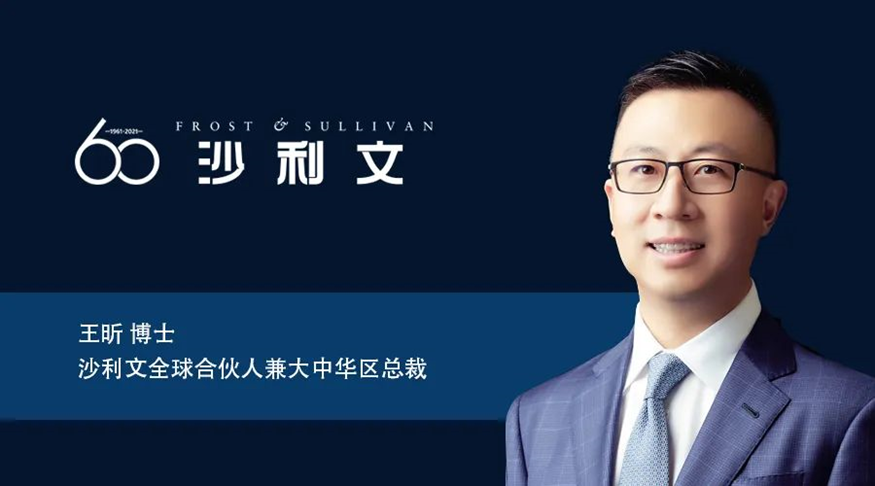
At Frost & SullivanFrost & SullivanAccording to Wang Xin, Global Partner and President of Greater China, the establishment of Hong Kong's status as an international financial center is inseparable from its effective macroeconomic policies, sound regulatory frameworks, and legal systems. These combined efforts have helped build a robust and resilient financial system.
Firstly, in terms of economic policy and legal system, Hong Kong has a dual positioning that other international financial centers do not possess. It connects the financial infrastructure and market systems between the Chinese mainland and financial centers such as London and New York; at the same time, Hong Kong has continued26The Hong Kong SAR has been ranked as the world's freest economy for two consecutive years. In addition to illegal activities such as money laundering and counter-terrorism, which are subject to regulation, capital and information can flow and interact freely in Hong Kong. This degree of freedom makes Hong Kong a regional and global financial hub and transit point, connecting extensive economic and financial interests across different countries and regions. Moreover, Hong Kong's free port status and low tax policy have greatly enhanced this advantage.
Secondly, as an important platform for global venture capital, the Hong Kong financial market attracts funds from around the world due to its openness, diversification, moderate regulation, and active trading. International investors conduct equity investments and asset management businesses in the Greater Bay Area and inland China through Hong Kong's international financing platform, which is conducive to mainland enterprises attracting overseas funds outside of traditional bank financing channels. Hong Kong provides an important channel for international capital to enter the Chinese market, and it is of great significance for attracting global funds to actively participate in China's independent technological innovation, stimulating entrepreneurial vitality, and smoothing the domestic and international circulation.
"The unique position of Hong Kong as an international financial center is the result of long-term institutional construction and evolution. Its core competitiveness lies in efficiently connecting the Chinese market with the global business network by providing world-class software and hardware infrastructure, as well as an open, rule-of-law-based, transparent, and secure business environment." Wang Xin told China Economic Weekly that Hong Kong is an important bridge for multinational companies to deeply penetrate the Chinese mainland market and an ideal platform for Chinese companies to "go global" and explore international markets.
In recent years, with the rise of trade protectionism and the impact of the COVID-19 pandemic, global economic and trade activities have faced shocks. Against the backdrop of tense geopolitical situations and increasing uncertainties in global economic development, the status of Hong Kong as an international financial center has become even more important.
"The functional positioning of the International Financial Center is an important entry point for Hong Kong to integrate into national development and also reflects Hong Kong's greatest value to national development," said E Kip Kwok. During the 14th Five-Year Plan period, China's financial industry enters a new era led by openness, with Hong Kong becoming the main channel for mainland financial markets to connect with the outside world, providing diverse options for interconnectivity.
"For a long time, the Chinese economy has been accelerating the promotion of development concepts that emphasize innovation, coordination, green development, openness, and sharing. 'Openness' occupies a prominent position among these five development concepts. Hong Kong's functional positioning is closely related to the above new development concepts, especially in the field of China's opening up to the outside world. Hong Kong has played a positive and irreplaceable role for a long time. In terms of financial market openness, the international financial center status established by Hong Kong through long-term efforts has unique advantages," said E Zhihuan.
In the face of increasingly complex external risks, Hong Kong, as a free port, has been significantly affected, and its status as an international financial center is also under challenge.
Wang Xin analyzed that, on the one hand, Hong Kong's financial system faces more complex external risks and challenges. On the other hand, within Hong Kong itself, there are issues such as insufficient upward mobility among young people and industrial hollowing out. Therefore, exploring the depth and breadth of financial industry applications to better inject development momentum into the real economy is one of the important measures for Hong Kong to face risks and challenges as an international financial center in the future.
02
The level of financial interconnection between the two places is constantly improving
In E J Huan's view, Hong Kong has gone through three important stages of development in its international financial centre. The first is in20century70In the 1980s, seizing the opportunity of Western financial globalization, the country opened up markets and initially established regional financial centers based on the Asian time zone. Secondly, after Hong Kong as a regional financial center had taken firm ground, it witnessed20century90In recent years, with the wave of financial reform and opening up in the Chinese mainland, the financial center has achieved transformation and upgrading, expanding into the international arena; thirdly, upon entering21After the century, Hong Kong took advantage of the internationalization of the RMB and capitalized on the establishment of a RMB offshore financial center to accelerate its development into one of Asia's leading international financial centers.
"Hong Kong has seized the once-in-a-century historical opportunity of RMB internationalization and rapidly developed into a true international financial center. Offshore RMB business has become a new engine for the development of Hong Kong's international financial center." E Zhihuan told China Economic Weekly reporters that over the past decade, Hong Kong's offshore RMB business has made significant progress. The RMB funds pool has continued to accumulate, trading activities have become increasingly active, product choices have become more diverse, and a virtuous cycle from demand to supply and back to demand has gradually formed, effectively promoting the development of markets such as foreign exchange trading and derivatives in Hong Kong.
2003In [year], the People's Bank of China appointed CITIC Hong Kong as the first offshore RMB clearing bank, marking the official inception of the Hong Kong offshore RMB market.2011In [year], the 'RMB Qualified Foreign Institutional Investor' (RQFIIThe plan for the official implementation has seen the Hong Kong offshore RMB market transform from an early one-way cash flow back to the mainland to a two-way RMB capital flow in terms of design concept and development model. It has become a pioneer and central hub for global development of RMB products and promotion of widespread use of the RMB. In recent years, with the opening of cross-border RMB trade settlements, direct investment, and the wider application of the RMB in cross-border investments, Hong Kong's offshore RMB business has been leading markets around the world, playing the role of an offshore RMB business hub.
At present, Hong Kong has the world's largest offshore RMB fund pool, with over8000RMB 10 billion, providing liquidity support for global RMB businesses. The scale of the RMB swap agreement signed between the Hong Kong Monetary Authority and the People's Bank of China reaches5000RMB 10 billion, the largest in the world. From a traffic perspective, offshore RMB transactions have also remained active. Hong Kong's RMB payment system supports various cross-border and offshore RMB transactions, with an average daily settlement exceeding1.5trillion yuan.SWIFTData shows that globally, more than75%Offshore RMB payment activities are conducted through Hong Kong.
"The national 14th Five-Year Plan clearly supports Hong Kong in strengthening its role as a global offshore RMB business hub, deepening cross-border connectivity between the two places, and has clearly put forward the direction of opening up markets and steadily advancing the internationalization of the RMB. With favorable policies and the increasing demand for overseas investors to allocate RMB assets, there is still vast room for development in Hong Kong's offshore RMB market," said Yu Wai-man, President of the Hong Kong Monetary Authority, in an interview with the media recently.
In addition,1997In the year, Hong Kong's bond market's total annual issuance fell short of200billions, by now2021In [year], this number has risen to4000billion US dollars, with a cumulative increase approaching20times.
"In everyone's impression, Hong Kong has not developed very well in the debt market, but I often encourage people to look at the numbers." Yu Weiwén cited the International Capital Markets Association (ICAMAccording to a report by (), Hong Kong ranked first in the Asia-Pacific region in terms of international bond issuance,34%Its market share remains the highest, exceeding that of the United States22%), United Kingdom17%) and Singapore5%The development of offshore RMB bonds and green bonds in Hong Kong has also been good in recent years.
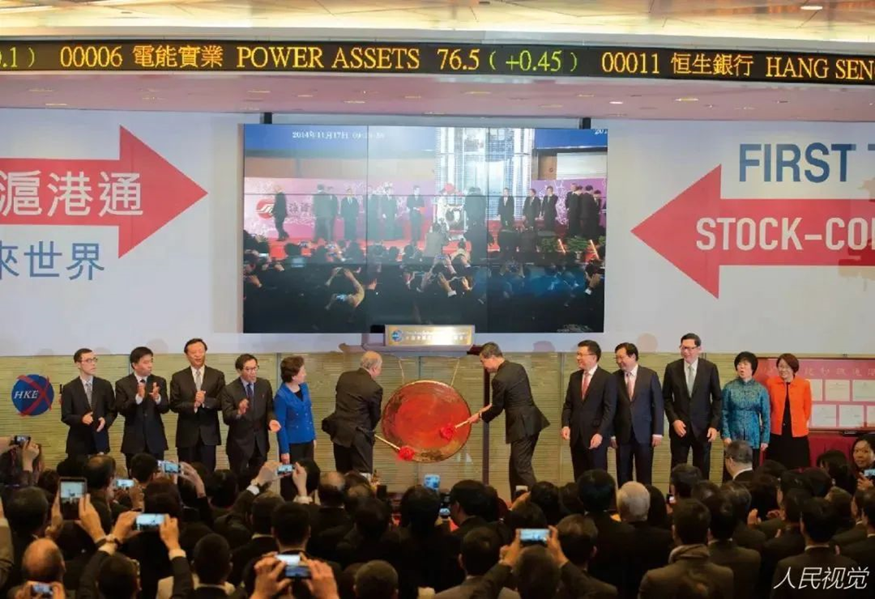
In the view of Yu Weiwen, the development of Hong Kong's bond market today is inseparable from its interconnection with the mainland capital market. In recent years, with the launch and rapid development of 'Shanghai-Hong Kong Connect', 'Shenzhen-Hong Kong Connect', and 'Bond Connect', trading volumes have been increasing day by day. Taking stock connect as an example,2014and2016In [year], the Shanghai-Hong Kong Stock Connect and the Shenzhen-Hong Kong Stock Connect were officially launched. At that time, the average daily trading volume was only56RMB 10 billion and16RMB 10 billion2021In [year], the average daily trading volume of the Shanghai-Hong Kong Stock Connect and Shenzhen-Hong Kong Stock Connect has climbed to553RMB 10 billion and650RMB 10 billion, with increases reaching9Double sum40times.
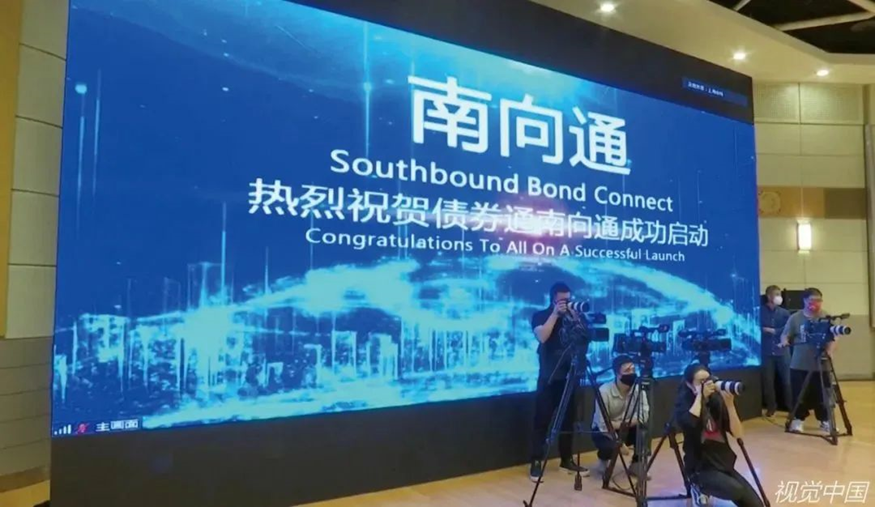
The growth of Bond Connect is also gratifying.2017In the year, the average daily turnover amount of bond Connect Northbound was22RMB 10 billion. Today, this number has risen11times,2021Increase to260RMB 20 billion. Yu Weiwen stated that the bond market's southbound development is initially slow but heating up, and based on past experiences with cross-border connectivity, it is believed that the next few years will be a major trend. It is expected that related transaction volumes will gradually increase.
"Compared with the stock market, the Hong Kong bond market has developed more slowly. On one hand, under the current HKD linked exchange rate system, local large enterprises prefer to raise funds in the US dollar bond market. On the other hand, the Hong Kong SAR government has a perennial fiscal surplus and rarely needs to issue public bonds, making it difficult to establish a risk-free pricing benchmark for the bond market."E Zhihuan said."
3
The total market value of mainland enterprises accounts for Hong Kong stocks7become
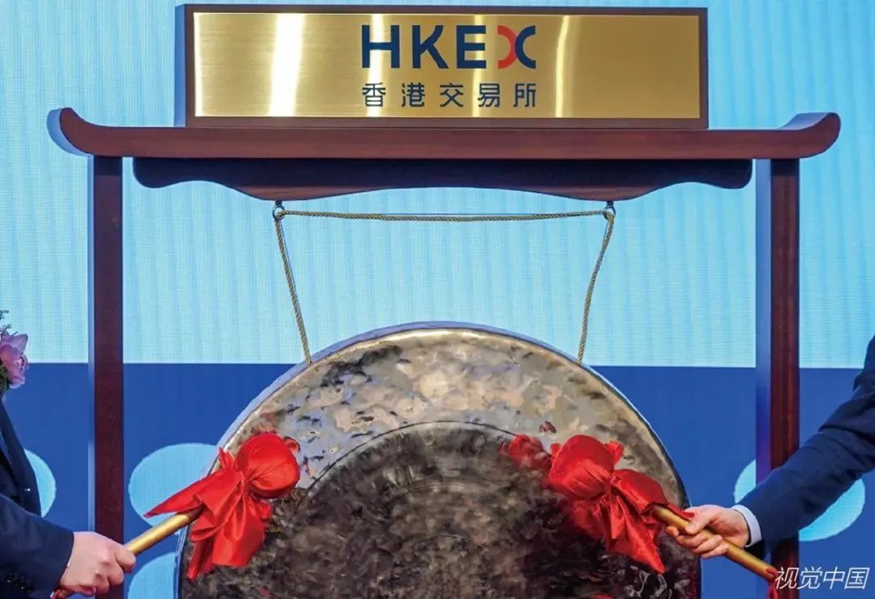
1993year7In January, the first mainland company, 'Tsingtao Brewery', went public in Hong Kong, thus kicking off the prelude to mainland enterprises listing in Hong Kong. Historical data shows that before the return of Hong Kong, the number of mainland companies listed in Hong Kong was not sufficient.100home.
1997year10In the month, China Mobile entered the Hong Kong market, raising a sum as high as323.63HK$10 billion, becoming the first deal after Hong Kong's returnIPO listingAt that time, there were a total of658Home, the proportion of mainland enterprises is insufficient15%.
2003In [year], the Mainland and Hong Kong signed the 'Arrangements on Establishing Closer Economic and Trade Relations between the Mainland and Hong Kong and Macao' (Abbreviation “CEPA")It supports further strengthening of cooperation between the two parties in the banking, securities, and insurance sectors.CEPAIt has opened the 'doors' to policy cooperation between the Mainland and Hong Kong, and has also accelerated the pace of mainland enterprises going public in Hong Kong.
25Over the past year, the Hong Kong stock market has gradually developed into an important financing platform for mainland Chinese enterprises and one of the key options for mainland investors and financial institutions to allocate overseas assets. Statistical data shows that as of2022year4Month, Mainland Enterprises Listed on the Hong Kong Stock Market1370Number of family-owned enterprises listed on the Hong Kong Stock Exchange53.3%, accounting for the total market value of Hong Kong stocks77.7%.
In the view of E Zhihuan, the large number of high-quality mainland enterprises listing in Hong Kong can, on one hand, fully utilize the liquidity of the Hong Kong market to attract overseas capital, and on the other hand, it also helps to rapidly enhance the fundraising function of the Hong Kong financial market, promoting Hong Kong to become the 'preferred overseas fundraising center' for mainland enterprises.
The following set of numbers may better illustrate the prosperity of the Hong Kong stock market over the years:1997Total market value of Hong Kong stocks at the end of the year3.2trillion Hong Kong dollars2021In , this number peaked at58.6Trillion Hong Kong dollars. Average daily turnover of Hong Kong stocks25Growth of nearly10times, from1997year154.65HK$10 billion (main board only) grew to2021year1667.3HK$10 billion. Since2009Since the beginning of the year, Hong Kong has ranked first globally for seven consecutive yearsIPO listingRanked first in fundraising amount.
The global leadership Hong Kong has gained in new share listings and the rapid expansion of the stock market are direct results of the continuous strengthening of economic and trade ties between the mainland and Hong Kong. They also further demonstrate Hong Kong's unique advantages in financial market infrastructure. As mainland enterprises flock to list on the Hong Kong stock market, they obtain development funds, injecting vitality into the Hong Kong economy and creating a good development situation where capital markets in both places complement each other, consolidating and enhancing Hong Kong's status as an international financial center.
If it's about launchingHThe share structure change is the first reform made by the Hong Kong Stock Exchange to welcome mainland enterprises to list on the Hong Kong market. The allowance for biotech companies without revenue and new economy companies adopting different voting structures to list in Hong Kong is the biggest reform since the establishment of the exchange, driven by mainland enterprises.
With the rapid development of internet technology in the Mainland, new economy companies represented by technology and the internet began to thrive. At that time, the rules of the Hong Kong Stock Exchange did not allow such companies to list on the Hong Kong market. After missing out on internet companies such as Alibaba one after another, the Hong Kong Stock Exchange2018In 2021, the listing system was reformed. Three new chapters were added to the listing rules, allowing biotech companies without revenue and those adopting different voting structures to list in Hong Kong for the first time, thus opening the door to a large number of new economy enterprises from the Chinese mainland.
According to incomplete statistics by reporters from China Economic Weekly, since then4year2018Year to2022year4At the end of the month), the Hong Kong Stock Exchange welcomed128Jiashine Economy Co., Ltd., including28Home Biotechnology Company and10The listed company is a secondary issuer, with a total financing amount reaching5537HK$10 billion. Currently, the Hong Kong Stock Exchange has become an internationally leading financing market for new economy companies and the second-largest biotech financing center globally.
2021At the end of the year, the Hong Kong Stock Exchange announced the introduction of new rules again, establishing a new type of special purpose acquisition companySPACThe listing mechanism has been in place for some time. As of now, two shell companies have successfully listed on the Hong Kong stock market. Meanwhile, the Hong Kong Stock Exchange has optimized its second-tier listing system to attract more Chinese concept stocks that have returned from overseas, granting issuers of dual primary listings greater flexibility. The industry predicts that the Hong Kong capital market will see a tide of returns from overseas investors from the second half of this year to next year.
Wang Xin told the reporter from China Economic Weekly that in the next few years, Hong Kong's capital market will still maintain its attractiveness to mainland enterprises for a long time. On one hand, Hong Kong's financial market infrastructure is complete and information transparency is high, and being backed by the motherland makes mainland Chinese companies more inclined to list on the Hong Kong Stock Exchange; on the other hand, multinational companies that value the mainland market often place their Asia-Pacific regional headquarters in Hong Kong, making Hong Kong an even more open and active international financial center.
"For many years, Hong Kong has had unique advantages in overseas financing for Chinese enterprises and offshore RMB business. These advantages are built on close economic and trade exchanges and geographical relations between Hong Kong and the mainland. It is difficult to change this objective advantage overnight," said Wang Xin.
04
The development of fintech has entered a fast lane
2000year5In January, the Hong Kong Monetary Authority issued the 'Recognition of Virtual Banks' industry guideline, proposing for the first time that there would be no opposition to the establishment of virtual banks in Hong Kong. For over a decade following this, the matter sank into oblivion, without causing any stir within the Hong Kong financial industry.2018In [year], the Hong Kong Monetary Authority (HKMA) issued a revised version of the 'Recognition of Virtual Banks' guideline, bringing virtual banking back onto the agenda.
2019year3monthLivi VB Limited,SC Digital Solutions LimitedHecom Virtual Finance Co., Ltd. has obtained the first batch of virtual bank licenses. This is now more than a year after the initial proposal for virtual banks was made.19year.
As an international financial center, Hong Kong's financial system has always been known for its prudence and stability. However, it has also been criticized for being backward and conservative, especially in the development of fintech.2004In [year], mainland netizens began using Alipay, while mobile payment did not arrive until2015It has only just begun to be widely available in Hong Kong.
Although it lost at the starting line, Hong Kong's fintech has been striving to catch up with this wave of development in recent years.
"Compared with the mainland, Hong Kong's fintech start-up scene is indeed a bit later, basically starting from2016In [a certain year], the government began to take the lead and fully launched relevant work on the development of fintech. "Liang Hanjing, the fintech supervisor at the Hong Kong Investment Promotion Department, said in an exclusive interview with a reporter from China Economic Weekly."
2016At the beginning of the year, the Hong Kong Monetary Authority established a Financial Technology Promotion Office to coordinate services for the development of the fintech industry and promote fintech products. The Hong Kong Investment Promotion Department also set up a dedicated fintech team during the same period, launching globally for several consecutive yearsExpress TrackPlan to provide comprehensive assistance to fintech companies, thereby attracting more fintech startups to set up in Hong Kong.
According to Leung Hang-kim, over the past few years, the SAR Government has launched a series of fintech infrastructure and measures, achieving many milestone advancements in Hong Kong's fintech sector. For example, the launch of the 'QuickPass' fast payment system, the issuance of virtual bank licenses, the implementation of open banking application interfaces, and the promotion of the blockchain-based trade financing platform 'Trade Link', among others. As Hong Kong regulatory authorities actively attract fintech investment into the market, there is also an upward trend in the penetration rate of fintech within the local financial community. Hong Kong Monetary Authority2020Surveys released annually show,35% to56% of banks view fintech as an opportunity for development,86% of banks are gradually integrating fintech into various financial services.
After five years of development, Hong Kong currently has600Home fintech companies and startups have become one of the preferred cities for global startups to expand rapidly, as well as one of the markets with the highest consumer fintech penetration. Ernst & Young2019The Global Fintech Adoption Rate Index released in [year] shows that the fintech adoption rate among consumers in Mainland China is87%, ranking first globally. The adoption rate index of fintech in Hong Kong has reached67%It is much higher than developed economies such as France, the United States, and Japan.
"In the global financial center index report released at the beginning of this year, Hong Kong ranked third globally in terms of financial centers and eighth globally in fintech centers. Compared to global economies, we are doing quite well. However, there is still much room for improvement in the future. We hope that by continuously developing the level of fintech in Hong Kong, we can better enhance Hong Kong's competitiveness as an international financial center," said Leung Hang-kwong.
Unlike other countries and regions in the world, Hong Kong, as an economy dominated by finance,700With a population of over ten thousand, however, there is160Multiple banks,160Multiple insurance companies,800Multiple securities companies and hundreds of insurance intermediary firms. For those focusing on2BFor financial institutions that are primarily engaged in business, it is tantamount to a natural financial market. Moreover, Hong Kong's unique geographical advantages enable fintech companies to connect with the world's largest, fastest-growing markets, as well as those in Southeast Asia, which offer long-term development opportunities. In recent years, an increasing number of overseas fintech companies have hoped to use Hong Kong as a springboard to enter the mainland cities within the Greater Bay Area.
"There are many fintech institutions in Hong Kong that handle cross-border payments. The reason for choosing to set up operations here is the connection between Hong Kong and the mainland. In this process, fintech has played a bridging role. On one hand, it helps more mainland enterprises go global, and on the other hand, it also provides more room for development and progress in fintech in Hong Kong," said Leung Hang-king.
The reporter learned that in the past two years, although the COVID-19 pandemic has had a certain impact on Hong Kong's economy, it has also accelerated the promotion and application of fintech to a certain extent.2018year9Since the Hong Kong Monetary Authority launched “Quick Transfer Numbers”, the number of registrations reached960Ten thousand, and the trading volume is also2018Year-on-year growth is nearly10times.
*This article is reprinted from China Economic Weekly.,Reporters: Zhang Yan, Xie Wei,Does Hong Kong still have an advantage as an international financial center??">
Frost & Sullivan Insight & Extended Readings
QFrost & Sullivan has long been committed to serving Chinese companies seeking listing in Hong Kong. What businesses have it carried out in Hong Kong and what achievements have been made? What are the key areas of development? What is the future development strategy?
A: asA global growth consulting firm, Frost & Sullivan with a global footprint61years of consulting experience,24Over the past year, we have wholeheartedly served the booming Chinese market. With a global perspective, we have helped clients accelerate their business growth and achieve leading benchmarks in industry growth, innovation, and technology leadership.
As early as2003In [year], Dr. Wang Xin, Global Partner and President of Frost & Sullivan Greater China, led the Frost & Sullivan team to pioneer industry advisory services for Hong Kong listings and overseas listings. He also took the lead in establishing and standardizing the business processes and service standards for industry advisors in the investment and financing sector. Today, industry advisors have become one of the important service institutions for companies seeking Hong Kong listings. Frost & Sullivan has long cooperated closely with globally renowned investment banks, financial audit firms, law firms, top investment institutions, and leading enterprises in the industry. As20As a witness to the recent surge in corporate listings in Hong Kong over the past few years, Frost & Sullivan has demonstrated its ability to15We provide professional services for various demand scenarios, helping nearly a thousand companies broaden their international financing channels, gain capital favor, strengthen investor relations and public relations, successfully list on the Hong Kong capital market, and have made outstanding contributions to Hong Kong's economic prosperity.2014till2021In the year, Frost & Sullivan retained its leading position as the industry research advisor with the largest market share for Chinese companies listing in Hong Kong.
2022In 2018, Frost & Sullivan and TradeGo's China-based affiliate jointly established Frost & Sullivan TradeGo China.(shenzhen)Yuntech Co., Ltd. (referred to as Yuntech). Yuntech provides precise promotional roadshows, public offering assistance, one-stop full-cycle investor relations management services, and comprehensive investment and financing support for Hong Kong-listed companies planning to go public or those that are already listed.
18ASince the implementation of the policy, Hong Kong has become the largest biotech fundraising centre in Asia and the second largest globally. Earlier this year, Frost & Sullivan, in collaboration with TradeGo, cloud technology and LeadLeo, jointly authored and published 'Hong Kong Stock Market18ABiotechnology companies issue investment activity reports". Subsequently, they have also jointly released2022Hong Kong stocks for the yearSaaSIndustry Activity Report》,《2022China's Consumer Healthcare Series Report: Hair Transplant Industry Living Report2022China's Specialized Hospital Service Series Reports: Assisted Reproduction Industry Activity Report2022China Property Management Industry Investment Activity Report for 2019, etc.
past24In [year], Frost & Sullivan's Greater China region leveraged its global collaborative capabilities to assist a large number of Chinese enterprises in entering the international capital market, as well as helping a multitude of domestic and foreign investment and financing institutions understand and invest in Chinese enterprises. In the future, we will base ourselves on China, provide long-term services, delve into the global capital market and corporate consulting services, and offer comprehensive investment and financing as well as various other professional consulting services for enterprises, including due diligence services, valuation services, assessment services, strategic consulting, management consulting, planning consulting, technical consulting, financial consulting, industry consulting, etc. We will always focus on the theme of innovation and technology, aim for growth, help clients gain a leading position, and add value to corporate capital operations with our professional knowledge, energize industry prosperity, and serve national development.