2022After the second half of the year, OEMs are deploying for online car-hailing andRobotaxiThe actions are frequent. Tianyanchaapplicationdisplay,8month3On the same day, NIO established a sales and service company in Yantai, with business scope including online car-hailing operations;7month19Today, Guangdong Xpeng Motors Technology Co., Ltd. registered “XPENGROBOTAXITrademark such as "Penggo PENGHANG" and "Penggo XINGHANG", which may be used for PenggoRobotaxiBusiness speculation followed.
Why are multiple automakers deploying online car-hailing services at this stage? From the current competitive landscape, automakers (traditional and new entrants) are making effortsRobotaxiWhat are the strengths and weaknesses? Frost & SullivanFrost & SullivanZhu Yiming, Executive Director of Frost & Sullivan Greater China, was interviewed by CBN and discussed online car-hailing andRobotaxiFuture development prospects of the track.
Caijing.com
2022After the second half of the year, OEMs are deploying for online car-hailing andRobotaxiThe action is frequent.
Tianyanchaapplicationdisplay,8month3On the same day, NIO established a sales and service company in Yantai, with business scope including online car-hailing operations;7month19Today, Guangdong Xpeng Motors Technology Co., Ltd. registered “XPENGROBOTAXITrademark such as "PengMCAR" and "PengXing" may be used for PENG.RobotaxiBusiness speculation followed.
Caijing.com Technology has found out about PengMC's online car-hailing serviceapplication"Yunepeng Chuxing" is currently in the "Service Adjustment, Not Available for Download" state in the app store. Regarding NIO, regarding whether the company has made any arrangements for online car-hailing services,RobotaxiRegarding media inquiries about the business, NIO stated that it will not respond for the time being.
Meanwhile, traditional automakers are also actively making arrangementsRobotaxiTrack.
Geely's subsidiary, Cao Cao Mobility, recently announced a partnership with Pony.ai to introduce services in Yizhuang, BeijingRobotaxi; Completed by the autonomous driving companyMomentaWaiting for investment to exceed10RMB 10 billionBIn a recent announcement, the Series B financing of SAIC Group's travel brand Enjoy Mobility has been completed withMomentaJoint layout creationRobotaxiProducts; GAC Group2022It was revealed at the semi-annual report communication meeting that Ruqi Chuxing, a subsidiary of the group, is advancingRobotaxiThe deployment and demonstration operation of the vehicles are expected to commence in Guangzhou with mixed operations of manned and driverless vehicles in the second half of this year.
Whether it's new force automakers or traditional automakers, targetingRobotaxiThe frequent layout of businesses inevitably raises many speculations behind it.
Some believe that expanding business scope and increasing sales are the main goals of automakers in deploying ride-hailing services. In addition, ride-hailing services will also becomeRobotaxiThe important scenarios for commercial implementation are also the reasons why automakers are making strategic layouts.
Zhu Yiming, Executive Director of Frost & Sullivan Greater China, stated that automakers entering the online car-hailing market can broaden their business and absorb production capacity on one hand, and increase brand exposure by enhancing passenger comfort and attracting them to purchase cars on the other.
Zhang Xiang, the dean of the New Energy Vehicle Technology Research Institute at Jiangxi New Energy Technology Vocational College, believes that although the online car-hailing industry is still in its early stages of development, with fierce competition between platforms and no profitability yet, online car-hailing is a trend for the future. It is a good choice for automakers to make early arrangements.
Chang Yan, a long-term observer in the automotive sector, believes that although new entrants mainly provide in-car services to help digest vehicles and improve delivery data, they also hope to quickly accumulate autonomous driving data and find moreCorner case(Long-tail cases in the field of autonomous driving, which are those problems that have never been encountered or are difficult to predict, occur with low probability but in large numbers.) This feeds back into the development of the entire autonomous driving system.
Automobile companies are vying to deploy online car-hailing services
2019year5In January, Xpeng Motors announced the launch of its online car-hailing service “Yopeng Mobility” platform in Guangzhou for trial operation, with plans to invest by the end of that year2000Remaining customized P7 modelsG3"Yopeng Chuxing" is positioned as a dedicated vehicle service, with drivers being full-time professionals who must undergo regular professional training according to industry standards before taking up their posts.
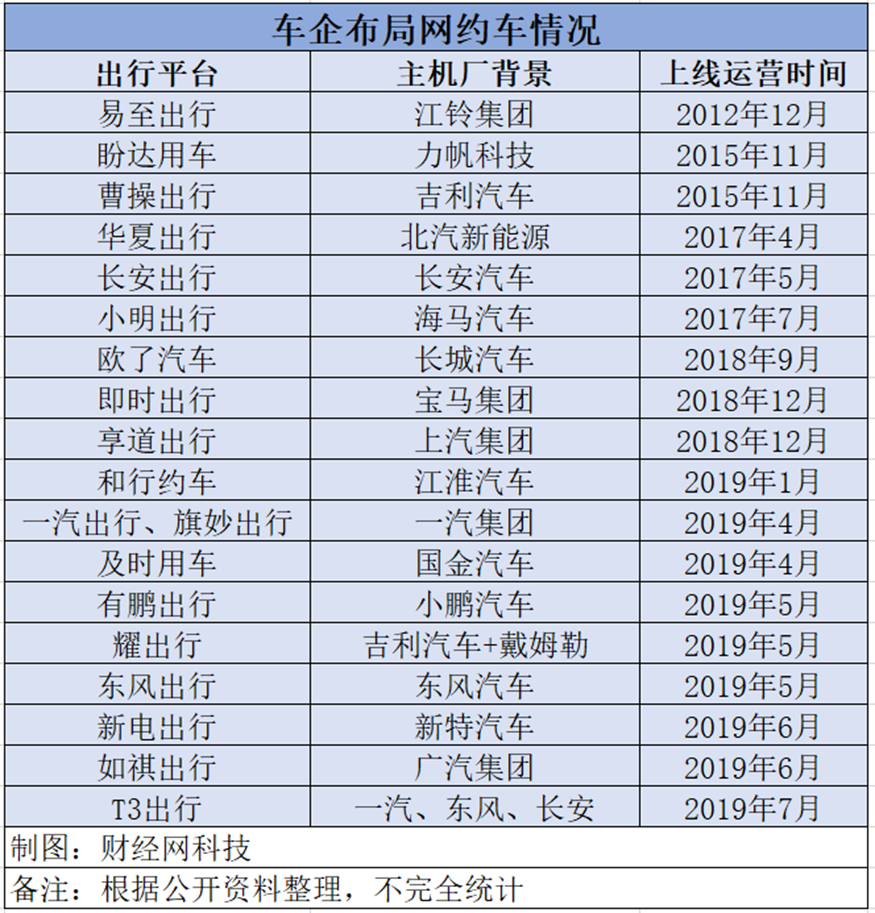
Around this period, traditional OEMs sprang up across the country to enter the online car-hailing business like mushrooms after rain.2017year-2019During the year, more than a dozen automakers deployed and launched online car-hailing platforms.
The transformation of China's automotive market from an incremental market to a stock market is seen as part of the broader industry backdrop, including automakers gradually shifting towards producing new energy vehicles and entering the online car-hailing market.
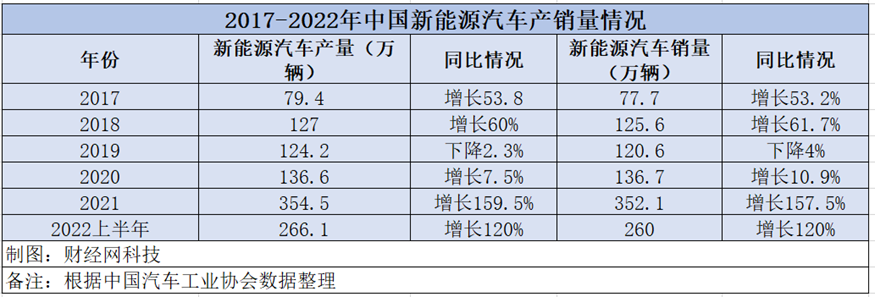
According to the statistical analysis of the China Association of Automobile Manufacturers,2018In [year], China's automobile production and sales were2780.910,000 units and2808.1Ten thousand units, with production and sales volume declining compared to the same period last year4.2%and2.8%, the Chinese automotive market is facing28The production and sales volume declined for the first time in a year, but the sales volume of new energy vehicles was125.6Ten thousand vehicles, a year-on-year increase61.7%.
Boston Consulting GroupBCGAccording to the report "Technology Disrupting Human Mobility: Where Will Corporate Profits Go?", the overall profit pool of the automotive industry in the future will shift from2017year2260USD billion growth to2035year3800billions of dollars. However, traditional profit pools (traditional parts,ICESales of hybrid new vehicles, auto finance, and the automotive aftermarket will only grow40Billion US dollars, with emerging profit pools (including parts for autonomous vehicles and pure electric vehicles, pure electric vehicle sales, data and intelligent connectivity, and mobility as a service) growing by approximately1500billion dollars.
Consulting firm PwC has also stated in relevant research reports that exploring new businesses has become a source for automakers to find profit points in the future, with the travel market being one of these new sources. PwC also anticipates that2030In 2023, China's shared mobility market will reach5640billions, with an average annual growth rate as high as32%The market prospect is huge.
"It's not just the number of cars that has changed, but the entire industry's model has also changed. In the future,"OEM(Original Equipment Manufacturer, also known as fixed-location production), will find their competitive position threatened by new challengers such as suppliers, travel platforms, and tech giants.BCGDirectors and ManagersThomas PalmeHas stated.
According to data from the China Association of Automobile Manufacturers,2017year-2022In the first half of the year, the production and sales volume of new energy vehicles in China were generally in a state of rapid growth. However, it is worth noting that in specific production and sales figures, there have been years when sales volume was less than production volume. Zhang Xiang believes that one of the main purposes for automakers to deploy online car-hailing services is to reduce inventory and increase sales volume.
Automobile companies mainly deploy shared mobility services through two main pathways: one is time-sharing rentals, and the other is online car-hailing (private cars)./Express services (such as express delivery, etc.) platforms. Automakers enter the former market through direct investment in operations or by taking stakes in car rental platforms; automakers deploying online car-hailing platforms mostly chooseB2CThe heavy-asset model has entered the market, with drivers not only being full-time employees but also the vehicles operated by online car-hailing platforms being uniformly purchased from their own automakers. Specifically, Cao Cao's special vehicle (later renamed 'Cao Cao Mobility'), incubated by Geely Automobile, operates with Geely models. Ruqi Mobility under GAC Group and Xiangdao Mobility under SAIC Group also purchase operating vehicles from their parent companies.
In addition to unified purchasing and operation of vehicles and self-operation, driver car-rental franchisees and driver-led car-rental franchises have also become a major trend in the development of online car-hailing platforms under automakers in recent years. For example,T3Travel offers the aforementioned two types of franchise methods; Enjoy Mobility's driver recruitment requires drivers to bring their own BYD models; Piongle's 'YouPeng Mobility' not only providesG3 2019Model (Intelligent Enjoyment Edition, Joyride Edition, and Premium Edition) and XpengP7Two types of vehicle models are available for drivers to choose from, offering both 'operating lease' and 'flexible lease-purchase' options. The former refers to renting a vehicle for a fixed period, while the latter allows drivers to buy out the ownership of the vehicle after leasing it for a certain number of years by paying off the remaining balance.
In the view of Lang Xuehong, deputy secretary-general of the China Association of Automobile Circulation, whether it is new forces in car manufacturing or traditional automakers, domestic or foreign, their entry into online car-hailing services or other off-automobile businesses mainly involves two considerations. On one hand, there is a rigid demand in the travel market. On the other hand, in addition toCFor end-sales vehicles, automakers will not miss any opportunity to capture more markets, such as targetingBEnds selling vehicles, operates car rental services, and builds its own online car-hailing platform.
However, she also pointed out that automakers deploying ride-hailing platforms is one of their methods for expanding vertically and horizontally, and should not be considered a way to clear inventory. This is because the inventory situation and supply-demand conditions of automakers often exhibit cyclical patterns, being influenced by various factors such as the company's development stage, product strength, production planning capabilities, and market demand.
Speaking of the reasons why automakers are deploying ride-hailing services,IDCWu Lianfeng, Vice President and Chief Analyst of China, believes that automakers' layout in the online car-hailing market is not about selling cars themselves, but rather about strengthening their ability to obtain data and attempting to create an ecosystem covering upstream and downstream operations.
It is reported that online car-hailing generates a large amount of data every day, including data from the vehicles themselves and operational data. Through travel data, automakers can not only verify the reliability of their products in a very short time but also efficiently learn about the optimal production and operation of vehicles and batteries under different usage scenarios, road conditions, and climates. In addition to deploying online car-hailing services and time-sharing rental services, automakers are also expanding into comprehensive service sectors such as charging and swapping operations, vehicle maintenance, energy management, and used car exchanges.
layoutRobotaxiIt has become a focus for the future development of automakers
If automakers' layout of online car-hailing services is considered1.0phase, from2021Since the beginning of this year, ride-hailing platforms have started collaborating with autonomous driving companiesRobotaxiThe business can be seen as entering the online car-hailing sector2.0phase.
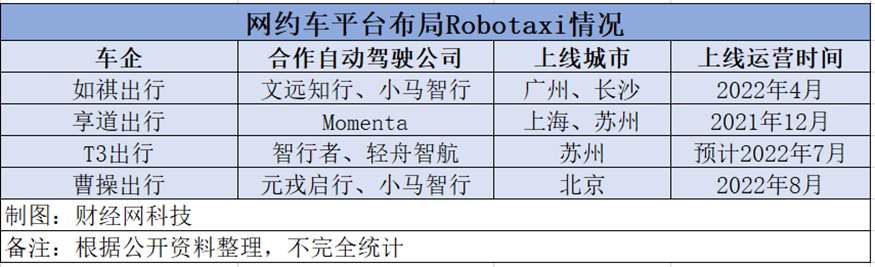
According to incomplete statistics, currently, platforms such as Ruqi Chuxing, Xiangdao Chuxing,T3Travel and Cao Cao Travel, four travel platforms, have already partnered with domestic autonomous driving companies, such asMomentaXiaomazhihang, Wenyuan Zhixing, Yuanrong Qixing, and other partners have collaborated to conduct test operations of autonomous taxi services in Shanghai, Guangzhou, Beijing, and other locations.
According to the financial and technological analysis by FinFinance Network, there are currently three cooperation paths for the aforementioned online car-hailing platforms. One is strategic cooperation between automakers and autonomous driving companies, where the former provides vehicles and the latter offers autonomous driving solutions, which have been completed in restructuring.RobotaxiUsed for testing by autonomous driving companies; secondly, autonomous driving companies bind with ride-hailing platforms through strategic cooperation or investment. The parent company of the ride-hailing platform provides vehicles, and the autonomous driving company offers autonomous driving solutions. The restructuring is completed.RobotaxiTest and operate on the online car-hailing platform; thirdly, the online car-hailing platform only provides APIs, and autonomous driving companies will ownRobotaxiConnect to TCO.
Ride-hailing platforms not only choose to cooperate with multiple autonomous driving companies but are also exploring various cooperation paths. Specifically, Caocao Chuxing has cooperated with Pony.ai and Yuanrong Qixing respectively for exploration.RobotaxiOn the one hand, Cao Cao Mobility has introduced the autonomous driving service of Pony.ai. That is, users in Beijing can use Cao Cao Mobility toapplicationYou can make an appointment for the ride-hailing service with Didi Chuxing at the dedicated entrance of "Autonomous Driving".RobotaxiOn the other hand, Cao Cao Chuxing has partnered with Yuanrong Qixing for vehicle services. According to Yuanrong Qixing, Geely provides GeometryAAnd the east windE70Model: Yuanrong Qixing provides autonomous driving solution technology.
Enjoy the Journey, Connect with UsMomentaTogether with SAIC's AI lab at its parent company, we are building XiangdaoRobotaxiAmong them, SAIC provides FeifanMARVEL RModelMomentaProvides autonomous driving solutions, and SAIC AI Lab offers an intelligent driving data monitoring platform. In addition, Ruqi Mobility, which has successively collaborated with Waymo X and Pony.ai to jointly build autonomous driving fleets, was established this year6The moon god showed off RuiqiRobotaxiOperate the technology platform. It is reported that this platform not only connects data from various autonomous driving companies but also schedules and assigns tasks to autonomous driving fleets.
In addition to traditional automakers,2021In the third quarter of 2023, He Xiaopeng, Chairman of Xpeng Motors, stated in a teleconference2022In the second half of the year, Xpeng Motors will begin exploringRobotaxibusiness. He said, “ThroughRobotaxiIn the operation of generalization scenarios, test P7P vehicles' related software to ensure a closed-loop driving experience throughout the entire city (thus) enhancing the stability and safety of autonomous driving algorithms.
Coincidentally, in August this year, Guangdong Xpeng Motors Technology Co., Ltd. registered “XPENG ROBOTAXIThe news about trademarks such as 'Pengpeng Smart Pilot' and 'Pengpeng Smart Mobility' has been leaked. Regarding the car-hailing service of Xpeng Motorsapplication"PengLink" is currently in the "Service Adjustment, No Download Available" status on the app store. Xpeng responded saying, "We have not released any relevant information yet, please wait for official updates later."
Chang Yan predicts, Pegasus is about to go publicRobotaxiThe business may go live in Guangzhou first, firstly because the local government provides policy support, and secondly because of Pony.ai.RobotaxiThe high-precision maps that require this service also became available for use in Guangzhou.
"Whether for automakers or ride-hailing platforms, autonomous driving is an important development trend for the future.RobotaxiIt has a high correlation with the travel market, and it is the most reasonable model for automakers to deploy through their online car-hailing platforms.IDCChina's research manager Wang Bo believes that for automakers already involved in autonomous driving-related businesses, the layoutRobotaxiIt can provide technical support and experience accumulation for its autonomous driving business, enabling automakers to take greater initiative in cooperation with technology suppliers.
"Automobile companies' layoutRobotaxiData collection can contribute to the advancement of autonomous driving technology. The more cars there are and the greater the mileage they travel, the more data they collect. The more diverse the data—different features, different countries' data—is collected, the more accurate the autonomous driving training models become.
Zhang Xiang expressed a similar view, believing that domestic automakers are significantly lagging behind Tesla in terms of autonomous driving mileage, as Tesla has a clear advantage both in cumulative sales and sales regions. Public data shows that Tesla has already achieved a significant number of autonomous driving miles in China, the United States, Europe, Japan, Australia, South Korea, Spain, the United Kingdom, France, Norway, and other global markets.20Sales in countries and regions, with cumulative global production exceeding30010,000 units.
According to a research report by RAND Corporation in the United States, autonomous driving needs to go through110hundred million miles180(100 million kilometers) of testing. After calculation, CITIC Securities found that autonomous driving technology companies need approximately510,000 autonomous vehicles, with at least7It can only be reached after [a certain number of] years110Actual mileage of 100 million miles tested on the road. At the same time, if2.44yuan/Estimate the testing cost in kilometers, which autonomous driving technology companies need to invest440Cost of hundreds of millions to meet180Hundreds of millions of kilometers of road testing requirements.
Research report from Industrial Securities shows that it is expected to end2022In the first quarter of the year, there were approximately150Ten thousand units equippedHW3.0The model of the platform hardware can collect data for Tesla based on the per-vehicle quarterly driving mileage.5000kilometers, and Tesla has collected approximately90Billions of kilometers of data (excluding simulations).
Public information shows that as of2022year7Month, Baidu'sApolloTest mileage reached270010,000 kilometers. At the recent "Pony Auto Tech Day," Wu Xinzhou, vice president of autonomous driving at Pony Auto, mentioned that it is expected2022At the end of the year, PENGPENG will have accumulated1.21000 million kilometers per hourNGPMileage. In comparison, automakers have a significant gap in autonomous driving data collection.
RobotaxiThe road is not smooth
Whether it's the online car-hailing service that has been operating for many years, or those under trialRobotaxiThe development path of automakers is clear, but the journey is not smooth.
According to statistics from the National Online Car-hailing Supervision Information Interaction Platform,2022year4Total order information received for the month4.76Hundreds of millions, marking the first time in a single month that the number of online car-hailing orders across the country has fallen5Yidian reached a new low in nearly two years. As of2022year7month31On the day279The number of home online car-hailing platform companies obtaining an online car-hailing platform business license has increased compared to last year for Didi7When it is taken off the market241The family has grown16%.
In terms of market share, a research report by Haitong Securities shows that2022year5The market share of Didi Chuxing in Yueqing is relatively2021year7Month-on-month decline10%for69%, stable at for the past six months70%Left and right. Amidst fluctuations in prices, market competition intensifies, and seizing more market share while ensuring stable and compliant operational capacity is a challenge that online car-hailing platforms must face.
"Currently, autonomous driving technology is not yet mature,RobotaxiMaybe10year-15It is expected to be implemented after a year. The uncertainty during this period is too high, and it also requires long-term and large-scale investment. Whether these travel platforms can survive for that long remains a question. Senior expert in the automotive industry, Shao Yuanjun, believes that travel platforms want toRobotaxiIt is still too early to consider breakthroughs in the travel sector, as autonomous vehicles, roads, laws, regulations, and business models are not yet mature. Even with car companies as a support, travel platforms cannot solely focus on investment without profitability for an extended period.
Zhang Xiaorong, the dean of the Institute of Deep Technology Research, expressed a similar view. He believes that the completeness of technology, the reliability of products, and the establishment and improvement of supporting traffic regulations and standard systems are all crucial for enterprises in their explorationRobotaxiPractical problems that need to be solved during the commercialization process. In addition to the fact that autonomous driving technology itself requires extensive practical testing, there is also a need for reliable solutions on how passengers can self-rescue in case of sudden accidents while unmanned vehicles are operating on the road. He said, 'Currently, most solutions involve equipping cars with safety officers to ensure that problems or situations can be handled promptly. Although this is a step forward compared to the traditional taxi model, there is still a significant gap from the autonomous driving that the public expects.'
Market Research Report "Electric Vehicle 100 Person Meeting"RobotaxiThe commercialization status quo, challenges, and suggestions state that although today's technology can handle traffic conditions90% of routine issues, but the rest10% has a huge impact and requires expenditure90% of cases are resolved, with a significant long-tail effect, and there is a gap between demonstration scenarios and real commercial scenarios. Liu Wenzhou, the director of capital investment, said in an interview with the media that Baidu's commencement of commercial operations in Yizhuang, Beijing, has indeed taken an important step, but it is still in a restricted scenario, with very limited road richness.
Bi Xin, Executive Director of the Shenzhen Future Intelligent Connected Transportation System Industry Innovation Center, believes that there are currently contradictions between technology development and product access, as well as management issues related to technical maturity and commercial operation. 'If products are not allowed to enter the market, how can technology be extensively verified? Without large-scale demonstration applications and comprehensive testing and evaluation, there may also be certain risks in commercial implementation,' he said.
In addition, He Xia, chief engineer of the Policy Economics Research Institute at the China Academy of Information and Communications Technology, said,RobotaxiThe cost issue isRobotaxiA major difficulty in the process of advancement, “RobotaxiIt is a typical bilateral platform economy model. Without sufficient autonomous vehicles and long user waiting times, the entire platform finds it difficult to attract users. Conversely, without enough users, the cost of enterprise layout is very high.
It is reported that most are currently concentrated in first-tier cities for testing and operationRobotaxiThe covered costs include labor costs, vehicle procurement, insurance costs, and the cost of applying for a license plate, etc. Wenyuan ZhihangCOO Officer-in-ChiefZhang stressed in an interview with the media that, in the taxi cost structure, driver costs account for60%Left and right, if the driver cannot be replaced, autonomous drivingRobotaxiThe business model is not viable. He also stated, 'For autonomous vehicles to make a profit, they must achieve profitability per vehicle. The prerequisite for achieving profitability per vehicle is the ability to implement autonomous driving. Currently, the mode of operation with safety officers on board cannot make money and may even result in losses compared to the regular mode.'
Specifically regarding the cooperation between online car-hailing platforms and autonomous driving companies, Wang Bo believes that automakers' heavy assets, autonomous driving companies' technical accumulation, and the traffic of online car-hailing platforms in the travel market are all factors for all partiesRobotaxiThe resources necessary for field development are currently focused on mutual achievement and win-win outcomes among all parties. The emergence of competition requires a foreseeable market scale within the medium to short term as a prerequisite.
However, Chang Yan believes that the cooperation between online car-hailing platforms and the aforementioned two parties is 'typical of an investment that does not match the revenue, and a risk that does not match the opportunity.' He explained that on one hand, travel platforms do not possess core technologies, so they may not benefit from the fruits of technological evolution; on the other hand, in terms of operations, travel platforms also need to bearRobotaxiOperational security risks. In addition, at this stage,RobotaxiThe possibility of making money is minuscule.
*This article is reprinted from Caijing.com Author: Huang Yang , Original title: The travel market is turbulent Automobile companies are making frequent layoutsRobotaxitrack ">
Frost & Sullivan Insight & Extended Readings
QCurrently, there are reports that, similar to traditional automakers Geely's involvement in Cao Cao Mobility, new forces in the automotive industry, such as NIO and Li Auto, have also registered trademarks for online car-hailing services. In fact, last quarter of 2021, Xpeng Motors even stated that they were planning to2022Second half-year layoutRobotaxiWhy are several aforementioned automakers deploying online car-hailing services at this stage?
A: Looking at the entire online car-hailing market, new energy vehicle companies entering the market can better expand their business and absorb production capacity. Especially with national policy subsidies and incentives for new energy vehicles, competition in the new energy vehicle market has intensified. Entering the online car-hailing industry allows for rapid promotion of the brand and models of cars themselves. Due to the huge market demand for online car-hailing andCFor end customers, automakers can directly enhance the comfort of riding through the promotion of their own vehicle-based online car-hailing services. This not only increases brand exposure but also attracts and converts more users into buyers, indirectly boosting automobile sales.
At the same time, with the maturity of autonomous driving technology andRobotaxiWith advantages such as energy conservation and emission reduction, labor cost savings, etc., online car-hailing will becomeRobotaxiImportant scenarios for commercial implementation.
QHe Xiaopeng said, doingRobotaxiThe purpose is to obtain data, test software in a closed loop, and improve the stability of autonomous driving algorithms. This goal is quite similar to the objectives of autonomous driving companies collaborating with logistics freight companies, automakers, and ride-hailing platforms. From the current competitive landscape, automakers (traditional and new force car manufacturers) are making effortsRobotaxiWhat are the strengths and weaknesses?RobotaxiHow far is it from us?
A: In terms of hardware, traditional automakers possess mature and complete capabilities in vehicle design, production, manufacturing, and sales. They have substantial capital and strong R&D strength, with years of accumulated automotive industry technology and experience. Their mature supply chain support system enables them to quickly enter theRobotaxiThe field has expanded, yet traditional automakers have weaker innovation capabilities and lag behind in the development of autonomous driving technology and intelligent technologies. They started relatively late and developed slowly. New automotive forces have stronger innovation capabilities and faster development speed, capable of focusing on the research, development, and production of autonomous vehicle models. However, they lack financial strength and mature automotive experience, mainly relying on suppliers for production.
With the maturity of autonomous driving technology in the future, more strategic cooperation between automakers and internet companies will emerge. Through the accumulation of massive user data and the improvement of algorithms,RobotaxiIt can provide users with a unique travel experience and intelligent travel scenarios, gradually realizing commercial implementation.