Although since2015Since the implementation of the comprehensive two-child policy in [year], it has been effectively implemented. However, the number of newborns has not seen the expected explosion as predicted; instead, it has been declining year by year.2016Year-end2021The annual compound growth rate of the birth population is-9.9%. According to Frost & Sullivan, the annual decline in birth rates may remain relatively stable under effective government policy stimulus and2026Annual achievement865Tens of thousands. Therefore, how maternal and infant products can expand their influence and sales among the target demographic that is declining year by year has become an industry-wide issue.
Frost & SullivanFrost & Sullivan,Jin Yue, a consulting analyst from Frost & Sullivan (hereinafter referred to as 'Frost & Sullivan'), was invited to write an article for China Cosmetics magazine on the market format of infant and toddler cosmetics, to discuss together Infant and toddler cosmetics Market ecology.
China Cosmetics Magazine
Macro environment and its impact on the infant and toddler cosmetic market
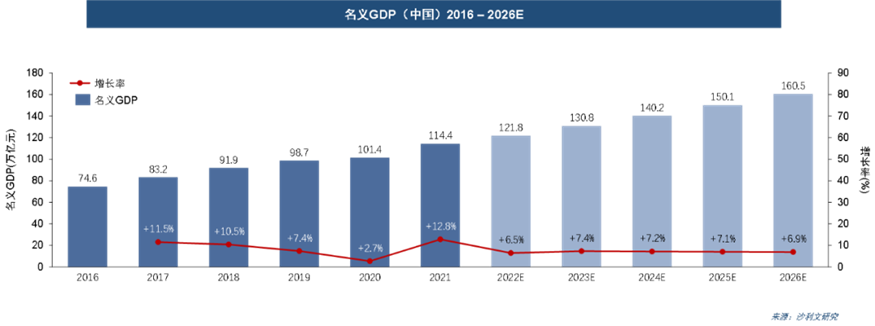
According to data from the National Bureau of Statistics of China, the Chinese government has adopted effective stimulus policies to maintain stable economic growth.
at "Ten Key Industries Revitalization Plan "and "Belt and Road Driven by a series of economic stimulus policies such as the initiative, China's nominal GDPGDP) in2016Year-end2021During the year8.9%The annual compound growth rate achieved a relatively strong increase, from2016Renminbi in [year]74.6trillion yuan grew to2021Renminbi in [year]114.4trillion yuan.
Looking ahead, the Chinese government will further maintain consistency and stability in macroeconomic policies to sustain macroeconomic stability. At the same time, it is expected that the Chinese government will vigorously promote economic restructuring to improve the quality and efficiency of economic development. The Chinese economy will shift from an investment-driven model to a consumption-driven model.
Under this trend, the Chinese economy will maintain healthy and good development. Entering the '13th Five-Year Plan' period, amidst economic downturns and uncertainties brought about by external events such as Brexit and Sino-US trade wars, industrial restructuring and upgrading, balancing imports and exports, and expanding domestic demand will become key for ChinaGDPThe driving force for future growth.
2020In [year], the outbreak of the COVID-19 pandemic led to a delay in resuming work and a suspension of economic activities in the first quarter, which2020Year in ChinaGDPGrowth has slowed down. According to the International Monetary Fund (International Monetary Fund) forecast, from2021Year-end2026Year, nominal in ChinaGDPwill be maintained7.0%The annual compound growth rate, and will be2026The annual increase amounts to RMB160.5trillion yuan.
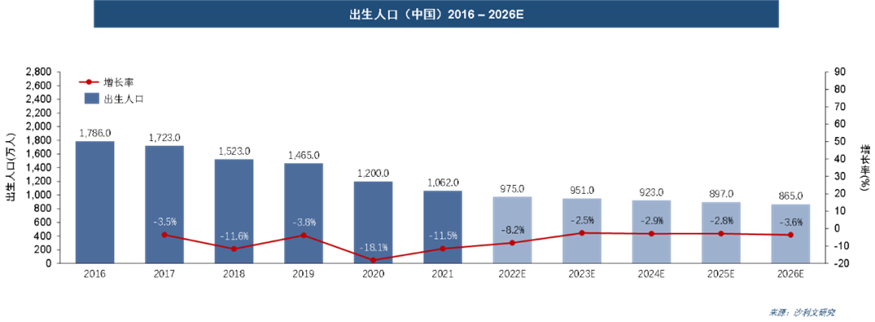
although2015Since the implementation of the comprehensive two-child policy in [year], it has been effectively implemented. However, the number of newborns has not seen the expected explosion as predicted; instead, it has been declining year by year.2016Year to2021The annual compound growth rate of the annual birth population is-9.9%According to Frost & Sullivan, the annual decline in birth rates may remain relatively stable under effective government policy stimulation and2026Annual achievement865Ten thousand people.
Therefore, how maternal and infant products can expand their influence and sales among the target demographic that is declining year by year has become an industry-wide issue.
But is the declining birth rate having a negative impact solely on infant products? Frost & Sullivan believes the answer is no.
per capitaGDPThe rapid growth and per capita disposable income from2016year33,616Increase by Yuan2021year47,412Under the upward trend of the yuan, the declining birth population does not mean that young people no longer value their children due to high work and life pressures. On the contrary, the cautious attitude towards childbearing among young people indicates an increasing emphasis on their children.
This is both an opportunity and a challenge for the infant skincare industry. A larger market, higher requirements, stronger brand awareness, greater purchasing power and willingness will further intensify competition among brands.
With a series of fertility support measures being implemented one after another, the comprehensive construction of a fertility-friendly society has entered an acceleration phase, which will also have a profound impact on the overall development of the maternal and infant industry. At the same time, with the decline in fertilityGDPWith the continuous rise, parents of newborns have shown a significant increase in their attention and time spent on baby products, and the trend of consumption upgrading is becoming more evident.

This can be glimpsed in the rapid expansion of the maternal and infant market scale in China. The maternal and infant market has been2016Year-on-year surge2021year4.9RMB 1 trillion, Frost & Sullivan predicts that the market scale of the maternal and infant market will be2026reaching about8.7trillion yuan.
Although the number of newborns is decreasing year by year, entering what is known as the 'existing market', how to extend the consumption cycle of maternal and infant products, how to further segment product categories and lines, how to refine and upscale products, and how to get closer to the shopping needs of young mothers including product aesthetics, natural ingredients, brand image, etc., have become issues that the vast majority of maternal and infant product manufacturers need to consider and clarify.
The personal care industry in China has a stable market development. In terms of retail sales, the scale of the personal care industry market is from2016year3,268RMB billion growth to2020year5,235Yuan, with a compound average annual growth rate of12.5%.
With the improvement of people's living standards and the gradual enhancement of personal care awareness, it is expected that the retail sales scale of the personal care industry market will continue to grow in the future.2025Will reach in8,308yuan. In addition, China's per capita skincare expenditure has risen from2016year212.8Yuan growth to2021year376.8Yuan, compound annual growth rate12.1%relative to the West2021annual per capita2,006There is still a significant gap in skincare expenditure per RMB.
Therefore, we can conclude that as an intersection of the mother and baby market and the skincare market, the infant skincare market still holds considerable market potential despite facing challenges brought about by changing user demands.
Classification of Baby and Infant Cosmetics Market: Product Classification
The infant and toddler cosmetics market is mainly divided into skincare products, sunscreen, hair care products, toiletries, laundry cleaning products, mosquito repellents, etc. Due to the special characteristics of its target population, namely infants and toddlers with delicate skin, low tolerance, and a low capacity to withstand external stimuli, manufacturers need to have higher standards for self-imposed requirements regarding the safety, professionalism, and specific efficacy of infant and toddler cosmetics.
Meanwhile, based on the different ages of infants and children, infant and toddler cosmetics are divided into different product categories and core benefits according to the skin needs of different age groups.
0 - 3Infants and young children at the age of30%It is highly fragile and has low tolerance. Sweat glands are relatively dense, so water loss is more severe in this group than in adults, leading to issues such as dryness and sensitivity.
Therefore, products with high moisturizing effects and sun protection functions are for0 - 3The demand for products targeting infants and young children is more specific. Under such product demands, moisturizers with anti-allergy effects, baby-specific sunscreens, and specialized skincare products with clear targets (such as eczema) are receiving increasing attention.
3Although the skin structure of young children aged 1 year and above matures year by year, their sensitivity is relatively0 - 3Infants and toddlers have a lower tolerance, but they still possess characteristics such as a thinner stratum corneum. At the same time, how to cultivate children's correct skincare habits is also one of the focuses of young mothers.
Therefore, infant and toddler cosmetics products that are relatively similar to the skincare routines and categories of adults have received more attention from young mothers. For example, low foam, low irritation, amino acid-based facial cleansers, hypoallergenic moisturizers with a certain level of oiliness, and sunscreens that take into account the special characteristics of young children's sebaceous glands and stratum corneum are popular.
Classification of Infant and Toddler Cosmetics Market: Channel Classification
The sales channels for baby and toddler cosmetics can be roughly divided into online and offline channels. Among them, offline channels remain the main sales channel for the special segment of baby skincare products, especially with the highest proportion of sales coming from comprehensive mother and baby product stores.
However, due to the impact of the pandemic, it has catalyzed a shift in the consumption habits of young mothers from offline to online purchases of baby and toddler cosmetics. It has also further segmented the online channels for baby and toddler skincare products. For example, live streaming e-commerce, community platforms like Rednote that come with their own shopping malls, and so on.
The increasingly diversified sales channels and consumption scenarios are also, to a certain extent, the reason why the infant and toddler cosmetics market has been able to maintain relative prosperity despite the overall decline in consumer power due to the pandemic.
by2016Year to2021In terms of the proportion of online channel sales for infant and toddler cosmetics,2016Year-end2019The year maintained a relatively stable growth rate, in20%till30%Between them, and then catalyzed by the pandemic,2020Year-end2021Online sales of infant and toddler cosmetics have seen rapid growth, accounting for half of the entire infant and toddler cosmetics market. This has led more and more manufacturers to prioritize the layout of online platform matrices.
The sales model, which combines multiple scenarios, channels, and online/offline efforts, has further driven the steady growth of the infant skincare market. Among them, online purchases of infant cosmetics show a trend towards younger consumers: there is a clear inverse correlation between the mother's age and her preference for online infant cosmetics.
According to JD.com's2022The "Personal Care Trend Report" shows that consumers are clearly showing a trend towards purchasing high-end brands, with product sales year-on-year growth exceeding90%The sales speed of the high-end line has even reached114%Among them, after Kaisi opened its official flagship store on JD.com for one month, both its search traffic and recommended traffic from the self-operated store quickly rankedTOPLevel.
Analysis of the Industrial Chain in the Infant and Toddler Cosmetics Market
The upstream of the infant and toddler cosmetics industry chain is mainly composed of several cosmetic manufacturers, primarily specialized in infant and toddler products as well as traditional cosmetics. Its characteristic is a relatively rapid growth rate in sales volume. Despite the relatively low concentration of the industry, its concentration has gradually increased. At the same time, there is also the rise of domestic brands and the competition between domestic brands and well-known overseas brands.
The market pattern is relatively fragmented, and industry rankings are relatively volatile.
In the midstream, it can be divided into online and offline channels: Online sales channels include comprehensive e-commerce platforms, vertical e-commerce platforms, direct-operated official websites, WeChat and other community platforms. Among them, comprehensive e-commerce platforms, which operate a full range of products, hold the largest market share. Leading platforms include Tmall, JD.com, Suning, VIP.com, Dangdang, etc. Vertical e-commerce platforms are those that specialize in the operation of baby and children's cosmetics.
Offline sales channels mainly include mother and baby product chain retail stores, brand physical stores, large comprehensive supermarkets, etc. The geographical location of the store, service quality, and scale of the store all affect the customer flow of offline sales channels. Although e-commerce channels are becoming increasingly active and online sales are growing rapidly, the sales of the infant and toddler cosmetics industry still mainly rely on offline channels, with a relatively high proportion coming from comprehensive mother and baby stores.
The downstream of the infant and toddler cosmetics industry chain isCEnd-users, due to the inherent characteristics of the era, group dynamics, and consumption patterns of young mothers, such as a relatively affluent growth environment, a more pronounced Westernized mindset, a pursuit of health and quality life far exceeding that of previous generations, and a greater focus on the quality of life during their children's infancy.
We can summarize the following key characteristics related to the infant and toddler cosmetic market: relatively low price sensitivity, increasing attention to baby care products, high focus on ingredients and efficacy, and a reliance on experts./The reliance on information such as communities is strong, and product requirements are becoming increasingly refined and quality-oriented.
Market scale of infant and toddler cosmetics

With the rapid increase in income levels,2021The per capita disposable income of residents reached35,128Nowadays, with the younger generation generally having stronger purchasing power,6In contemporary urban families where parents often have only one or two children, and with a strong willingness to spend on their children, the Chinese infant and toddler cosmetics market has enormous potential.
from2016year170.8RMB 10 billion to2021year322.7RMB 10 billion, with an annual compound growth rate of13.6%According to Frost & Sullivan's forecast, infant and toddler cosmetics2026Annual sales will reach492.7RMB 10 billion, annual compound growth rate7.7%.
Among them, there are also efficacy skincare products made from natural ingredients and high-end skincare products with relatively strong potential in niche markets. Domestic brands of infant skincare products have seen a significant increase in sales under the growing national pride and recognition, no longer limited to the lower-tier market.
Market scale of infant and toddler toiletries

Infant and toddler skincare products, as an important subcategory of infant and toddler skin care products, often receive significant attention from manufacturers. At the same time, with continuous consumption upgrades, young mothers have a relatively strong willingness to pay for infant and toddler skincare products, which has further driven the continuous rise in the average transaction value per customer for these products.
especially2020After the Spring Festival, the continuous expansion of online sales channels further accelerated the influx of infant and toddler toiletries.2016Year to2021In China, the market for infant and toddler toiletries grew extremely rapidly in2016year72.2RMB 10 billion, an increase of2021year162.3RMB 20 billion is a relatively large-segment category within the broad category of infant and toddler skincare products.
Frost & Sullivan prediction2026In [Year], the market scale of infant and toddler toiletries will reach266.1RMB 10 billion.
Market competition landscape of infant and toddler cosmetics: A mixed battle between domestic brands and overseas ones
China's infant and toddler cosmetics market is mainly composed of professional infant and toddler manufacturers and traditional cosmetic manufacturers. Its characteristic is a relatively rapid growth rate in sales volume, with the concentration gradually increasing despite the relatively low industry concentration. At the same time, there is also the rise of domestic brands and the interplay between domestic brands and well-known overseas brands.
The market pattern is relatively fragmented and competitive, resulting in a relatively volatile industry ranking. There are currently no monopolistic enterprises that hold a dominant position. However, overall, the market share of some emerging state-owned brands is rapidly climbing, continuously diluting the market share of traditional infant and toddler cosmetics manufacturers led by Johnson & Johnson. For example, Red Little Elephant, which ranked fourth in Tmall's infant skincare category last year.
withAveenoAiwénuo andPigeonOverseas well-known infant and toddler cosmetic brands represented by Beiqin have captured the high-end market due to their brand recognition, focus on natural ingredients, and other characteristics.

Further compare the competitive landscape of state-owned brands and overseas brands in the infant and toddler cosmetics market.
Compared with domestic and overseas brands in Japan, South Korea, or the United States, they each account for approximately50%In terms of competitive landscape, the number and turnover of domestic brands in China's infant and toddler cosmetics market are relatively lower compared to those in the US, Japan, and South Korea, accounting for only about19.5%.
The relative weakness of Chinese infant and toddler cosmetic brands in market competition has multiple reasons, including a comparative lack of advantage in R&D technology, starting later than other industries, and some historical legacy issues. For instance, most young mothers today generally complete their mother-to-child consumption education with overseas brands, and consumers have a lower trust in domestic brands.
However, due to the continuous growth in R&D capabilities of domestic manufacturers in recent years, deeper research into the market and consumers, and the increasing recognition of domestic brands by the public, domestic infant and toddler cosmetic brands have been continuously challenging the high-end market and achieving quite impressive results. Frost & Sullivan believes that there is great potential for domestic infant and toddler cosmetic brands and they will further impact the turbulent competitive market for this segment.
Opportunities and Challenges in the Infant and Toddler Skin Care Market
1The demand for further product category refinement under the continuous differentiation of needs
Due to the continuous reduction in the number of newborns and changes in population structure, the expansion of the infant skincare market cannot rely on an increase in user numbers. Instead, it should further tap into the existing market through consumption upgrades, product category segmentation, consumer education, and other methods. Among these, family structure4-2-1or4-2-2The standard urban family structure has also continuously fueled the consumption upgrade of infant skincare products.
Frost & Sullivan believes that further differentiation of infants and young children, such as by age group, gender, or skin type, can assist in the refinement of infant skincare products and the brand positioning of manufacturers.
2The dependence on channels and communities continues to grow.
The popularization of social networks has made various information platforms an important source for exchanging parenting information. However, the uneven quality of platforms and the complexity of information sources have also left many young mothers confused.
Therefore, some leading platforms have achieved astonishing retention rates and turnover of infant products due to their massive platform stickiness, relatively high-quality content, and complete consumer journey. For instance, the cumulative views of Douyin's infant-related topic videos have exceeded680Hundreds of millions, involving an extremely wide range of personnel and topics.
3The potential for the sinking market is relatively large.
Although capturing the high-end market has become a common goal and challenge for many infant skincare manufacturers, the Chinese market still has some particularities, such as the non-negligible importance of the lower-tier markets.
Even in third- and fourth-tier cities, young mothers' consumption of mother and baby products is no longer limited to milk powder and diapers. The popularization of social networks has naturally taught these young mothers from third- and fourth-tier cities how to raise their children meticulously through communities like Rednote. There has also been increasing attention paid to non-rigid mother and baby consumer goods, such as infant skincare products.
Meanwhile, third- and fourth-tier cities have higher birth rates and more births. The implementation of the three-child policy has been more effective in these cities than in first- and second-tier areas. Women of childbearing age have a stronger desire to have children and expect greater population growth.
Finally, in third- and fourth-tier cities, the proportion of rigid consumption related to marriage and childbearing, such as housing prices and education costs, is relatively small, leading to a higher willingness to consume infant skincare products.
4Challenge: How to extend the user consumption cycle under the downward population trend
With the decline in population, the number of newborns has been decreasing year by year. Infant and toddler skincare manufacturers face a severe challenge of no incremental growth. How to extend users' consumption cycle has become another important solution besides consumption upgrading. By continuously segmenting, expanding the product matrix, and extending the applicable age range of infant and toddler skincare products, the market for these products can be broadened.
*This article is published in the magazine China Cosmetics , author Jinyue , Original title: The infant and toddler cosmetics market is expected to reach500Hundreds of millions ">