IPO listingIt is an important milestone in the company's development, and going public does not mean that the marathon has been finished. From the perspective of corporate development logic, going public actually means that there will be more financing tools available. In the current market environment, pharmaceutical companies facing listing face many opportunities and challenges. For companies that have already gone public, they need to consider how to open up and activate more financing channels.
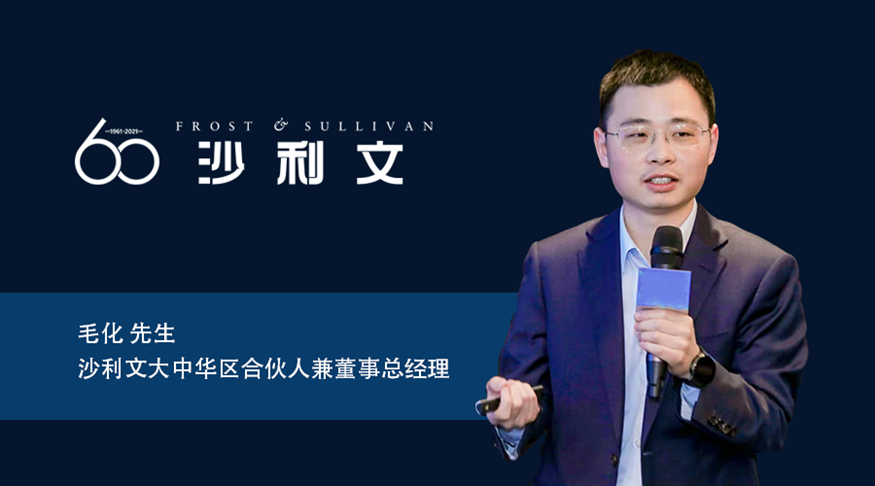
Frost & SullivanFrost & SullivanMao Hua, Partner and Managing Director of Frost & Sullivan Greater China, was invited by CBN.com to participate in the financial dialogue program 'Square and Round Knows'. Wang Yinyan, Executive General Manager of Investment Banking at CICC Li Zhixian, Partner-in-Chief of PricewaterhouseCoopers' China East and West Markets, and Consultant at Junhe Law Firm Let's go together, Joint Interpretation of EnterprisesIPO listingAnd the channels and paths for refinancing, to broaden industry horizons, connect capital with industry, and provide more effective solutions for the market. 
 QCurrentlyIPO listing"Postponed" or "Forward"?
"
Fattening: Firstly, from the actual situation, compared to2020Year-on-year,2021The year was a 'big' one both in terms of fundraising amount and volume. Indeed, there were fewer projects this year in the Hong Kong stock market, but this yearAThe number of shares has increased particularly significantly. Overall, Frost & Sullivan's entire workload for this yearIPO listingThe number of listings has actually increased rather than decreased compared to last year. Therefore, overall speaking about the capital market, we believe that companies can maintain their pace and plans for continued listing.
Secondly, although there have been some corrections in the current capital market, we still believe that the overall financing progress of companies should be carried out according to their financing plans, and listing should continue as scheduled. The capital market for biotechnology is currently in a correction phase and will not see a large-scale rebound for a long time to come. This is because the capital market for biotechnology will tend to be more rational in the future.
Third, For listed companies in the biotechnology sector in the future, reasonable expectations, market valuation upon listing, and stock price performance after listing are very important. This is actually the same as the R&D cycle of innovative drugs in China. In the initial stages, everyone may rush to grab the market share, targets, and time windows. However, as there are more and more products on the market and biotech companies emerging, competition for the same track, variety, target, and indication will become increasingly fierce. At this point, it becomes difficult to think about the previous high valuations and premiums, so we need to have reasonable expectations for post-market valuations and stock prices.
Fourthly, for enterprises, we often say that going public is actually just the first step an enterprise takes on the capital market; it is not the final step. Going public does not mean that the company can rest easy from then on. At the level of the capital market, The listing is just the beginning. In the future, the company needs to continue developing its business, advancing its clinical pipeline, commercializing products, telling more investment stories in the secondary capital market, and doing well as aPR/IRManagement. In today's and even future biotechnology industries,IPO listingIt is no longer a scarce target, and in such a context, it is a very important issue. We need long-term development rather than short-term attempts to go public.
QHow does the new listing venue weigh up its considerations when it opens?
"
Fattening: First, from2019The official launch of the Sci-Tech Innovation Board for innovative pharmaceutical companies this year6The opening of the Sci-tech Innovation Board for innovative medical devices, andspacJudging from the listings in Hong Kong and US stocks, this provides more options for future innovative pharmaceutical companies and devices to list on capital markets. For example,2018Before the year is over, going public in the US may be an inevitable choice for innovative tech companies. But from2018After a year, there are Hong Kong stocks18AThe domestic Science and Technology Innovation Board has opened its doors to innovative drugs and devices, as well asspacWith more options, enterprises have a wider range of financing channels. This is indeed a progress that has created more pathways for biotech companies and investors. This is a major prerequisite.
Second, for biotech companies, it's not just the Sci-tech Innovation Board; there are alsospacThe launch on the market, although it didn't take very long. We are dealing with Hong Kong stocks18AIt has been observed that from18Niange Li started as the first one, and now there are dozens of companies listed18AIn fact, the exchanges and regulatory authorities have made some adjustments to the listing rules for device and pharmaceutical companies. Therefore, althoughspacWhile relatively new channels have created many avenues for capital circulation, they will not immediately form a very mature and complete listing system in the short term. It still requires continuous improvement to better suit Chinese biotech companies, which is a long-term process. Therefore, when choosing a listing location, enterprises need to comprehensively consider the maturity of various listing location structures and their suitability for the enterprise itself.
Thirdly, in addition to the structural maturity mentioned earlier, It is also necessary to make comprehensive considerations regarding the company's own organizational structure, fundraising amount, and the nature of its business operations, in order to formulate an IPO choice that suits the development of the enterprise, its positioning, and its financing needs. Since there are now so many alternative listing venues, we can make more choices based on our own and external conditions.
QWhat is the risk of refinancing or private placement?
"
Fattening: Although there have indeed been instances of low-price issuance during private placements, and there are also many cases where company stock prices have fallen below par, we still need to make practical considerations based on financing and business development needs. When it is necessary to conduct a private placement or raise additional funds, you should do so accordingly. As is well known, biotech companies require substantial financial support. The biotech industry is a capital-intensive sector, especially clinical development, which is an expensive phase from Phase I to Phase III and even into commercialization.
And as the R&D track becomes increasingly crowded, it's important to find your unique strengths in this space and doindustry-leadingThe difficulty is getting higher and higher, which requires a lot of capital. In addition, in order to expand their R&D pipeline and reduce their R&D risks, enterprises will do a lotin license to operateSuch businesses also require more capital. Moreover, after the product is launched, it is necessary to establish one's own sales team, market entry team, andPRTeams actually cost money. Therefore, companies will have a need for private placements at certain stages.
Of course, it would be great if one could find a better timing point to raise sufficient funds without having to break even. However, at present, during the hot summer of this year or for some time next year, if there are no earth-shaking changes in the trend of the entire biotechnology industry, we still need to make practical considerations based on the business development and financing needs of enterprises. For example, if a company currently needs so much capital and has to purchase factory buildings to expand production capacity, it cannot overly consider the factor of bankruptcy. Instead, it should be based on the actual situation of the company.
QWhere can I activate more financing channels?
"
Fattening:GDRThis year has indeed been quite active, with capital markets in the London Stock Exchange, the Swiss Exchange, and Germany all being viable optionsGDRYes, but currently it is mainly focused on the Hong Kong Stock Exchange. First, within the entire healthcare industry, our Frost & Sullivan has also covered two companiesGDRThe companies, namely Leopar Medical and Health Yuan, have all been taken over by Frost & Sullivan. Second, GDRIt has indeed opened up a new path for eligible Chinese enterprises to go public overseas. Being able to meet the business expansion needs of Chinese enterprises in Europe in the future while also achieving financing is indeed a relatively good two-way choice.
For enterprises, there is no doubt that exchanges like the New York Stock Exchange are larger in scale, which is actually a consideration for their financing positioning—do they want to be a 'big fish' in a 'small pond', or a 'little fish' in a 'big pond'? If it's the former, then on the RuSE side...GDRIt may be more attractive.
In reality, doGDRIndeed, it's quite fast, even faster than Hong Kong stocks. It is a very effective way to save time for both the company and intermediaries. Although Hong Kong stocks18AThe overall time has accelerated significantly because now, whether it's regulatory authorities, various intermediaries, or companies themselves, they all have a good understanding of the entire Hong Kong stock listing process. Therefore, the pace is actually very fast. ButGDRThe speed will be even faster, so in the future, Chinese medical industry companies that meet the requirements can proceedGDRThe number will undoubtedly be even greater.
QWhere does external financing and endogenous hematopoiesis go from here?
"
Fattening: Since the capital market is indeed not particularly friendly at present, after companies in the secondary market successfully go public, they tend not to be keen on hearing more about their investment stories. Therefore, it has become very important for companies in the future to perform better and generate internal revenue more effectively in the capital market. I would like to share with you from the following aspects:
Firstly, the company's positioning is as a biotechnology company. Therefore, future technological demands will be more hardcore and cutting-edge, and the grasp of clinical needs requires greater precision. Now, we can see that the research institutes of some domestic scientific research institutions and universities are at the forefront of their respective technologies. They have recognized the shortcomings in original technologies both domestically and internationally and have made many improvements and developments internally. If these technologies can continue to advance, they will indeed form a relatively good technological advantage. Therefore, for biotech companies that have successfully gone public, whether throughin-houseorin license to operatein a way, find
The most cutting-edge and hardcore technologies can help you continuously write investment stories in the capital market.
Secondly, the concept of early layout runs through the entire development trajectory of biotech companies, not only in terms of R&D but also in commercialization. For example, in R&D, people usually sayfast-followingIt's not actually a good business model. But actuallyFast follow-upFor Chinese companies, it's not a very bad model, and there are many technology companies globallyFast follow-upIt's done very well aboveboard. So why is it now despised by everyone?
It's just thisFast follower algorithmfollowed byfollowerThe time window is relatively narrow, and this is justfollow upThe original research team is moving quite fast, but the speed of your follow-up teams will also be very high, making the time gap between you and them extremely short. Therefore, when your product goes on market, the follow-up teams are basically close to obtaining approval for Phase III clinical trials, leaving you at a disadvantage. If you want toFast follow-upYou need to move the time window forward, expanding the time gap between you and your followers. This allows you to accumulate a certain amount of time, which in turn can create a disparity.
So, incommercial transactionWhen that happens, we usually say, “My Phase III clinical trial has been approved, and even my product is about to goNon-Disclosure AgreementAt that time, I started commercialization efforts here," and now you can look further ahead, even considering entering the company's commercialization phase during Phase II. How to proceed in the futurepartnership arrangementHow to select distributors, how to negotiate prices with medical insurance... These can be planned ahead of time. As a result, the company will be more relaxed in future product development projects, clinical trials, and commercialization, and it will also be easier to achieve success in these various fields.
Thirdly, since this is a period of capital correction, 'surviving' is one of the primary issues that every enterprise needs to consider. We recommend that enterprises re-examine their pipelines and business capabilities. YesOut of licenseSome pipelines, or for collaborative development of pipelines, do not require full development by the company itself. In fact, some pipelines that are currently in high competition or whose preliminary clinical data is not particularly good can be scaled back to save on R&D funds and better leverage the company's own strengths.
For example, if the company has a large production capacity or strong drug discovery capabilities, we can appropriately launch some new businesses, includingCDMOandCRO companySuch services can generate some cash flow, as long as we ensure our survival first. Of course, it is unlikely that these new businesses will become the company's main business; the main focus remains on product research and development. However, this is indeed a relatively viable direction for our company's survival.
Fourth, the positioning of our enterprise needs to be clearer, because at the beginning of starting a business, every entrepreneur actually hopes to make their enterpriseBiopharma companyOur product goes through a complete lifecycle from research and development, clinical trials, commercialization to market entry. I can help it grow throughout this entire process, and every entrepreneur has such an original intention. However, there are very few enterprises that can complete the entire process, as the R&D and commercialization processes are actually two separate events with completely different requirements for a company's capabilities and judgment. Not every enterprise is suitable for both R&D and commercialization. Therefore, in the end,Biopharma companyThere are relatively fewer companies.
But if we position the enterprise as aBiotechAt this time, the company has a clear attribute positioning. We neither need to handle the entire product development process from start to finish ourselves, nor do we need to build our own teams, sell products, or commercialize them for profit-making purposes. We just need to focus our strengths on the areas where we excel, and then promote them for collaboration to do morelicense outFocus on activities that leverage your strengths. I believe this is a very important topic for both current and future biotech companies. First, you need to identify your strengths, and then position yourself accordingly based on those strengths.
QHow do mergers and acquisitions promote resource flow and balance?
"
Fattening: The general tone for mergers and acquisitions is that they can be carried out at any time, but it is crucial to align with the company's own development status. We cannot just buy a bunch of stuff in order to make a profit because the current market is a capital correction period and stock prices are relatively cheap. Because acquisition is not simply about buying things; after acquiring them, the company has to 'swallow' them up and also use them to promote the development of its own business. Only in this way is an acquisition useful.
In terms of acquisitions, Firstly, the product or service must be valuable to the company. It either currently lacks this product or target, or the technology platform or production capacity can bring highlights and value addition to the company's business. This is the most fundamental consideration. If it's not useful to the companyAt least there is no added cost1equal to2, or rather1add1even less than2, so there is indeed no need to make this acquisition.
Secondly, the acquisition target should be able to make up for some weaknesses in the company's industrial chain. If a company is prone to supply chain risks with upstream raw materials, then we can engage in the acquisition of those raw materials. For example, if we areIVDEnterprises that supply large quantities to domestic medical institutionsIVDTest kit, so you can buy one and make itIVDFor raw material companies, in the future, they can ensure the security of their supply chain. At the same time, I can also supply to other companies in the industry, achieving a win-win goal. If I amCDMOThe company, I have acquired some production bases from old domestic and foreign pharmaceutical factories, which can indeed expandCDMOThe acquisition is made with clear considerations for capacity expansion and addressing the issue of insufficient production capacity.
Thirdly, we must have the capability to absorb the acquisition business ourselves, or have a plan for doing so. Because, in fact, every acquisition business has more or less some differences from the company's existing operations, especially cross-industry acquisitions. For example, if I'm a company that deals with small molecules and now I want to acquireCGTThe company, althoughCGTThe track is very attractive, but its R&D logic and model are different from those of the small molecule sector. How to effectively digest acquired targets and better align them with the company's current business requires advance consideration and planning.
QWhat suggestions are there for investment and financing in the field of biotechnology?
"
Fattening: All in all, although2022The capital market of the entire biotechnology industry throughout the year2021Compared with last year, there has been a slight decline, but we believe that it is more due to rationality and prudence. Because the development of the biotechnology industry cannot remain constant2019 - 2021The rapid development characterized by soaring growth in that year.
In fact, when the domestic biotechnology industry has not grown for a particularly long time, rapid progress can indeed lead to many problems, such as: The product lacks originality, the market is highly competitive, the initial valuation was high, and the commercialization capabilities are insufficient in the later stage. Stopping at an appropriate node allows us to examine and review these issues, and to a certain extent, solve them. This is very helpful for the healthy development of the entire biotechnology industry in the future. Therefore, I believe that the capital correction is also a favorable factor for our biotechnology industry. I also hope that this industry can develop in a more positive direction in the future.
👇 Click at the end of the article Read the original text You can watch the full program directly.