2023The year is the first year to implement the strategic deployment of the '20th National Congress' and also a crucial year for the implementation of the '14th Five-Year Plan'. Under the national policy that encourages innovation, China's innovative drugs are about to enter a period of explosive growth, with clinical trial projects breaking new highs. China's position in global innovative drug transactions is becoming increasingly prominent, and strategic opportunities for differentiation, commercialization, and internationalization have become industry consensus. What new opportunities lie ahead? How can we strengthen and complement the innovation chain, focus on clinical value, link global innovation resources, promote cross-border cooperation among industry, academia, research institutions, and healthcare, and achieve the integration of the innovation chain and industrial chain?
2023year4month28On the day, the 'International Summit on Innovation and Transformation of China's Biomedical Industry Chain', co-hosted by the China Biomedical Industry Chain Innovation and Transformation Alliance and the Nanjing Biomedical Industry Innovation and Transformation Center, grandly opened in Nanjing, Jiangsu Province. The conference hopes to leverage the collective intelligence of alliance experts. It has specially invited leading scholars, political elites, scientific research pioneers, industry leaders, clinical authorities, and investment pioneers to gather together. They will review cutting-edge hot topics in various subfields, focus on issues of concern to biopharmaceutical companies, concentrate on achievement transformation, empower enterprises to leap forward, explore new paths for drug research and development technology and industrial innovation suitable for our country, inspire industry-wide forward-looking thinking and overall planning, and enhance the innovation capabilities of China's biopharmaceutical industry chain.
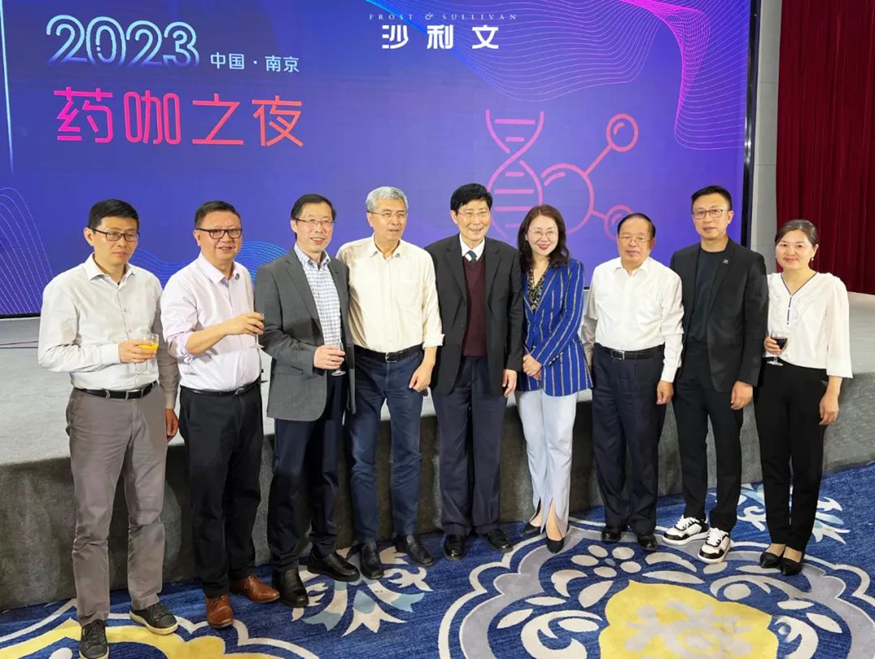
Dr. Wang Xin, Global Partner at Frost & Sullivan and Chairman of the Greater China Region (second from right), and Academician of the Chinese Academy of Sciences, Deputy Director of National Major New Drug Creation Technologies, former Director of the Shanghai Institute of Materia Medica, Chinese Academy of SciencesCBIITAAcademician Chen Kaixian (center), President of the Alliance and Editor-in-Chief of "Advances in Pharmacy", and President of the China Chemical Pharmaceutical Industry AssociationCBIITAGroup photo of Mr. Pan Guangcheng, Vice President of the Alliance (third from right)
Frost & SullivanFrost & SullivanDr. Wang Xin, Global Partner and Chairman of Frost & Sullivan's Greater China Region, was invited to attend the conference and delivered a speech on 'The Iteration and Development of China's Pharmaceutical Industry'.
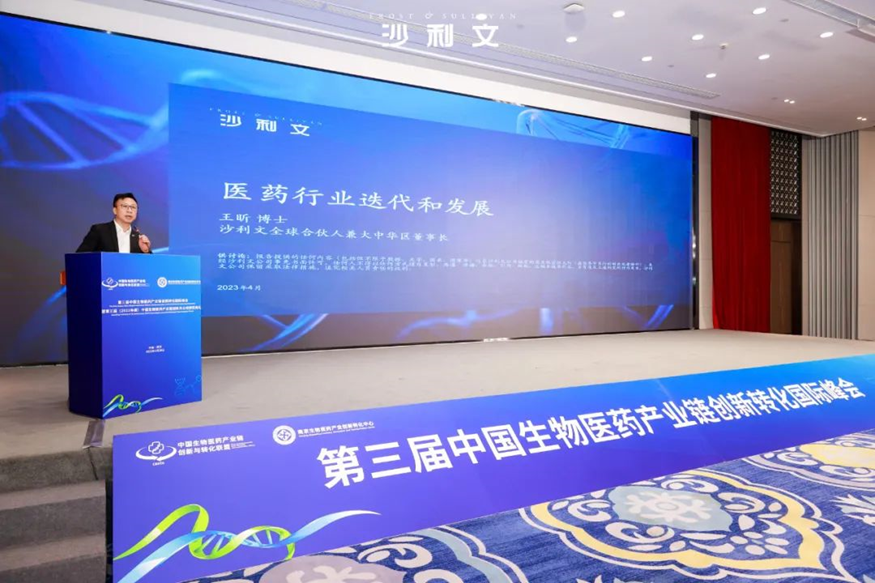
At the meeting, Dr. Wang Xin first analyzed the trends in the global pharmaceutical market. He pointed out that through observation and analysis of the global healthcare industry, Frost & Sullivan believes that the industry is currently facing three major challenges.
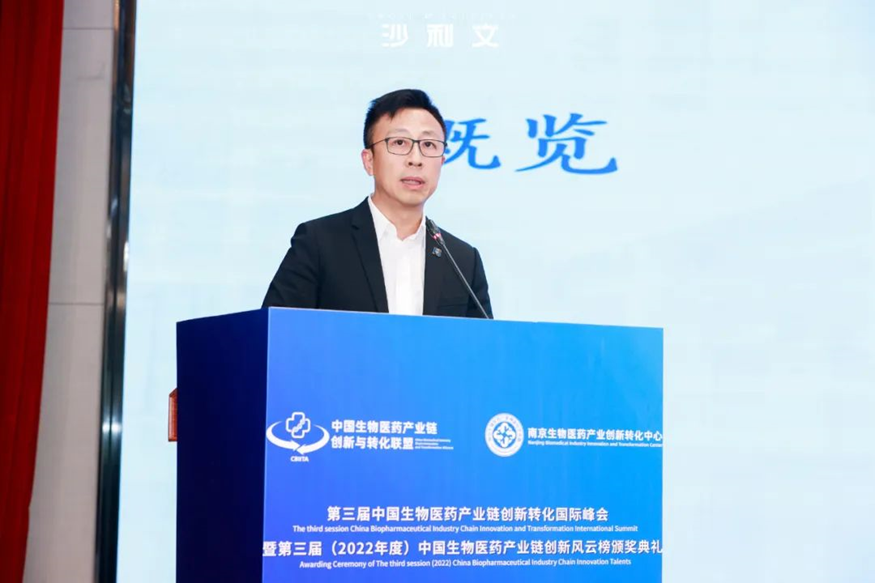
Global Partner and Chairman of Frost & Sullivan Greater China Region Dr. Wang Xin
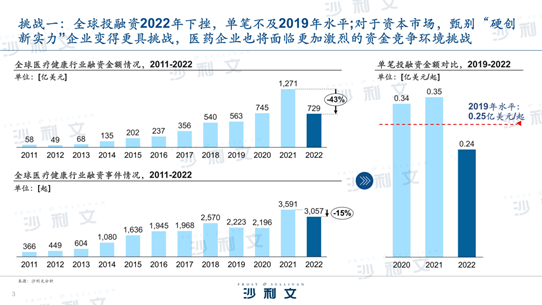
The first challenge comes from the external funding environment. 2022Since the beginning of the year, affected by factors such as geopolitical conflicts, energy shortages, the COVID-19 pandemic, and high inflation, the global healthcare industry capital market has seen a significant decline.2022In the year, the global healthcare industry witnessed a total3,057Start financing event, more2021Decrease in annual value43%The overall sentiment tends to be calm and prudent.
In terms of total financing,2022Total annual amount729billion US dollars, compared to2021Decrease in annual value15%close to2020The level of last year. But2022The capital structure in [specific year] is significantly different compared to2020In the year, there was a noticeable clustering of funds, capital became more rational, investors' strategies tended to invest in higher-quality targets with greater certainty. The number of financing enterprises participating and the amount they could raise were both decreasing.2022The single-investment and financing amount in the year is0.24billion dollars, less than2019The level of [a certain year].
"Investment and financing are the lifeline of pharmaceutical innovation, and they are crucial for promoting the success of R&D and commercialization by healthcare enterprises." Dr. Wang Xin stated that for the capital market, identifying 'hard innovation capabilities' has become more challenging, and pharmaceutical companies will also face more intense competition for funds.
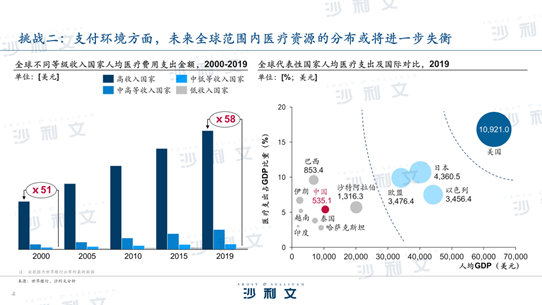
The second challenge lies in the payment environment. In terms of income levels, the gap in per capita medical expenditure among countries with different income levels has further widened. The gap between high-income and low-income countries has grown from2000year51Has been multiplied by2019year58times. Looking at specific economies, the world's representative countries have gradually formed a clear bipolar distribution, with wealthy countries having significantly higher per capita healthcare expenditures than low-income countries, such as2019The per capita medical expenditure in the United States is about20.4times, from Vietnam60.4times. The distribution of global healthcare resources is positively correlated with regional economies. High medical expenditures in developed regions enable patients to receive more cutting-edge treatments in healthcare, while low-income areas mainly rely on maintaining the most basic essential medicines and medical services. It is expected that the distribution of healthcare resources globally may become even more imbalanced in the future.
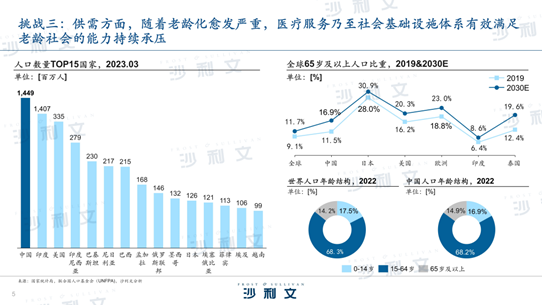
The last challenge comes from supply and demand. Driven by factors such as urbanization development, improved medical standards, and gradually extended human lifespan, the world's population is growing at a rapid rate. Population aging has become an inevitable trend in global population development, with developing countries experiencing a more pronounced acceleration of aging. The deepening degree of population aging means that in the future, the demand side will have higher demands for medical and health services in terms of quantity and quality. Therefore, with towards The medical services and even social infrastructure system positioned for the younger population will struggle to effectively meet the severe diagnostic and treatment needs brought about by the aging society.
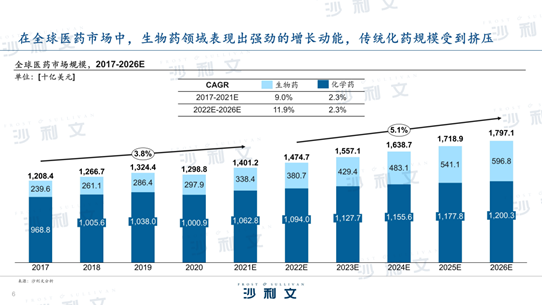
Dr. Wang Xin pointed out, Looking at the global pharmaceutical market, the biopharmaceutical sector has shown strong growth momentum, while the scale of traditional drugs has been squeezed.
Data shows that the global pharmaceutical market size has2017year1.2Trillions of dollars grow to2021year1.4trillion dollarsCAGRabout3.8%are expected2026Will reach in1.8Trillions of dollars, with the global pharmaceutical market maintaining stable growth. Looking at the two types of drugs in the pharmaceutical market, biologics have a completely new therapeutic concept compared to chemical drugs, providing new ideas for treating difficult and complicated diseases such as cancer and psoriasis. Currently, the growth rate level is much higher than that of chemical drugs. In the future, driven by factors such as enhanced efficacy of biologics, development of biotechnology, increased R&D investment, and continuous approval of biologics, it is expected that the global biopharmaceutical2022 - 2026The compound annual growth rate for the year is11.9%, still significantly ahead of chemical drugs2.3%.
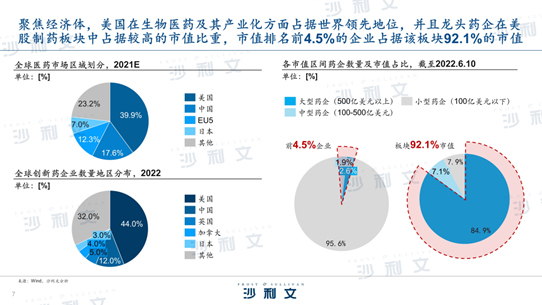
Looking at the major economies, the United States occupies a world-leading position in biomedicine and its industrialization. The biomedicine industry has become one of the core drivers for the development of high-tech industries in the US. The biopharmaceutical industry is an emerging technology-intensive industry in the United States and a pillar industry for economic development, exerting a significant influence. Leading pharmaceutical companies account for a high proportion of market value in the US pharmaceutical sector, ranking among the top.4.5%Enterprises in this sector92.1%Market value.
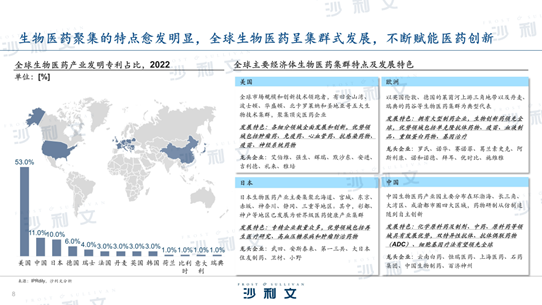
In terms of regional distribution, global biomedicine is developing in clusters. In terms of biomedical invention patents, the United States, China, Japan, and Europe are the major patent-contributing countries globally, and the clustering effect of their biomedicine industries is becoming increasingly evident.
United States As the global center for biopharmaceutical development, it has established five major biopharmaceutical industry bases including Boston, San Diego, and the North Carolina Triangle. It has achieved comprehensive development and innovation in sub-specialty drug fields such as oncology drugs, immunology drugs, cardiovascular drugs, anti-infective drugs, vaccines, and neurological drugs.
Europe The biomedical industry cluster has gathered large pharmaceutical enterprises, leading the global biotech innovation. It has significant advantages in monoclonal antibody drugs, vaccines, blood products, recombinant protein drugs, gene therapy, and other areas;
Japan There are numerous specialized enterprises, with advantageous fields including regenerative medicine research, drugs for the prevention and treatment of hypertension, diabetes, and tumors;
china The biomedical industrial parks are mainly distributed in four regions: the Bohai Rim, Yangtze River Delta, Greater Bay Area, and Chengdu-Chongqing Metropolitan Area. In terms of development characteristics, they not only have advantages in the development of chemical bulk drugs and preparations, traditional Chinese medicine, etc., but also in bispecific antibodies and antibody conjugates (ADCFrontier technologies such as cell gene therapy are also booming.
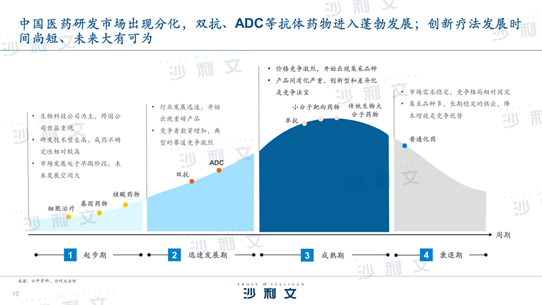
Subsequently, Dr. Wang Xin analyzed in detail the iteration and development trends of the innovative drug industry.
According to a study by Frost & Sullivan, Currently, constrained by the rapid development of generic drugs, centralized procurement, and medical insurance, Generic drugs have entered a period of decline Market demand is stable, and the competitive landscape is relatively fixed; The fields of monoclonal antibodies, small molecule targeted drugs, and traditional biological macromolecular drugs are in the mature stage. Market competition is fierce, and centralized procurement varieties have begun to appear. However, product homogenization is serious, such as insulin, which has been successfully included in centralized procurement; Dual Antibody,ADCInnovative drugs have entered a period of rapid development Compared with the European and American markets2000There have been some around the New YearADCApproved. The Chinese market started relatively late and has been developing in recent years3In the new year, significant product approvals are expected to begin. As the efficacy and safety of early-stage products are clinically validated, the number of competitors in the Chinese market will also increase, leading to fierce competition in the sector; The R&D technology barriers for innovative therapies such as cell therapy, gene therapy, and nucleic acid drugs are high. The uncertainty of developing drugs into marketable products is relatively high, and the market development is in its early stages, with great potential for future development.
From the changes in the number of clinical trials in China, it can be seen that compared with2017Year to2020The number of new drug clinical trial levels in China in the past three years, including monoclonal antibodies, bispecific antibodies,ADCLarge molecule drugs such as antibody fusion proteins have become an important area in new drug research and development. The proportion of related clinical trials in the total number of new drug clinical trials in China has increased significantly, while the proportion of chemical drugs and monoclonal antibodies has shown a downward trend. Clinical trials of innovative therapies represented by cell therapy, gene therapy, nucleic acid drugs, and oncolytic viruses continue to increase, and their proportion in new drug clinical development is gradually rising. Recently3The annual proportion has reached3.8%.
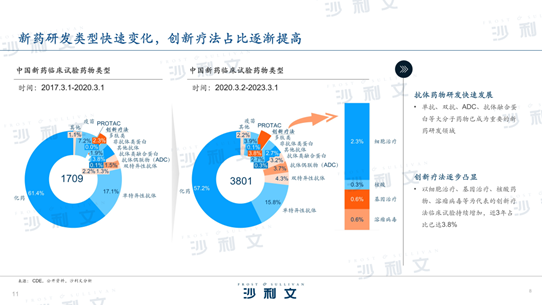
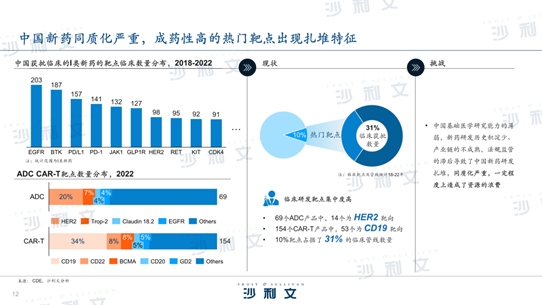
"One of the major current issues in new drug research and development in China's pharmaceutical market is severe homogenization."2018Since [start year], the distribution of approved new clinical drug targets in China has been very concentrated. Typical targets that have become drugs areEGFR,BTK,PD1/PDL1,JAKTargets all exceeding100A clinical trial has been approved. This "The current situation is closely related to China's drug research and development process. The weak basic medical research capabilities in China, the lack of historical accumulation in new drug research and development, an immature industrial chain, and relatively lagging regulatory oversight have led to a clustering of new drug research and development efforts in China, with serious homogenization. This has also, to a certain extent, caused a waste of resources." Dr. Wang Xin further added. "Creating a differentiated product pipeline by developing new targets, avoiding target overcrowding, iterating and upgrading R&D technologies, and changing drug development strategies are key for pharmaceutical companies to break through in the fierce competition."
Dr. Wang Xin pointed out that the innovative drug industry will exhibit the following three development trends:1The domestic market is shifting towards overseas markets;2)BiotechreachBiopharma companyThe transformation;3)License-in grantedreachLicense-out of the MainlandTransformation.
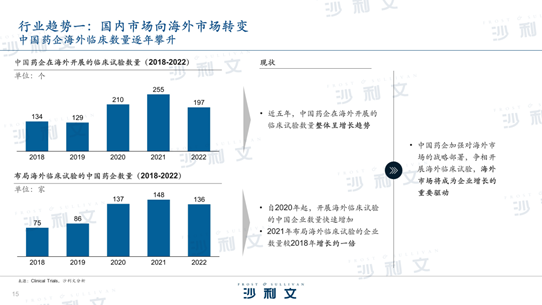
In recent years, factors such as enhanced R&D capabilities for innovative drugs, significant potential in overseas markets, gradual alignment of domestic and international regulatory systems, and pressure on domestic prices of innovative drugs have driven Chinese pharmaceutical companies to go global and actively explore international market territories. Data shows that in the past five years, the number of clinical trials conducted by Chinese pharmaceutical companies overseas has generally shown an upward trend.2020Starting from the year, exceeding130Chinese pharmaceutical companies conduct overseas clinical trials;2021The number of companies deploying overseas clinical trials in the year2018The annual growth is about double. As Chinese pharmaceutical companies continue to strengthen their strategic deployment in overseas markets and compete to conduct overseas clinical trials, the overseas market will become an important driving force for corporate growth in the future.
On the other hand, driven by factors such as desire to drive growth, industrial environmental impact, good market prospects, and continuously improving commercial capabilities, more and moreBiotechThe company has embarked onBiopharma companyThe path to progress.
The upsurge of high-end medical talents returning to China This is the primary catalyst for this transformation and upgrading. Driven by China's huge demand for biomedicine and talent policies, many pharmaceutical talents with strong research capabilities have chosen to return to their home country to start businesses and cultivate in the fertile soil of Chinese medicine.
Domestic industrial environment It is also one of the factors catalyzing this transformation. Compared with developed countries, China's 'segmental' industrial division of labor model is not yet mature, and mostBiotechThe products are still concentrated in the R&D stage and do not yet possess commercialization capabilities. It is difficult to complete the division of labor between production and sales, thus making the product's investment return cycle long. Catalyzed by this industrial environment,BiotechFaced with a move towardsBiopharma companyThe transformation and change aim to achieve full coverage of the pharmaceutical industry chain by deploying production and sales links.
The listing environment of Chinese pharmaceutical enterprises This is the third factor catalyzing this transformation. With the implementation and promotion of the fifth set of listing standards for the Sci-Tech Innovation Board, many innovative pharmaceutical companies have embraced opportunities. With the capital support after listing,BiotechWe will continue to invest in the research and development of innovative drugs, accelerate the commercialization process, andBiotechGradually progress from cost centerBiopharma companyProfit center.
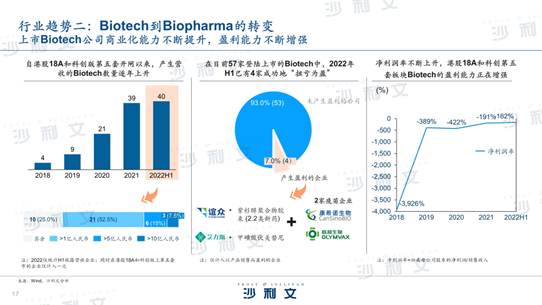
Dr. Wang Xin said, since Hong Kong stocks18ARevenue generated since the implementation of the fifth set of measures for the Sci-Tech Innovation BoardBiotechThe number has been increasing year by year. As of2022In the first half of the year, as many as40homeBiotechGenerate revenue, of which3The earnings of home pharmaceutical companies exceed10100 billion RMB, more than halfBiotechRevenue exceeds11000 million RMB, Hong Kong stock market18AAnd the fifth sector of science, technology and innovationBiotechThe profitability is strengthening.
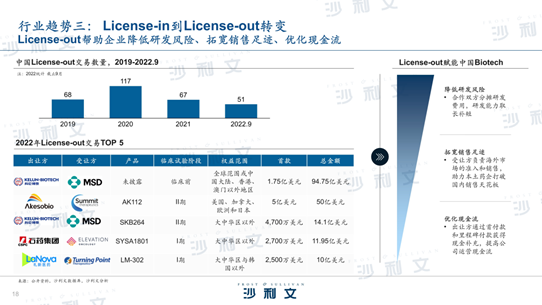
In addition, as the domestic innovation drug ecosystem gradually takes shape,License-in grantedreachLicense-out of the MainlandIt represents the third trendic shift faced by China's innovative pharmaceutical industry against the backdrop of globalization.
Under the influence of favorable policies and capital support, the domestic innovation drug R&D capability has rapidly improved. However, this has also led to homogenization in innovation drug R&D and a 'involution' situation. Therefore, product 'going global' has become an inevitable trend in China's pharmaceutical development. 2020The year is the pharmaceutical industryLicense-out of the MainlandIn the first yearLicense-out of the MainlandThe project has set a new record high, with outbound transactions reaching117pen. "Domestic pharmaceutical companies can achieve complementary advantages in research and development by collaborating with overseas pharmaceutical companies, reducing the risks of new drug development. They can also leverage the sales networks of international big pharmaceutical companies in the sales sector, enabling domestic innovative drugs to enter the international market more quickly and participate better in global competition," said Dr. Wang Xin.
"Going global" is undoubtedly an inevitable trend for domestic pharmaceutical companies to rapidly move towards globalization.License-out of the MainlandOptimizing policies is the top priority of this transformation. Dr. Wang Xin pointed out,License-out of the MainlandThe core lies in internationalization, differentiation, and commercialization. Internationalization is mainly reflected in fully examining overseas pharmaceutical markets and precisely selecting partners that better fit with the products going global; secondly, by developing products that address unmet needs in overseas markets, leveragingLicense-out of the MainlandDifferentiate the product to break out of the homogenization dilemma; at the same time, layout products in the advantageous areas of partners, making full use of their experience in sales networks, clinical applications, etc., to maximize profits; finally, adhere to long-termism, create brand benefits, and establish sustainable developmentLicense-out of the MainlandPolicy.
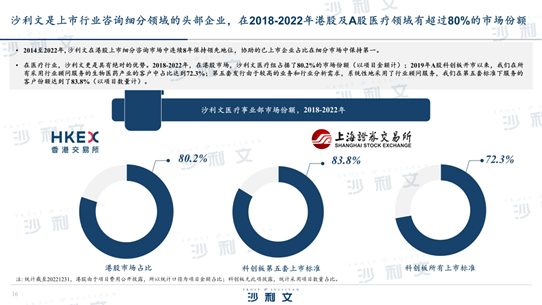
Finally, Dr. Wang Xin briefly introduced the consulting services of Frost & Sullivan to the guests present. Dr. Wang Xin stated that this year marks the global establishment of Frost & Sullivan.62The anniversary is also the first time we have entered the Chinese market25As a global growth consulting firm, Frost & Sullivan has been deeply involved in the global capital markets and corporate consulting services for over a decade. It provides comprehensive investment and financing as well as various other professional consulting services to enterprises. The company has helped nearly a thousand companies successfully list on the Hong Kong and overseas stock exchanges and is a leading enterprise in the field of investment strategy consulting in China.
2014till2022In FY, Frost & Sullivan went on to maintain its market-leading position in the Hong Kong-listed consultancy segment for the second consecutive year.8Maintaining a leading position year-on-year, the proportion of assisted listed companies remains first in the segmented market. In the healthcare industry, Frost & Sullivan has an absolute advantage.2018 - 2022In FY19, the Frost & Sullivan healthcare team in the Hong Kong market accounted for80.2%Market share (in terms of project amount); from2019yearASince the launch of the Sci-tech Innovation Board, Frost & Sullivan's share has reached72.3%Due to the high demand for business and industry analysis in the fifth set of issues, systematic use of industry advisory services was adopted. Frost & Sullivan's share of clients served under the fifth set of standards has reached83.8%(Number of projects).
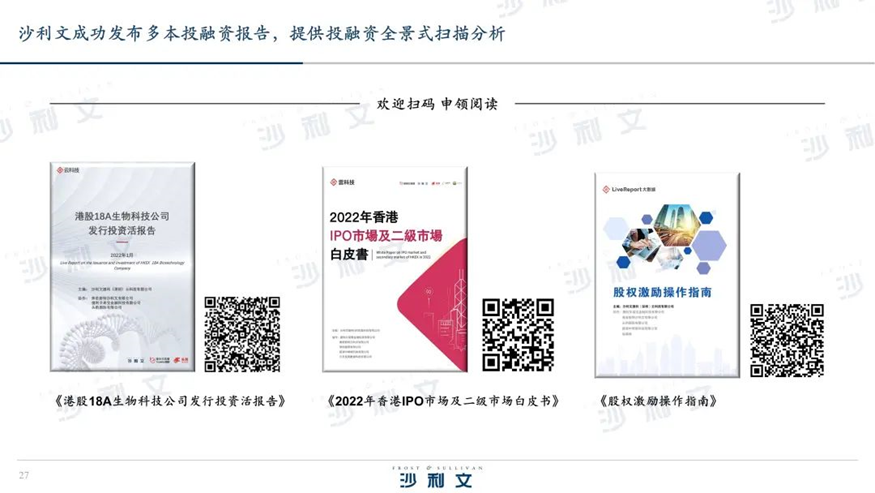
Based on its rich experience in the investment and financing sector, Frost & Sullivan has successfully released 'Hong Kong Equity Markets'.18ABiotech companies issue 'Investment Activity Reports' "The2022Hong Kong in YearIPO listingMarket and Secondary Market White Paper, Equity Incentive Operation Guide, etc. Multiple investment and financing reports, providing a panoramic scan and analysis of investment and financing.
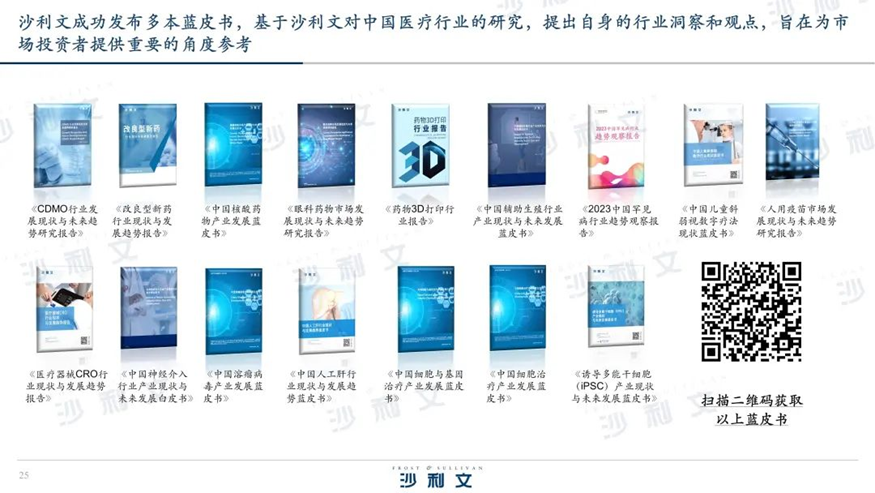
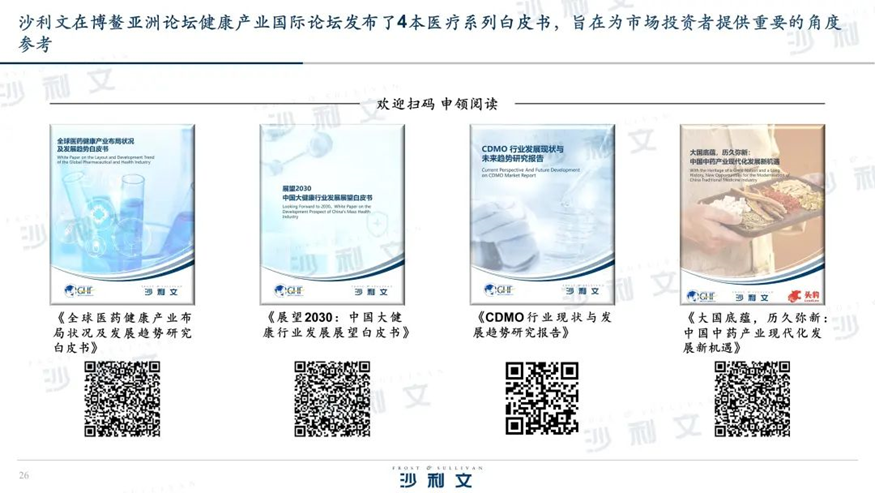
2023year4month21On the same day, Frost & Sullivan released the 'Global Pharmaceutical and Healthcare Industry Layout Status and Development Trend Research White Paper' and 'Outlook2030White Paper on the Development Prospect of China's Big Health IndustryCDMOResearch Report on the Current Industry Situation and Development Trends, and "The Heritage of Great Powers, Everlasting Newness: New Opportunities for the Modernization and Development of China's Traditional Chinese Medicine Industry"4This healthcare series white paper aims to provide important perspective references for market investors.
In the entire healthcare sector, based on its research into the Chinese healthcare industry, Frost & Sullivan has successfully released Induced pluripotent stem cellsiPSCBlue Book on the Current Industry Situation and Future Development "White Paper on the Current Industry Situation and Future Development of China's Neurointerventional Industry" , "Blue Book on the Current Situation and Development Trends of China's Artificial Liver Industry", "The2023"China Rare Disease Industry Trend Observation Report", Medical DevicesCRO firmIndustry Status quo and Development Trends Report Blue Book on the Current Situation of Digital Treatment for Strabismus and Amblyopia in Chinese Children, etc. Multiple blue books present their own industry insights and viewpoints, deeply summarizing and analyzing the current development status and trends of the industry. It is hoped that these can provide an important reference perspective for market investors, as well as for industrial development and decision-making.