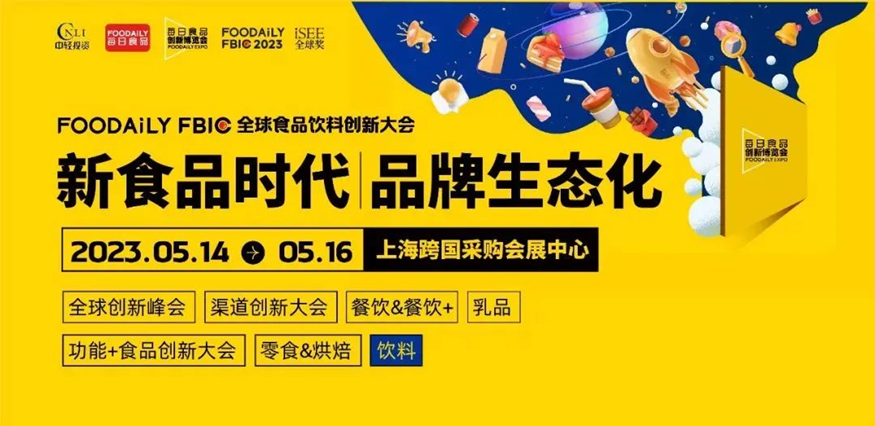
 Global Food and Beverage Innovation Conference
5month14 - 16day, byFoodailyDaily Food HostedFoodaily FBICThe Global Food and Beverage Innovation Conference was held at the Shanghai Multinational Procurement Exhibition Center. With 'brand ecosystemization' as its core, this conference focused on 'youthfulness, digitalization, branding, and specialization', aiming at brands from0reach1, fromBreachCWith an open mindset, we have invited hundreds of heavyweight guests to share their insights. Together, we will discuss the new future of the food industry from an innovative perspective, helping the industry keep up with the pulse of the times and achieve innovative breakthroughs.
The conference includes four major sections: conferences, exhibitions, awards, and special events.360Present innovative products, brands, industries, and new consumer trends in a 3D format. In addition to the traditional sessions of [Global Innovation Summit], [Dairy Products], [Catering],&Catering+】、【Snacks&In addition to the Baking and Drinks forums, a special event, the [Channel Innovation Conference], and [Features] have been planned.+The [Food Innovation Conference] presented a grand event for the food and beverage industry. Frost & SullivanFrost & SullivanAs one of the conference's keynote speaker partners and content partners, Lou Lei, Executive Director of Frost & Sullivan Greater China, was invited to attend the conference and deliver a presentation titled2023Delivered a speech at "Insights into the Innovation Trends of China's Beverage Industry".
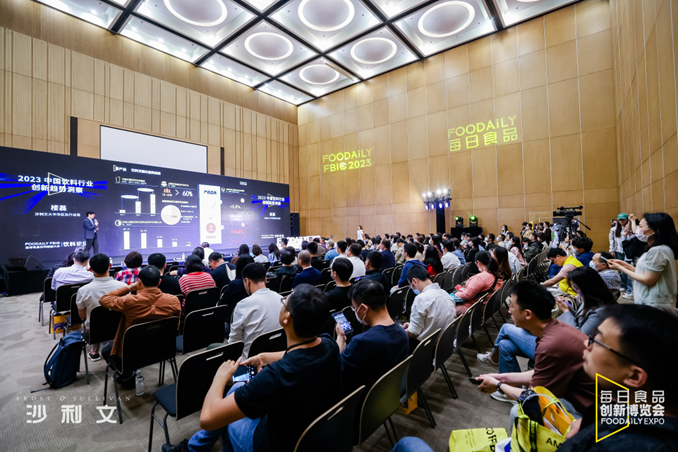

Executive Director, Greater China, Frost & Sullivan Lou Lei
Lou Lei said that judging from Frost & Sullivan's insights into the beverage industry in recent years, Omni-channel, differentiated products, new media, and health concepts have become the new trend in the development of the entire industry at present.

Data shows, the soft drink market in China The segment with the largest market size is packaged drinking water, and2016Year-end2022The annual average compound growth rate reaches10%At the same time, functional beverages also maintain a high market share and growth rate. In addition, it is worth mentioning that although coffee beverages do not account for a large proportion, the entire coffee market has been growing rapidly in recent years.2016Year-end2022The annual average compound growth rate exceeds24%.
In terms of channels, Modern and traditional channels occupy60%Market share: E-commerce channels continue to innovate, with interest e-commerce (content and social commerce) represented by Douyin, Kuaishou, Bilibili, WeChat, Weibo, and Rednote showing a rapid development trend. It also brings continuous industry growth and new touchpoints.
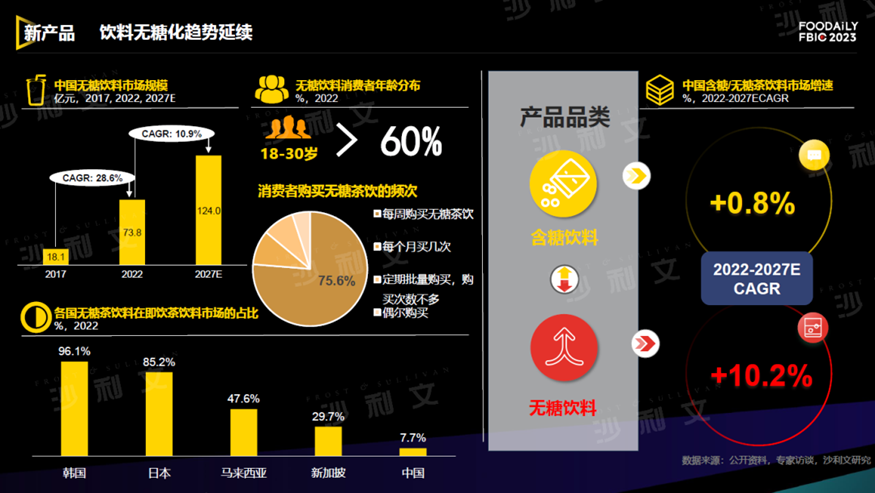
From a product perspective, the beverage industry in China shows the following trends: First, there is a trend towards sugar-free and healthy lifestyles. The consumer group for this category is relatively young, and once a consumption habit is formed, repeat purchases will be very stable; Second, packaging differentiation. In terms of packaging style, there is a trend towards youthfulness and personalization. The brand is willing to attract more consumers' attention through cross-border collaborations, color visual impacts, etc. In terms of packaging appearance, it caters to the evolution of the 'single economy' towards lightweight, compact, and personalized packaging. At the same time, it innovates with fun and expands packaging functions to enhance product interactivity.
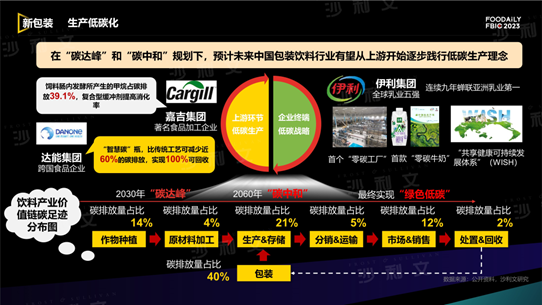
"In addition, environmental protection is also a focus for leading companies. By using environmentally friendly packaging, enterprises highlight their brand's sense of social responsibility and strengthen the brand's social value," In addition to focusing on environmentally friendly material packaging, many companies are starting to tell more stories about eco-friendly packaging. 'Lou Lei further explained that the beverage industry chain is a food sector with very high carbon emissions, which are currently mainly concentrated in packaging, production processes, and upstream raw materials. Some leading companies have begun to pursue carbon neutrality and peak carbon emissions, gradually widening the gap with small and medium-sized enterprises by setting higher standards for industry norms and enhancing their brand image. For example, carbon reduction in packaging, establishing zero-carbon factories, achieving product carbon neutrality, etc., these measures reflect the exemplary role of Chinese companies under the international trend of environmental protection and are also very important for companies going global to open up foreign markets.
Finally, Lou Lei pointed out that there is a trend towards product collaboration in the current hot spot of ready-to-drink tea with hot pot brewing. For example, the cross-border collaboration between Wong Lo Kiu and Keen Yip's brands, targeting both The attribute of 'reducing internal heat and treating acne' resonates with consumers, combining seemingly unrelated categories to expand influence through contrast effects; Coca-Cola with PopMart, and Hito Tea with 'Dream of the Red Chamber'.IP addressCollaboration, relying on with trendsIP addressIntegration, with beverage companies continuously expanding their brand influence and user base. "With consumers gradually developing a habit of consuming packaged beverages, how to innovate the brand to create new customers, new scenarios, and new markets has become a new direction of consumer demand," said Lou Lei.