On December 10, 2024, the China Consumer Industry Entrepreneurs Summit 2024 was held in Changsha, Hunan Province. The conference brought together authoritative figures, corporate leaders, and industry experts from China's consumer industry to jointly delve into industry insights, development directions, strategic layouts, as well as opportunities and challenges of the consumer market under the new cycle.
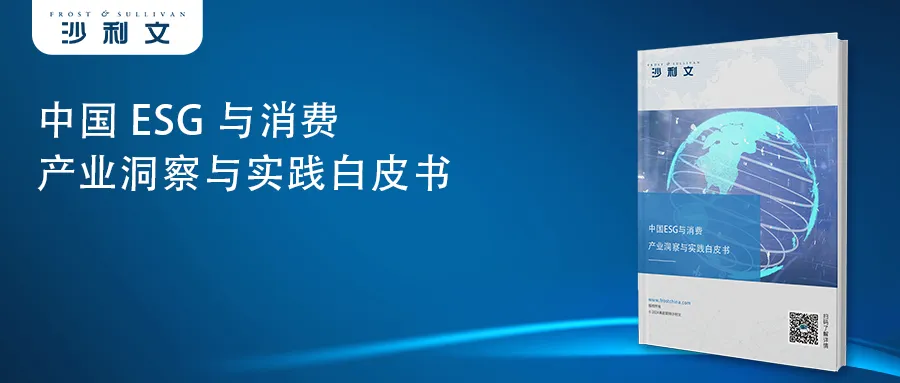
Xiang Wei, Executive Director of Frost & Sullivan Greater China, was invited to attend the event and deliver a speech. At the conference, Frost & Sullivan (referred to as 'Frost & Sullivan') joined forces with NetEase Capital, JD Logistics, Zhongxin Environmental Protection, Oatly, and Jianhui Xing Shan Zhe Public Welfare Foundation to release the 'White Paper on ESG and Consumer Industry Insights and Practices in China'.
The report provides a detailed analysis of the concepts and development trends of ESG (Environment, Social Responsibility, and Corporate Governance), as well as examples of ESG practices in various segments of China's consumer industry at the current stage.
Scan the code to obtain the complete report

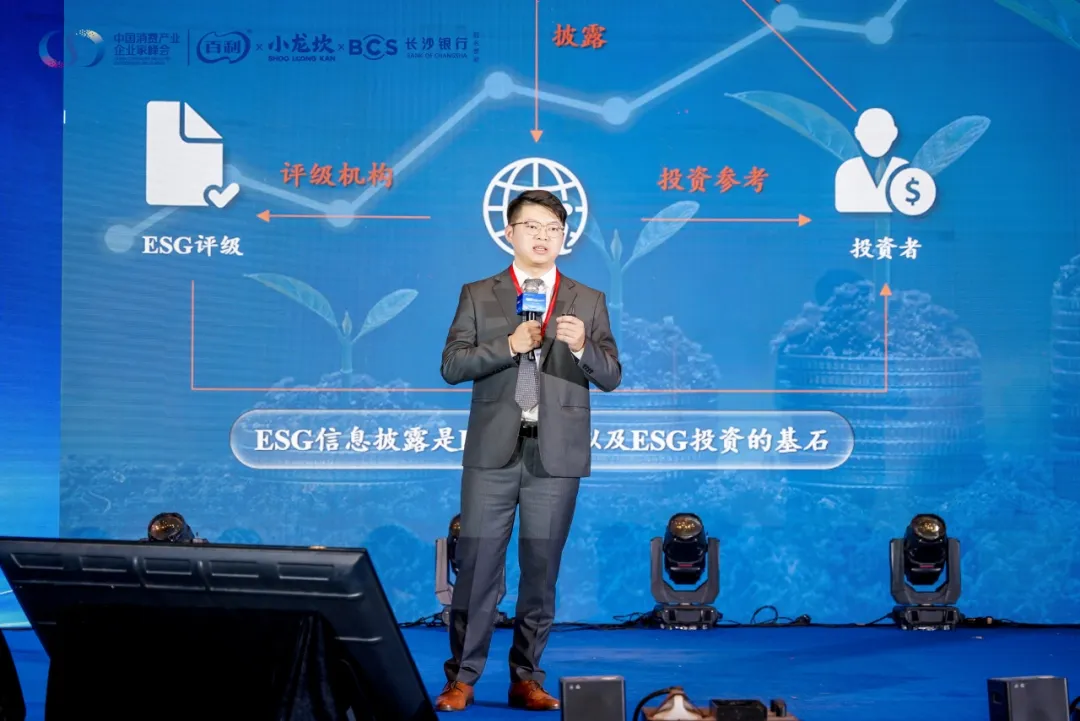
Xiang Wei, Executive Director, Frost & Sullivan Greater China
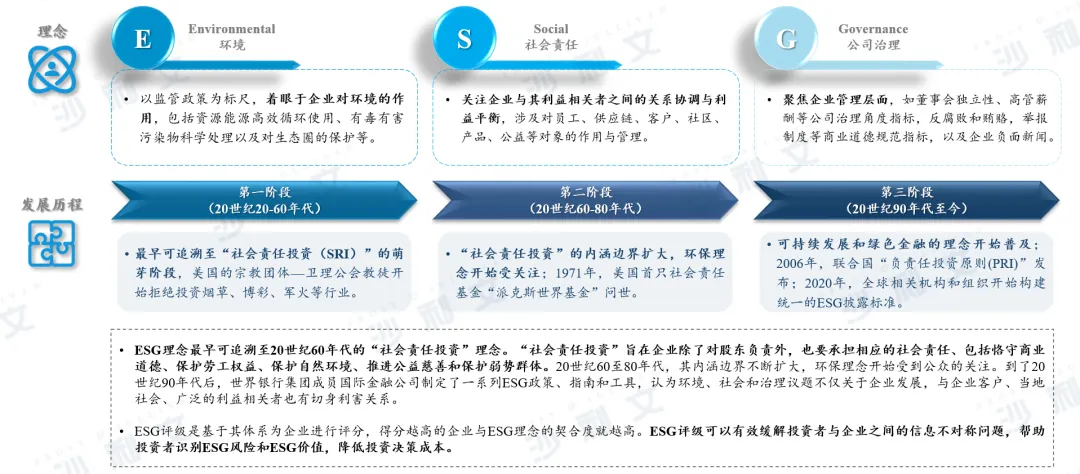
ESG is an investment philosophy that focuses on the environmental, social, and governance performance of enterprises. It differs from traditional financial indicators as it assesses the sustainability of a company's business development and its impact on society from the perspectives of environment, society, and corporate governance. It can be traced back to the 1960s.
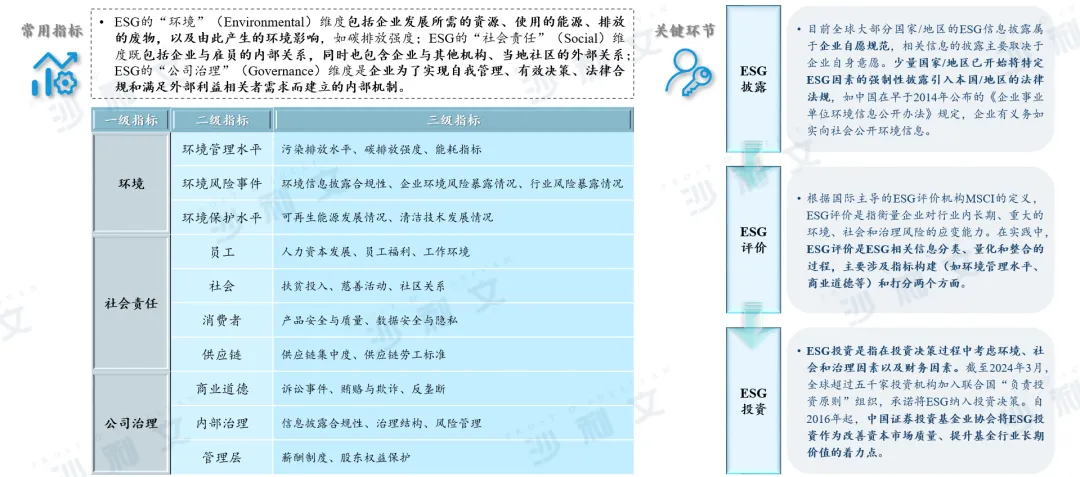
The three key links of the ESG system include ESG information disclosure, ESG evaluation, and ESG investment. That is, enterprises disclose corresponding information based on the content included in the evaluation system, rating agencies evaluate the ESG disclosed by enterprises, and ESG investors control investment risks based on the evaluation results.
Since the United Nations Environment Programme introduced the ESG concept in 2004, the market's focus on non-financial performance information has increasingly shifted towards companies' environmental, social responsibility, and corporate governance performance. Companies are compiling their ESG information into social responsibility reports and sustainable development reports.
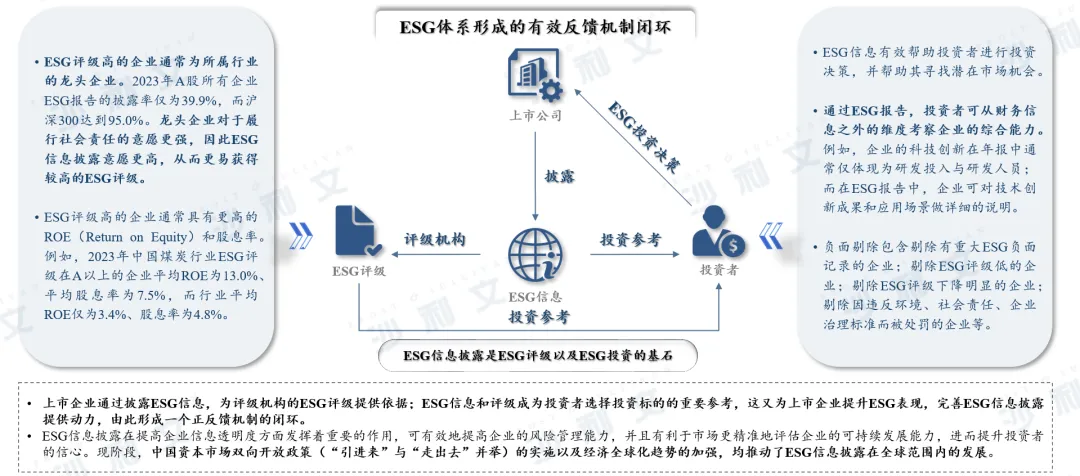
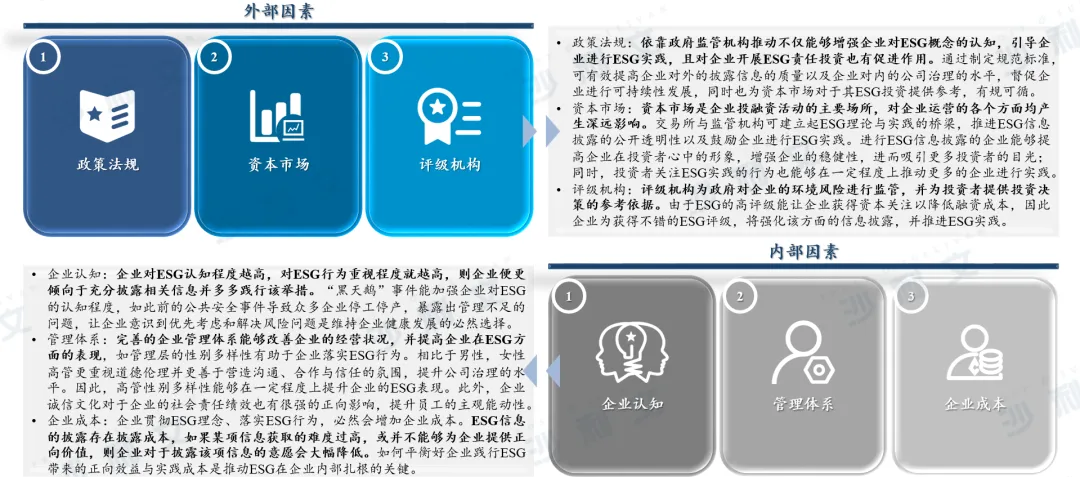
Developing ESG effectively differentiates a company from other enterprises within the industry. There are various factors for companies to implement ESG concepts and behaviors, including external factors such as capital market drivers and macro policy supervision; internal factors such as an individual company's awareness of ESG, practical difficulty and cost.
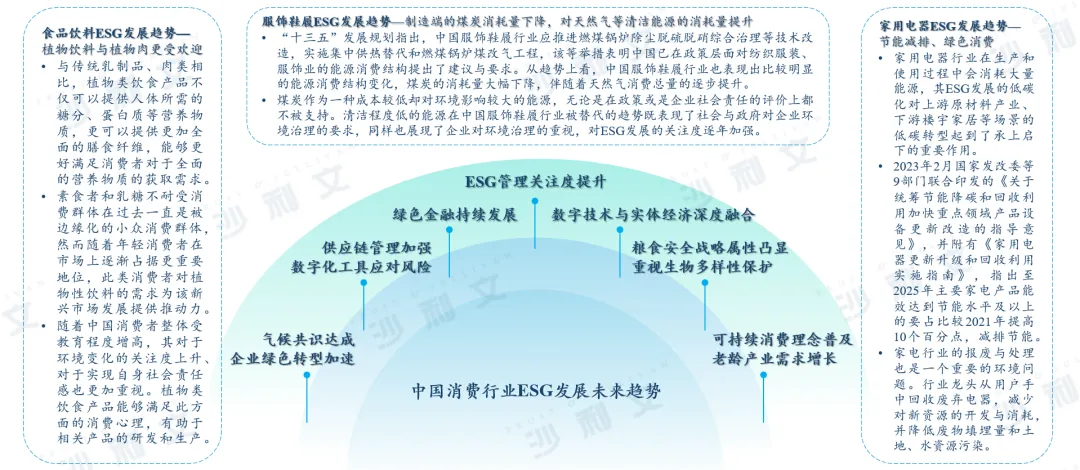
With consumers' growing awareness of environmental protection, health, and sustainable development, as well as companies placing increasing emphasis on ESG practices in operational management, China's consumer industry is undergoing a green transformation and upgrading under favorable policies such as the procurement of environmentally friendly materials and circular economy, presenting broad development prospects.
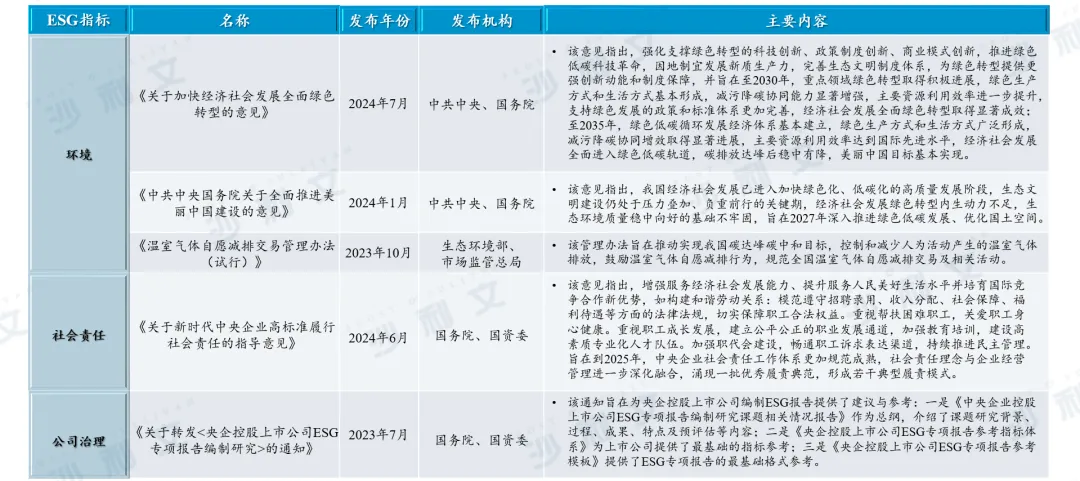
The ESG concept highly aligns with China's current development strategy. In recent years, relevant policies have been introduced one after another, aiming to enhance the country's sustainable development capabilities, promote the optimization and upgrading of industrial structure, facilitate resource conservation and environmental protection, and improve social welfare. These policies have a substantial directional impact on enterprise development.
At present, leading enterprises in various sub-sectors of China's consumer industry are making numerous attempts in ESG practice and development, and have made considerable progress through unremitting efforts. These attempts and progress indicate that China's consumer industry is actively responding to the ESG concept, and is promoting the sustainable development of the industry through various efforts such as product innovation, supply chain optimization, social responsibility practices, environmental practices, and digital transformation.
Finally, Wei Li expressed that 'Chinese consumer enterprises will pay more attention to Chinese characteristics and international standards in implementing ESG concepts and behaviors. Against the backdrop of the increasingly prosperous digital economy, new-generation digital information technologies represented by artificial intelligence and cloud computing provide strong technical means to enhance enterprises' ESG practice capabilities, such as optimizing supply chain management and managing carbon emissions. In the future, Chinese consumer enterprises will have broader development space and deeper practice in exploring ESG.'
Recommended Reading
Long-press to scan the QR code below to obtain the report