On July 25th, the National Medical Products Administration conditionally approved the registration application for Zanubrutinib tablets by Zhejiang Bio-Thera Biologics to add an indication for treating COVID-19 pneumonia. This is also the first domestically approved small molecule oral drug for COVID-19.
What is the significance of the launch of China's first self-developed small molecule oral COVID-19 drug? What is the demand for small molecule oral drugs? How is the supply of small molecule drugs for COVID-19 in our country? Li Qian, Senior Consulting Director for Healthcare Industry in Greater China at Frost & Sullivan (hereinafter referred to as "Frost & Sullivan"), was interviewed by CBN to discuss the future direction of China's small molecule drug market after the approval of the first domestic COVID-19 oral drug.
CBN
On July 25th, the National Medical Products Administration conditionally approved the registration application for Zanubrutinib tablets by Zhejiang Bio-Thera Biologics to add an indication for treating COVID-19 pneumonia. This is also the first domestically approved small molecule oral drug for COVID-19.
Zhejiang Bio-Thera Biologics has not officially announced the manufacturer, but according to previously disclosed information by listed companies, including Aoxang Pharmaceutical, Tuoxin Pharmaceutical, and China Resources Shuanghe, they have all stated that they have signed framework agreements for entrusted production with Zhejiang Bio-Thera Biologics.
As of the close on July 26th, the stock prices of Aoxang Pharmaceutical (603229) and China Resources Shuanghe (600062) both fell by a full point, while the stock price of Tuoxin Pharmaceutical (301089) dropped by 6.3%.
On the evening of July 25th, Fosun Pharma announced a long-term strategic cooperation with Zhejiang Bio-Thera Biologics to exclusively commercialize Azvudine. CBN reporters learned that Fosun Pharma's upfront payment amount reached 100 million yuan. On July 26th, the stock prices of Fosun Pharma's A-share (600196) and Hong Kong stock (2196) both fell by about 3%.
The key is market demand
Market analysis suggests that the market demand for Azvudine is still unclear, and the stock prices of related companies have been significantly pushed up earlier, which is also the reason for the significant market decline.
Since the beginning of this year, the cumulative increase in the stock price of China Resources Shuanghe has approached 80%, and that of Aoxang Pharmaceutical has exceeded two-thirds.
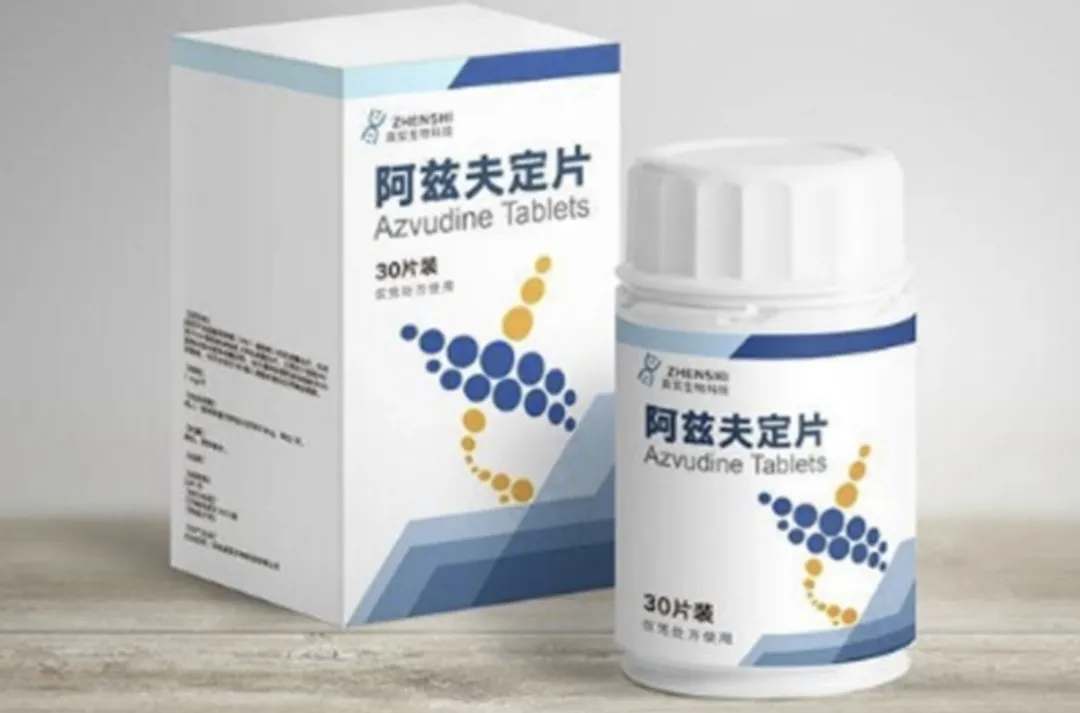
Image source: CBN
Azvudine is a nucleoside analog that has broad-spectrum activity against viral RNA-dependent RNA polymerase (RdRp), and it can also specifically act on the RdRp of the novel coronavirus, thereby inhibiting virus replication. The drug has strong targeting properties. It was originally marketed as an anti-AIDS drug and shares the same mechanism of action as Remdesivir.
“Multiple companies can produce Azvudine; the key is how future demand will be, which depends on the development of the pandemic and the effectiveness of the drug in actual use,” said a pharmaceutical expert to CBN reporters.
According to the key Phase III registration clinical trials submitted by Zhejiang Bio-Thera Biologics earlier, the results showed that Azvudine has antiviral activity against the novel coronavirus, with a virus clearance time of about 5 days; among subjects who improved clinically symptoms on the 7th day after the first dose, the proportion in the Azvudine group was 40.43%, compared to 10.87% in the placebo group.
“From the current situation, if it cannot be proven that taking antiviral drugs can prevent severe cases, only reducing the time to turn negative for the virus, then even if the clinical trials are very strict, their importance would be greatly reduced,” said the above-mentioned pharmaceutical expert to CBN reporters.

Li Qian
Senior Consulting Director for Healthcare Industry in Greater China at Frost & Sullivan
Compared to other COVID-19 therapies such as neutralizing antibodies, the advantage of small molecule oral COVID-19 drugs lies in their convenience of use, and they can tolerate mutations to a certain extent, offering significant advantages such as high patient compliance, convenient storage and transportation, and easy distribution.“As the pandemic becomes normalized, small molecule drugs can play a role in suppressing viral proliferation early in patients' infections, reducing the likelihood of developing into severe cases, and can be used for daily prevention, adding an important link to epidemic control measures,” said Li Qian, Senior Consulting Director for Healthcare Industry in Greater China at Frost & Sullivan, to CBN reporters.
Institutions significantly downgraded Pfizer's oral drug sales expectations
Currently, the only small molecule drug for treating COVID-19 that has entered clinical use in China is Pfizer's antiviral drug Paxlovid. This drug is also currently leading the global COVID-19 treatment market. However, according to the latest research predictions from data analytics company Airfinity, Paxlovid's sales in the next six months are likely to fall short of market expectations.
Health data agency Airfinity said that the latest data confirm that the order volume and quotes recently signed by Pfizer have begun to gradually slow down. The agency expects that by the end of this year, there may be as many as 70 million courses of Paxlovid surplus in the global market.
Airfinity analysis says that this small molecule drug may interact with other drugs, which could limit its use. Airfinity analyst Harry Cheeld said that Pfizer may re-examine its bullish plans for the drug demand and deal with the supply surplus problem.
Earlier, Pfizer said it planned to provide 120 million courses of Paxlovid this year. Since the beginning of this year, Pfizer's stock price has fallen more than 12%. Pfizer is set to release its latest quarterly financial report on July 28th.
According to Airfinity's prediction, another company providing COVID-19 oral drugs, Merck, is expected to supply only 15 million courses this year.
Looking at overall sales, Airfinity predicts that Pfizer's total sales of Paxlovid this year will reach $232 billion, lower than the previous three-month forecast of $236 billion; Merck's total sales of oral drugs are estimated to be $58 billion, lower than the previous estimate of $64 billion; the sales of the COVID-19 oral drug approved by Japanese pharmaceutical company Ono Pharmaceutical, which was postponed, are estimated to be $500 million, lower than the previous forecast of $25 billion.
In China, in addition to Zhejiang Bio-Thera Biologics' Azvudine tablets, Junshi Biosciences' COVID-19 oral drug VV116 tablets have also entered Phase III clinical trials. On May 23rd this year, Junshi Biosciences announced that VV116 tablets had met the primary endpoint set in the protocol in a Phase III registration clinical study comparing them with Pfizer's PAXLOVID for the early treatment of mild to moderate COVID-19 pneumonia and stated that they would submit an application for marketing shortly.
*This article is reprinted from 'CBN', authored by Qian Tongxin, with the original title 'Why did manufacturers fall by a full point after the approval of the first domestic COVID-19 oral drug?'
Frost & Sullivan Insights · Extended Reading
Q:What does the launch of China's first self-developed small molecule COVID-19 oral drug indicate?
A:As of June this year, two small molecule drugs for COVID-19 have been approved for marketing and commercialization in multiple countries around the world, namely Pfizer's Paxlovid and Merck's Molnupiravir. Before the launch of the first self-developed drug, the only available small molecule oral drug in our country was Paxlovid, which was conditionally approved for import in February this year. As the officially approved first domestically developed small molecule oral drug for treating COVID-19, Azvudine further constructs China's comprehensive prevention and control system of "vaccines + neutralizing antibodies + small molecule drugs."
Q: Globally, is there currently an oversupply of Pfizer's small molecule drugs?
A:Paxlovid is used to prevent high-risk groups from developing into severe cases. Due to the ongoing spread of the real pandemic, the number of infections remains high, and the demand for medication is still there. Although the sales in the first quarter of this year were lower than market forecasts, overall sales are still considerable. In the global field of small molecule oral COVID-19 drugs, Pfizer's Paxlovid holds a dominant position.
Q: How is the supply of small molecule drugs for COVID-19 in our country?
A:In the announcement released on the evening of July 25th, Fosun Pharma disclosed that it has reached a strategic cooperation with Zhejiang Bio-Thera Biologics to jointly develop and exclusively commercialize Azvudine through Fosun Pharma's industry, and will carry out the commercial layout of Azvudine. After the full industrial chain is implemented in the future, mass production will be carried out to meet current clinical medication needs.
Q: Which other companies are expected to receive approval?
A:In China, in addition to Zhejiang Bio-Thera Biologics' Azvudine tablets, there are two other drugs that are progressing relatively rapidly in the research and development of COVID-19 oral drugs, including VV116 jointly developed by Junshi Biosciences and Wangshan Wangshui, and Puklumab developed by Kuaer Pharmaceutical, which are currently in Phase III clinical trials and are expected to be launched soon. The research progress is worthy of continuous attention.