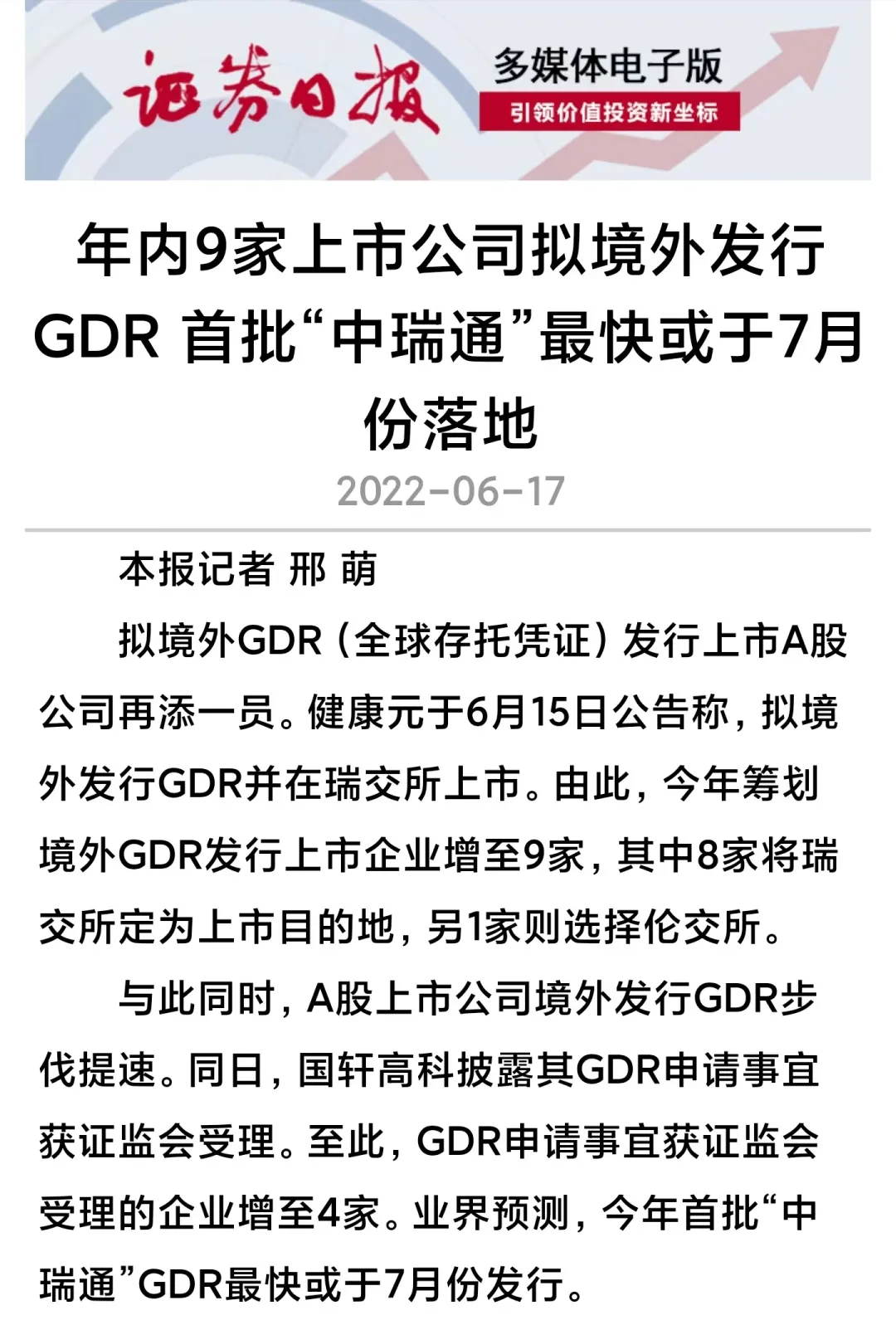
On the evening of June 15th, Guoxuan High-Tech announced that its GDR issuance and listing application had been accepted by the China Securities Regulatory Commission (CSRC). Previously, Keda Manufacturing, Green Motion, and Lepu Medical also announced in early May that their GDR applications had been accepted by the CSRC.Currently, going public on the Swiss Exchange has become the mainstream choice. This year, nine companies have planned to issue GDRs for overseas listing, with eight targeting the Swiss Exchange.
What are the advantages of issuing GDRs? Is there a possibility that GDR issuance could become an alternative to private placements? Which types of companies are more suitable for financing through GDR issuance? From the current progress, when will the first Chinese company's GDR listing on the Swiss Exchange be finalized? Mr. Lu Jing, Partner and Managing Director of Frost & Sullivan Greater China, interviewed with the Securities Daily to discuss the impact of GDR financing on enterprises.
Securities Daily
Another A-share company plans to issue GDRs (Global Depository Receipts) overseas. On June 15th, Health Yuan announced that it plans to issue GDRs overseas and list on the Swiss Exchange. As a result, this year's number of companies planning to issue GDRs overseas has increased to nine, with eight targeting the Swiss Exchange and one choosing the London Stock Exchange.
Meanwhile, A-share listed companies are accelerating their pace of issuing GDRs overseas. On the same day, Guoxuan High-Tech disclosed that its GDR application had been accepted by the CSRC. Thus, the number of companies whose GDR applications have been accepted by the CSRC has increased to four. Industry forecasts suggest that the first batch of "Zhongrui Tong" GDRs may be issued as soon as July
Compared to previous years, the number of companies choosing to issue GDRs overseas this year has significantly increased, with the main destinations being the Swiss Exchange.
Currently, there are three destinations for overseas GDR issuance and listing: the UK, Switzerland, and Germany. Before 2022, four listed companies such as Huatai Securities had successfully achieved overseas GDR issuance and listing, all choosing the London Stock Exchange. This year, three companies—Sany Heavy Industry, Guoxuan High-Tech, Lepu Medical, Shanxi Shares, MingYang Intelligence, Keda Manufacturing, Fangda Carbon, Green Motion, and Health Yuan—have planned to issue GDRs overseas. Except for MingYang Intelligence which chose the London Stock Exchange, the other eight chose the Swiss Exchange.
“As one of Europe's largest stock exchanges, the Swiss Exchange offers relatively higher valuations for enterprises in terms of price-to-earnings ratio, making it competitive.” Sun Lijun, co-head of Global Investment Banking at UBS Securities, told the Securities Daily.
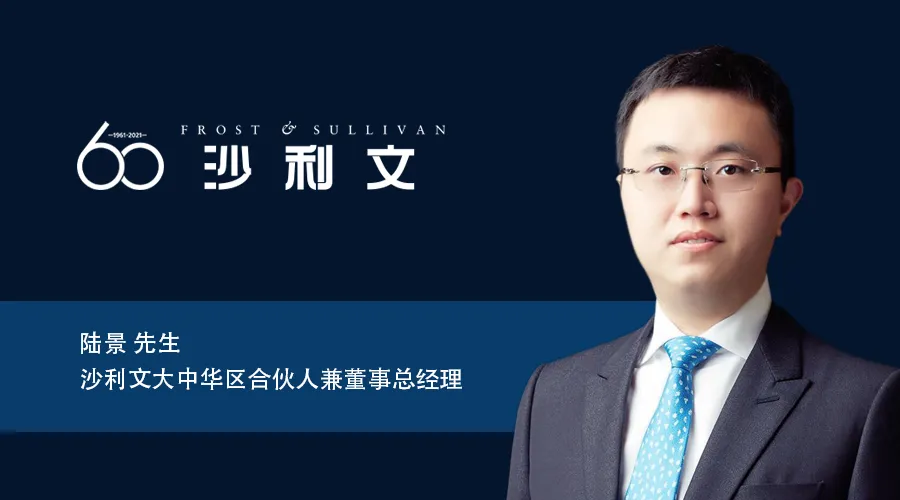
“The investors on the Swiss Exchange are internationalized, and their valuation level is among the top in major European securities markets. At the same time, the proportion of institutional investors from outside the country is high, and they also have a high degree of openness to overseas investors.” Mr. Lu Jing, Partner and Managing Director of Frost & Sullivan Greater China, told the Securities Daily.
According to Sun Lijun, listed companies interested in issuing GDRs generally have the following demands: introducing international and domestic strategic investors to promote business development; enhancing internationalization levels and consolidating overseas financing channels; improving corporate governance and further optimizing shareholder structure; establishing a benchmark position and expanding market influence.
For example, Health Yuan mentioned three purposes for GDR issuance and listing: accelerating international strategic steps, using capital markets to support the enhancement of multi-channel financing capabilities, and improving corporate governance levels.
GDR can meet the various needs of relevant listed companies. Sun Lijun said that on one hand, GDRs can be freely converted into A shares, with relatively high liquidity, which can attract more investors; on the other hand, the issue price floor for GDRs is also higher than that for private placements, raising more funds, and diluting existing shareholders less, thus achieving higher financing efficiency.
Since Sany Heavy Industry announced its plan to issue GDRs overseas on March 15th, eight companies have followed suit within three months, accelerating the progress of GDR issuance and listing.
It is worth noting that, unlike previous years when state-owned enterprises were predominant, these nine companies are all private enterprises. Sun Lijun said that these private enterprises have strong demands for financing and expanding international business, which is an important reason for optimizing interconnectivity rules, allowing more private enterprises with high development levels, capital, and overseas business needs to accelerate their development through GDR issuance.
Lu Jing said that private enterprises are important market entities in China's economy. In recent years, China has actively guided and supported private enterprises to "go global," which not only helps to accelerate the formation of a higher level of opening up but also facilitates private enterprises to further explore international markets and continuously develop and grow.
From the progress of the nine companies, four companies—Keda Manufacturing, Green Motion, Lepu Medical, and Guoxuan High-Tech—have received approval from the CSRC for their GDR applications, with the fastest progress. Additionally, the related GDR proposals for MingYang Intelligence, Shanxi Shares, and Fangda Carbon have been passed by the shareholders' meeting.
The Jindu Research Institute believes that the issuance of GDRs requires completing internal decision-making procedures and supporting system construction, as well as external regulatory authorities' declaration and approval procedures. The external approval procedures include not only the approval of the CSRC and Shanghai and Shenzhen stock exchanges involved with domestic issuers but also the approval of securities regulatory authorities and exchanges in overseas GDR listing destinations.
Lu Jing predicts that if the domestic and international reviews are successful, the GDR review time will be about 1 to 2 months, with an overall execution time expected to be 4 to 5 months. Based on current progress, the first batch of "Zhongrui Tong" GDRs is expected to be issued between July and August this year.
Previously, Guoxuan High-Tech revealed that "this GDR project is conducive to accelerating the company's international strategic layout, building a global brand and image, and meeting the funding needs for overseas business development. Therefore, the company plans to complete the issuance and listing by the end of July."
Lu Jing believes that as the team of overseas financing enterprises continues to grow and their advantages gradually become apparent, it is expected that more domestic companies will consider raising funds through overseas GDR issuance to expand their overseas influence.
Frost & Sullivan Insights ·>Extended Reading
Q: Compared to traditional private placement financing, what are the advantages of issuing GDRs, and is there a possibility that GDR issuance could become an alternative to private placements?
A:GDR (Global Depository Receipts) refers to a situation where a listed company deposits its shares with foreign banks according to a depositary agreement, and the latter issues documents as proof of deposit. These documents are known as global depositary receipts. GDRs can be publicly issued globally and are a type of depositary instrument issued by depositary institutions, available to markets in multiple countries, and used to raise funds in US dollars or euros. GDRs allow companies' stocks to be traded in countries without a stock market, enabling investors to invest in companies not listed on local stock markets. Chinese companies can introduce international and domestic strategic investors through issuing GDRs, thereby achieving goals such as promoting business development, enhancing internationalization, consolidating overseas financing channels, and optimizing shareholder structure. GDRs have an advantage in overall issuance time. If the domestic and international reviews are successful, the GDR review time is about 1 to 2 months, with an overall execution time expected to be 4 to 5 months. A-share private placements typically take more than half a year from the board's proposal announcement to approval. H-share IPOs generally complete within 6 to 8 months. In the future, as the team of overseas financing enterprises continues to grow and their advantages gradually become apparent, it is expected that more companies will consider raising funds through overseas GDR issuance to expand their overseas influence.
Q: This year, all GDR issuances and listings were by large private enterprises. What do you think is the reason? Which types of companies are more suitable for financing through GDR issuance?
A:Private enterprises are important market entities in China's economy. Facing new international situations and development requirements, in recent years, the Chinese government has actively guided and supported private enterprises to "go global," which not only helps to accelerate the formation of a higher level of opening up but also facilitates private enterprises to further explore international markets and continuously develop and grow. Through GDR issuance and listing, private enterprises can promote healthy and rapid business development by introducing international and domestic strategic investors; enhance internationalization levels and consolidate overseas financing channels; improve corporate governance and further optimize shareholder structure.
Compared to A-share refinancing and H-share IPOs, GDR issuance also has advantages such as shorter review time, free conversion with A shares, and flexible issuance ratios. It has a positive impact on large private enterprises that have 1) broadening international financing channels, 2) international development needs, 3) enhancing global brand influence, etc.
Q: From the current number of companies applying for GDR listing, it far exceeds previous levels and they are clustered around choosing the Swiss Exchange. What do you think are the reasons? From the current progress, when will the first Chinese company's GDR listing on the Swiss Exchange be finalized?
A:The reasons why the number of companies applying for GDR listing far exceeds previous levels and they are clustered around choosing the Swiss Exchange include:
1) Thanks to the "Regulations on the Supervision of Interconnectivity Depositary Receipt Business between Domestic and Overseas Stock Exchanges" issued by the CSRC on February 11th this year, which expanded the coverage of interconnectivity depositary receipts to Switzerland and Germany. This provides more diversified financing channels for enterprises.
2) Compared to A-share and H-share IPOs, GDR issuance has a shorter review time, which helps improve financing efficiency.
3) The headquarters of the Swiss Stock Exchange is located in Zurich, Switzerland, making it one of Europe's largest stock exchanges. Investors are internationalized, and their valuation level is among the top in major European securities markets. The proportion of institutional investors from outside the country on the Swiss Exchange exceeds 50%, and Swiss banks are world leaders in cross-border private asset management, with a high degree of openness to overseas investors.
Regarding GDR issuance, relevant Chinese rules have now been implemented. Based on current progress, the first batch of Zhongrui Tong GDRs is expected to be issued between July and August this year.
*This article is reprinted from the Financial News section of the Securities Daily, with reporter Xing Meng, and the original title is "Nine Listed Companies Plan to Issue GDRs Overseas This Year, with the First Batch “Zhongrui Tong” Likely to Land as Soon as July