In the first four months of this year, China's software business revenue increased by 10.8% year-on-year, making it one of the few industries that maintained a high growth rate despite the impact of the pandemic. On May 25th, People's Daily published an article calling on the domestic software industry to firmly grasp the initiative in innovation and development, enhance their sense of crisis, strengthen their confidence in innovation, and win broader development space by combining research with application.
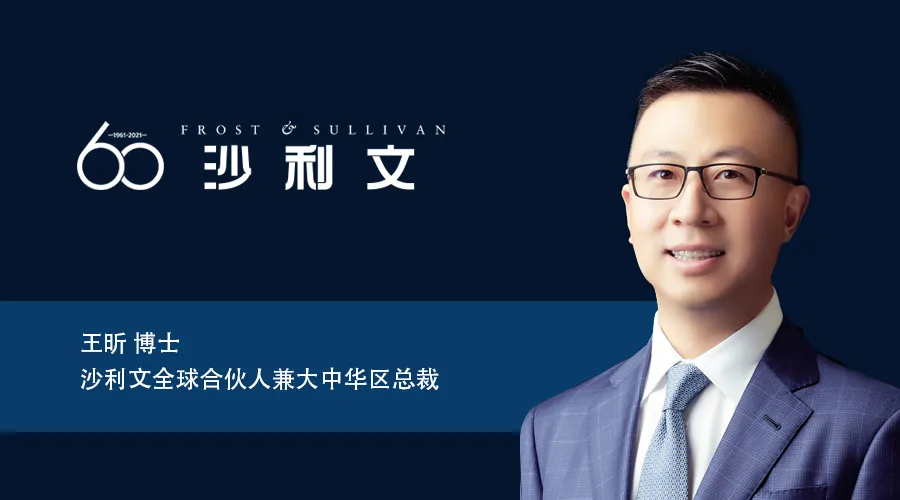
What is the reason for the rapid growth of the software business? Which sub-sectors have driven the rapid development of this industry in recent years? At present, which software technologies in China are subject to foreign control? How should governments and enterprises respond to gain the initiative? Dr. Wang Xin, a global partner at Frost & Sullivan (referred to as 'Frost & Sullivan') and President of Greater China, recently spoke with Nanhua Daily to discuss the current development status of the software industry.
Nanhua Morning Post
Q: In the first four months of this year, China's software business revenue increased by 10.8% year-on-year. It is one of the few industries that have maintained a high growth rate despite the impact of the pandemic. Could you explain the reasons for this rapid growth?
Dr. Wang Xin:In recent years, the dividends of national policies have been continuously released. The high-quality development of the software industry has risen to a national strategy, and the independent innovation capabilities of local enterprises have been greatly enhanced, completing a transformation from scratch. Product performance has approached the international medium level. Against the backdrop of accelerating domestic substitution, the domestic software industry is entering a golden acceleration period from 1 to N. It not only occupies more market share in the domestic market but also gradually begins to go global, competing with overseas manufacturers in high-end markets.
On one hand, the pandemic has accelerated the digital transformation of enterprises and public sectors. Mature domestic operating systems, databases, and office software are widely used in government affairs, enterprises, education, and other fields. Online handling of government affairs and enterprise collaboration have become the new normal after the pandemic.
On the other hand, China possesses a vast and complete industrial system. The fierce competition in the global industrial chain has made the digital transformation of the industrial production side an urgent necessity. As the 'brain' of factories, industrial informatization software platforms can significantly shorten product delivery cycles and help enterprises effectively reduce costs and increase efficiency. In addition to the industrial sector, domestic software has formed large-scale and in-depth applications in fields such as energy, manufacturing, telecommunications, finance, retail, etc., jointly promoting the steady growth of the software market.
Q: What are the main sub-sectors that have driven the rapid development of the software industry in recent years? Cloud services? Industrial Internet platforms? Which companies have performed outstandingly?
"
Dr. Wang Xin:With the continuous deepening of digital transformation in Chinese enterprises and the gradual improvement of related IT infrastructure, the cloud service industry in China has developed rapidly. The annual compound growth rate over the past five years has reached over 30%, and its proportion of total IT expenditure in China has been continuously increasing. Cloud service providers represented by Huawei Cloud, Alibaba Cloud, and Tencent Cloud have all achieved significant growth.
On the other hand, as the world's largest manufacturing country, China has a huge market space for industrial software, with market growth rates significantly faster than the global average. The technological gap between domestic and foreign manufacturers is continuously narrowing, and their market share is gradually increasing.
Q: The People's Daily article 'Let More Domestic Software Show Their Skills' mentions 'Practice has repeatedly told us that key technologies cannot be obtained through purchase or negotiation.' What are some examples of how we have been turned away from Western key technologies?
Dr. Wang Xin:Taking the chip industry as an example, although China has numerous chip design manufacturers, the industrial software used for chip design mainly comes from abroad. For instance, leading global market share holders of EDA industrial software are all from the United States. If foreign companies stop licensing and using EDA chip design software, the R&D work of domestic chip design manufacturers will be severely affected.
Q: At present, which software technologies in our country are subject to foreign control? How should the government and enterprises respond to gain the upper hand?
Dr. Wang Xin:Although there are a wide variety of application software in our country, the basic software industry is relatively weak compared to developed countries and has long been in a state of 'being controlled by others'. Domestic basic software does not have a deep enough understanding of core technologies, and there are still certain gaps between its product performance, user experience, stability, and maturity with mainstream foreign products. Enterprises related to the ecosystem lack in-depth cooperation, making it difficult to form systematic application capabilities, and an industrial ecosystem that develops healthily has not yet been formed.
In this situation, the government needs to strongly encourage the development of professional talents, increase investment in basic software fields such as operating systems, databases, and middleware to fill the talent gap. At the same time, it is necessary to strongly support basic software R&D enterprises to help them overcome difficulties in research and development investment. On the other hand, enterprises within the industry need to be patient in gradually breaking through key technologies and developing into capable enterprises with unique competitiveness. Basic software technology has high technical barriers and requires substantial investment, necessitating long-term accumulation of technical experience. Therefore, both the state and enterprises need long-term joint efforts to create a virtuous cycle of 'government, industry, academia, research, and application' so as to truly gain the initiative in the field of software technology.