On October 13, at a policy briefing held by the State Council Information Office, Li Ming, Deputy Chief Engineer and Director of Marketing Department of State Grid Corporation of China, stated that it is expected that the maximum load this winter will reach 1 billion kilowatts, exceeding the historical level of 970 million kilowatts during the same period.
After experiencing a period of power supply tension, with the arrival of winter's peak electricity consumption, will the tight power supply situation continue? How can the power grid make efforts this year to ensure power supply safety? The power grid has annual imbalances and gaps. When, and how can these be stabilized? Will the new power system dominated by renewable energy exacerbate this phenomenon in the future? Analysts from Frost & Sullivan were interviewed by China Energy News.Focus on ensuring power supply this winter, and we will provide you with a detailed interpretation.
China Energy News
On October 13, at a policy briefing held by the State Council Information Office, Li Ming, Deputy Chief Engineer and Director of Marketing Department of the State Grid Corporation of China, stated that it is expected that the maximum load this winter will reach 1 billion kilowatts, exceeding the historical level of 970 million kilowatts during the same period. The "triple convergence" of the peak electricity consumption period in the north, the dry season for hydropower, and the heating period for cogeneration units “will further increase power demand." Overall, the system will be in a state of tight balance, with local hard shortages and still significant pressure on the power grid to ensure power supply.
Under the pressure of ensuring supply, the transformation of the power system itself has received even more attention. After successfully constructing a new type of power system, will the grid be more adept at handling the pressure of ensuring power supply?
Facing the test of a maximum load of 1 billion kilowatts
After experiencing a period of power supply strain some time ago, with the arrival of winter's peak electricity consumption, will the tight power situation continue under the maximum load of 1 billion kilowatts?
A relevant official from the Economic Operation Regulation Bureau of the National Development and Reform Commission recently stated that this winter, the total installed capacity across the country will reach about 24 billion kilowatts, an increase of about 200 million kilowatts year-on-year. The effective peak load will be increased by more than 60 million kilowatts, and the peak power generation capacity can exceed 12 billion kilowatts. The country's maximum power generation capacity can ensure the highest demand for electricity consumption, and there is confidence and capability to ensure winter power supply.
Jiangxing Smart CFO Shao Junsong believes that with the joint efforts of relevant national departments, there is basically no risk of power outages during the peak electricity consumption period this winter and next spring.
"In the current situation, there is an overall imbalance between electricity supply and demand. Although residential and general industrial and commercial electricity use will be guaranteed, large industrial users, especially those with high energy consumption, are likely to face relatively strict orderly electricity usage measures," said Shao Junsong.
Wang Gengye, consulting director of Frost & Sullivan's Energy Carbon Double Reduction Business Unit in Greater China, analyzed that one of the core reasons for this round of power rationing is supply-demand imbalance. On the supply side, the issue of rising coal prices remains an objective reality at present; on the electricity price side, although the electricity pricing mechanism has been announced to be more market-oriented after the reform was introduced on October 8th, there are still fundamental issues with the coal-fired power pricing mechanism that need to be resolved.
This forces all links of the power system to be more coordinated
Shao Junsong told reporters that under the current market conditions, due to the special nature of electricity as a commodity, power supply safety depends on a strong grid structure, safe operation on the power generation side, and orderly consumption on the power consumption side.
He stated that although China's power grid network structure is relatively sound and strong, the risk of insufficient power generation capacity due to issues such as coal-fired power inversion and fluctuating power generation from new energy stations on the generation side could affect grid safety. At the same time, on the consumption side, if a large number of users cannot implement an orderly electricity use plan, it can also impact grid safety.
The relevant person in charge of the National Development and Reform Commission stated that it is necessary to coordinate and strengthen the construction of power supply capacity. Accelerate the progress of important power source grid projects, ensure that coal-fired and gas-fired power units are fully operational, promote the frequent and full generation of clean energy, and enhance power supply capacity through multiple channels.
Wang Gengye told reporters that currently, against the backdrop of insufficient stability and volume of new energy power generation, thermal power generation remains the main source of electricity in China. However, the price increase of coal far exceeds the affordability of electricity prices, coupled with carbon reduction constraints, makes it still a prominent pressure for power grids to ensure power supply.
Industry insiders told reporters that in this situation, on the one hand, the power grid needs to transform as soon as possible and accelerate the construction of a new power system, making the grid itself more flexible and resilient. This will better enable the adjustment of power supply and demand gaps, achieving balance between supply and demand through dispatching; on the other hand, it must also be recognized that achieving stable and high-quality power supply is not just the responsibility of the power grid alone. It requires joint efforts from both the power source side and the load side, and more importantly, policy guidance from an overall perspective and throughout the entire process.
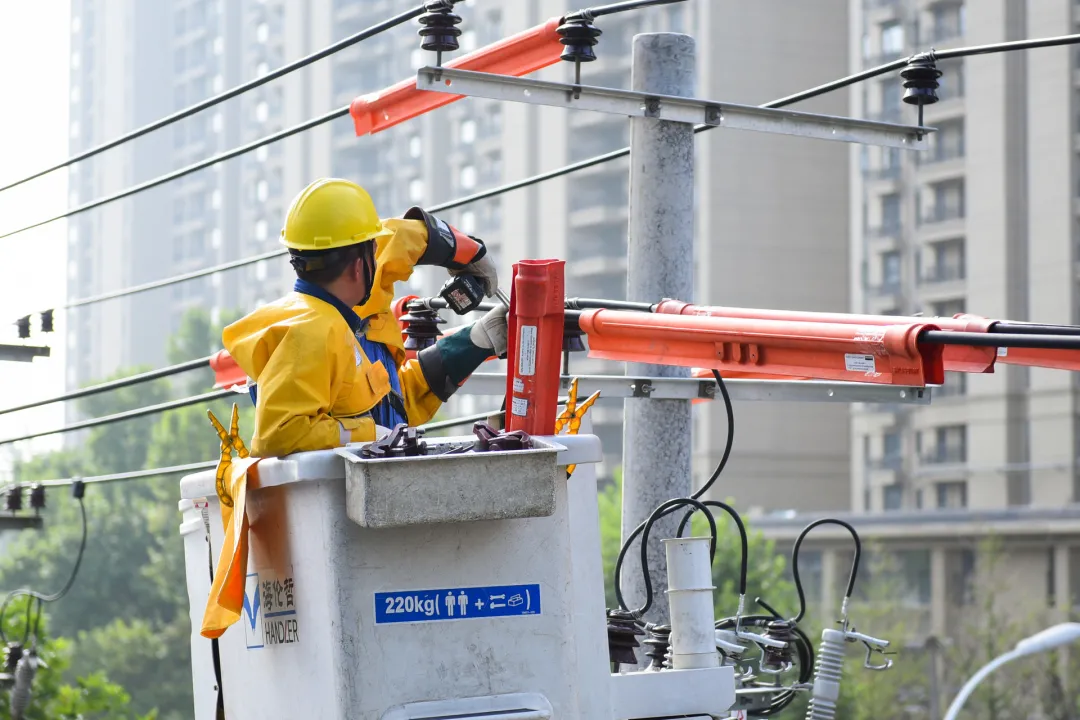
Shao Junsong believes that to ensure power supply safety, multiple measures need to be taken: First, through digital and intelligent means, inspect and maintain power transmission, distribution, and transformation facilities to ensure the safety of the grid's structure and the normal operation of equipment; second, make good use of information systems to accurately predict power generation from power plants, especially new energy sources, ensuring the accuracy of prediction data. At the same time, coordinate and regulate energy storage stations on both the source and grid sides to ensure that the electricity fed into the grid meets expectations; finally, accelerate the advancement of virtual power plant services on the user side, transforming user-side orderly electricity consumption plans with mandatory enforcement characteristics into flexible electricity consumption plans regulated through market mechanisms, allowing a large number of users to spontaneously participate in actions to ensure power supply safety.
Developing new energy will not exacerbate the risk of power rationing
Currently, the proportion of new energy is still low, leading to a phenomenon of power supply shortages. In the future, as the proportion of new energy continues to rise, will the volatility and intermittency of new energy pose greater challenges to electricity stability?
In response, Shao Junsong explained that due to the natural difficulty of storing electricity, under the circumstances where the proportion of new energy is gradually increasing and energy storage stations are not widely used, the power grid operation will always be in a state of tight balance. However, with the promotion and application of energy storage technology, through the function of energy storage buffer pools, it is possible to adjust the amount of electricity in both temporal and spatial dimensions.
In addition, the power grid itself still has room for improvement. By changing the dispatching and operating modes of the grid, it can gradually adapt to a power supply structure dominated by new energy sources.
"In the future, power market transactions in various regions will strictly implement a market-based price mechanism of 'benchmark price + floating range', allowing more electricity to enter the market. At the same time, after the completion of the new power system, due to the synchronous realization of coordinated regulation of sources, grids, loads, and storage, power supply will only be safer, and the grid's safe and stable operation margin will be greater," said Shao Junsong.
In Wang Gengye's view, the proportion of new energy power generation will continue to increase in the future. Building a new power system with new energy as the main body is gradually reducing China's dependence on thermal power, which can effectively alleviate the risk of power rationing caused by carbon emission control.
"Effectively improve the timeliness of source-grid-load storage coordinated control services, ensure the credibility and security of business data, enhance the flexible consumption of distributed power sources, precise control of power generation and load, and diversified coordination capabilities among source-grid-load storage. Ultimately, this can promote the consumption of clean energy, improve the safe and stable operation level of the power grid, and eliminate concerns about power rationing issues caused by a high proportion of new energy," said Wang Gengye.
*This article is reprinted from 'China Energy News', authored by Han Yifei, with the original title 'Surpassing the 970 million kilowatt load level of the same period in history, the maximum power load this winter is expected to reach 1 billion kilowatts - Winter electricity peak, grid under test again'.